









Schiphol airside gets a major overhaul
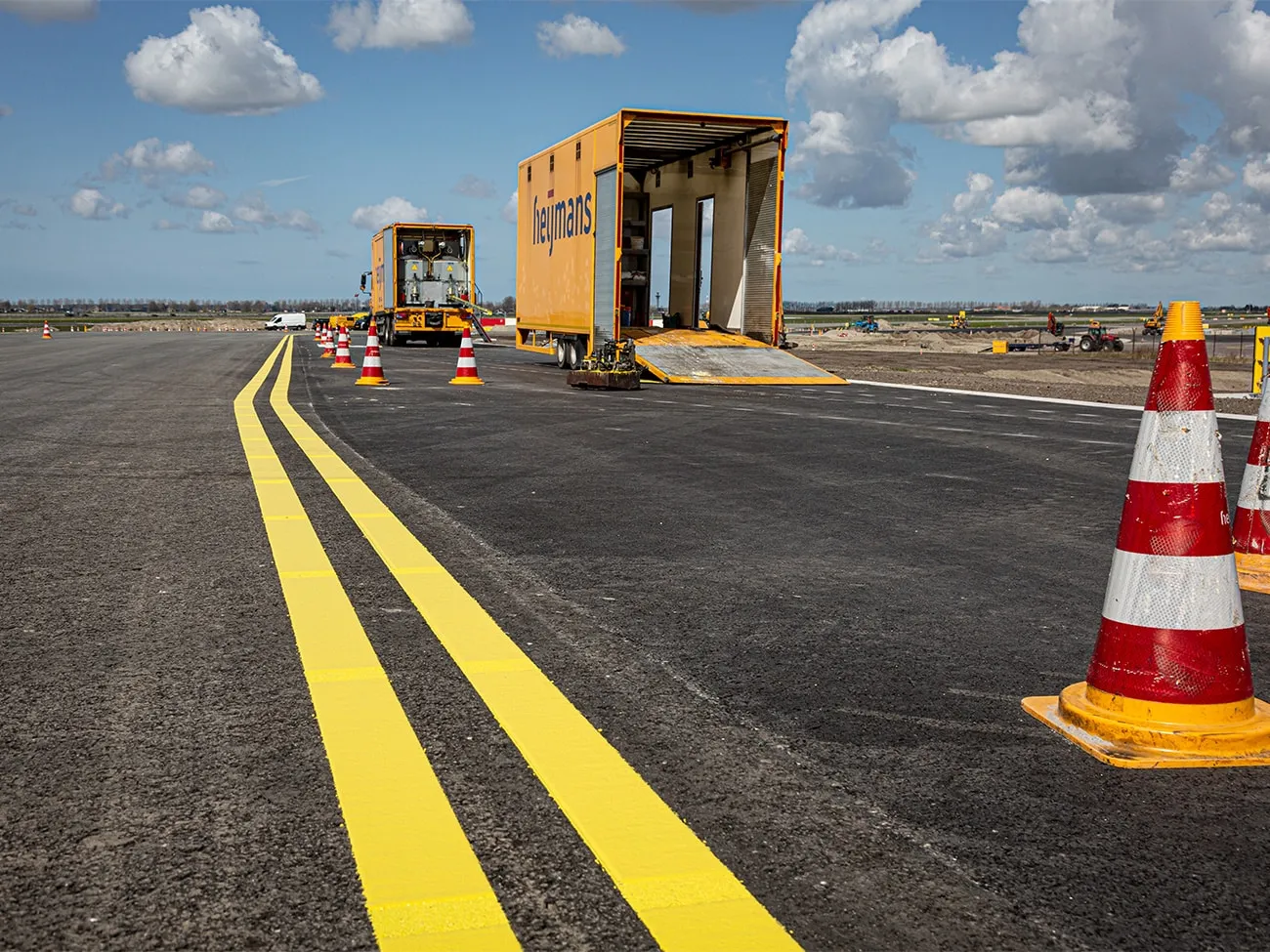
Completing the dual Quebec taxiway system requires significant changes airside at Schiphol. Heijmans Infra is carrying out this extensive work.
Project manager Marcell van Buël says it is anything but a routine job. “We had to demolish some taxiways down to the foundations, then rebuild, realign and widen them in phases. And all of this in the complex environment of an airport, with numerous stakeholders and all the constraints that entails.”
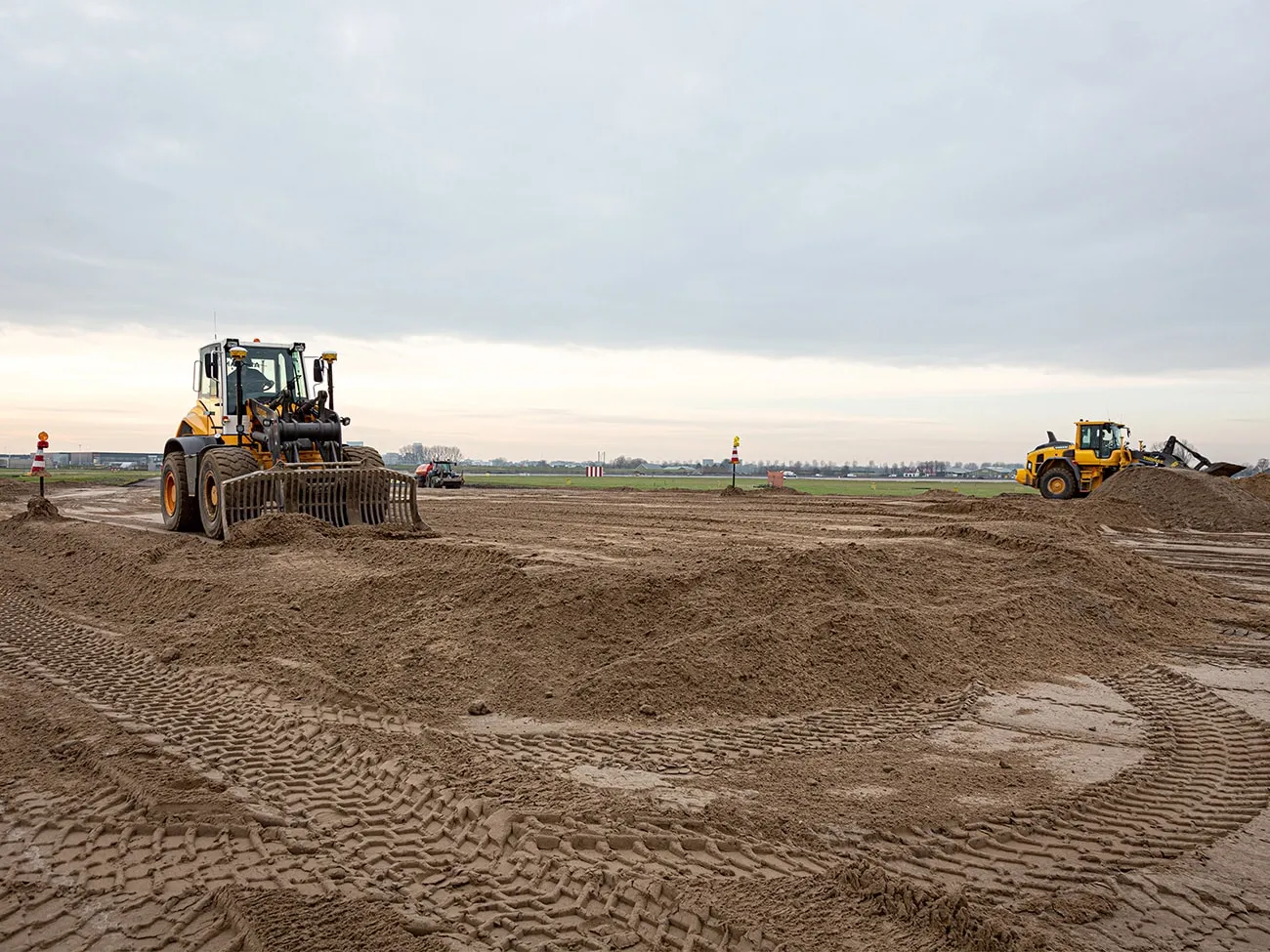
As main contractor airside at Schiphol, Heijmans Infra is responsible for the maintenance and modification of all runways, taxiways and roadways. “Based on the preliminary design prepared by NACO for Schiphol for the duplication of the Quebec taxiway system, we produced the detailed and working designs for the connections,” says Van Buël. “Our colleagues at Heijmans Projecten are building the new structure, while we are carrying out all the connections, widening and raising work needed to make the taxiway system operational by the end of 2021. This includes drainage and taxiway lighting. We started work in October last year. During the first four months of 2021, work on the VDR ran in parallel with the reconstruction of the Polderbaan, which was also a project under our main contract.”
Preloading
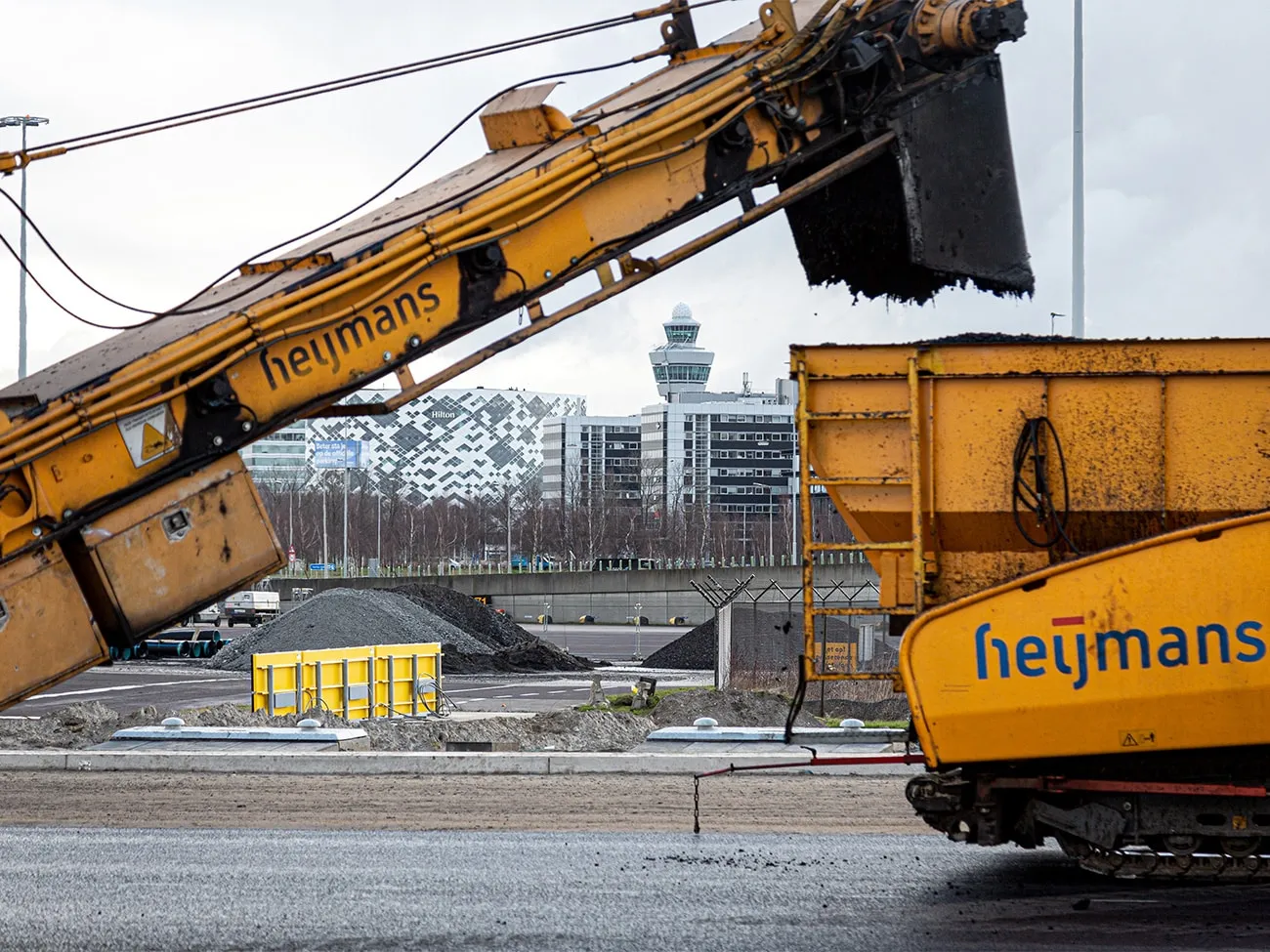
One reason for modifying part of the existing Quebec taxiway system was to accommodate the difference in height between the existing and new structure over the A4. “The connections to the existing structure are considerably lower than the new structure will be,” explains Van Buël. “We therefore removed a large part of the existing infrastructure, both above and below ground. This was done in close collaboration with BAM, which carried out all the required directional drilling and diversions of third-party services, such as LVNL and ST. The routes to be built were then ‘rapidly’ filled with sand as preload, as part of the design is being constructed on former polder land. Just under 300,000 m3 of sand was placed in total, more than 100,000 m3 of it in the first two months, allowing part of the ground to settle over the Christmas break. Based on cone penetration tests and analyses of soil quality, we calculated that the ground would need to be preloaded for 180-200 days. Once settlement was complete, the surcharge was removed and moved to another phase.”
Drainage
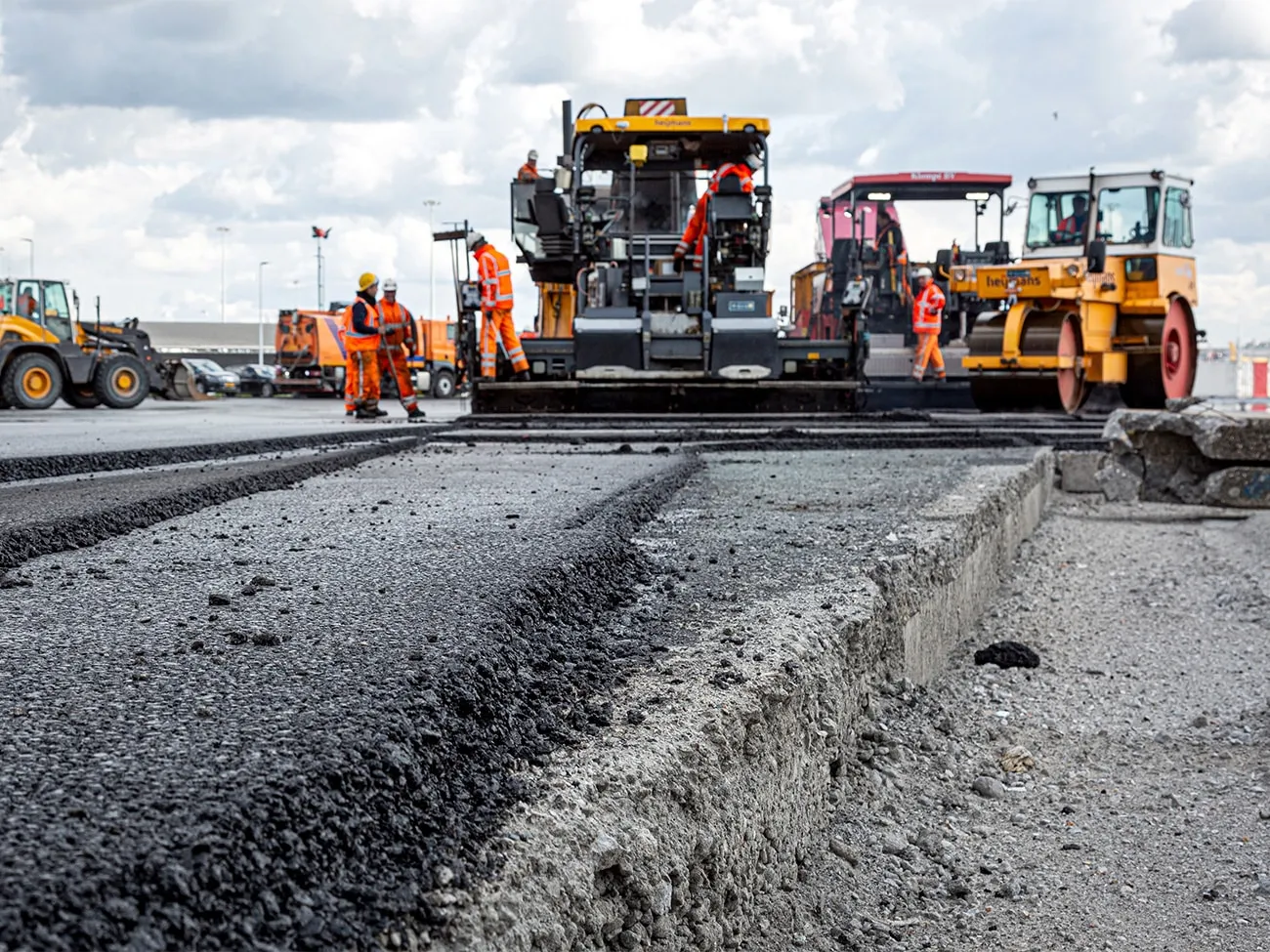
Once the ground had settled, Heijmans began installing the stormwater drainage system for future runoff, comprising a channel on each side of the taxiway. Van Buël: “The foundation was then built up from a 50-centimetre layer of sand and 75 centimetres of CTB, the heaviest pavement structure used at the airport. Four asphalt layers, each 5 centimetres thick, will be laid on top. The project has been carried out in phases to keep the taxiway system available to air traffic as much as possible. Each time, part of the new design was implemented, often requiring us first to demolish, then preload, allow the ground to rest and settle. Another significant challenge was an existing watercourse that could be temporarily dammed. The initial plan was to place the preload, excavate it again once the ground had settled, and then install a concrete culvert.
After extensive discussions with Bergschenhoek Civiele Techniek and drawing on experience from previous projects, an alternative was devised in the form of a corrugated steel culvert structure. It could be installed directly under the preload, as it can accommodate uneven settlement. A win-win situation.”
Safety above all
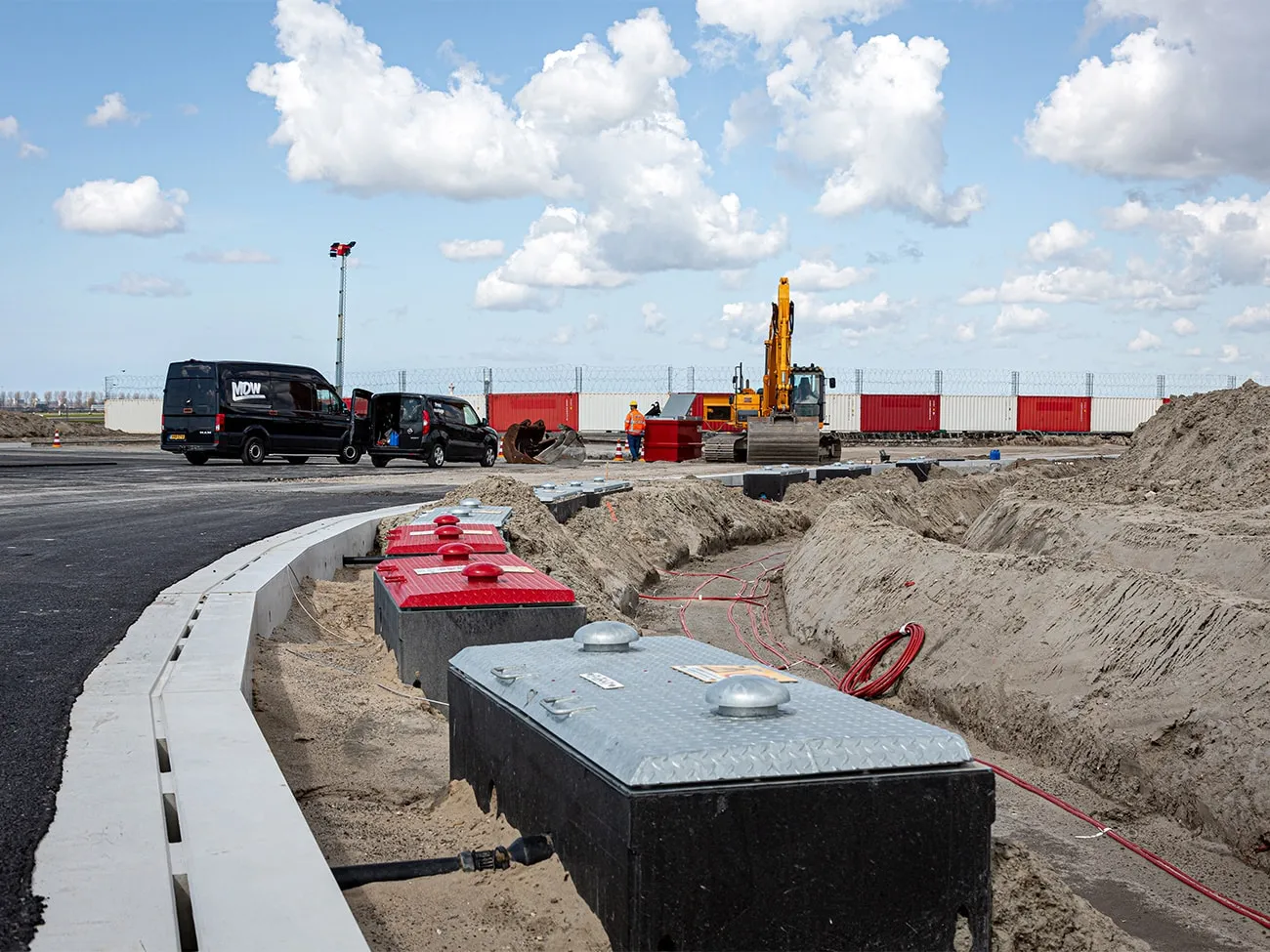
The lighting in and alongside the taxiway also needs to be switched on. Behind the stormwater channels, Heijmans Infra installed a cable route on both sides of the taxiway to supply power to the lighting from taxiway station G2. “All power supplies at Schiphol are designed for 5,000 volts DC,” says Van Buël. “If the current draw increases, for example because of a short circuit or flashover, the capacity rises to meet demand. This can lead to life-threatening situations. Since only part of the Quebec route was being worked on at any one time, the taxiway could not be fully de-energised. For safety reasons, we therefore decided in the preparatory phase to reroute the supply from taxiway station G2 outside the project scope, making the entire work area free of live services so we could work safely. It was a huge job costing 2.5 million euros, but it guaranteed the safety of all employees. A great example of how cost must never be an issue when it comes to safety, and Schiphol listened to that message.”
Taxiway lighting
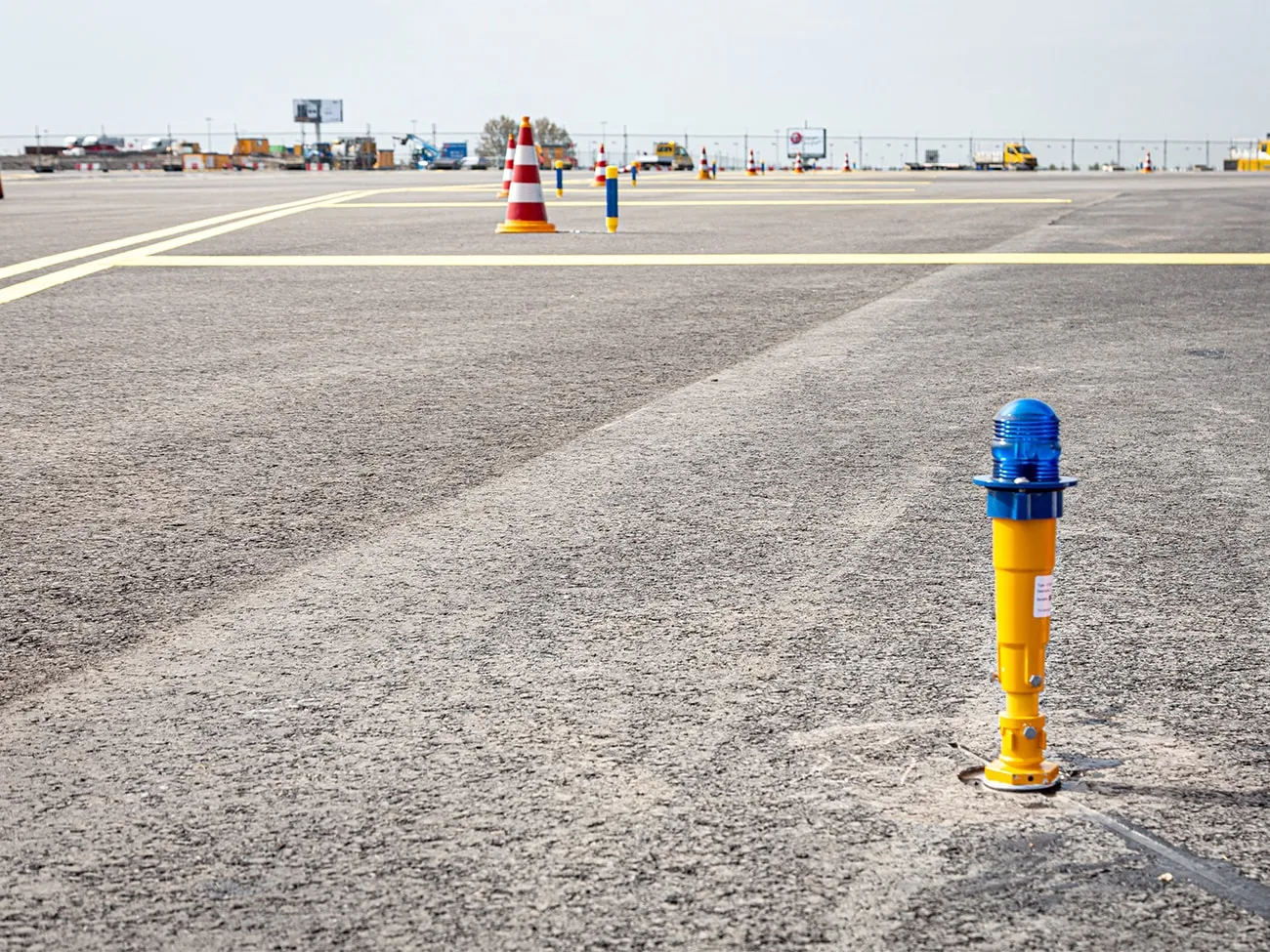
The power supplies from taxiway station G2 each serve a transformer chamber. “Each chamber contains six transformers, each powering one light in the taxiway. A total of 230 chambers and 1,500 lights are being installed. In addition to the taxiway lighting, lights are also being installed in the surface layer of the shoulder at the edge of the taxiway. This is done in the conventional way. The taxiway lighting is installed differently. We use several methods to ensure that replacing the surface layer does not also mean losing the lighting cables. Depending on the existing situation, which we need to connect to, the power supply for the taxiway lighting is incorporated in the foundation, inserted from above into the third asphalt layer (the Brussels variant), or placed in the second asphalt layer just beneath the surface layer (the Amsterdam variant). After the asphalt is laid, a hole is drilled in it to install the light fitting. In sections where ducts have been installed in the foundation, we drill through all the asphalt layers and the duct itself, then run the cable from the transformer chamber through the duct to the light fitting and make the connection.”
Heijmans Infra’s work is progressing neatly to schedule. “Several phases are already open for operations, and aircraft are using them again. Little by little, our work area is shrinking. The project is due for completion at the end of 2021, as planned,” concludes Van Buël.
Question about this story? Ask your question
Keep following this
Get an email when a new story is published. No account needed.
- SubjectRoad construction







