









Road safety auditors: the A2’s silent guardians
Text Roel van Gils Image De Baan Verkeersadvies
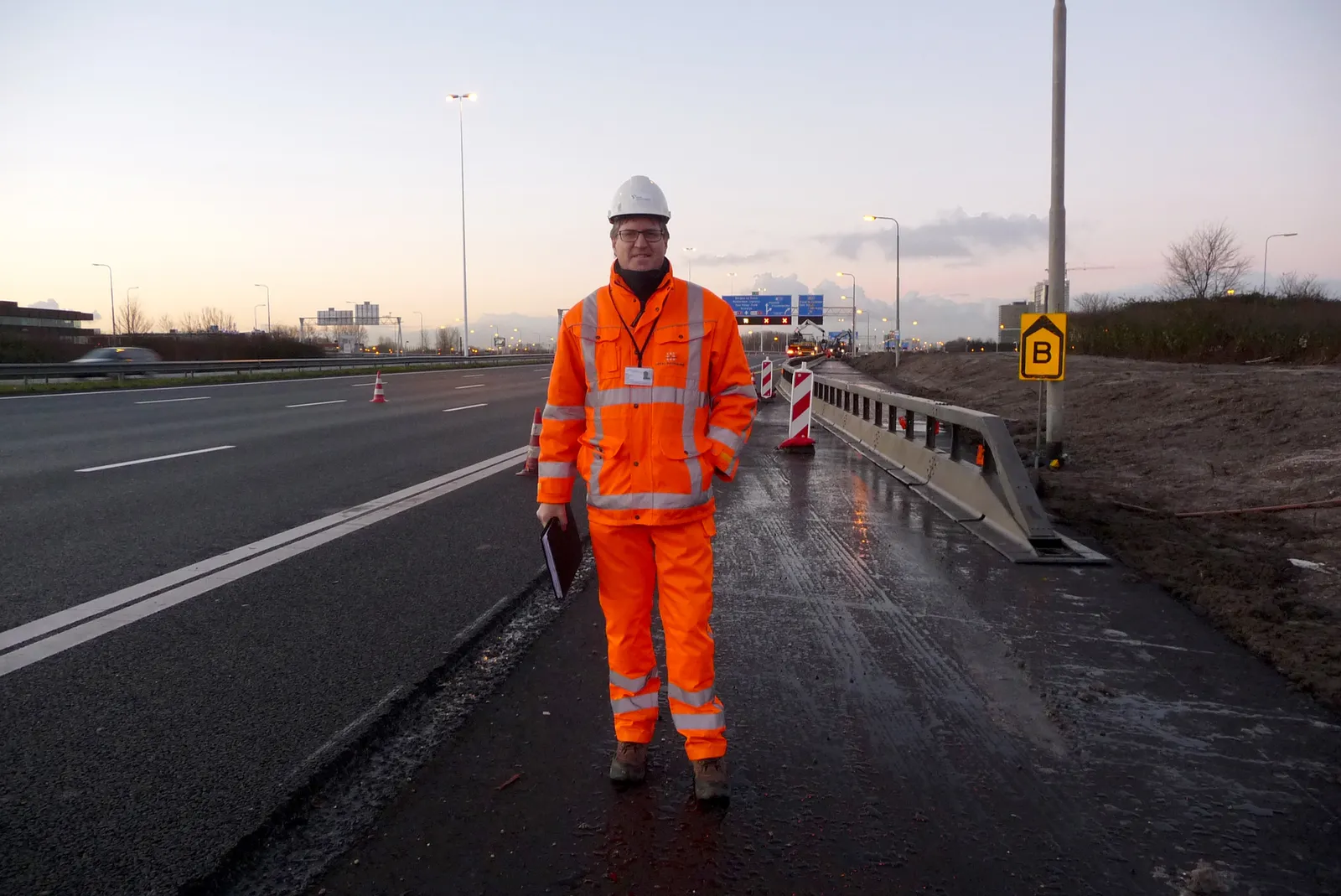
Drivers using a new or upgraded trunk road rarely stop to think about the work that goes into making it safe to open. Behind the scenes, road safety audits are carried out at various stages, helping determine how safely road users reach their destination. The Netherlands has just thirteen certified auditors authorised to carry out these audits on trunk roads. Dirk de Baan, a traffic engineer at De Baan Verkeersadvies, is one of them. He takes us behind the scenes of the A2 widening project between the Het Vonderen and Kerensheide interchanges.
Road safety audits on trunk roads are carried out in four successive stages, De Baan explains. “The first audit is carried out on the preliminary design (VO). This is usually drawn up by a consultancy commissioned by Rijkswaterstaat. The design must then be assessed by an independent audit team, meaning not by auditors working for the same consultancy that produced it. On the A2, Betty van de Wetering and I carried out this first audit for the consultancy involved.” Neither of us had been involved in the design, ensuring our independence.
Making sense of stacks of drawings
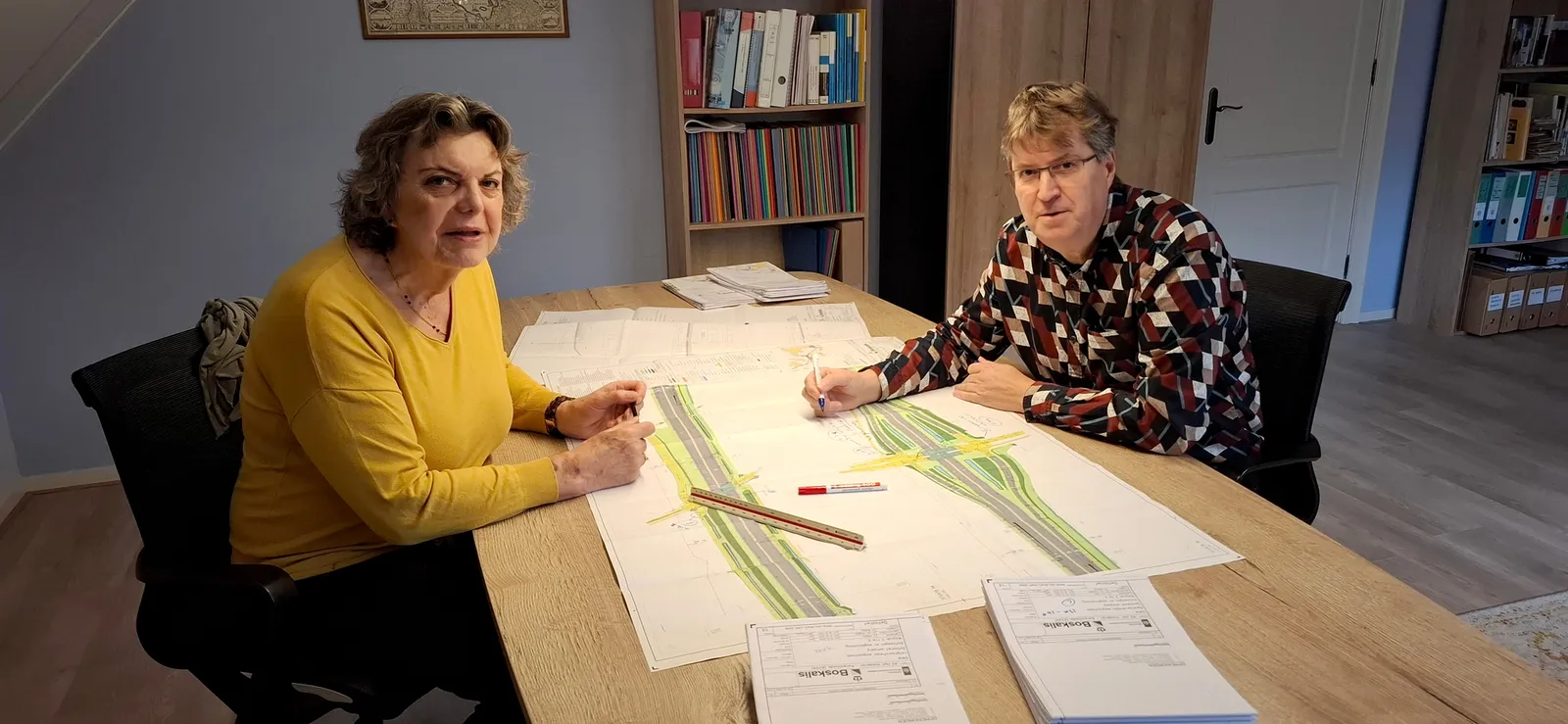
From stage 2, the detailed design (DO), the contractor is required to have a road safety audit carried out on its design. “At this stage, the design is assessed afresh, without preconceptions: what has changed since the VO, and have the earlier points of concern been adequately addressed?” De Baan explains. “Essentially, we unfold stacks of drawings, including site plans, longitudinal sections and cross-sections, and review them with a ‘red pen’. Working as a pair, in line with the four-eyes principle, we describe the problem and the road safety risk to road users. We then set out possible ways of addressing it. We do not make recommendations, but show what could happen if no action is taken. Each identified road safety risk is classified by severity in one of three categories: yellow, orange or red.”
Through the road user’s eyes
De Baan says that on major projects such as this one on the A2, temporary traffic arrangements are also assessed. “Phases in which traffic is diverted for months at a time must be separately checked for road safety. These checks are carried out by two other road safety auditors to avoid any conflict of roles.” Stage 3 of the audit then takes place just before the road opens. “We go out on site, during the day and in the dark, and literally see things through the road user’s eyes. We drive the route several times, take photographs and video, and assess whether road markings, signs, delineation and barriers are clear and safe. Stage 4 follows three to six months later, once traffic has settled into the new arrangement. Travelling with the traffic, we check whether the road infrastructure is easy to understand and whether any unexpected risks have emerged, such as vegetation obscuring signs or ‘forgotten’ objects on the verge. Sometimes we can also observe the traffic from an overpass, which is particularly straightforward near junctions. We watch how traffic merges and exits.”
De Baan, who knows the field inside out, stresses that this approach is not unique to this project. His company has carried out hundreds of audits on projects including the Afsluitdijk, the A2 tunnel through Maastricht, the A15 near Rotterdam and Ring Groningen. He has also contributed to the development of various CROW guidelines and was involved in introducing road safety audits in the Netherlands in the late 1990s.
Een zakelijke vraag aan De Baan Verkeersadvies? Get in touch
Companies in this story
Keep following this
Get an email when a new story is published. No account needed.
- SubjectRoad construction
- CompanyDe Baan Verkeersadvies







