









Reconstruction project on Hoogstraat in Landgraaf serves two purposes
Text Chris Elbers Image Mourik Infra
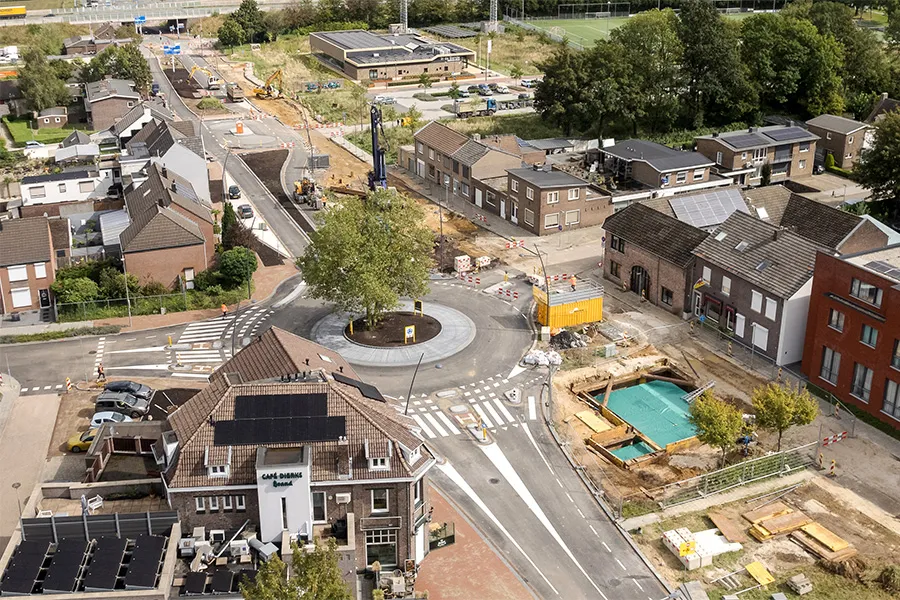
Work began in April this year on the redevelopment of Hoogstraat in the Limburg municipality of Landgraaf. An average of 18,000 vehicles use this busy thoroughfare every day. Large numbers of cyclists and pedestrians also use the road. By carrying out various above-ground works, Mourik Infra is significantly improving road safety. At the same time, the existing flooding problem is being tackled underground, an issue affecting several municipalities in the region…
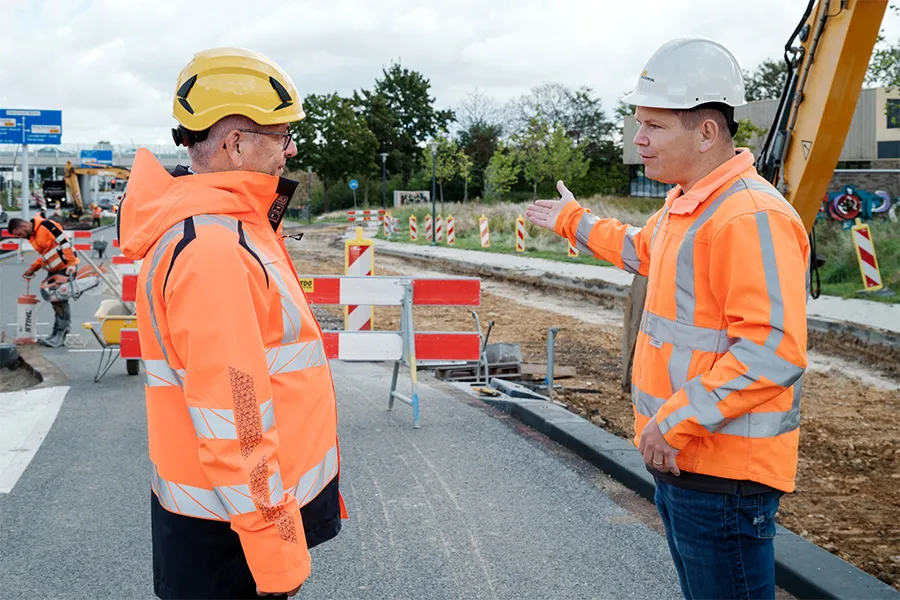
The project currently under way on Hoogstraat in Landgraaf is a prime example of close cooperation between the municipality, contractor and local residents. The redevelopment also serves two purposes. “One is to raise the standard of road safety,” says Peter Suppers, project manager for Mourik Infra, Echt branch. “Traffic in Landgraaf has increased considerably in recent years. The presence of a school complex and sports centre in particular means this route is used extensively. As part of the redevelopment, the cycle paths will be physically separated from motor traffic. We are also building pavements and introducing additional measures at various crossing points. Last but not least, the road is getting a new surface.”
Additional storage capacity
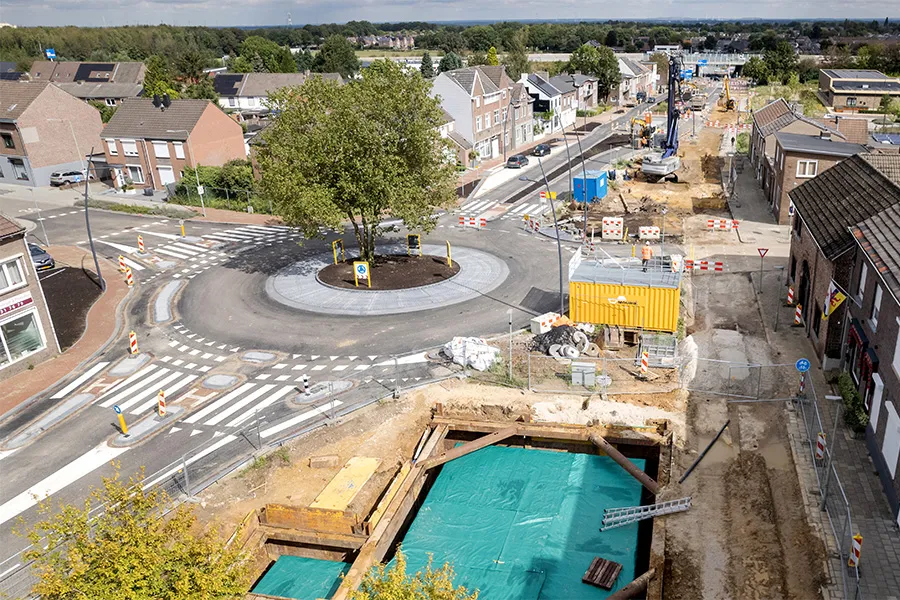
Landgraaf and the surrounding municipalities are increasingly affected by flooding. The work being carried out by Mourik Infra will significantly reduce this problem. “Heavy rainfall is increasingly putting the sewer system under strain,” Peter continues. “As a result, the lowest point on Hoogstraat would often become flooded.” Mourik would not be Mourik if it could not come up with an effective solution to this problem. Following the additional water storage capacity installed earlier near the ‘In de Bende’ swimming pool, the company is building two new underground water storage facilities, or IT chambers, with a combined capacity of around 1,300 cubic metres. These are temporary storage areas that hold excess rainwater during peak flows. It then infiltrates back into the ground through the walls. Any remaining water is later discharged in a controlled manner through the sewer system.
Actively involved
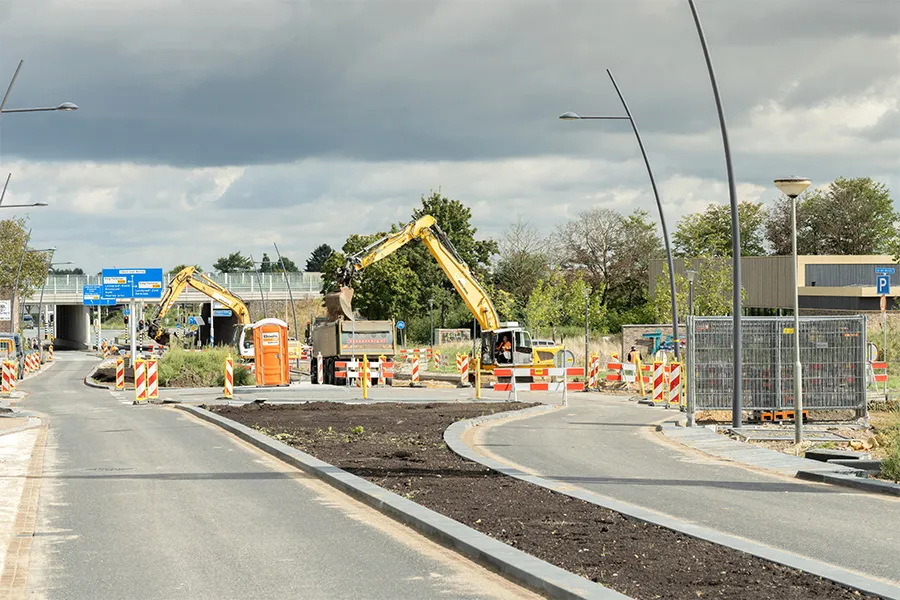
As well as serving two purposes, the project being rolled out in Landgraaf is characterised by an excellent example of cooperation between the municipality, contractor and residents. “Actively involving local people in the work makes this project truly unique,” says Peter. “We gave residents the opportunity to contribute their ideas during the design stage. Thanks in part to the efforts of our community liaison manager, this has generated a strong sense of commitment, which will continue to pay dividends in the future. Alongside the additional water storage, various initiatives will help keep people’s feet dry when the heavens open again.”
A bright future
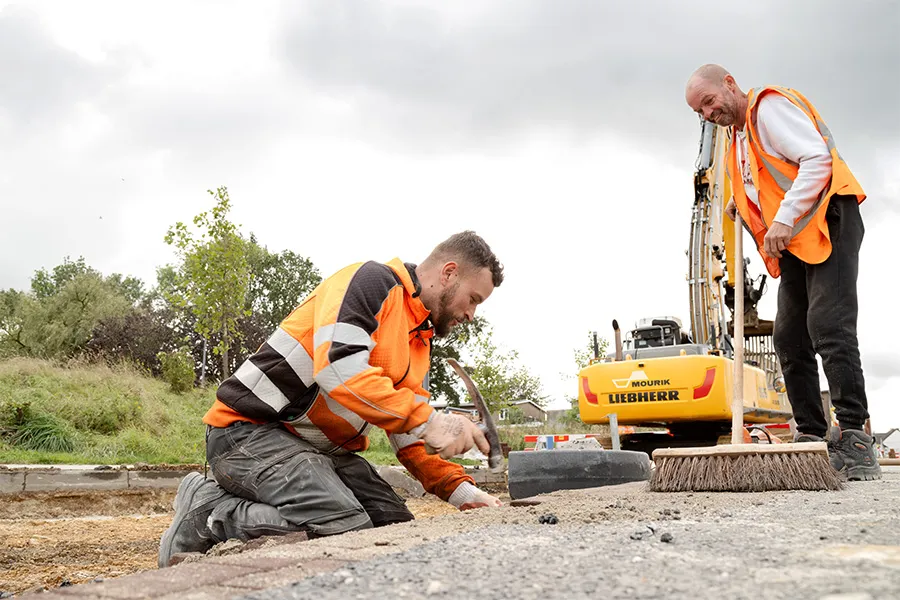
The work being delivered in Limburg is earning high praise from both the site manager and the client. “For our team, enjoyment in the work leads to excellence in what we do,” says Peter. “Both are very much in evidence on this great project, where we are also paying close attention to the interests of local residents. The road remains open during the works for emergency services, cyclists and pedestrians. The safety of road users and our own staff is also closely monitored.”
Sharing knowledge
Freed Janssen, alderman for the Municipality of Landgraaf, is equally delighted. “By improving road safety and reducing disruption caused by rainfall, this project kills two birds with one stone. We are very pleased with the changes,” says Freed, who sees scope for similar work elsewhere in the region. “The surrounding municipalities face the same challenge as we do: how do we keep our feet dry? It is therefore good that we are sharing the experience and knowledge gained during this project with them.” The first step in this process was taken on 24 September. Mourik and the Municipality of Landgraaf, together with Trewatin, a specialist in infiltration systems, organised a networking event for interested municipalities in the region. Climate adaptation was very much the central theme. Peter reflects on the meeting: “Rainfall is becoming more frequent and more intense. That is why the municipalities in the Parkstad region are joining forces to tackle the growing problem of flooding. Using IT chambers is one possible way to reduce flooding. We organised this meeting with nearby municipalities to build connections and share knowledge, with the ultimate aim of encouraging and strengthening regional cooperation.”
A business enquiry for Mourik? Get in touch
Who worked on it
Hoogstraat Landgraaf in Landgraaf
- site manager
 Mourik
- clientMunicipality of Landgraaf
Keep following this
Get an email when a new story is published. No account needed.
- ProjectHoogstraat Landgraaf
- SubjectRoad construction
- CompanyMourik
- CompanyMunicipality of Landgraaf







