









Reconfiguration of the N264 calls for smart solutions from BAM Infra Nederland
Text Suzanne van Gaale Image BAM Infra Nederland
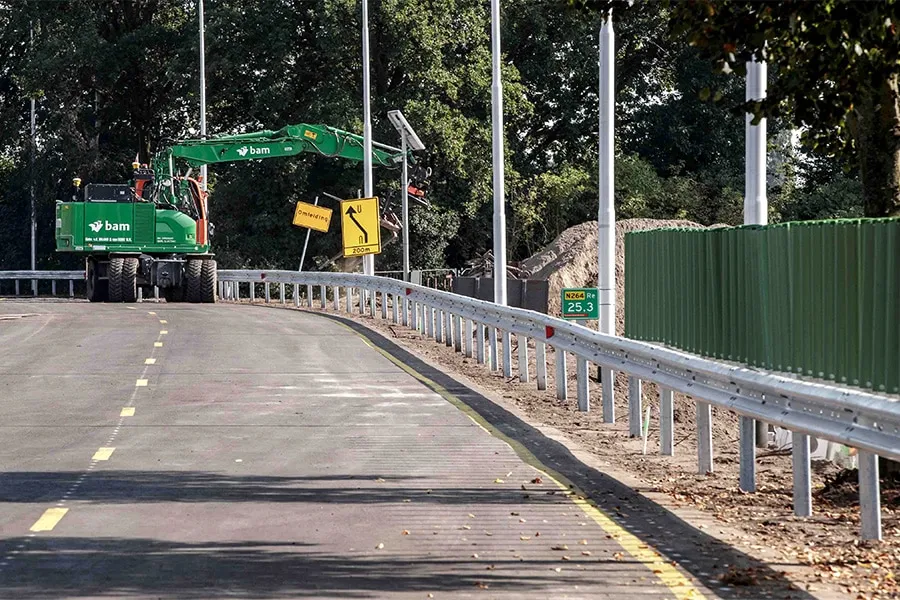
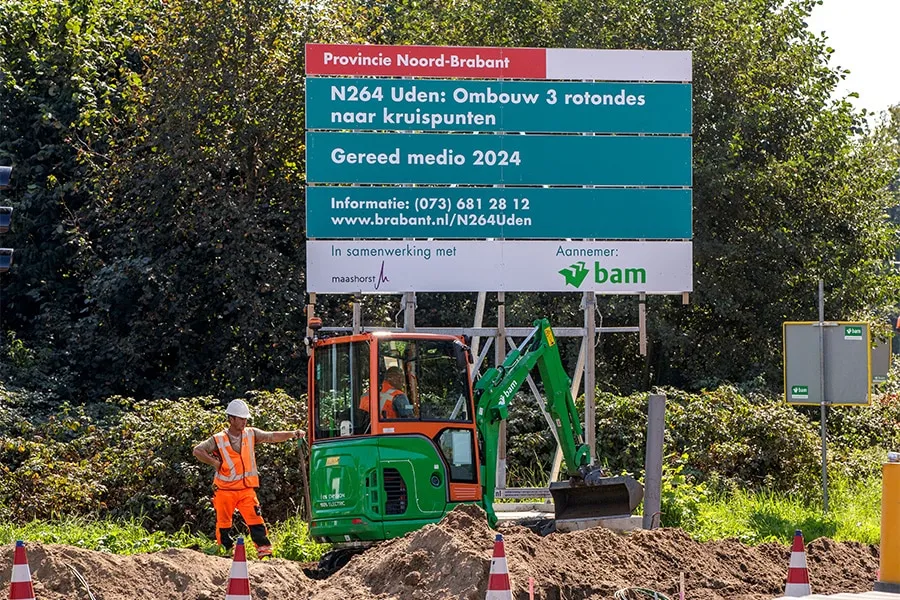
Commissioned by the province of North Brabant, BAM Infra Nederland is working hard to improve traffic flow and road safety on the N264. The project involves a range of measures, including replacing roundabouts with junctions equipped with intelligent traffic lights, and converting a cycle tunnel into a cycle street. According to Rick van der Wielen, BAM project manager, the project is a fine example of how they are willing to take an innovative approach together with the province. This article looks at how that translates into practice.
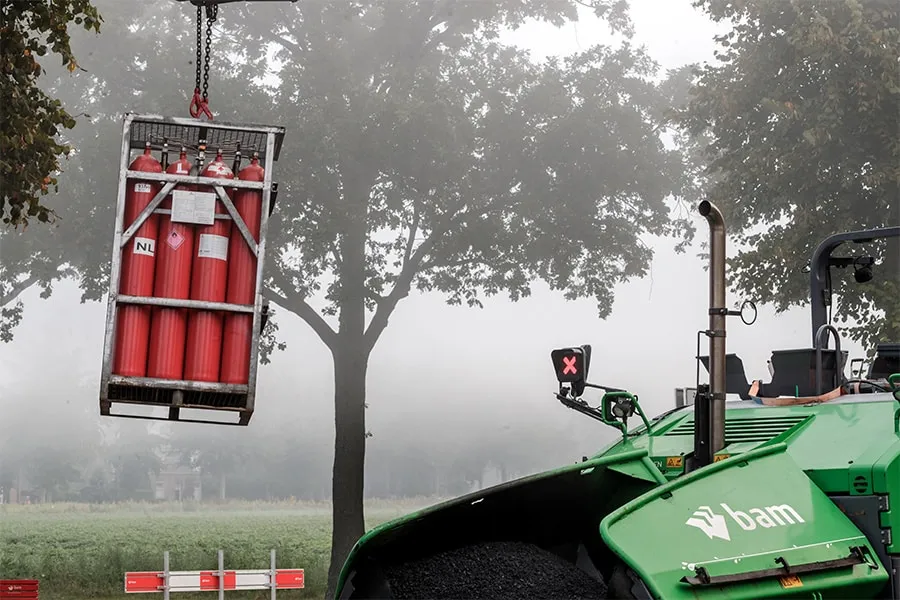
“The N264 project is no ordinary project,” says Rick. “When the construction exemption for nitrogen deposition was abolished during the design and preparation phase, we immediately faced a major challenge: how could we reduce nitrogen deposition in the surrounding Natura 2000 sites to zero? After carrying out the necessary calculations, we came up with a good solution. First, the project was divided into two phases, and second, we are using electric equipment. This includes electric asphalt paving equipment and excavators, as well as asphalt pavers with hydrogen combustion engines and site cabins powered by solar panels. Our equipment has at least Stage IV engines, while the remaining non-electric equipment runs on HVO biofuel.”
Dedicated charging hub
Using electric equipment immediately presented another challenge, this time a logistical one. Not all equipment has batteries large enough to run all day without the batteries needing to be changed and recharged. “To make it possible to recharge equipment during the day, we set up a dedicated charging hub at one of our partners, Gebroeders van den Brand en van Oort in Uden. They have a large transformer, where we have installed several charging stations.” The use of electric equipment calls for logistical adjustments not only from BAM, but also requires commitment from the various contractors involved. “Using electric equipment means working in a different way. You have to plan carefully and consider which equipment to use, where and when, so that batteries can be changed as efficiently as possible. We keep track of all the equipment used in order to monitor nitrogen deposition. One of our team members does this by running an Aerius calculation after each phase, based on actual equipment use. This allows us to make sure we continue to meet the statutory limit.”
Reclaimed asphalt
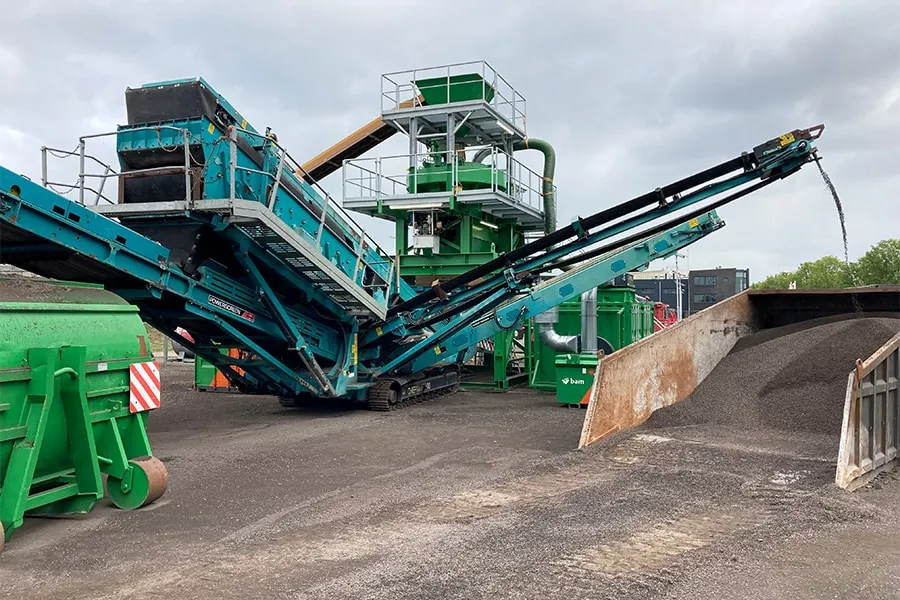
As well as electric equipment, BAM is using specially reclaimed asphalt in the asphalt surface courses, known as PA-stone. The aggregate has undergone more intensive processing and has been passed through a special centrifuge to remove the bitumen and sand, known as mastic. The remaining stones are called PA-stone, derived from ‘porous asphalt’, the English term for porous asphalt. Extensive testing and certification have shown that PA-stone is just as good as new aggregate. “Using reclaimed asphalt results in a lower Environmental Cost Indicator (MKI) score. On top of that, we are also using our special asphalt separator, which runs on electric power supplied by a fixed 270 kWh battery and two intelligently controlled electric motors.”
Taking an innovative approach together
Two of the three roundabouts have now been replaced with junctions equipped with intelligent traffic lights (iVRI). By using collected vehicle data and prioritisation settings, these iVRI systems can manage traffic flow on the N264 more efficiently. “By enabling traffic lights, smartphones and navigation systems to communicate with each other, we can, for example, keep freight traffic moving as much as possible.” The third roundabout, at Velmolenweg, is scheduled for work after the summer of 2024. The walls and roofs of the two cycle tunnels will also be replaced. Rick says: “Looking back on the project so far, we are especially proud that, together with the province of North Brabant, we have made it possible for work to go ahead on the N264. Our longstanding collaboration and the experience we have gained on previous projects, such as the N395, allow us to take an innovative approach together on current and future projects.”
Question about this story? Ask your question
Who worked on the N264
- concrete paving
 Concrete patterningMentioned in Betonfiguratie bv gives traffic islands and aircraft viewing areas their own ‘concrete look’
- excavation and cable worksVan Beek Infra GroepMentioned in Van Beek Infra Groep converts N264 roundabouts into intelligent traffic signal installations
- civil engineering contractorBAMMentioned in Van Beek Infra Groep converts N264 roundabouts into intelligent traffic signal installations
Keep following this
Get an email when a new story is published. No account needed.
- ProjectN264
- SubjectRoad construction







