









Open-face boring with water seal beneath railway tracks
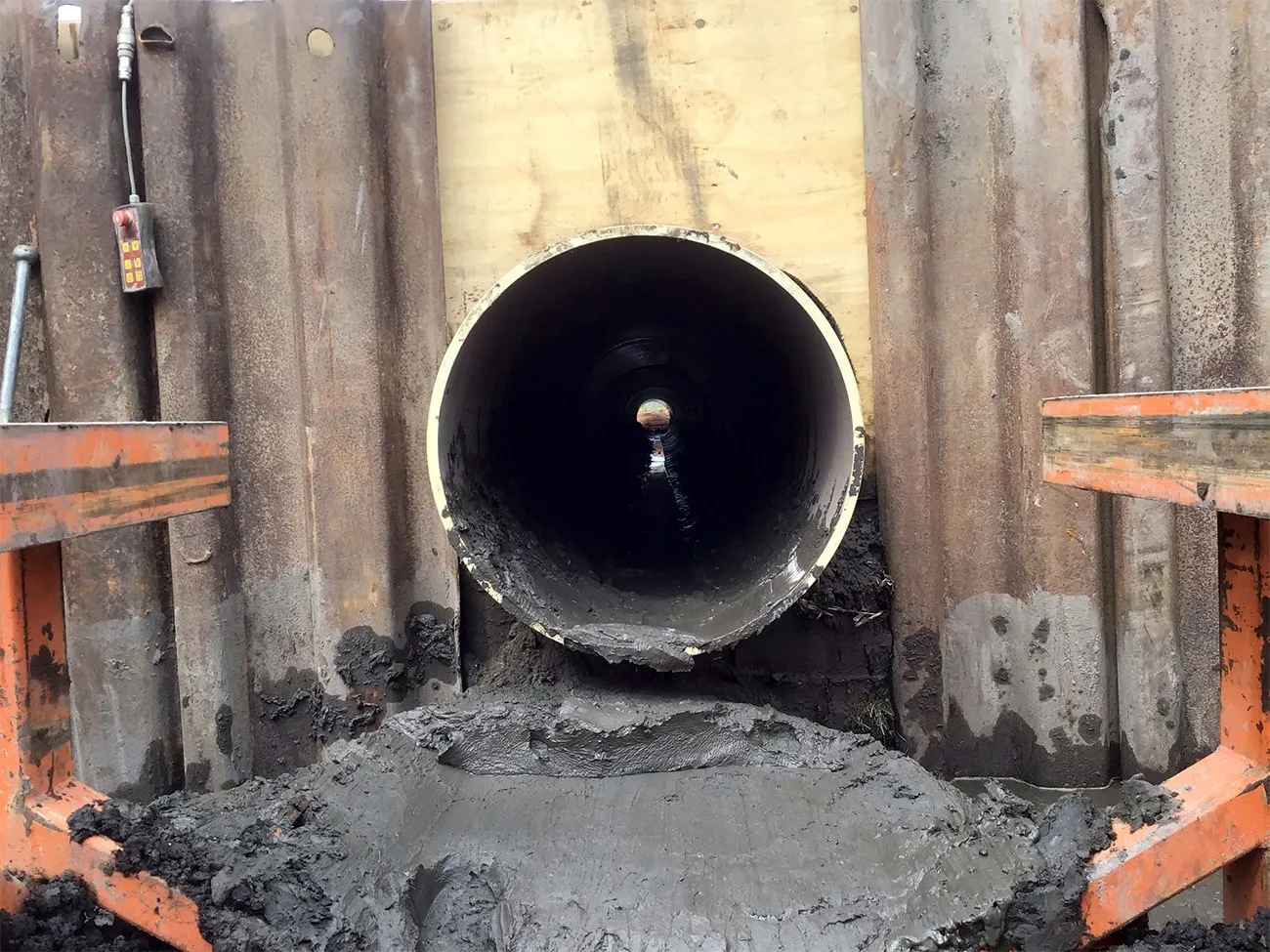
A blocked culvert beneath the railway regularly caused several gardens in Oudesluis to flood. Further investigation revealed that the badly deteriorated culvert was also leaking. ProRail had reason to act quickly. Kouwenberg Infra was responsible for boring a new culvert beneath the railway and filling in the existing one. The trenchless technology specialist agreed several changes to the original plan with the railway infrastructure manager.
Kouwenberg Infra has specialised for many years in designing and installing pipelines and culvert structures beneath roads, waterways and railways. “We are used to carrying out this work as a subcontractor, but for the Oudesluis project we submitted a bid to ProRail’s tender as main contractor,” says Sjoerd Janssen of Kouwenberg Infra. “It was a UAV-GC contract, under which we were responsible for the entire project, including the baseline survey, inspections, ground investigation, consultation with local residents and risk management.” His colleague Teun van Ras adds: “That is also where our strength lies: thanks to our many years of experience, we can devise a suitable solution for every situation. In this case, that meant safely and to a high standard filling in an existing structure, then carrying out a new bore beneath the railway in a controlled manner a little further along.”
Existing structure filled in
“The existing steel culvert was 19 metres long, with two concrete inspection chambers beside the railway and two short projecting outlets towards the watercourse,” Janssen explains. “An inspection revealed that the entire structure was in poor condition. The inspection chambers were on the verge of collapse, and various leaks had caused the culvert to become completely silted up. The track had even subsided where it crossed the existing culvert.” Van Ras adds: “To prevent further problems with the old culvert, we agreed with ProRail to depart from the original plan set out in the specification. Instead of cleaning and flushing through the existing culvert, which could have washed sand and silt out from beneath the railway, we first completely sealed the existing structure and vented it. The inspection chambers and projecting outlets were then removed.”
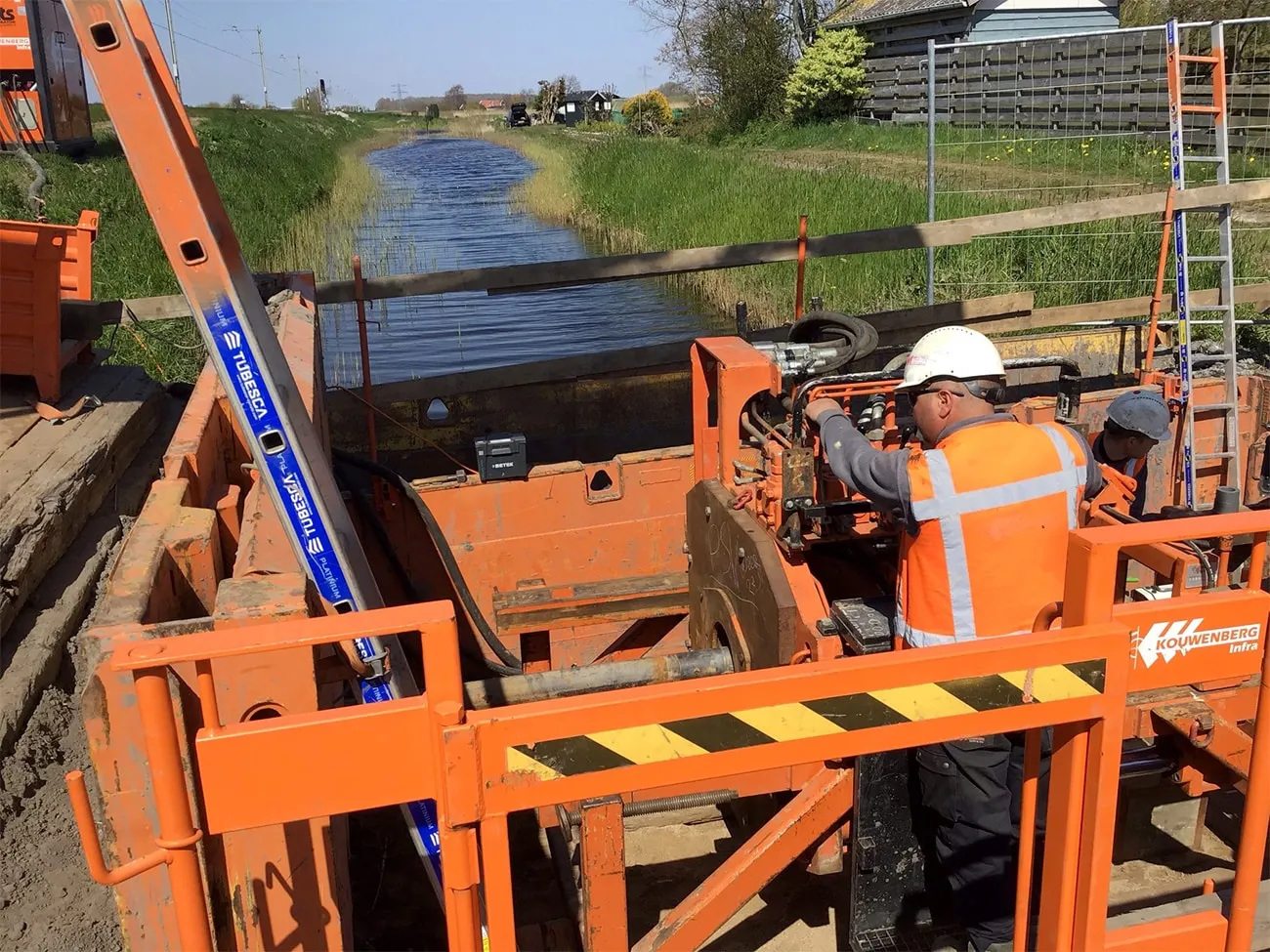
From shield boring to open-face boring
Preparations were then made for the new culvert structure, approximately 145 metres away. The new culvert is 26 metres long, made from a GRP pipe with an external diameter of 860 mm, and runs from one watercourse to the other. Inspection chambers are therefore not needed. Van Ras says: “We also consulted with ProRail in advance to fine-tune the plan. The original proposal, which involved shield boring, was changed to open-face boring with a water seal, mainly because there was limited space to set up the necessary container compound. The ground also proved insufficiently stable to support the boring head. Using a water seal prevented groundwater from flushing material beneath the railway. We completed the work on site in three weeks, from setting up the worksite and installing formwork in the watercourses to pumping out the pit, carrying out the bore and connecting the two watercourses.”
“Boring beneath a railway, with or without a water seal, is part of our everyday work. Our biggest challenge was the preparation and contract management as main contractor for ProRail,” Janssen reflects. “But we succeeded in that too. In fact, our next job for ProRail is already on the horizon: delivering five railway crossings at the Rotterdam Centraal Station railway yard.”
Question about this story? Ask your question
Keep following this
Get an email when a new story is published. No account needed.
- SubjectRoad construction







