









New surface course for the A50
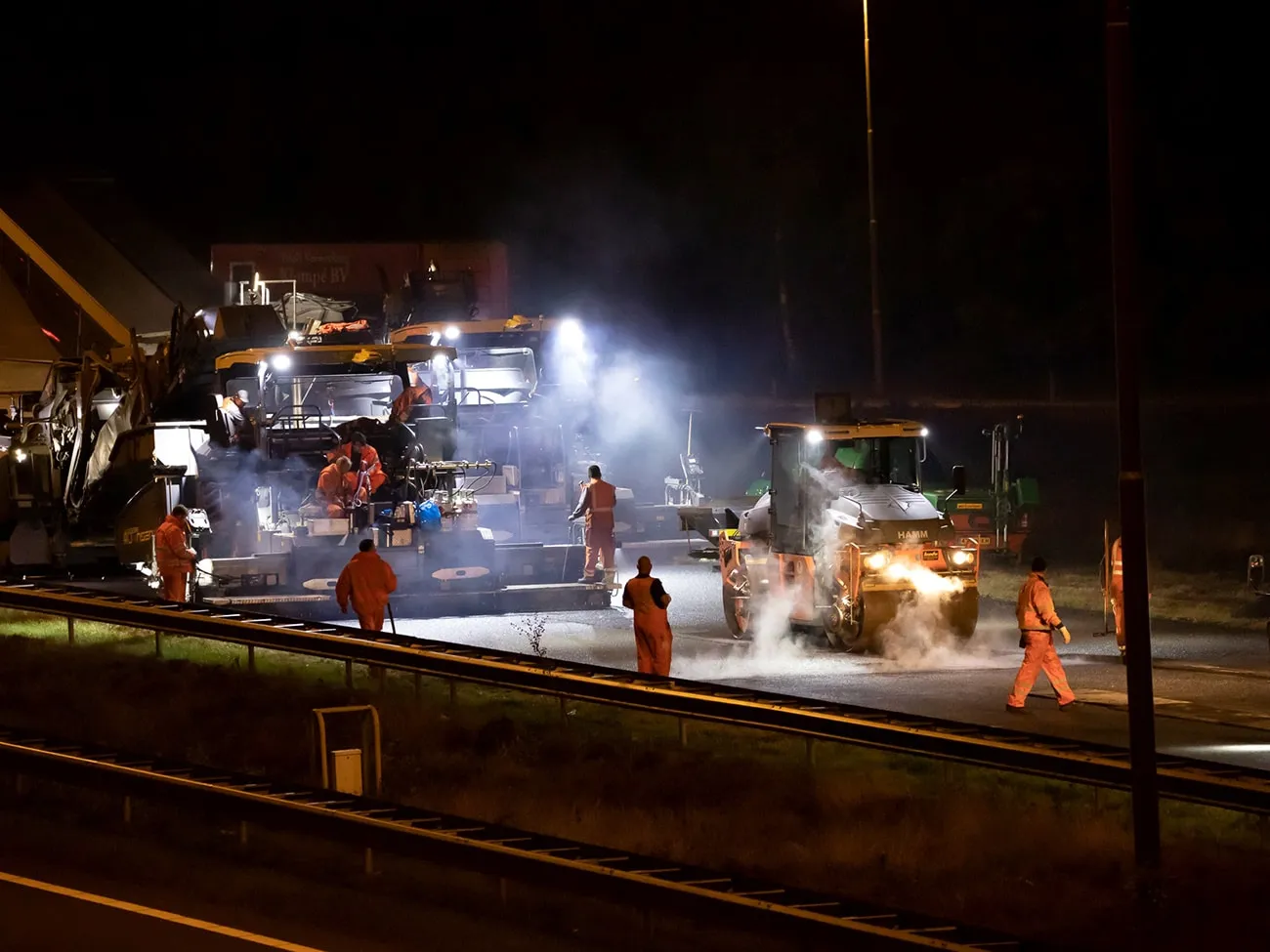
Gebroeders Jansen laid most of the new surface course on the A50 between Waterberg and Beekbergen interchanges. The family-run company has worked closely with BAM Infra Nederland since 2009. This partnership has already paid dividends on several projects, including the integrated major maintenance (IGO) programme on national roads in Gelderland and Overijssel.
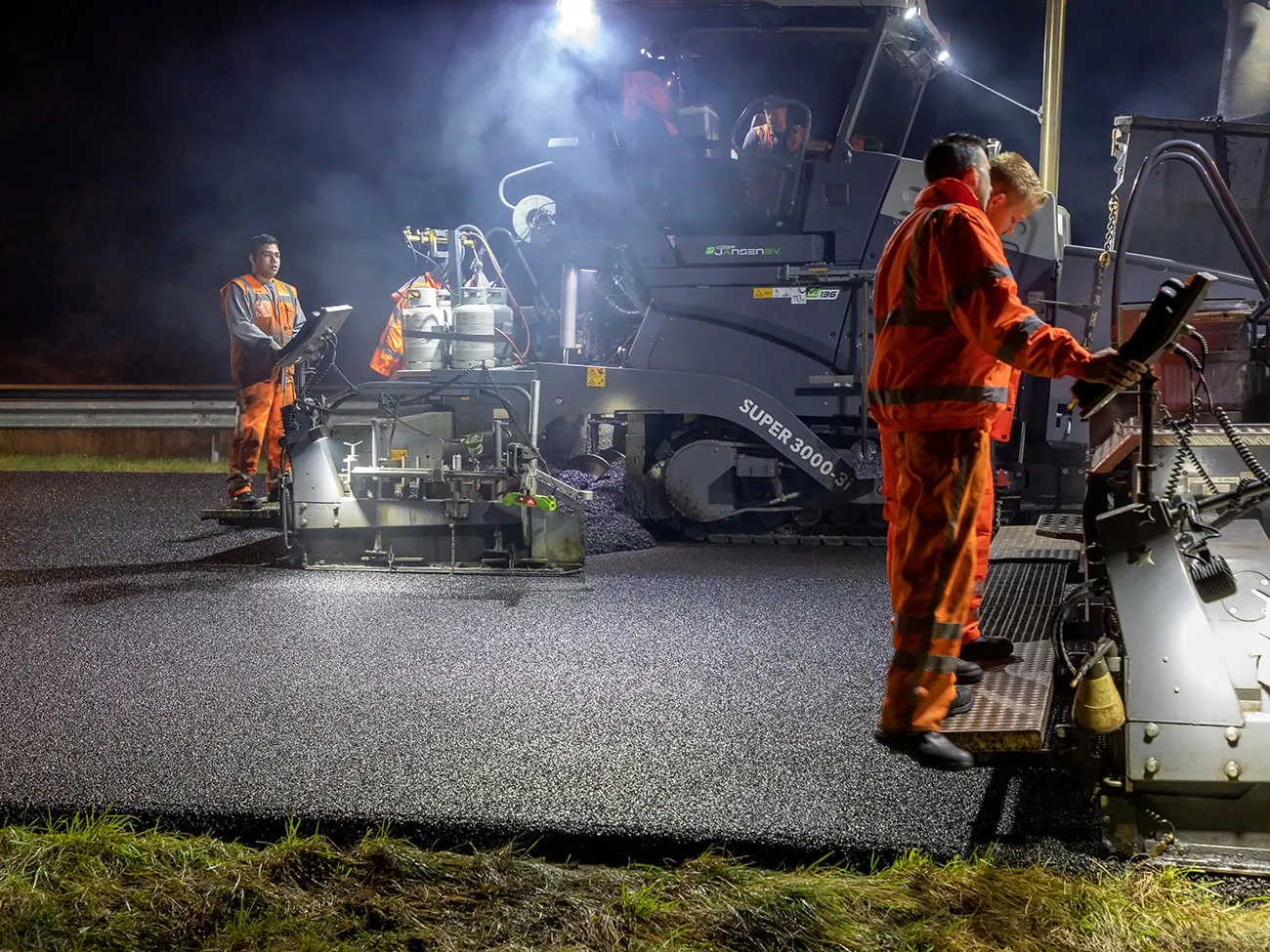
Gebroeders Jansen has three paving crews and employs an average of between 80 and 110 people in asphalt laying and transport. “Infrastructure contractors come to us for our specialist skills, knowledge and reliability,” says Joost Jansen, director of Gebroeders Jansen. “For BAM Infra Nederland, we provide a flexible pool of expertise and skills across a broad range of areas. We often contribute during the tender phase to improve the quality and robustness of the plans, resulting in fewer costs from errors, fewer snags at handover and a fair price. That way, we continually strengthen each other and achieve excellent results. Together, we delivered GVO zuid in Limburg, IVOD in South Holland, the renewal of the road from Tolplein to the Westerscheldetunnel, and the new surface course for the 2021-2022 IGO project.”
Knowledge and expertise
Gebroeders Jansen’s broad expertise was also drawn on for this project during the tender phase. “At the outset, we spent many sessions of several hours a day developing the plans,” Jansen explains. “And because of the pandemic, most of these sessions were online. That laid the groundwork for bringing the project to a successful conclusion in a controlled way.” The pressure was considerable, according to Jansen. For various reasons, a conventional surface course was laid instead of opting for the double-layer asphalt system (Inline pave). Gebroeders Jansen developed this asphalt system in 2016 and also built specific machinery for it. Following validation by Rijkswaterstaat, it was approved for use on national roads in the Netherlands. What is the system’s main advantage? “It requires fewer skilled workers to lay and fewer raw materials because we lay both layers in a single pass. This makes the risk of crushing negligible. The road also lasts longer, and the technique means the surface course can be laid over a longer season, including in February.”
A total of around 100,000 tonnes of asphalt was laid on the A50 alone. “We carried out around 75% of the paving work and completed it neatly to schedule,” says Jansen. “Our great strength is delivering on our promises. We do this for large infrastructure contractors such as BAM Infra Nederland, but certainly also for smaller local contractors. They benefit from economies of scale.”
Question about this story? Ask your question
Keep following this
Get an email when a new story is published. No account needed.
- SubjectRoad construction







