









Massive sawing and lifting operation a crucial part of the Oosterweelverbinding
Text Roel van Gils Image Van der Jagt Groep
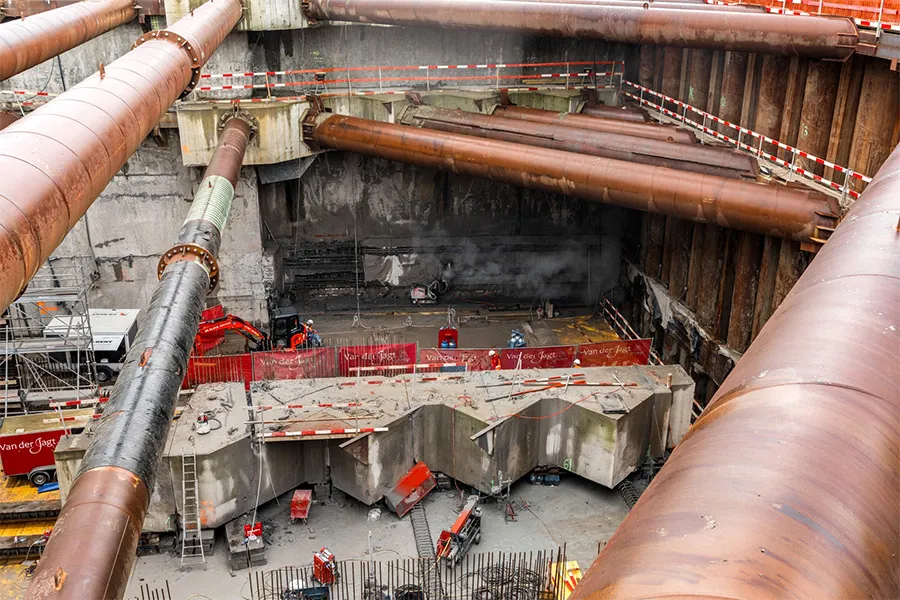
The Oosterweelverbinding is currently Belgium’s largest and most complex infrastructure project. Initially intended to complete the Antwerp Ring on its northern side, it is also creating much-needed breathing space on and alongside the road. One part of this major project is the construction of a road tunnel beneath the Schelde, alongside a dedicated cycle tunnel. Preparatory work is already well under way on both banks of the Schelde. In the deep construction pits, the expertise of Dutch demolition contractor Van der Jagt Groep is proving invaluable.
Tijdelijke Maatschap Combinatie
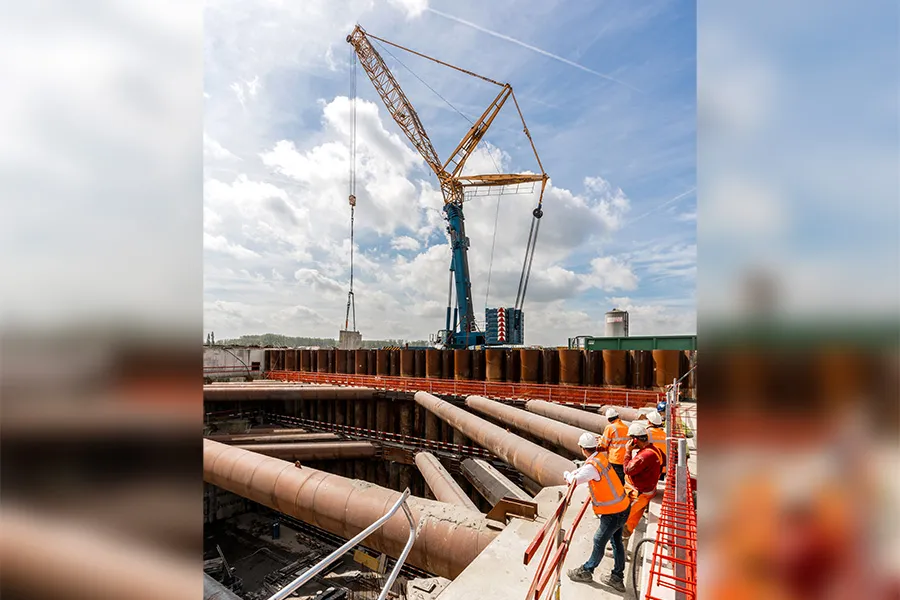
Oosterweeltunnel (TM COTU) is responsible for constructing the Scheldetunnel. The consortium comprises Belgian construction groups BESIX, Stadsbader Contractors, DEME group and Jan De Nul. On the Linkeroever, the tunnel approach is already taking shape. At the end of August last year, the deepest point of the construction pit was reached at a depth of 25 metres, and the consortium has been carrying out concrete works ever since. “On the Rechteroever, the construction pit is formed by anchored diaphragm walls, with bracing frames at three levels. The loads from the bracing frames are transferred to the diaphragm walls on either side by six heavily reinforced concrete beams, each weighing 430 tonnes,” explains Adriaan van der Jagt. “Like the bracing frames, the concrete beams are temporary and will be removed in stages as the approach is built. We are responsible for this complex task.”
Too heavy and too long
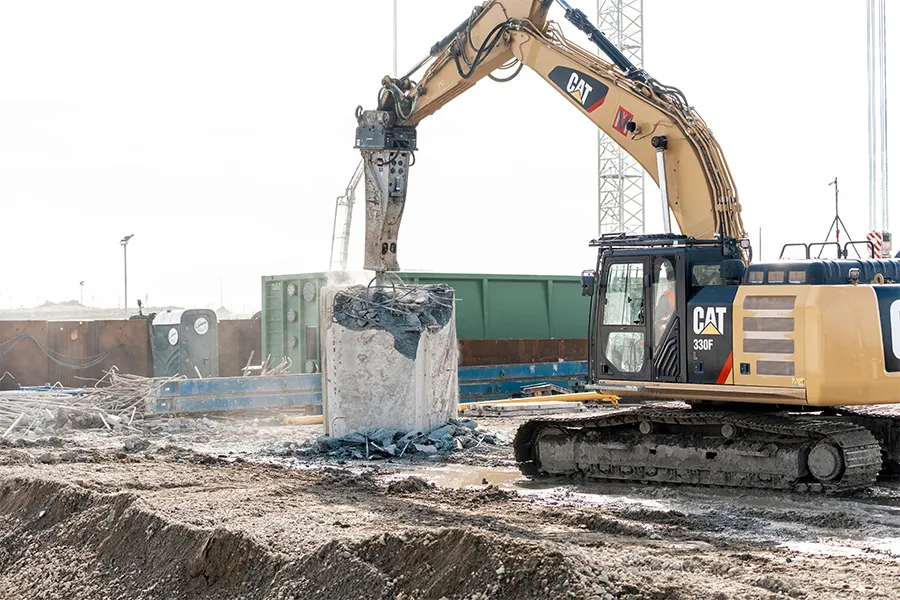
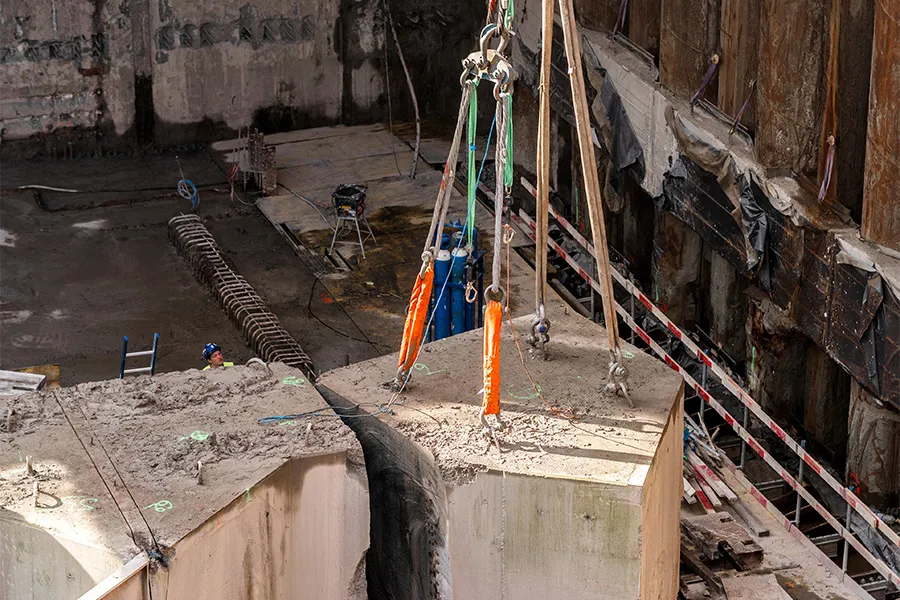
TM COTU approached several companies to remove the six heavily reinforced concrete beams in stages. “We may not have been the cheapest, but the consortium had the most confidence in our method,” says Adriaan. “This complex project calls for a combination of disciplines and techniques, as the concrete beams cannot be lifted out in one piece. They are too heavy and too long. Traditional demolition was not an option either, as it could damage the couplers anchoring the diaphragm wall. We devised a method in which we support the beam with a jacking system, saw it free from the back of the diaphragm wall, then move it along a sliding track to the centre of the construction pit. There, we have plenty of room to saw the beam into blocks weighing between 70 and 120 tonnes, then lift them out between the bracing frames above using a 750-tonne crane.”
Combining techniques
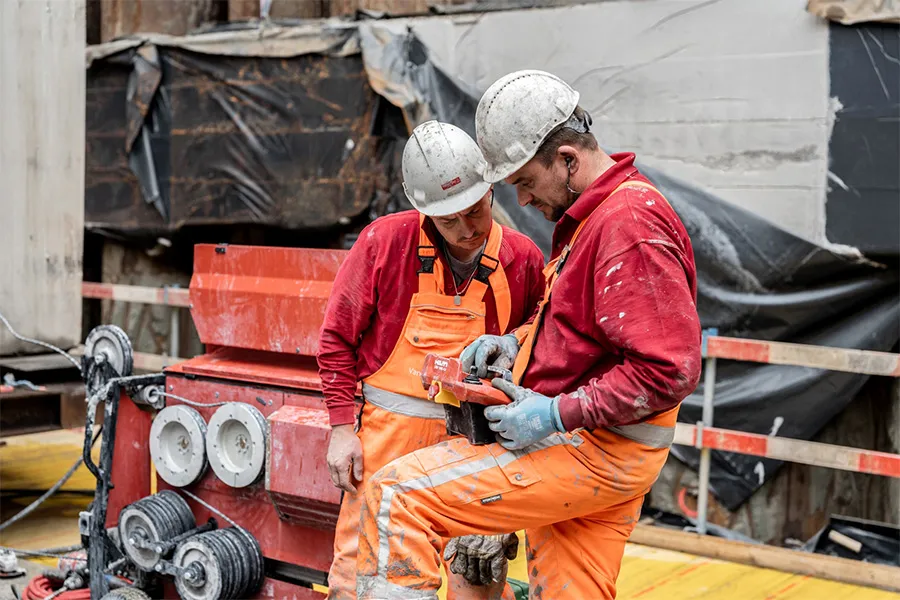
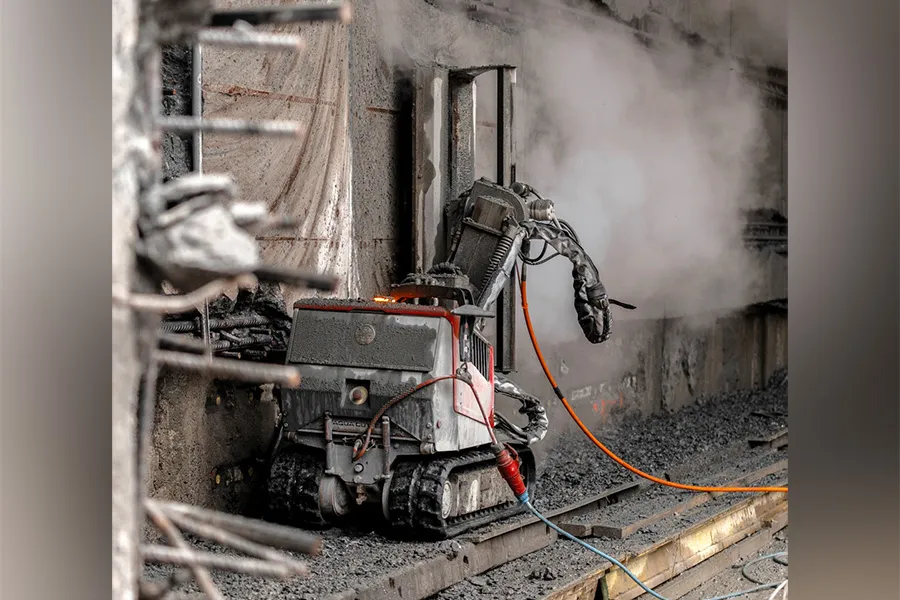
The proposed method has proved highly successful. After the concrete floor was poured in the construction pit, Van der Jagt Groep removed the bottom two beams in early April. The beams are heavily reinforced and measure 18 metres long, 2.5 metres deep and 3 metres high. “We worked day and night with three wire-sawing units to cut more than 250 m² of concrete. The concrete blocks had to be removed from the construction pit, all the waste cleared and the finishing touches completed within three weeks. Quite an achievement. After sawing, we used hydrodemolition to remove the remaining sections of both beams against the wall.” According to Adriaan, this is a particularly special contract for Van der Jagt Groep. “Projects like this are right up our street. It’s specialised, large-scale work that has to be done quickly. It brings everything together, and that’s what we enjoy. We take care of the entire package for TM COTU, from A to Z.”
As scheduled, Van der Jagt Groep will remove the two concrete beams on the next level just before the summer holiday, once the roof of the approach has been poured. The final two beams are due to be removed in February 2025.
A business enquiry for Van der Jagt Groep? Get in touch
Companies in this story
Keep following this
Get an email when a new story is published. No account needed.
- SubjectRoad construction
- CompanyVan der Jagt Groep







