









Massive sawing and lifting operation a crucial part of the Oosterweel Connection
Text Roel van Gils Image Van der Jagt Groep
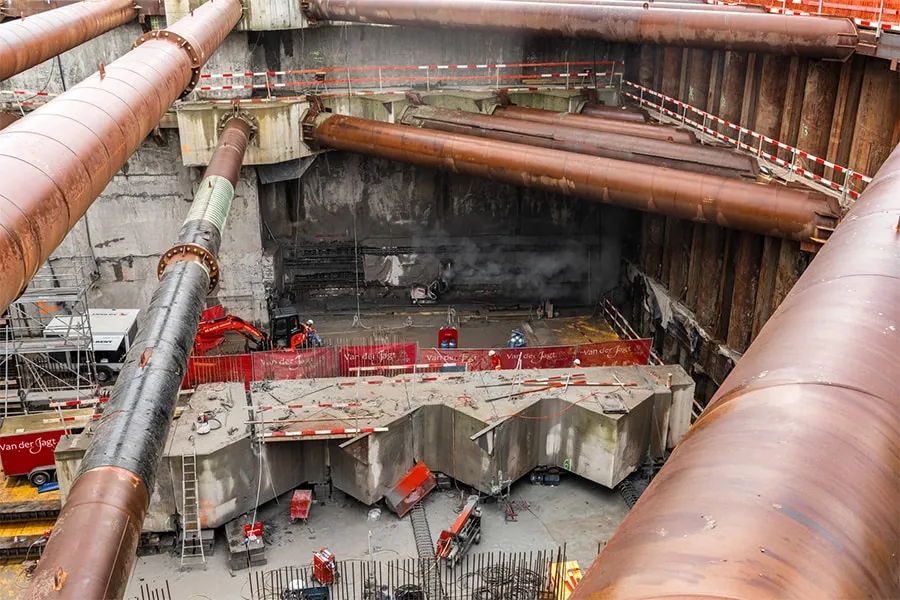
The Oosterweel Connection is currently Belgium’s largest and most ambitious infrastructure project. Initially intended to complete the Antwerp Ring on its northern side, the project will also provide much-needed breathing space on and alongside the road. One part of this extensive project is the construction of a road tunnel beneath the Scheldt, with a parallel cycle tunnel. Preparatory work is already under way on both banks of the Scheldt. And in those deep construction pits, the expertise of Dutch demolition contractor Van der Jagt Groep is proving invaluable.
Temporary Joint Venture
Oosterweeltunnel (TM COTU) is responsible for building the Scheldt Tunnel. The group consists of Belgian construction companies BESIX, Stadsbader Contractors, DEME group and Jan De Nul. On the Left Bank, the tunnel approach is already taking shape. At the end of August last year, the excavation reached its deepest point, 25 metres down, and since then the consortium has been carrying out the concrete works. “On the Right Bank, the excavation is formed by anchored diaphragm walls, with bracing frames at three levels. Six heavily reinforced concrete beams, each weighing 430 tonnes, distribute the loads from the bracing frames on both sides across the diaphragm walls,” explains Adriaan van der Jagt. “Like the bracing frames, the concrete beams are temporary structures and will be removed in stages as the approach is built. We are responsible for carrying out this complex operation.”
Too heavy and too long
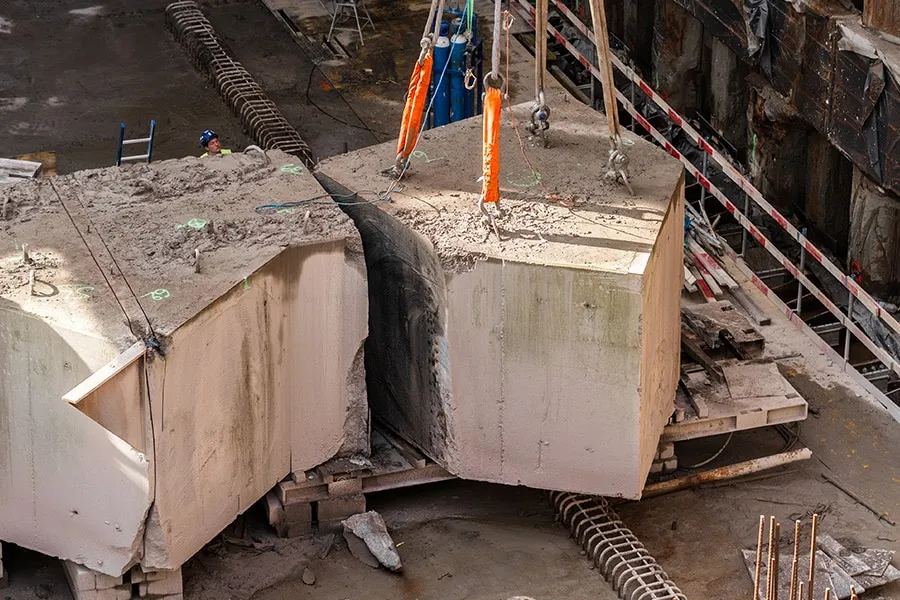
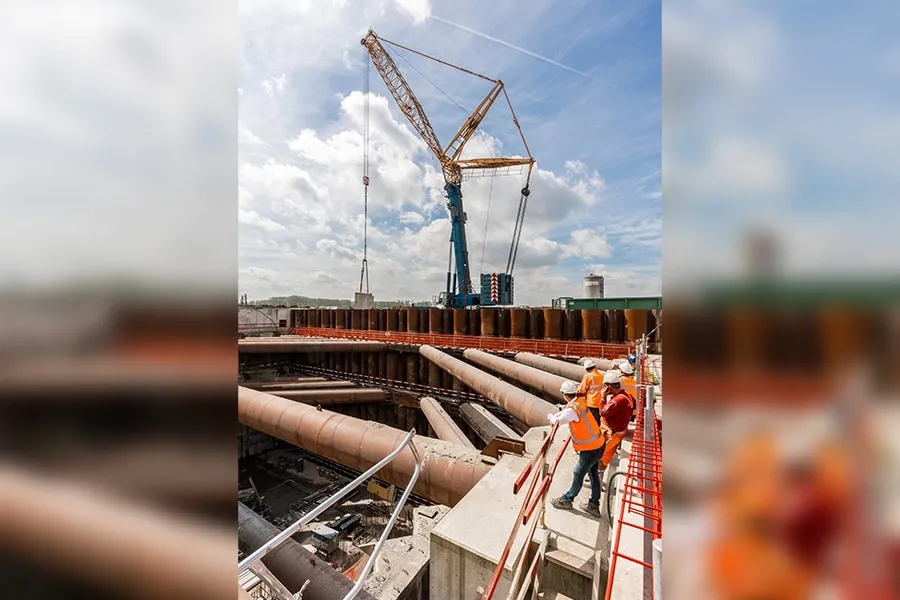
TM COTU approached several contractors to remove the six heavily reinforced concrete beams in stages. “We may not have been the cheapest, but the consortium had the most confidence in our method,” says Adriaan. “This complex project requires a combination of disciplines and techniques, as the concrete beams cannot be lifted out in one piece. They are too heavy and too long. Conventional demolition was also not an option, as that could damage the couplers anchoring the diaphragm wall. We devised a method in which we support the beam with a jacking system, saw it free from the back of the diaphragm wall, then move it along a sliding track to the middle of the excavation. There, we have plenty of room to saw the beam into sections weighing 70 to 120 tonnes and lift them out between the upper bracing frames using a 750-tonne crane.”
Combining techniques
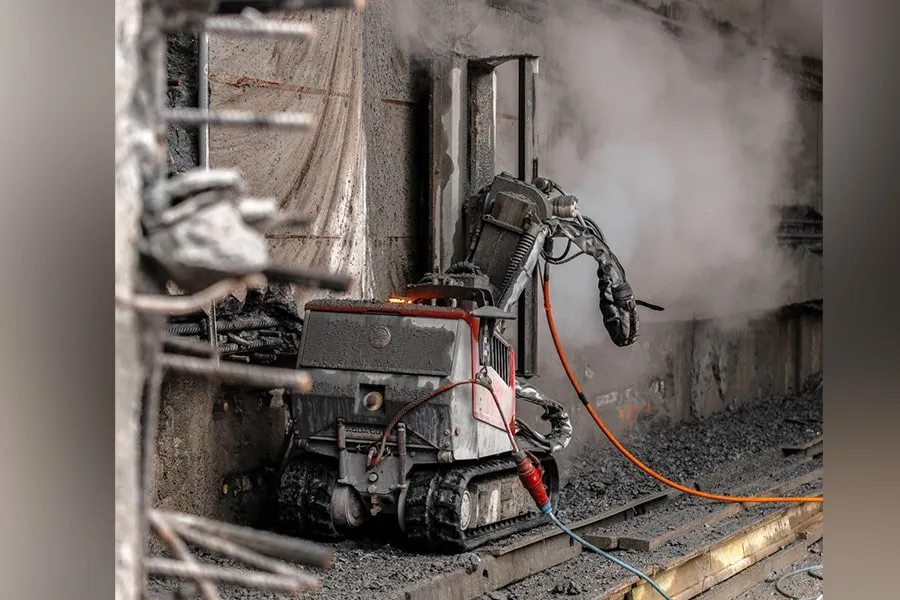
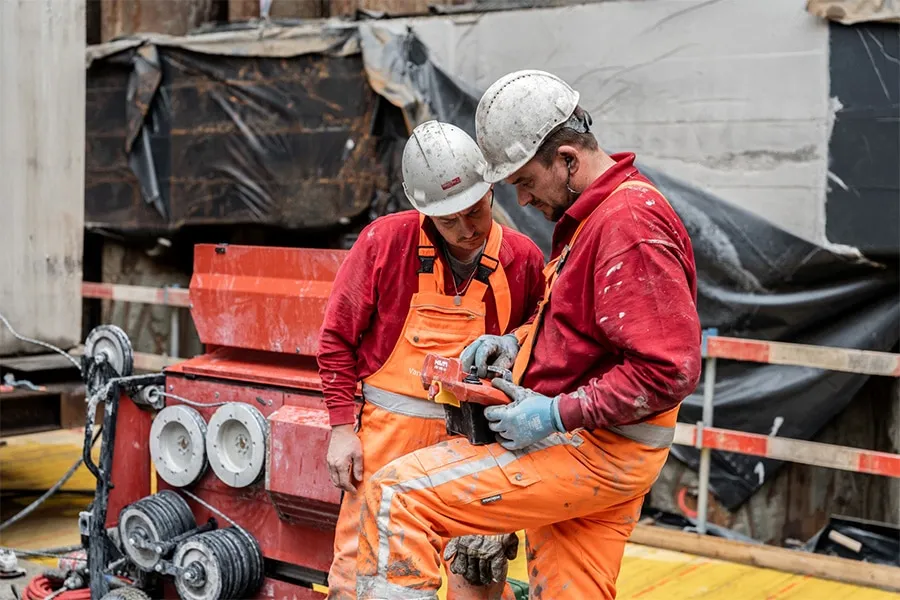
The proposed method is proving highly successful. After the concrete base slab was poured in the excavation, Van der Jagt Groep removed the bottom two beams in early April. The beams are heavily reinforced, 18 metres long, 2.5 metres deep and 3 metres high. “We worked around the clock with three wire-sawing rigs to cut through more than 250 m2 of concrete. The concrete blocks had to be removed from the excavation within three weeks, all waste cleared and the finishing touches completed. Quite an achievement. After sawing, we used hydrodemolition (high-pressure water removal) to remove the last remnants of both beams against the wall.” Adriaan says the job is an especially interesting one for Van der Jagt Groep. “These are exactly the kinds of projects we are made for. It is specialised, large-scale work that has to be done quickly. It brings everything together, and that is what we enjoy. We are taking the entire package off TM COTU’s hands, from A to Z.”
Van der Jagt Groep is scheduled to remove the two concrete beams at the next level just before the summer holidays, once the roof of the approach has been poured. The final two beams are due to be removed in February 2025.
A business enquiry for Van der Jagt Groep? Get in touch
Companies in this story

Keep following this
Get an email when a new story is published. No account needed.
- SubjectRoad construction
- CompanyVan der Jagt Groep
- CompanyBESIX Nederland BV







