









“Every NABO has its own story”
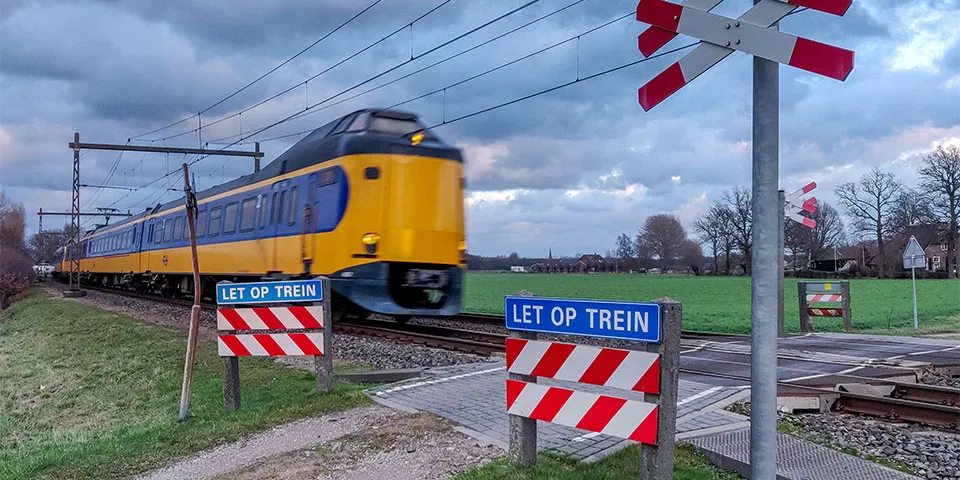
Antea Group is working on the NABO programme.
The Netherlands is among the world leaders when it comes to level crossing safety. Yet accidents and near misses still occur regularly at level crossings without active protection (NABOs). ProRail is therefore stepping up efforts to close or convert these unprotected railway crossings. Engineering and consultancy firm Antea Group now has twenty NABO sites in preparation.
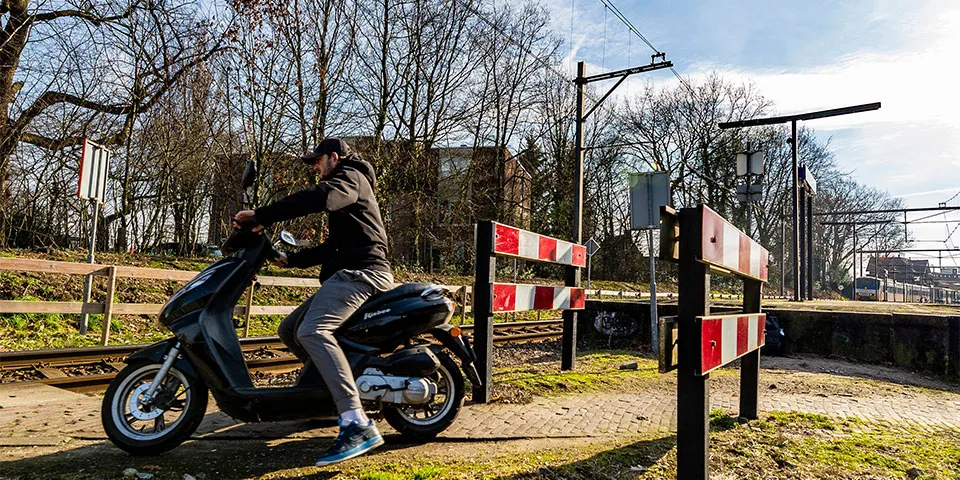
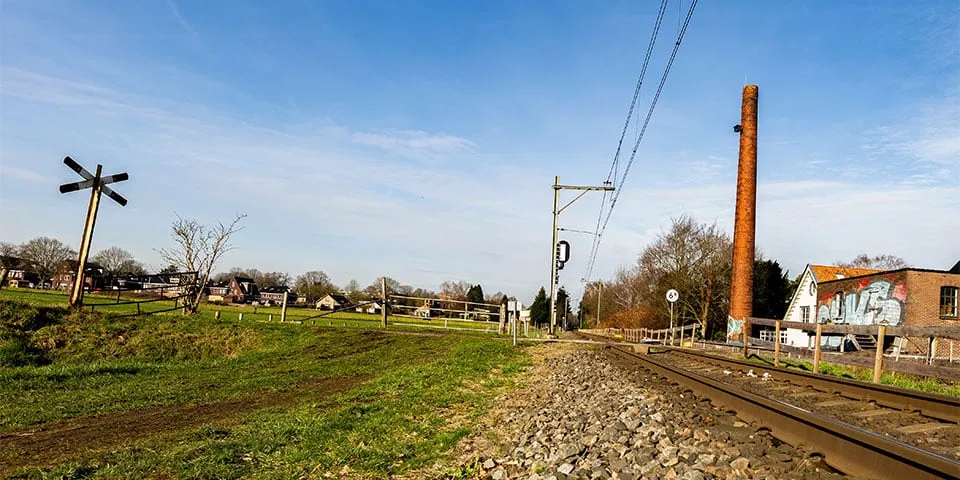
You will find level crossings without active protection, or NABOs, mainly in rural areas, where local and private roads cross the railway. They are often marked with a St Andrew’s cross, but have no barriers, bells or warning lights. These are crossings where road users need to be extremely alert, says Antea Group project manager Björn Heijmer. “People misjudge how fast a train is travelling, and visibility is often poor.” This regularly leads to life-threatening situations. On average, two people are killed each year at NABOs.
The NABO programme
The Ministry of Infrastructure and Water Management (IenW) therefore instructed ProRail to remove 180 publicly accessible NABOs as soon as possible. In 2019, ProRail closed 25 NABOs. It launched the NABO programme to address 120 other crossings. The aim is to close a large number of NABOs within five years, with alternatives to be provided for 50 crossings. ProRail developed four possible solutions: a footbridge over the railway, an underpass, a new access road or a U-shaped structure that uses an existing bridge or viaduct.
ProRail selected Antea Group to design solutions for fifty NABO sites, prepare the tender documents and oversee construction. “We are now working on around twenty NABOs, most of them involving underpasses, footbridges and access roads,” says Heijmer. This means that, during the exploration phase, ProRail has consulted stakeholders to choose the best alternative. “That’s when we come in. We carry out site investigation work, discuss the design details with the parties involved and prepare a preliminary design. We then draw up the tender documents.”
Finding the right fit
Every NABO project involves a careful balancing act. Heijmer explains: “A solution affects local and private interests. Pedestrians, cyclists, farmers and recreational users: you want to find a suitable solution for everyone.” This can lead to some interesting discussions. “In Almen, for example, we’re working on a NABO crossed by a bridleway. The riding school owner wants to keep the path. So we’re designing an underpass that will allow a rider to safely lead their horse through. That means taking a horse’s behaviour into account in the design. An underpass that a horse won’t go through is obviously not an option.”
A range of other factors in the surrounding area also affect the solution. Heijmer says: “In Oisterwijk, we’re closing a NABO crossed by a footpath. We’ve found a great solution: further along, we’ll build a U-shaped structure beneath a bridge. But to connect the path to it, we’ll need to route part of it through a Natura 2000 area. We have to sit down with the water authority and Brabants landschap to work out how to make this happen while complying with all the requirements.”
Parametric design
That is the main challenge. “Every NABO has its own story and calls for a unique design. At the same time, you want a standard approach that allows you to deliver every project efficiently.” To keep things moving, Antea Group uses parametric design, among other methods. Heijmer explains: “This allows us to quickly develop different options for each design. For example, we’re working on an underpass with a staircase: how does a particular stair gradient affect the space required or the volume of concrete? Parametric design lets you ‘play around’ with design parameters. Every variable you change automatically generates a new option. You move through the design process faster and arrive at better solutions.”
A year and a half after the programme began, one NABO alternative has been completed: De Kers near Haaren, a new access road. Heijmer expects several more projects to reach the construction stage in the coming months. “You can see that a lot of time and effort goes into the preparation. After all, you only get one chance to get it right. With a third of all NABOs now in preparation, we’ve taken a major step towards improving safety along the railway.”
Question about this story? Ask your question
Keep following this
Get an email when a new story is published. No account needed.
- SubjectRoad construction







