









Drilling beneath the railway
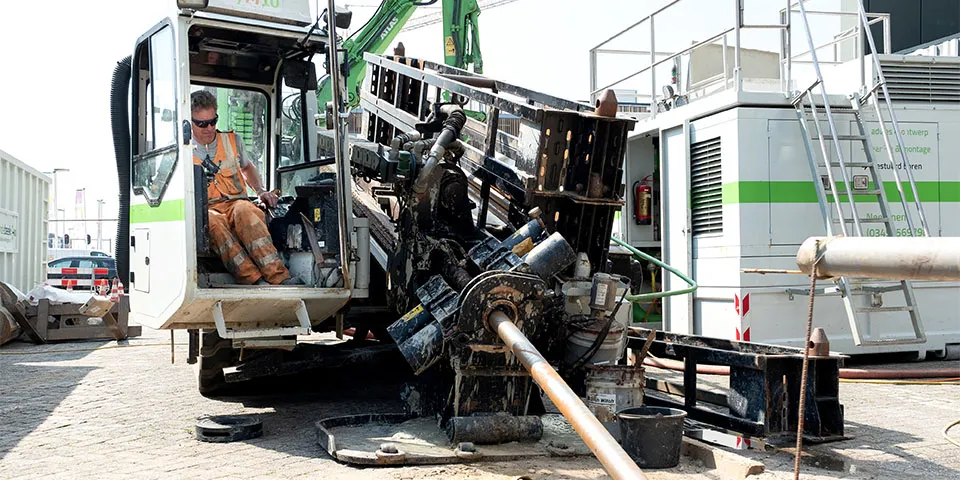
Rail and motorway traffic cannot be stopped to install cables and pipelines. Yet they regularly need to be crossed. Where there is no room above ground, there is often a clear route underground. Crossing beneath a railway line does, however, require the necessary expertise to prevent settlement during or after drilling. Van de Beek Gestuurd Boren BV has been a ProRail-certified contractor for more than fifteen years and, in this capacity, is engaged by many market players to design and carry out guided and auger borings beneath railway lines.
Van de Beek Gestuurd Boren BV has been active in underground infrastructure since 1977 and specialises in installing cables and pipelines. “We have the people and equipment to install cable and pipeline routes from A to Z,” says Arie jr. van de Beek. “Whether it involves open excavation or trenchless techniques, we can carry out the entire job in-house, with our own people. Open ground often presents no obstacles, but additional requirements apply in the vicinity of a railway, for example, as set by ProRail. A guided bore must then be carried out by a ProRail-recognised contractor, such as us.”
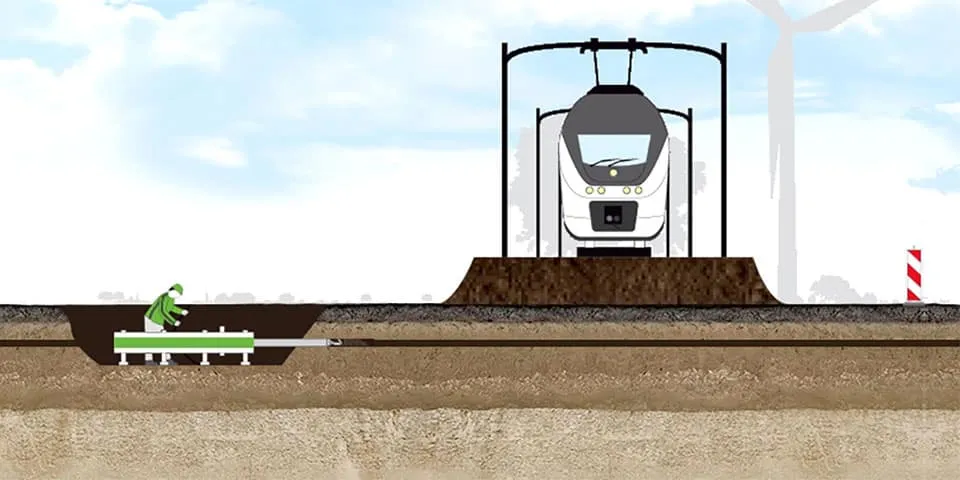
Where space is limited, we often opt for pilot-guided auger boring.
Guided drilling versus auger boring
There are several ways to drill beneath a railway. “The technique we use depends on the situation and the space available,” Arie jr. explains. “In all cases, it is important, for example, that a guided bore stays outside the railway’s pressure lines, as stipulated by ProRail. We have the expertise and personnel to produce a thorough bore design in advance, based on the specified requirements. When carrying out a guided bore, it is important to cross the railway’s pressure lines at a safe depth to prevent settlement. This technique allows us to install cables or pipelines for up to 500 metres without trenching. Where space is limited, we often opt for pilot-guided auger boring. A starting and finishing point are set up close to the railway. From the starting pit, a pilot rod is first pushed into the ground with great precision. The auger (screw) and the pipe to be jacked are then connected to the pilot rod. The auger and pipe follow the pilot rod, keeping deviations from the bore alignment to a minimum. The auger removes the soil through the pipe.”
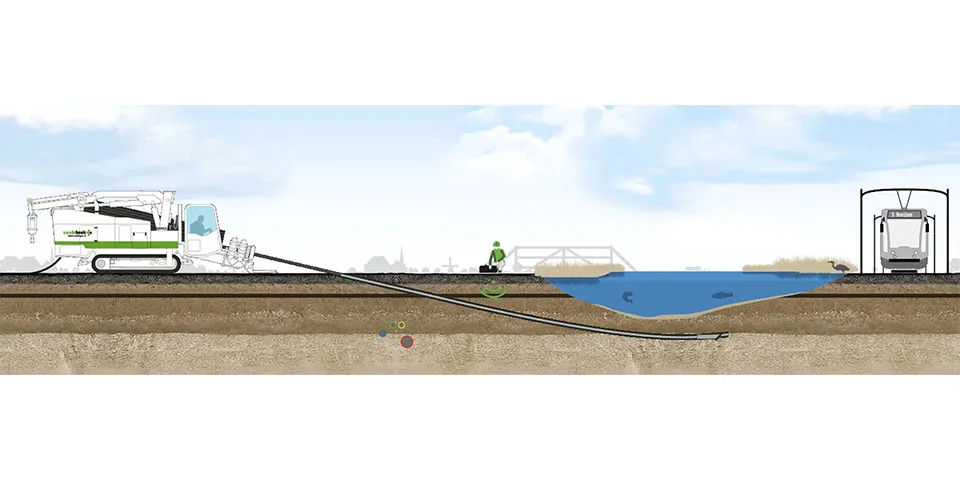
Using guided drilling, Van de Beek Gestuurd Boren BV can install cables or pipelines for up to 500 metres without trenching.
Experience
Using an advanced gyro-measurement system, Van de Beek Gestuurd Boren BV can also record guided bores or existing pipelines using X, Y and Z coordinates. Arie jr. says: “Recording pipeline locations is extremely important, especially beneath a railway. After the work, we send a gyro tool through the bore to determine its exact position. We include this data in the as-built drawings submitted to ProRail. This technique provides greater accuracy in determining the location than the standard method.” According to Arie jr., the great thing about ProRail’s recognition scheme is that the drillers’ experience, measured in years of service, is also taken into account. “All the drillers who completed the recognition scheme in 2005 are still working in the role. Experience is crucial, particularly when drilling beneath a railway, because the potential consequences are enormous. ProRail places great value on this. Continuity and experience are also important factors in the Safety Culture Ladder, for which we are certified at step 3.”
Question about this story? Ask your question
Keep following this
Get an email when a new story is published. No account needed.
- SubjectRoad construction







