









Controlling and managing invasive non-native species
Text Roel van Gils Image Weed Free Service
Japanese knotweed has made itself at home along the A2
Invasive non-native species are an increasingly serious problem in the Netherlands. They displace native species, damage infrastructure and nature, and incur high costs for society. Japanese knotweed has also made itself at home along the A2, but not for much longer. Commissioned by Boskalis, Weed Free Service is managing this invasive species as an integrated part of the wider construction process for widening the motorway between the Het Vonderen and Kerensheide interchanges.
As a pioneer in the fight against invasive non-native species, Weed Free Service knows how to understand them and control them effectively. The company was founded in 2013. Founder Harry Kloosterman, who until then had run his own gardening business, had always been interested in keeping invasive plant species under control. “With the ban on chemical control due to come into force in 2016, I began pioneering the use of sustainable and innovative control techniques,” he says. From an early stage, he focused on developing and applying sustainable, non-chemical alternatives. Since August last year, several non-native species have been included on the Union list, meaning that trade, possession and dispersal are strictly prohibited, and that these fast-spreading plants must be managed.
A combination of techniques
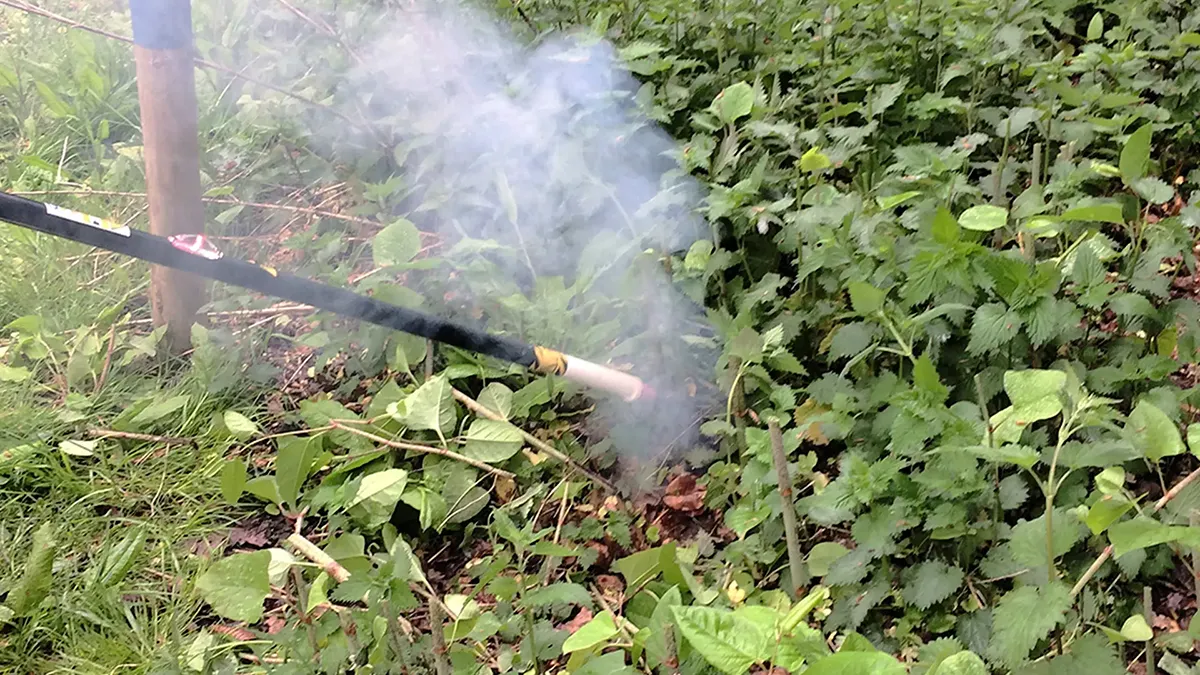
Weed Free Service works with species including giant hogweed, Japanese knotweed, floating pennywort and ragwort. “The core of our approach is to combine different techniques, tailored to the location, soil profile and risk profile,” Kloosterman explains. “And to apply them in the right order, intensity and combination.” These include:
- Thermal treatments, such as hot water;
- Controlled increases in soil temperature;
- Cryogenic techniques using ice pellets;
- Electrical root-stress methods;
- Physical isolation of root and rhizome structures.
12,000 m2
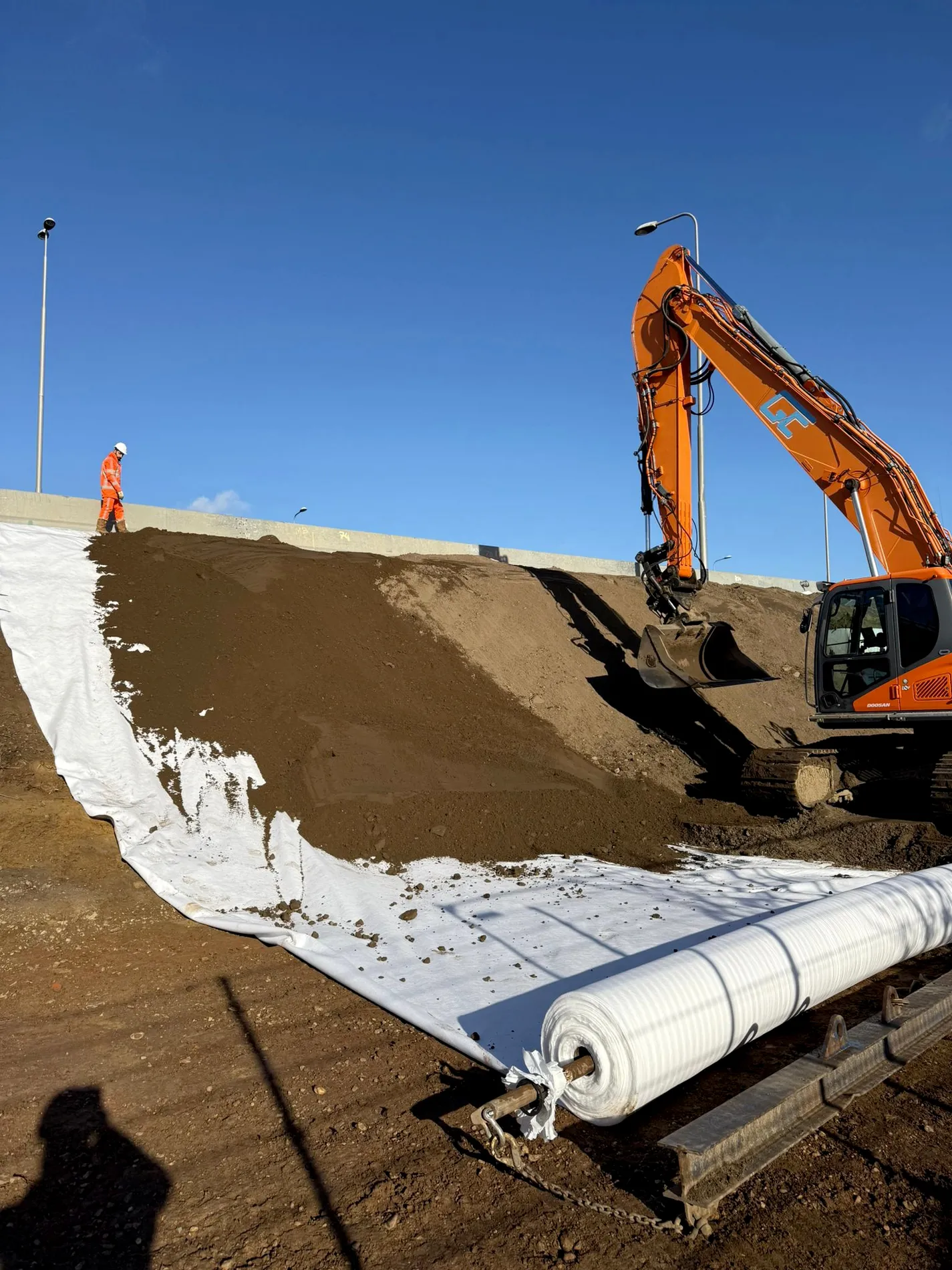
For Boskalis, Weed Free Service is treating several ‘spots’ along the 18-kilometre A2 route where Japanese knotweed has become established. In total, the affected area covers around 12,000 m2. The work is being carried out in stages. First, the above-ground vegetation is cut and taken away in sealed containers to prevent it spreading. The contaminated soil is then excavated to a depth of around 1 metre and stored in an underground depot. The underlying soil is treated thermally and, in some areas, cryogenically. The area is then covered with a non-woven geotextile and filled in again.
Physical isolation
Within this controlled setting, Weed Free Service uses its Weed-Rhizom Destroy technique: a form of physical isolation that prevents rhizomes from spreading horizontally. “By restricting space and depleting energy reserves, we rule out regrowth in the long term,” Kloosterman assures us. Once treatment is complete, the depot is raised and used as a noise barrier.
In 2025, Weed Free Service successfully treated more than 8,000 m2 along the A2, and the next phase will begin later this year. “We will remain involved at least until the end of the project, and beyond. Aftercare remains crucial and is an essential part of responsible management of non-native species. Only long-term monitoring can keep the risk under control.”
Question about this story? Ask your question
Keep following this
Get an email when a new story is published. No account needed.
- SubjectRoad construction







