









Adapting the dry risers at Leeuwarden station is a real challenge
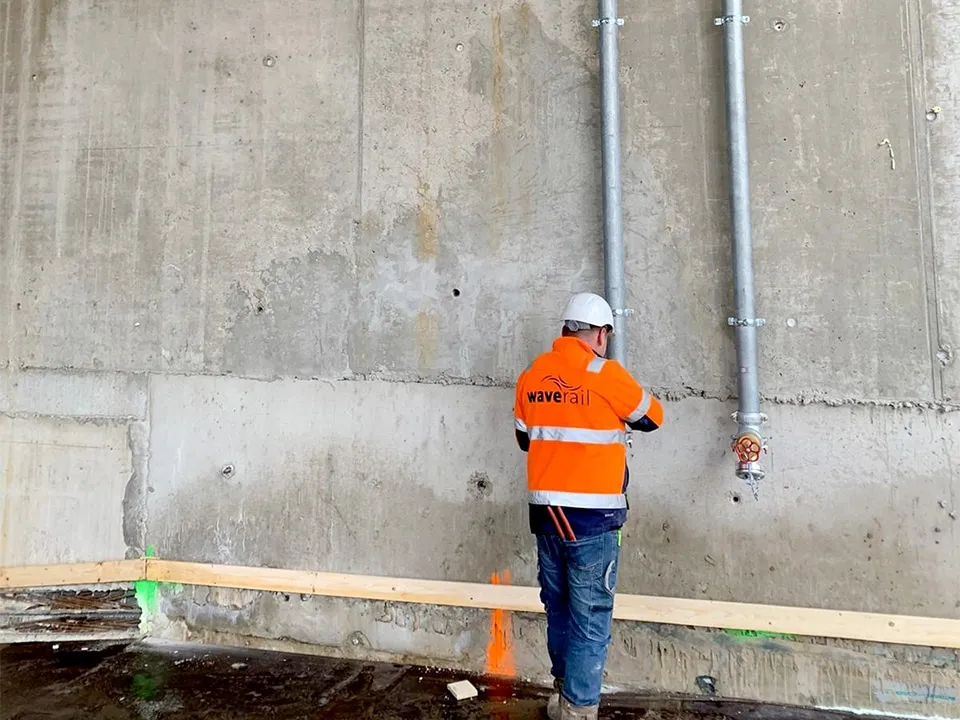
To enable additional express trains to run between Groningen and Leeuwarden, the station in the Frisian provincial capital recently underwent an extensive refurbishment.
Among other changes, the platforms were extended and widened. As a result, the existing dry risers inside the station also need to be modified. This work presents a number of challenges for contractor Waverail because of the building’s listed status.
Waverail is a full-service provider of dry and wet fire suppression systems, water systems and point heating, among other services. The company provides end-to-end engineering, supply and installation in these specialist fields, including at Leeuwarden. First, however, project manager Ernest-Jan Achterhuis explains what a dry riser is. “A dry riser consists of a pipe with fire hydrants, one or more fire brigade inlets, drain points and air vents. It is called a dry riser because it only contains water during firefighting operations.”
Purpose
A dry riser provides the fire service with a pipe system that can transport water quickly, without the need to lay out numerous hoses. “Using a dry riser saves a lot of time and ensures that firefighting water is quickly available wherever it is needed,” Achterhuis continues. “It is important that the system continues to function without interruption in the event of a fire, so that the fire can be extinguished.”
Greater attention
Partly as a result of the fire at Grenfell Tower in London in 2017, permit authorities and builders have paid greater attention to the installation of dry riser systems. At the same time, various factors are making the installation and engineering of dry risers increasingly complex. Space in the ground is becoming scarce as new networks are installed and existing ones expanded. In addition, stricter requirements apply to minimising disruption to users of buildings and infrastructure, while more compact construction is making access more difficult.
Complex
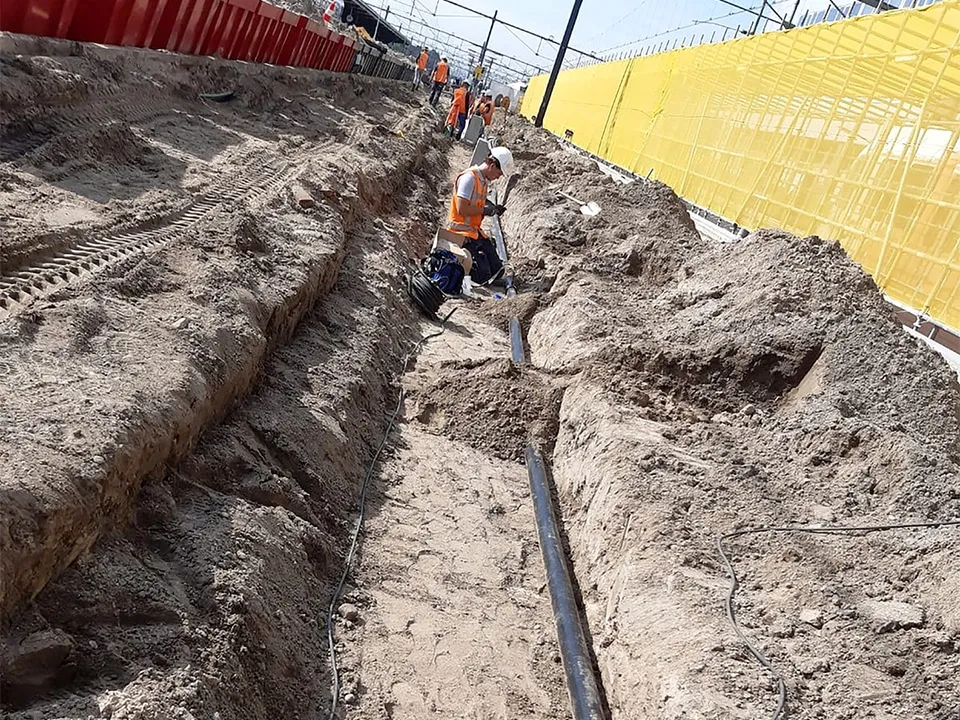
Some of these complexities also apply to the modification of the dry risers at Leeuwarden. “First of all, the pipes have been installed in a listed building. The station also remains open during the work, so we have to take passengers into account. There are also a lot of cables and pipes in the platforms, which considerably limits the available working space. And, of course, we have to comply with the safety rules that apply to railway operations,” says Achterhuis, before outlining the project’s status. “We completed the modifications to the dry risers on platforms 1 and 2 last September. A new PE pipe was also installed in these platforms, with the existing fire hydrants mounted on it. The modifications to the third platform will follow in 2021.”
Question about this story? Ask your question
Keep following this
Get an email when a new story is published. No account needed.
- SubjectRoad construction







