









A sustainable road for the N395
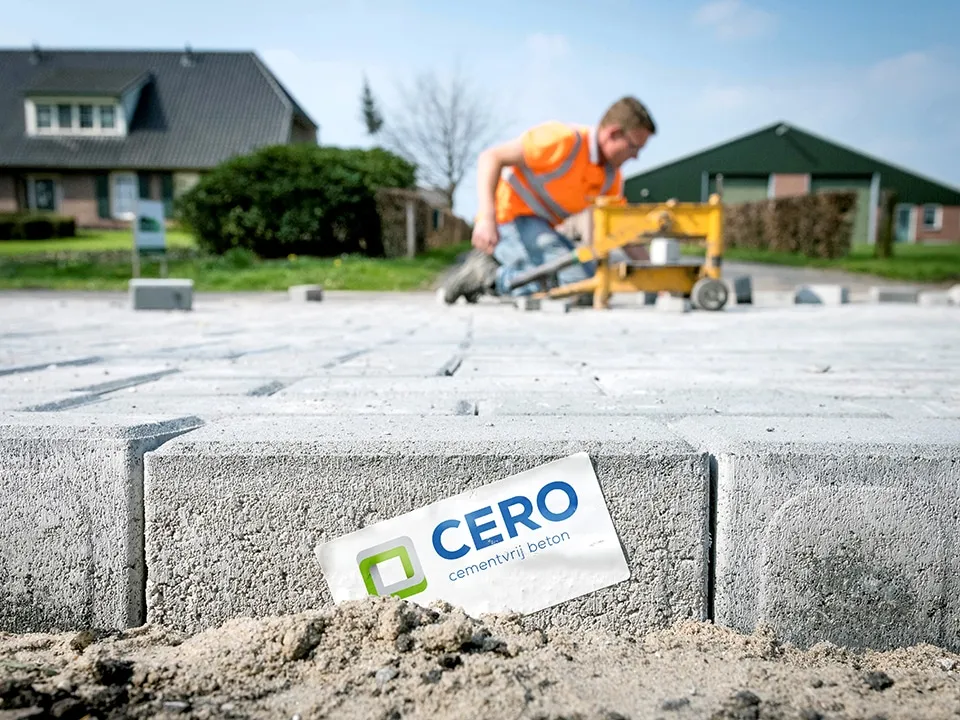
Work to reconstruct the provincial road between Hilvarenbeek and Oirschot (N395) is well under way. The goal? To improve road safety around the N395, make the village greener and reduce noise pollution. The province is also committed to using sustainable materials to build public roads. Struyk Verwo Infra has a suitable solution: CirCOton concrete paving blocks.
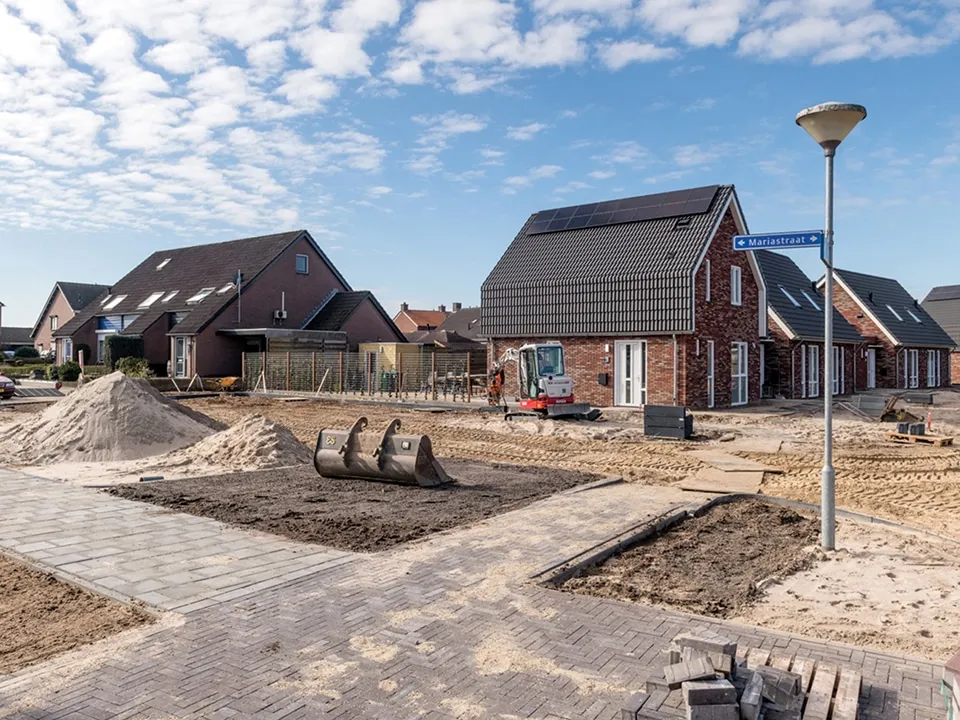
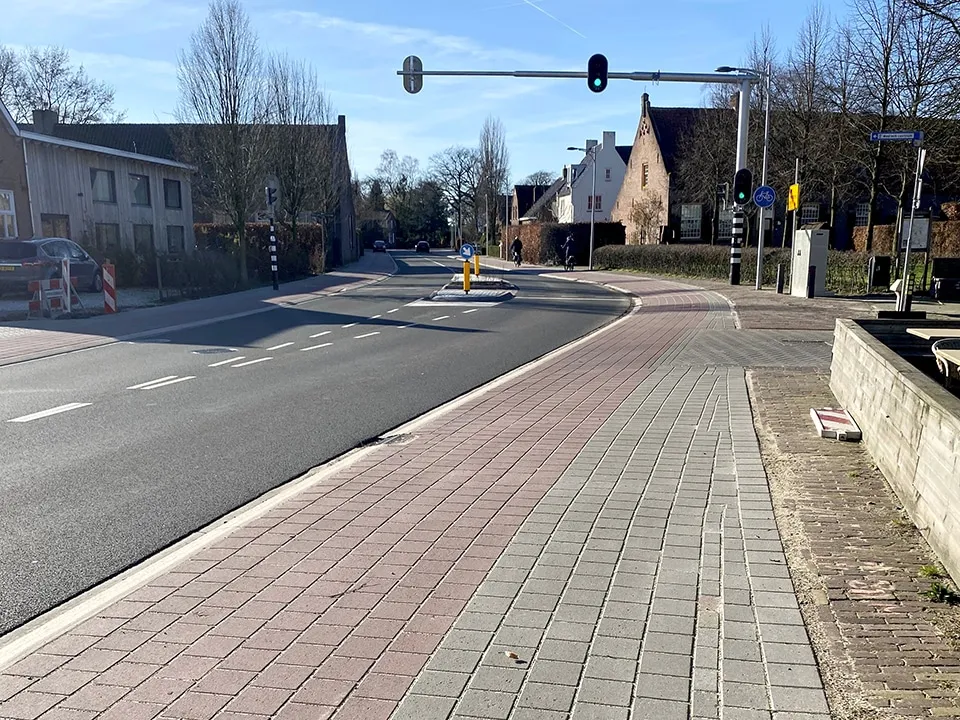
The N395 is a provincial road for which Struyk Verwo Infra supplied paving materials for the cycle paths and footways on behalf of BAM and Provincie Brabant. Rinke Veld, commercial director at Struyk Verwo Infra, explains.
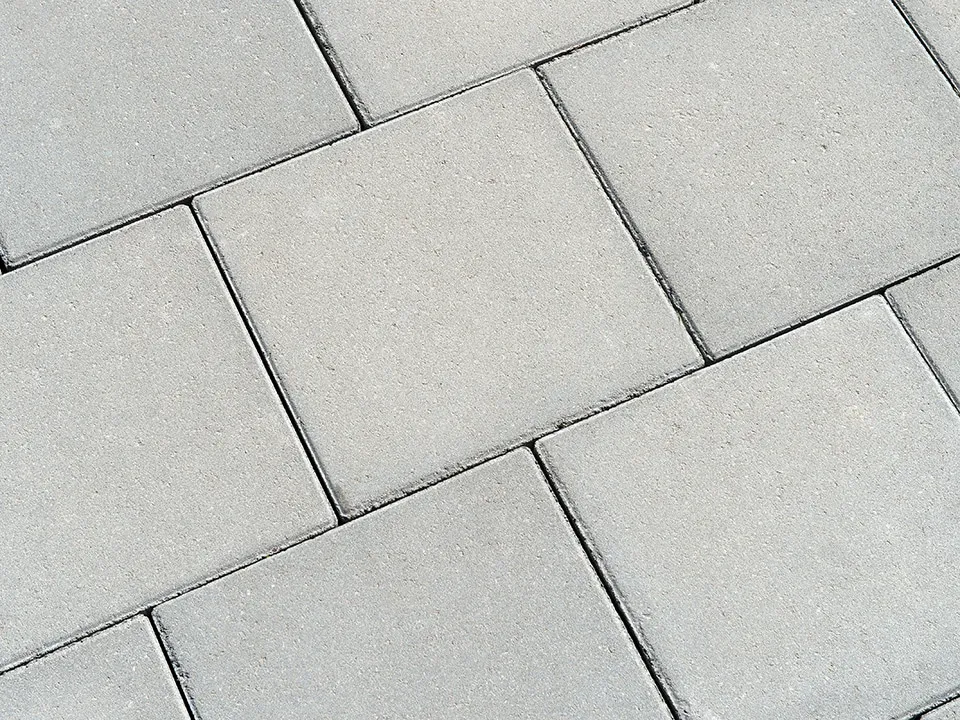
“For the ‘Herinrichting/Reconstructie N395’ project, we supplied various products, including double pavers, kerbs, blocks and slabs, under the CirCOton name. This product range uses secondary raw materials to partially replace primary materials such as sand and gravel. We are certified under BRL K 11002, the environmental profiles standard for concrete paving products. CirCOton products are guaranteed to contain at least 15% secondary raw materials and have a maximum environmental cost indicator (MKI) of
€ 23,- per m3. This meets the guidelines we agreed together in the Betonakkoord and the Bouwcirculair master specification.”
Circularity and lower CO2 consumption
Concrete is the most widely used building material, largely thanks to its versatility and reliability. However, the cement binder in concrete is also a source of pollution. Climate change calls for action to curb this. “To prepare for a changing climate and limit CO2 emissions as much as possible, choosing sustainable concrete products that make an essential contribution to environmental targets is more important than ever,” says Veld. “That is one of the reasons CirCOTon was used for the reconstruction of the N395.”
At the forefront of sustainable material use
“But there are other sustainable alternatives,” Veld continues. “Struyk Verwo Infra is at the forefront of developing and manufacturing concrete products for public spaces. We therefore made sustainability a fixed part of our policy at an early stage. Two things have always been central to this: full transparency and continually listening to the needs of clients and other stakeholders. These may be local authorities and provinces, as well as contractors, architects and engineers.”
An urgent necessity
“Over the past few years, we have seen a huge rise in the sustainability ambitions of local authorities and provinces in relation to climate, energy and the circular economy. Topics such as circularity, secondary raw materials, CO2 reduction, greening, climate adaptation, noise reduction and water management are becoming increasingly important. This makes it essential to offer and develop products that address these priorities. We have devoted considerable attention to research and development for years. As a result, we can offer a strong range of sustainable and climate-adaptive solutions. This diversity is necessary because the choices made are always linked to other considerations, including a local authority’s financial situation. We need to be able to respond to that too.”
CERO cement-free concrete
Struyk Verwo Infra’s latest development is CERO cement-free concrete. Veld says: “We have invested in a technique that replaces all the cement in the concrete base layer with Geopolymer, an alternative, proven binder. Geopolymer concrete is a stable, dimensionally accurate material that looks the same and meets the same standards as cement-bound concrete. The environmental cost indicator (MKI) for this CERO cement-free concrete is, on average, 50% lower than for fully cement-bound products. That means a significantly lower CO2 footprint!”
Sustainability is built into the pavement
“Our policy is to make only concrete products that can be reused at the end of their service life,” Veld continues. “We are leading the way in concrete reuse. We collect concrete rubble from our own factories and from demolition work in public spaces, then have it crushed to the required grades. Once approved, the recycled concrete aggregate and sand can be put to excellent, high-grade reuse in products such as blocks and slabs. Our CERO cement-free concrete products can also be broken down and given a second life.”
Cycle for Concrete: the highest level of circularity
“The highest level of circularity is achieved with our concept . Together with our partners, we collect concrete paving products at the end of their service life and process them into recycled aggregate. We guarantee that 100% of all clean concrete rubble returned is put to high-grade reuse, with at least 75% replacing gravel in new blocks and slabs. In a world where corporate social responsibility is becoming increasingly important, I hope that the full reuse of concrete rubble will become the new standard as soon as possible.”
Sustainability comes first
“Every concrete product we make has specific properties, but is always guaranteed to deliver added sustainability value. This means we can offer a suitable solution for a wide range of sustainability challenges,” says Rinke Veld.
Question about this story? Ask your question
Keep following this
Get an email when a new story is published. No account needed.
- ThemeMaterials and techniques for infrastructure
- SubjectRoad construction







