









A carefully planned conversion from railway bridge to culvert
The railway bridge over the Bleiswijkse Vaart is no more. Built by NS in 1927, the structure was designed to let the transport of agricultural and horticultural produce pass without hindrance. One striking detail: the original railway bridge was a drawbridge. In 2021, when trains always have priority, that is hard to imagine. The bridge was later converted into a fixed bridge, so trains no longer had to wait.
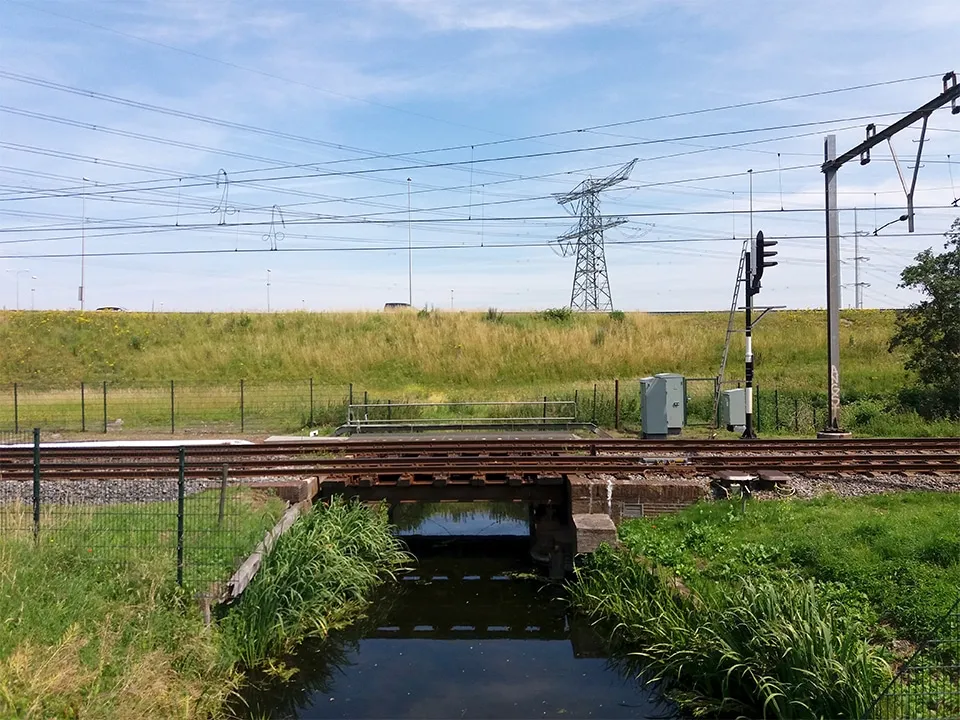
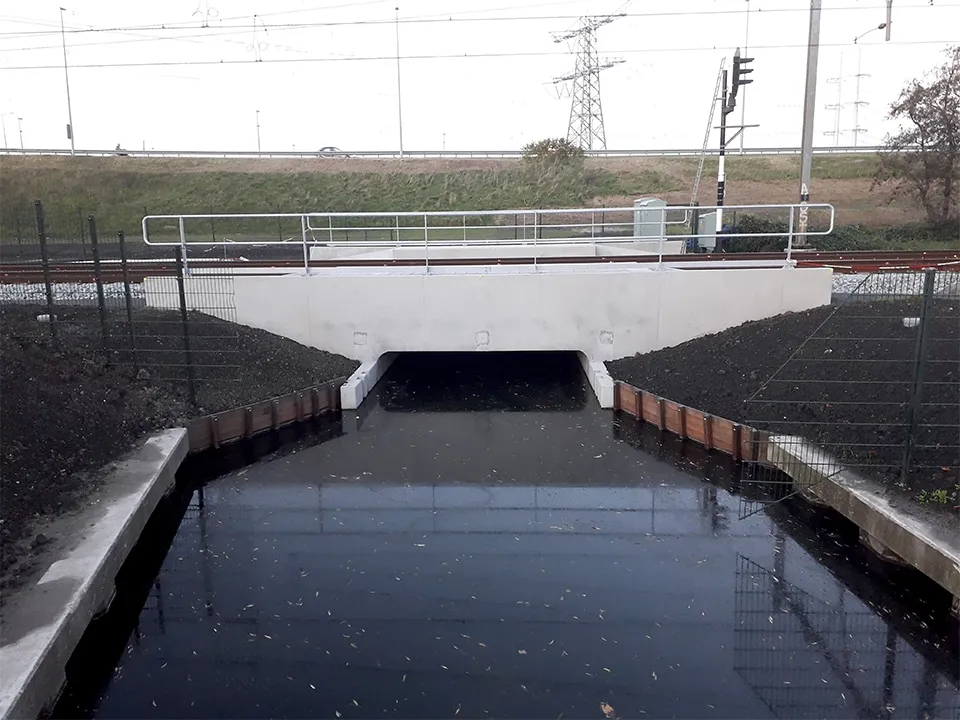
The bridge, with its timber sleepers and masonry abutments, has now been replaced by a culvert structure. Knipscheer Rail-Infra won the tender, thanks in part to a well-considered plan developed jointly by Knipscheer Rail-Infra and Knipscheer Infrastructuur’s civil engineering concrete construction division. The plan’s crowning achievement: replacing the railway bridge with a culvert structure during a single track possession. Arjan Beens, company manager at Knipscheer Rail-Infra B.V., takes us through the project.
Just one track possession
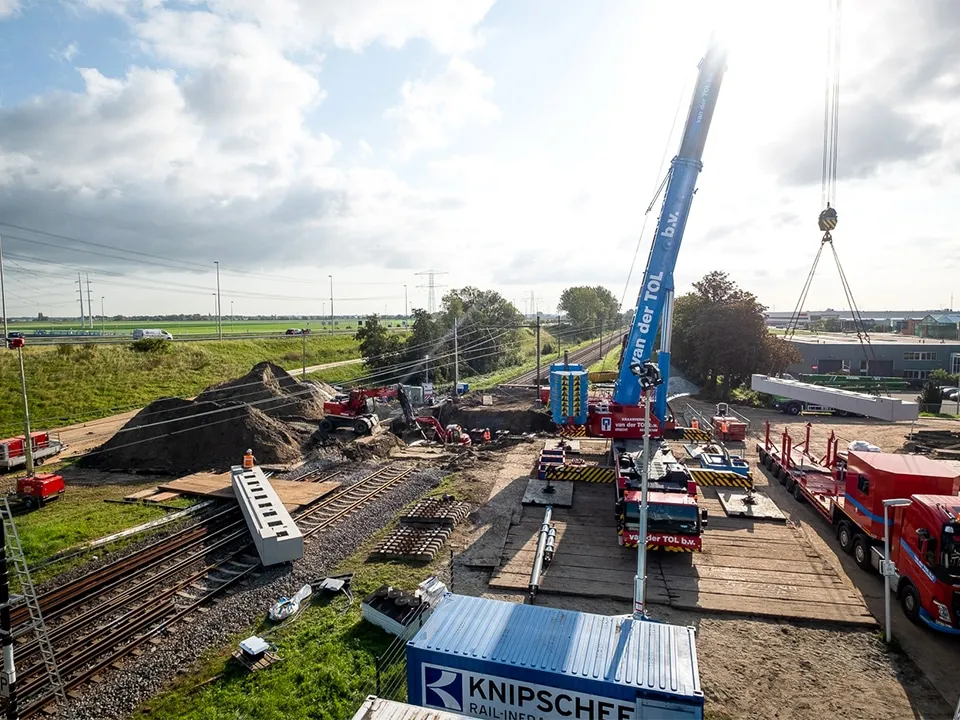
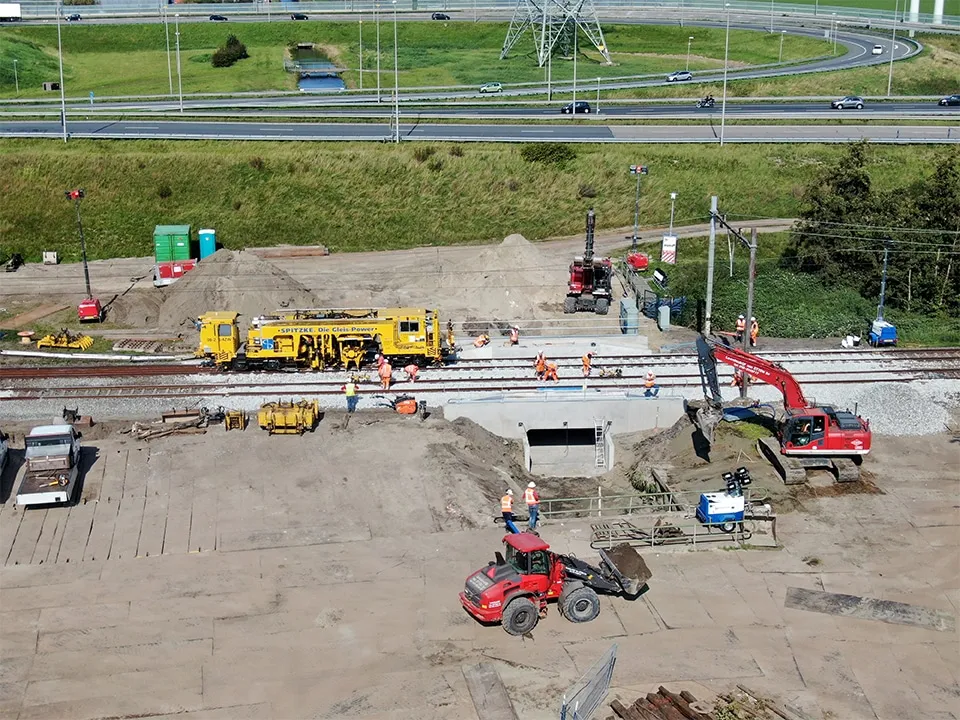
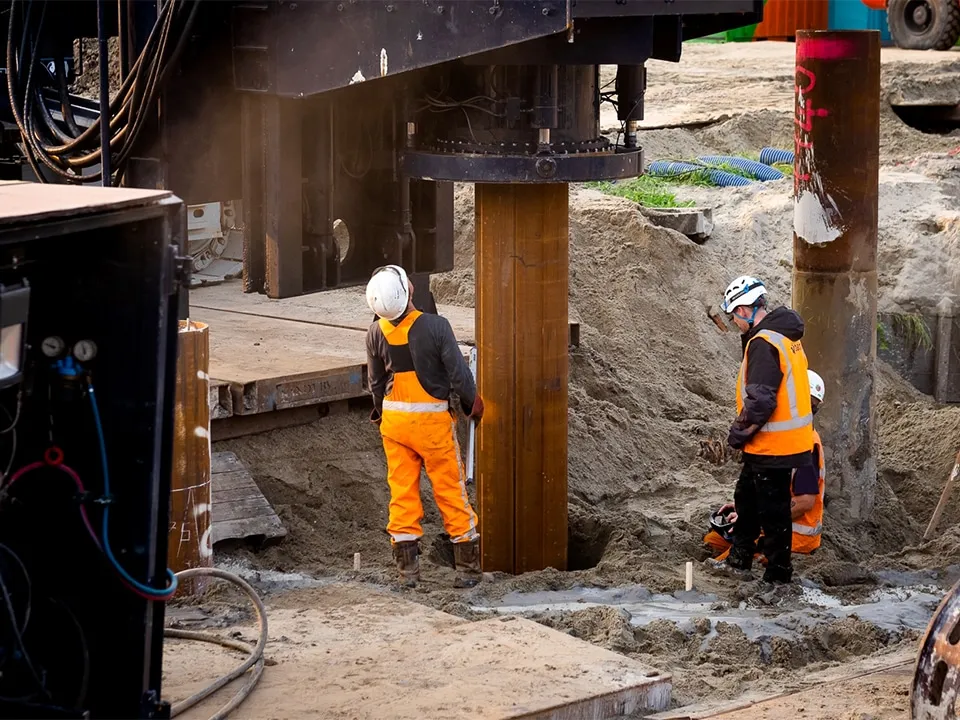
“We carried out all the project’s preparatory work in-house,” Beens begins. “Throughout the project, we worked with specialist partners wherever possible, while keeping everything under our own control. The challenge we set ourselves was to complete all the work during a single track possession rather than two. During the possession, we demolished the old bridge and built the new culvert. For the tender, we looked at smart construction methods, which we further optimised after the contract was awarded. In practice, that meant damming the watercourse, draining it, taking the track out of service and removing the masonry. We then installed vibration-free tubular piles, which were needed because of the transport pipelines and the possibility of unexploded ordnance from the Second World War in the surrounding ground. Next came the concrete beams, on which the culvert was placed. We then secured and backfilled the culvert. The track could be laid on the concrete culvert structure.”
Excellent collaboration with ProRail
A project like this can only be completed quickly and efficiently if all parties work together seamlessly. Beens agrees: “Everything went our way, including the weather. We kept precisely to the schedule, and all our partners were pulling in the same direction. ProRail also deserves special praise: they did everything they could to make this partnership work.” The project was completed on 4 November 2020, to everyone’s satisfaction. Looking back, Beens says: “In terms of scale, this wasn’t a particularly large project, but it was a major undertaking in terms of complexity. A huge amount of expertise was deployed in a very small area. The worksite was barely bigger than a postage stamp, about 150 m2. Then there were the challenges posed by existing cables and pipelines, large transport pipelines, soft ground and possible unexploded ordnance. We managed to get it all done. A great job.”
You can’t be in two places at once. Or can you?
Knipscheer has considerable operational and organisational capacity. This is clear from the fact that Knipscheer Rail-Infra was working simultaneously at Zoetermeer Oost station while carrying out the culvert project. “A stone’s throw from the culvert project, we were also renewing the retaining walls and paving at Zoetermeer Oost station. Half of the station was refurbished. We’re proud of that. It shows that we can work at several locations at once, with full commitment and maximum efficiency. As the saying goes, you can’t be in two places at once. That’s true, but it is possible when your team includes a large number of motivated, skilled colleagues.”
Question about this story? Ask your question
Keep following this
Get an email when a new story is published. No account needed.
- SubjectRoad construction







