









400 tonnes of prestressing steel
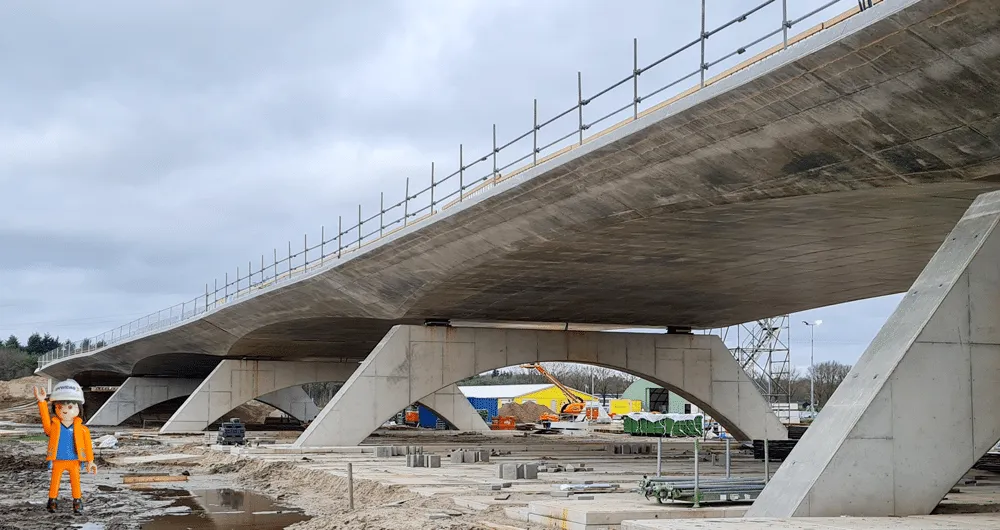
All structures on the new N69 are being built using DYWIDAG prestressing systems. In total, more than 400 tonnes of prestressing steel are being used, mainly in standard system solutions and a small number of coupling systems.
Business as usual for DYWIDAG. Despite using standard systems, the prestressing specialist still managed to stand out from the competition on this project.
“Boskalis involved us in the project during the design phase so we could engineer the prestressing as efficiently as possible,” says Robert Jansen of DYWIDAG. “While some of the structures have an iconic design, in many cases we were able to design standard prestressing systems. The project involves nine structures, for which we supplied around 400 tonnes of prestressing systems over a period of about a year and a half. Most use the DYWIDAG prestressing system with 19 strands, with 22 strands used in a few cases.”
Coupling systems
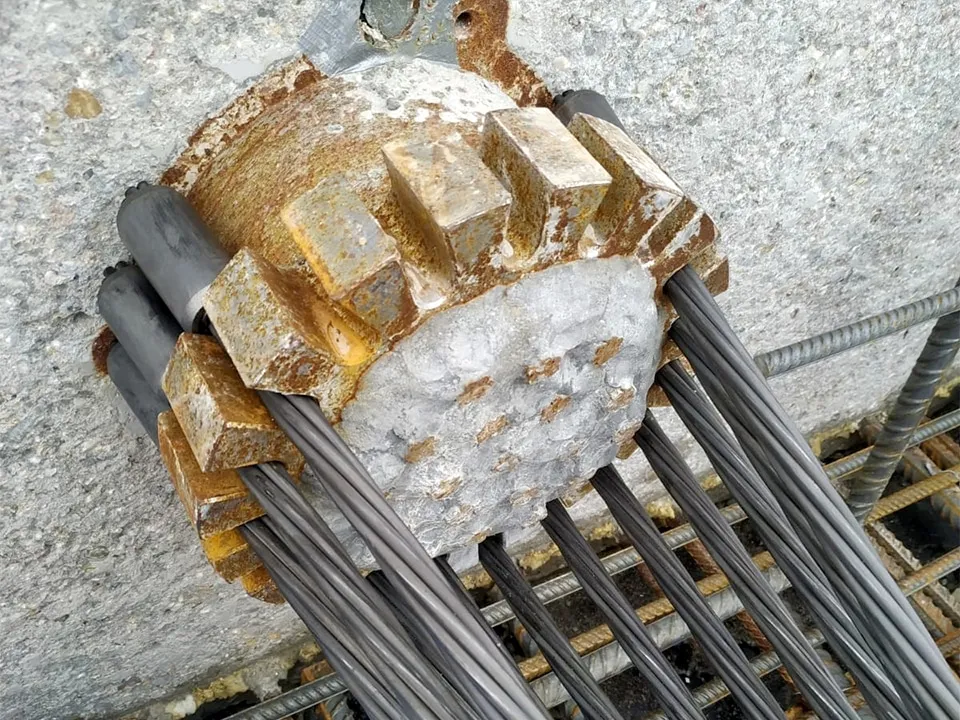
Most of the decks are therefore fitted with fairly standard solutions. “Although these are substantial decks. The Keersop valley bridge, for example, consists of five segments, each 62.5 metres long. With a total length of more than 300 metres, it is a sizeable structure in the middle of the countryside,” Jansen acknowledges. “The decks built in stages naturally required more attention when it came to prestressing. They are cast in segments, while the prestressing has to be continuous. That makes it challenging, but also gives us the opportunity to adapt the prestressing to requirements. After all, each individual span has different prestressing needs. We used our expertise to work to Boskalis’s construction sequence. The coupling system uses press sleeves instead of a wedge. A toothed rack, with a strand jack behind it, minimises the risk of strand slippage.”
DYWIDAG has made a substantial investment in its IT infrastructure to support this. “We have made huge strides in digitalisation, and we are now reaping the benefits. Our installation teams enter all stressing results directly into the cloud in real time from the construction site. This significantly speeds up the approval process, so the construction work is certainly not delayed as a result of our involvement. By the time the last tendon has been stressed, all the data is already with the structural engineer for approval. It is presented in a clear, well-formatted, standardised layout, rather than the familiar ‘scribbled notes’. This was an important reason for Boskalis choosing DYWIDAG for this project,” Jansen concludes.
Have a business enquiry for Boskalis Nederland? Get in touch
Companies in this story
Keep following this
Get an email when a new story is published. No account needed.
- SubjectRoad construction
- CompanyBoskalis Nederland







