Climate adaptation: what do we need and which risks are we willing to accept?
The Netherlands aims to be climate-resilient by 2050. But what does it mean to be climate-resilient? You cannot prevent everything. What level of performance must our network deliver, at what cost, and which risks are we willing to accept? At Rijkswaterstaat, we are working with the ministry to make these trade-offs, so that we take the right measures and limit the damage caused by waterlogging, flooding, severe drought and extreme heat. In this way, we can make our networks climate-resilient.
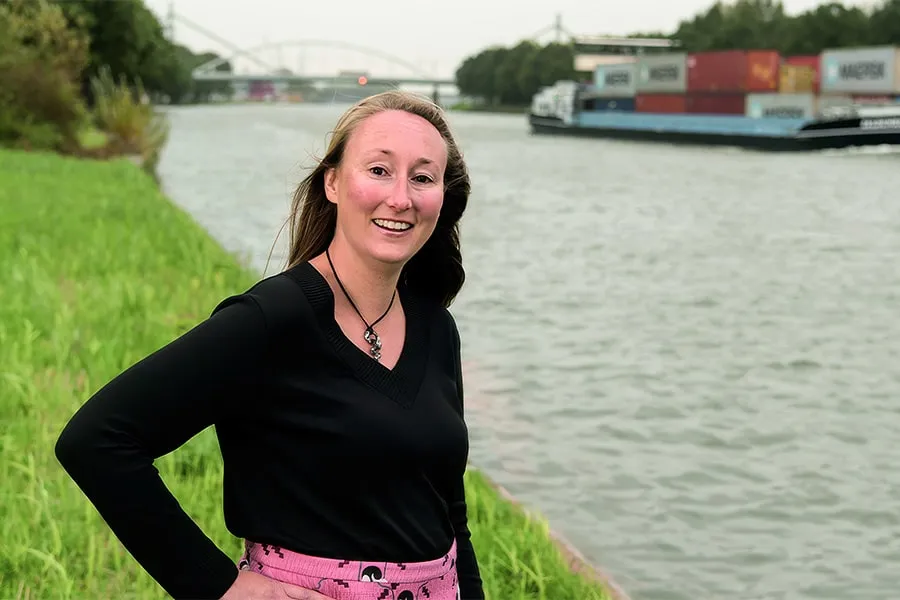
In this column, I am focusing on Rijkswaterstaat’s ‘wet’ networks: what does climate adaptation mean for the main water system and main navigable waterways? The focus is often on damage to assets caused by extreme weather, but climate change also affects maintenance windows, for example. We can only maintain a storm surge barrier when water levels are low, but rising sea levels and storms mean that this level is exceeded more and more often. We need to address this, because maintenance is crucial to the barrier’s operation. And in the summer of 2021, we saw in Limburg that high water is no longer just a winter phenomenon. If you happen to be carrying out routine maintenance on a weir at that time, as is usual in summer, you face a real challenge.
In the southern Netherlands, we are now preparing to renew the 100-year-old weirs in the Meuse. The seven weirs in the Meuse at Borgharen, Linne, Roermond, Belfeld, Sambeek, Grave and Lith form a single system. Between 2028 and 2035, they will reach the end of their technical service life. Climate adaptation plays a major role in choosing the right solution. If we replace them, we need to plan 100 years ahead. This gives us the opportunity to prepare for the future. When renovating, we look 30 years ahead. This may seem to offer fewer opportunities, but it could also be a sensible choice. The new KNMI scenarios still contain uncertainties and variables. And how far can we limit global emissions, and therefore the rise in temperature? We do not know exactly what lies ahead. In 30 years, we will have a better understanding. But we also know that we already often face problems during dry periods when river flows are low. This makes the Meuse increasingly vulnerable. We are now in the middle of weighing up replacement against renovation.
Rijkswaterstaat also carries out periodic stress tests on its network, as do all government authorities. These help us map vulnerable locations. One such location identified on the Brabant canals was the junction between the Zuid-Willemsvaart and the Wilhelminakanaal. In extreme rainfall, the volume of water discharged into the canals by two water authorities may exceed the amount we can drain away. This 40-kilometre stretch is also known as Brabant’s rain barrel. We not only store water here, but also use it during dry periods.
Last winter, we saw how crucial it is to think about climate adaptation and redundancy: in the ‘rain barrel’, a gate in a discharge culvert at lock IV became stuck. The system here is designed with a lock chamber for shipping and a discharge culvert alongside it to control the water level in the canal. When the culvert gate became stuck, the lock gates were opened so that water could be discharged through the lock chamber and the water level regulated. Unfortunately, this brought shipping to a standstill, but it did keep a considerable part of the surrounding area dry.
We are currently investigating how to increase the discharge capacity of this ‘rain barrel’ in a climate-adaptive way. We have linked this work to the Hoogwater Aanpak Brabant Oost programme, set up to protect the area around Den Bosch from high water. We are working with the water authorities to find a solution. But I also feed the results back into policy. What level of performance do we want to deliver, at what cost, and which risks are we willing to accept?
The Pen, Carina Verbeek, climate adaptation adviser at Rijkswaterstaat Zuid-Nederland
Question about this story? Ask your question
Keep following this
Get an email when a new story is published. No account needed.
- SubjectThe pen