









One year on: How are the winners of the InfraTech Innovation Award 2025 getting on?
Text Armand Landman Beeld InfraTech - Rotterdam Ahoy
Winning an innovation award is about more than a memorable moment on stage. It raises the profile of new ideas, brings people together and can speed up their adoption in practice. That is precisely why it is worth looking at what happens after the award ceremony. A smart idea, a new material or an innovative process ultimately proves its value in projects, tenders, delivery and asset management.
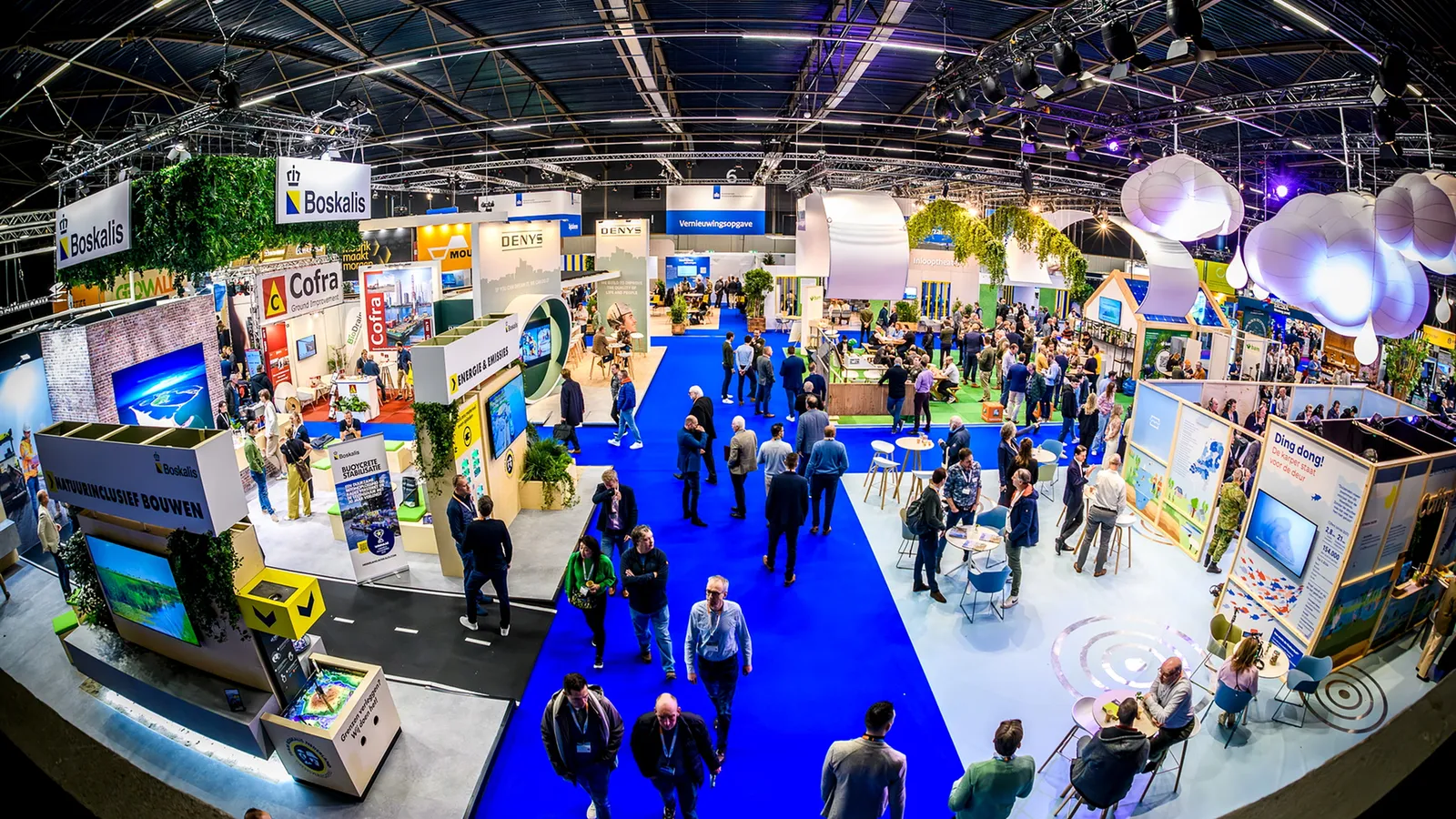
That makes the winners of the InfraTech Innovation Award 2025 particularly interesting. In January 2025, three very different innovations were recognised at Rotterdam Ahoy: Boskalis’ Buoycrete stabilisation in the Product Innovations category, De Natuurladder by Dura Vermeer and Heijmans in the Process Innovations category, and the Asphalt Recycling Train in the Sustainable Collaboration category.
Together, they offer a good snapshot of where the sector stands. The Netherlands needs to maintain, replace and make bridges, quays, roads, locks and tunnels more sustainable. At the same time, budgets, nitrogen emissions allowances, raw materials, capacity and deliverability are all under pressure. Innovation is not a luxury, but a necessity. The path from a good idea to widespread adoption, however, is often long and challenging.
From award to application
Since the awards ceremony, the three winners have each reached a different stage. Buoycrete has been used in practice for the first time, and work is under way to build the evidence base and scale it up. The Asphalt Recycling Train is the subject of pilots, measurements and validation. De Natuurladder is moving from an initiative by two construction companies towards becoming a sector-wide instrument with broader support.
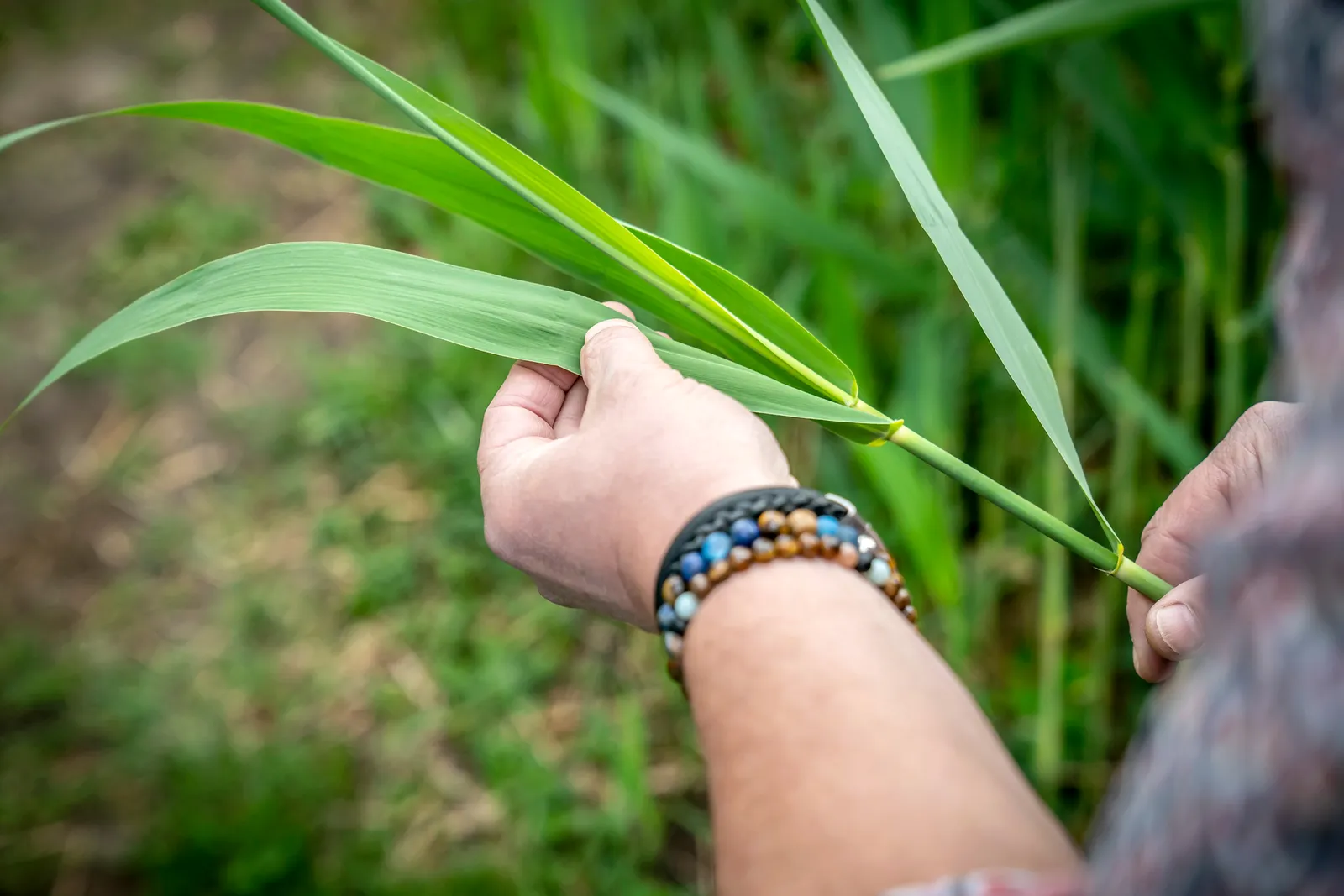
This last innovation is perhaps the least tangible, but it says a great deal about infrastructure. De Natuurladder is neither a machine nor a material. It is a way to make nature-inclusive design, biodiversity, soil, water and climate adaptation topics that can be discussed and addressed in projects. Inspired by the Safety Culture Ladder, it focuses instead on working in a nature-friendly way.
Jeroen Demmer of Dura Vermeer explains what prompted the need. “In the Netherlands, we struggled with how to create an effective management tool for topics such as nature-inclusive design and biodiversity. They are much more subjective and far harder to measure than, for example, CO2 or circularity.” The focus therefore shifted to behaviour and leadership. “The analogy with the Safety Culture Ladder was an obvious one. That is not just about measures either, but also about awareness, attitudes and leadership.”
Leon Dielen of Heijmans recognises the tension between ambition and practice. “If you come to a project with something as abstract as behavioural change, there’s a good chance it won’t catch on. People on projects say: tell me what to do and I’ll do it.” That is precisely why De Natuurladder also includes an opportunities scan, which identifies the specific measures that could be taken.
Not yet standard practice
Since winning the innovation award, De Natuurladder has attracted more attention, both within Dura Vermeer and Heijmans and beyond. Even so, it has yet to reach the point where the Safety Culture Ladder now stands: an instrument routinely specified by clients. Nature-inclusive design is increasingly a topic in tenders, but there is still no established methodology.
Jeroen believes the award has helped. “It brings you extra attention, both internally and externally. It also helps when you’re talking to your management team. The subject is in the spotlight for a while, and it confirms that we’re on the right track.” Dura Vermeer now incorporates De Natuurladder into operational plans and reports. At Heijmans, it features in several business plans. Larger projects and construction teams are expected to apply the ladder. Leon is candid: “It’s still happening on a limited scale. Certainly not on every project. But the projects where we use De Natuurladder have had successful discussions.”
An important step was transferring De Natuurladder to Collectief Natuurinclusief. This has freed the instrument from the two companies that developed it. “That was necessary,” says Leon. “Both Heijmans and Dura Vermeer felt that this wasn’t an instrument we should be managing ourselves.” Collectief Natuurinclusief gives the ladder a more neutral footing and makes it easier to develop further for other fields, such as property, education, agriculture and water.
Until then, it remains a pioneering effort. In the Triax project, a collaboration between Dura Vermeer, Heijmans and BESIX, a De Natuurladder session led to an opportunities scan with several measures for biodiversity and climate adaptation. The client did not want to pay for them, so the consortium decided to cover part of the cost itself. Leon calls this “a really great result”.
Jeroen adds a realistic caveat: “Not everything ends up being implemented. As here, management and maintenance also prove decisive.” Even so, he sees progress. “When it comes to behaviour and leadership, that step forward is a real gain for De Natuurladder.”
Reusing asphalt
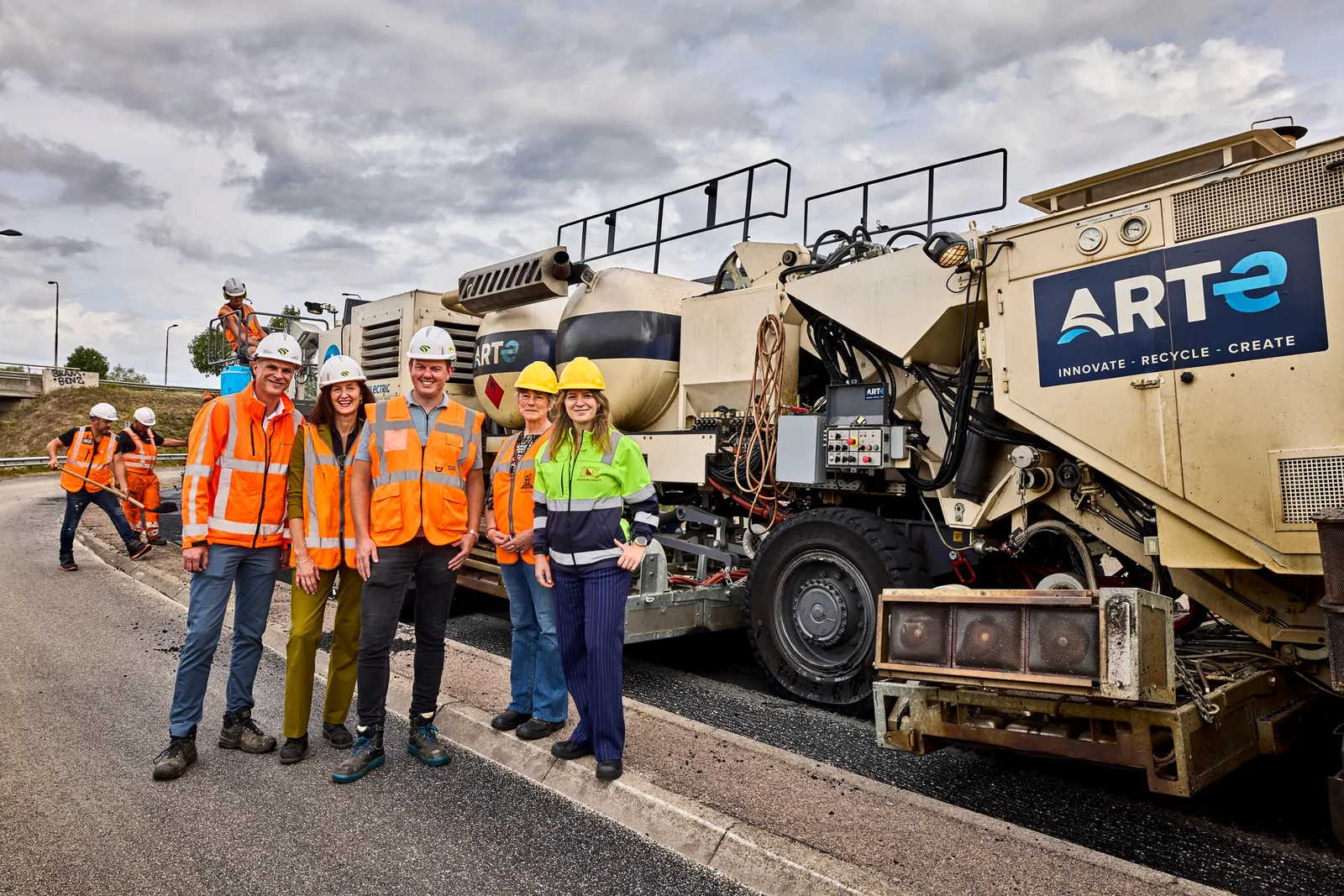
Where De Natuurladder is primarily about behaviour, the Asphalt Recycling Train is highly visible. A line of machines moves along the road surface like a train, heating old asphalt, loosening it, remixing it and laying it again straight away. Old asphalt becomes new, on site.
That is why the ART won in the Sustainable Collaboration category. The Province of Gelderland, Rijkswaterstaat, Dura Vermeer, ART-E and other partners are working together to validate the technology and make it available to the sector. The first trial took place in June 2024 on the N315 near Ruurlo. This was followed by applications and demonstrations in Almere and Hilversum, among other places.
The potential is considerable. Reusing existing asphalt on site reduces the need for primary raw materials. It also eliminates many journeys to and from the asphalt plant, cutting CO2 emissions, traffic and disruption. In addition, the aggregate remains more intact than with conventional cold milling. In principle, the technique comes close to fully reusing the existing surface course.
But the ART’s value lies in more than the machine. The knowledge being built up is at least as important. Which asphalt mixes are suitable? How does the surface course behave after heating and remixing? What temperature is needed? What additives are required? How does the new road surface perform over time?
This is where the delivery process comes into play. As the ART’s asphalt contractor, Harry Beltman translates the technology into day-to-day work on the road. However impressive the train may look, it ultimately has to produce asphalt that meets the required specifications. That calls for rhythm, craftsmanship, coordination and quality control. The machine needs space, cannot operate everywhere and requires a different approach to organising work than conventional asphalt maintenance.
That is precisely why pilots and trials are so important. Not to prove once that it can be done, but to test the process in different conditions. The technology is making real progress towards readiness for practical use, but it is not yet standard practice. Configuration, emissions, quality, logistics and asset management all need to be right for each application.
Preserving quay walls
Boskalis’ Buoycrete addresses a very different challenge: ageing quay walls. Many local authorities have quays that need replacing or strengthening. Full replacement is often difficult. Space is limited, there are trees, and cables and pipes are in the ground. The work also causes considerable disruption. Many quays are of historic value too.
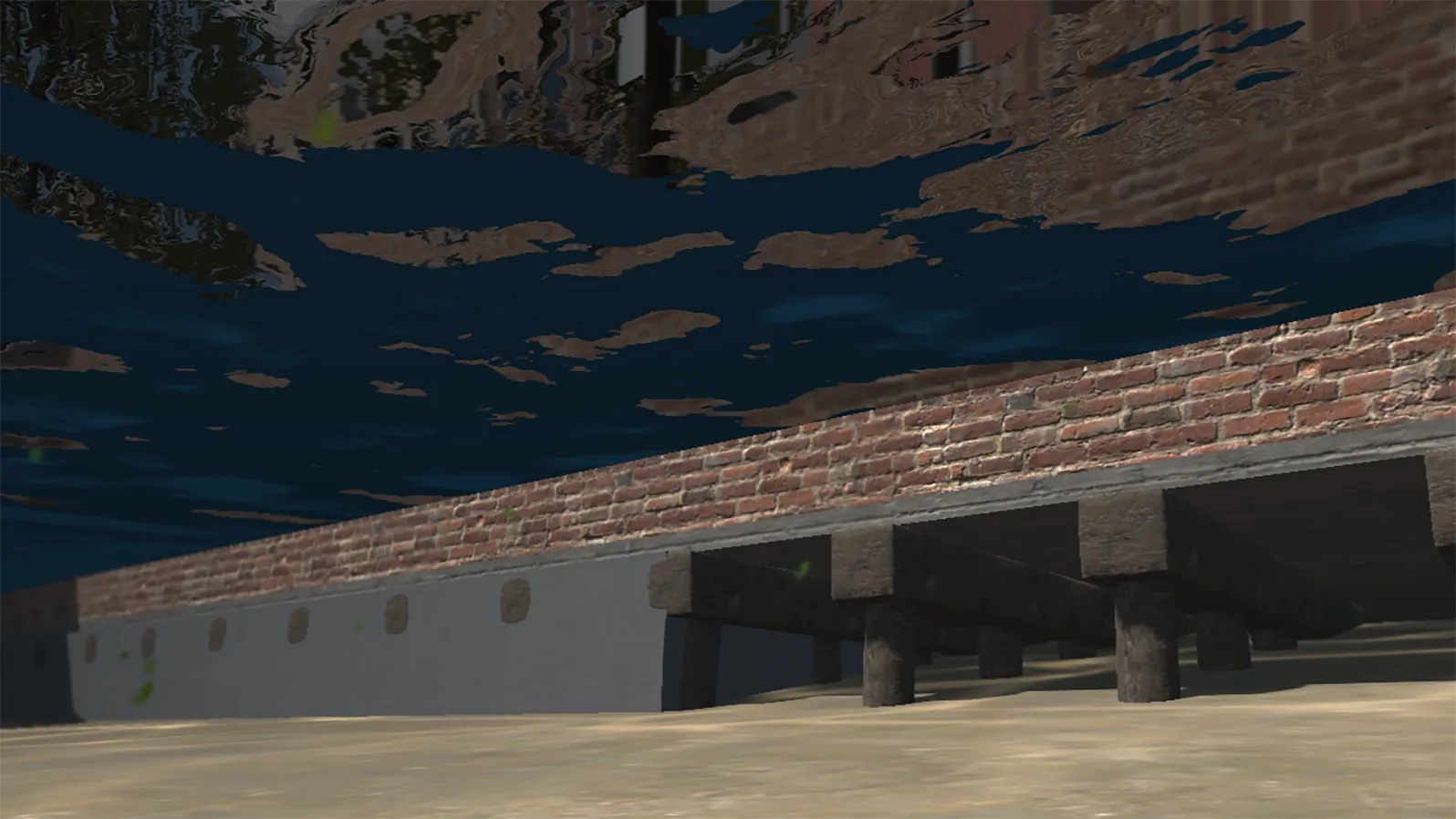
Buoycrete offers an alternative. It is a concrete mix with almost neutral buoyancy. It weighs roughly the same as water, does not dissolve and can be placed underwater without sinking or adding extra weight to a vulnerable structure. Once cured, it forms a strong mass that can fill voids behind and beneath quay walls. This prevents further washout and can stabilise the existing structure.
Guido Visch of Boskalis developed the material as part of an innovation programme focused on underwater construction. The idea was simple, but technically challenging: create a mix with the same density as water. As a result, Buoycrete behaves almost as if it were weightless under water, while acquiring the properties needed to stabilise a quay once cured.
The technology was tested in practice in Amsterdam, where erosion and washout had created voids in historic quay walls. Buoycrete can fill them without draining the quay, installing heavy formwork or adding load to the existing foundations. In spring 2024, a 30-metre section of quay wall was renovated and strengthened in this way. This will significantly extend the quay’s service life while preserving its authentic character.
Three areas of progress
Together, the three winners of the InfraTech Innovation Award 2025 show that innovation in infrastructure rarely follows a linear path. An award helps. It brings attention, legitimacy and internal momentum. But then comes the stage when an idea has to take root in systems that are complex, risk-averse and heavily regulated.
For De Natuurladder, the challenge is adoption. The instrument is strong in principle, but it needs to be specified, applied and embedded more widely. For the Asphalt Recycling Train, the focus is on validation and sharing knowledge. The technology promises significant gains in circularity and CO2 reduction, but needs to demonstrate where and how it works best under different conditions. For Buoycrete, the task is to scale a proven application for a wider market, backed by robust technical assurance and client confidence.
The common thread is that innovation does not stop at technology. In fact, technology is often only the beginning. What follows is behaviour, contracts, asset management, data, maintenance, budgets and acceptance. In 2025, then, InfraTech recognised not just three good ideas. The event put the spotlight on three developments the sector urgently needs: giving nature greater consideration in projects, maintaining asphalt more circularly, and preserving quay walls for longer instead of automatically replacing them. Because real innovation does not begin on stage. It begins on site, in the project team, on the road and alongside the quay.
Have a business enquiry for Boskalis Nederland? Get in touch
Companies in this story
Keep following this
Get an email when a new story is published. No account needed.
- ThemeViable projects and strong collaboration
- SubjectNews
- CompanyBoskalis Nederland
- CompanyInfraTech







