Sustainable concrete repair using wet-mix sprayed concrete
Text Roel van GilsImage Leggedoor
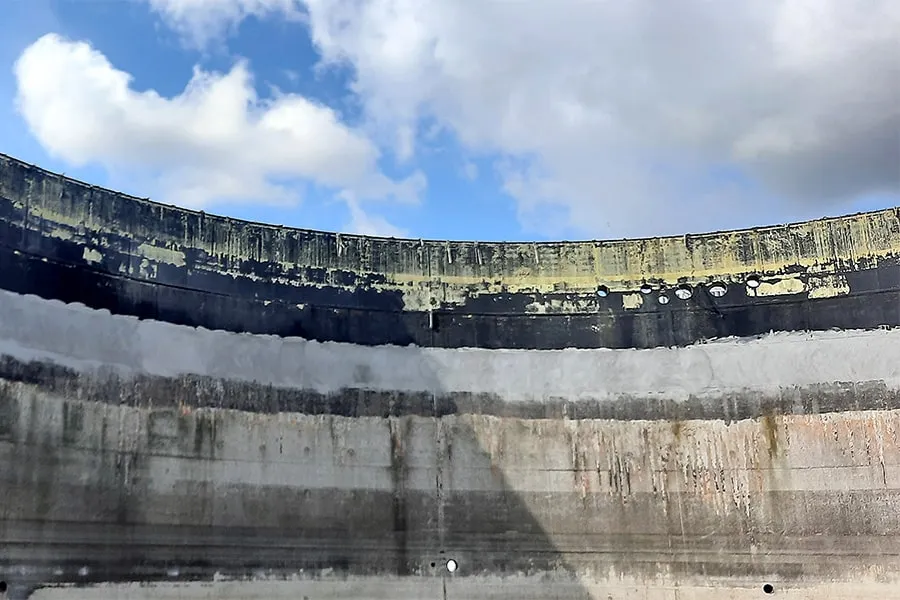
Before the existing concrete tank silos at Echten wastewater treatment plant could be upgraded for the new sludge digestion plant, the concrete damage first had to be repaired. There are several ways to do this. Leggedoor, specialists in concrete maintenance, opted for wet-mix sprayed concrete. It is a sustainable concrete repair method that produces less rebound and no dust nuisance.
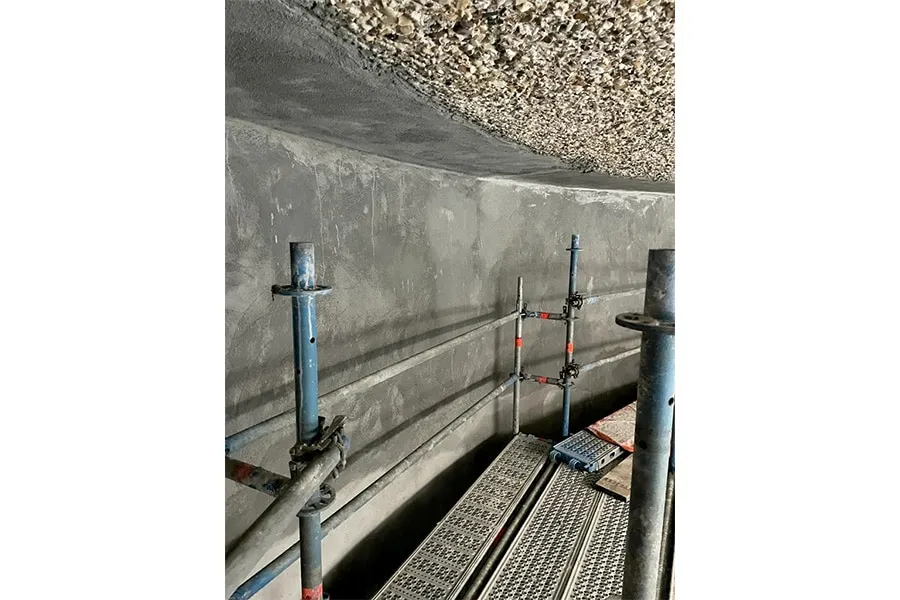
The concrete walls of two tank silos at Echten wastewater treatment plant were badly deteriorated. “The concrete had suffered severe erosion in several places as a result of the H2S gases released during the digestion process,” says Dennis Leggedoor. “There was also damage around the waterline. A chemical reaction inside the tanks had caused the cement to come loose. On behalf of Van Hattum en Blankevoort, we inspected the tank walls and ceilings, removed the damaged concrete down to the sound substrate and repaired them with sprayed concrete.”
Sprayed concrete
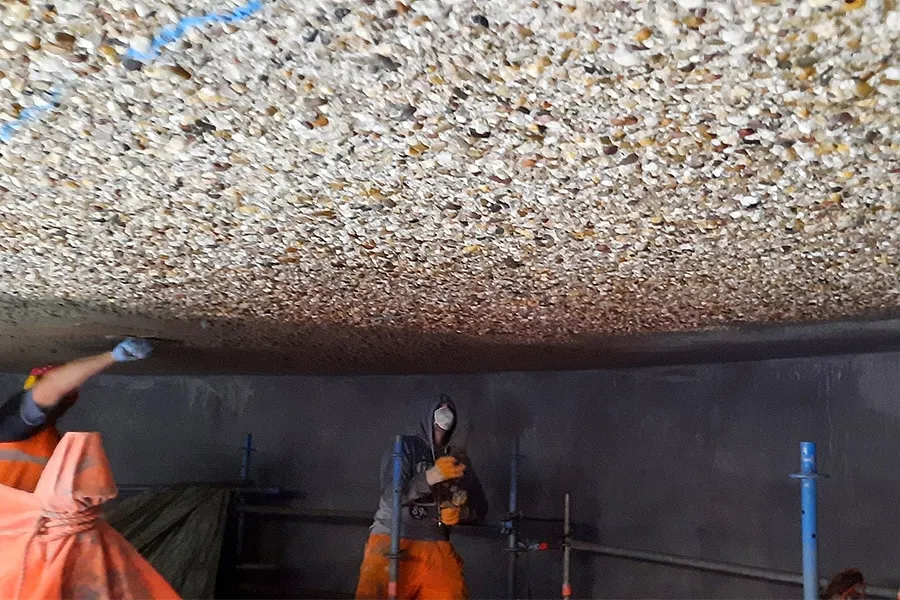
Sprayed concrete can be applied using either a dry or a wet process. “With the dry process, the concrete mix is only mixed at the nozzle. This often creates a lot of dust. Wet-mix sprayed concrete generates much less dust, because the repair mortar is mixed before it enters the pump. There is also hardly any rebound with wet-mix sprayed concrete, meaning mortar bouncing off the surface. It adheres better, making it the more sustainable option too, as less material is wasted,” Dennis explains. Access to the walls and ceiling in one of the tanks was a challenge for Leggedoor. “We solved that by putting up scaffolding throughout one tank and working from a MEWP in the other.”
R4 repair mortar
In both tanks, Leggedoor applied the repair mortar in a layer approximately 30 millimetres thick. “That was certainly necessary, given that the erosion had progressed to halfway through the 32 mm aggregate. The tanks are therefore now slightly smaller in diameter following the concrete repairs,” says Dennis with a laugh, adding that a standard R4 repair mortar was used. Leggedoor is a true specialist in concrete maintenance and repair. “We now have 45 years’ experience in this field and know the ropes. We know where the weak spots are in projects like these and how to address them as efficiently as possible. In this case, the biggest challenge was access, particularly in the enclosed tank. For example, we used a banksman and deployed specialist equipment to cover the greater distances.”
Leggedoor is regularly called in for projects of this kind. “We work in infrastructure and housing and specialise in sealing, repairing, protecting and strengthening concrete structures. Strengthening is a hot topic at the moment. We use a range of approaches, including external reinforcement using steel with sprayed concrete or carbon-fibre laminates. This is an interesting technique in view of Rijkswaterstaat’s large-scale replacement and renovation programme.”
Question about this story? Ask your question
Keep following this
Get an email when a new story is published. No account needed.
- ThemeExtending the life of roads and civil engineering structures
- SubjectConcrete