25 years of pioneering concrete cooling
Text Roel van Gils Image Hoteco
Ingenious system extracts peak heat from concrete
Hoteco has been cooling concrete for 25 years, a specialism in which the company is truly unique. “While many companies rely on standard solutions, we developed our own cooling units in our early years,” says Leo Suiker, owner of Hoteco. “And those units are still at the heart of our service.”
Concrete is made from a mixture of sand, gravel, cement and water. “When the cement binder reacts, it releases heat. That heat needs to be removed. If it is not, the concrete can shrink too quickly as it cools, causing cracks. This poses a real risk, particularly in large structures,” Suiker explains. “That is why we extract the peak heat from the concrete using an ingenious system similar to underfloor heating, but in reverse: we circulate chilled water through tubes in the reinforcement, drawing heat out of the concrete.”
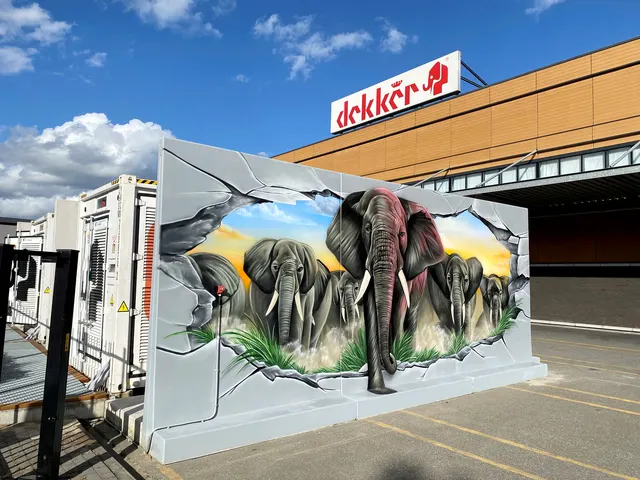
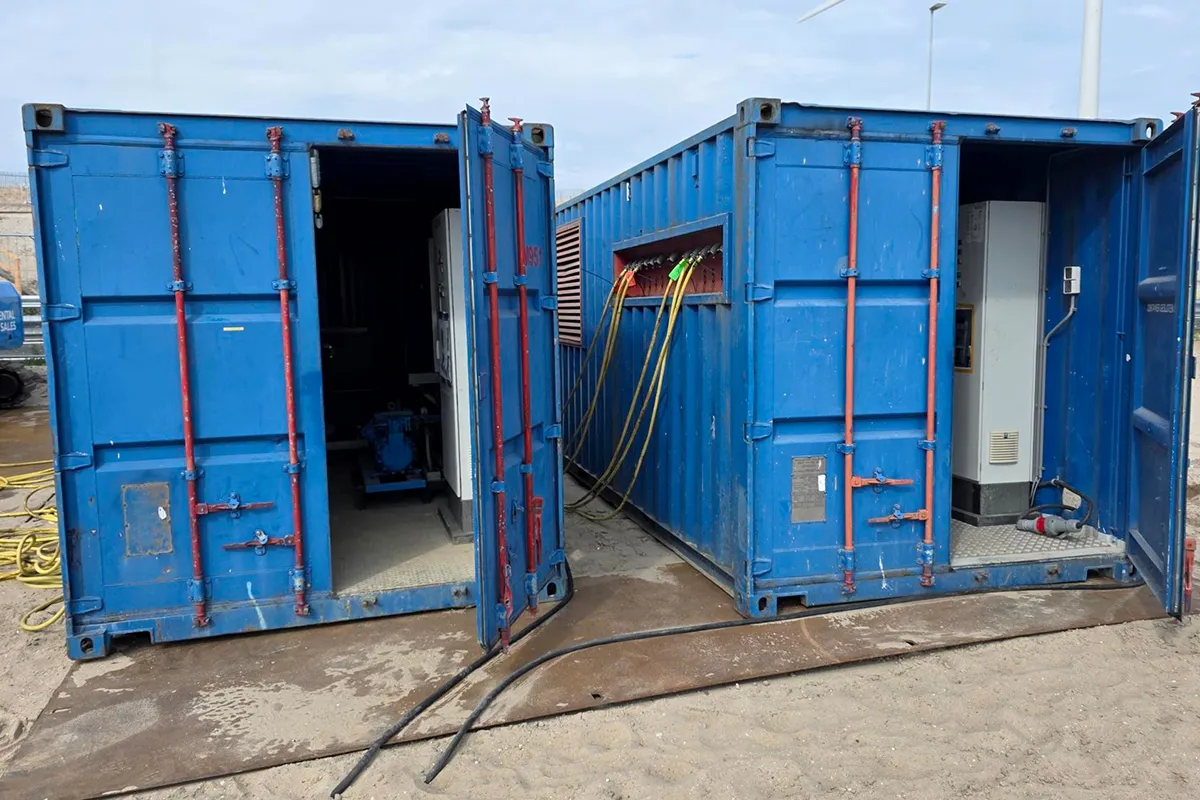
20-foot container
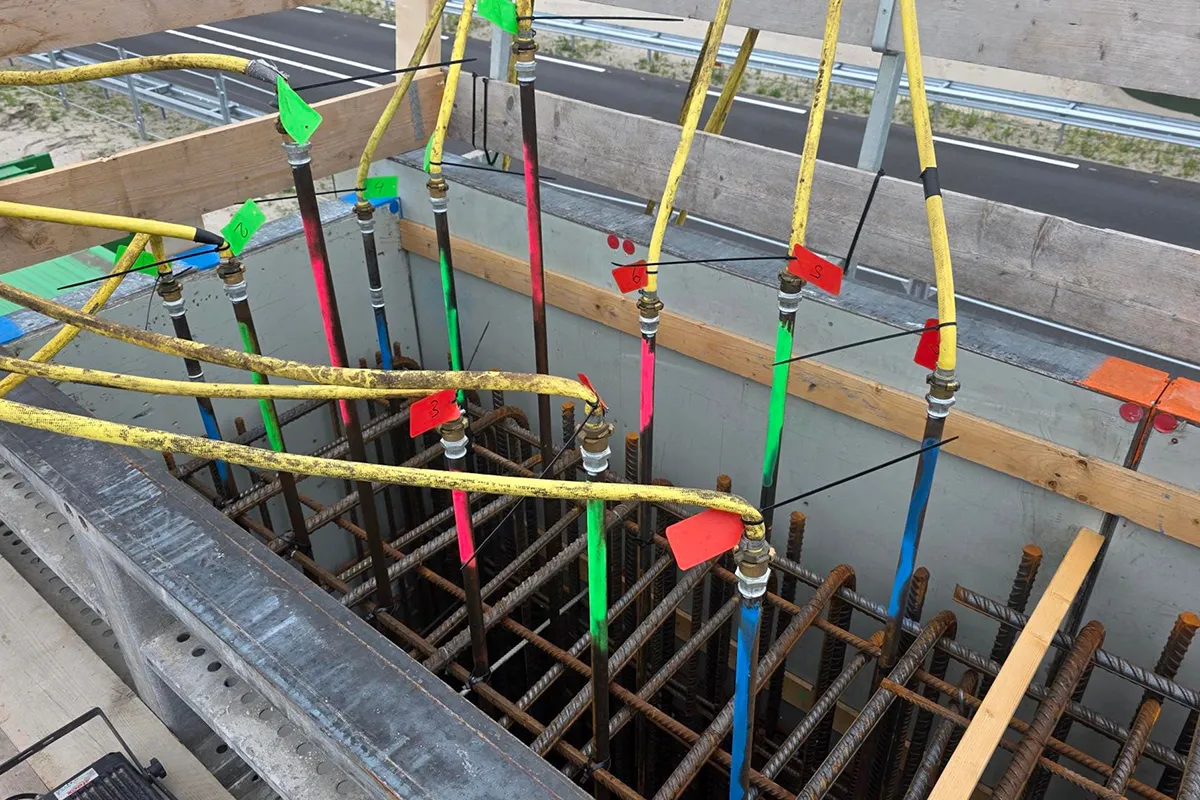
The tubes are installed by steel fixers about 40 to 50 centimetres apart and divided into groups, each no more than 150 metres long. “If the groups are too long, the cooling process is less efficient,” says Suiker. “We feed about one cubic metre of water into the system for each group. The water returns warm to the buffer tank, where it is cooled back down to around 10 degrees Celsius. Housed in compact 20-foot containers, our cooling units can control six groups at a time and are easy to move. Special connecting hoses let us connect and disconnect quickly between pours, while the tubes remain permanently embedded in the concrete.”
Cooling capacity
The cooling process usually takes no more than three days. “The day after the pour is particularly crucial, as that is when most of the heat is released,” says Suiker. “Here at the Prinses Alexiaviaduct, BAM’s concrete technologist calculated in advance the heat generated by the sustainable GroenR concrete used. We supply the cooling capacity required on that basis. In this case, the concrete releases as much as 200 kW of heat. Our units remove that heat in a controlled way, combining several units where needed.”
A proven track record
Hoteco’s expertise is used on major infrastructure projects. “We were involved in the HSL, the Betuweroute, countless tunnels and viaducts, and we are currently working in Belgium on the Oosterweelverbinding. Our units have also proved their worth during construction of the nuclear reactor in Petten, and we will be returning soon for the next phase.” Hoteco is increasingly being called on for complex projects. “In Denmark, we are now supplying our systems for the world’s largest immersed tunnel, between Denmark and Germany.”
With twenty cooling units in its current fleet, Hoteco is on the cusp of even more and larger projects, judging by the enquiries Suiker is receiving. “To meet future demand, we are currently building a new generation of cooling units that can be monitored and controlled remotely. After 25 years, clients are genuinely convinced that concrete cooling is a specialist trade. And we are proud to have turned that trade into an art.”
Question about this story? Ask your question
Keep following this
Get an email when a new story is published. No account needed.
- ThemeMaterials and techniques for infrastructure
- SubjectConcrete