Hinged ‘green’ concrete mat
Text Roel van Gils Image LBN Betonproducten
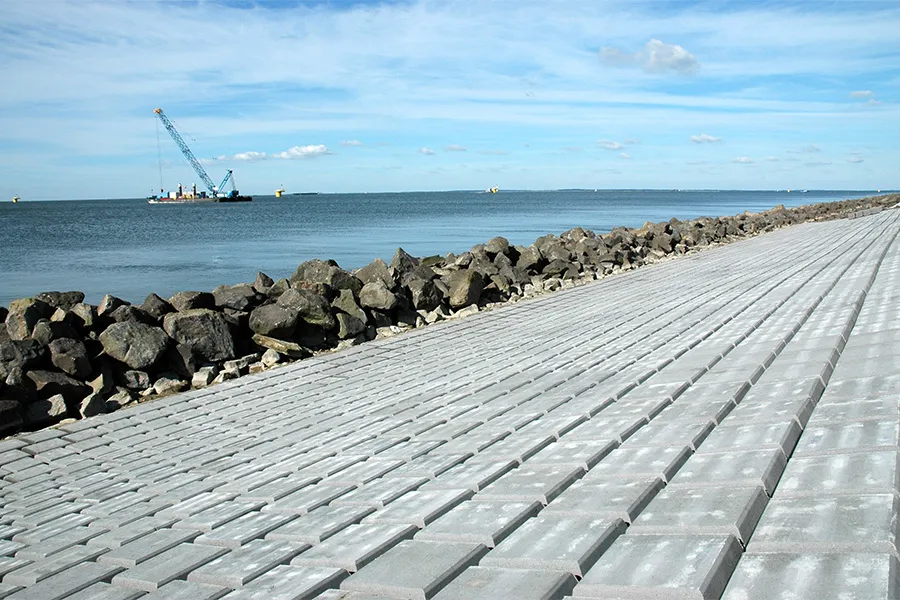
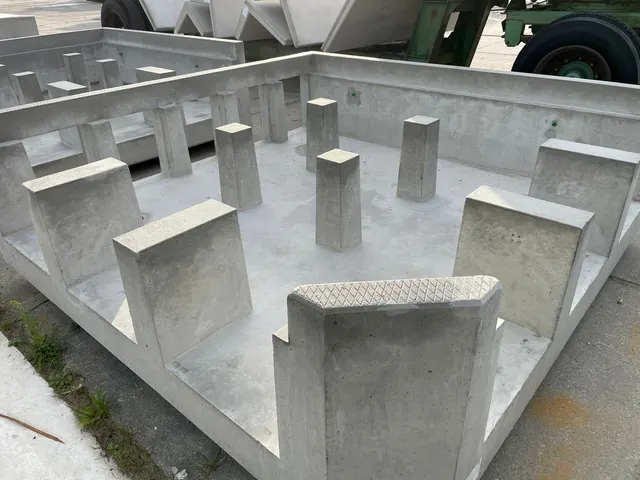
The hinged concrete mat made from Verkalit blocks on the Lauwersmeerdijk between the Peasumer Lannen and the Cleveringsluizen (province of Friesland) is being extended in Groningen as part of the Lauwersmeerdijk-Vierhuizergat dike reinforcement project. Water authority Noorderzijlvest has also chosen this innovative concept, which has been proving its worth in Germany for many decades. Its unique tongue-and-groove system ensures stability, while allowing the mat to follow the dike profile. Nature can also take hold between the blocks, eventually creating an attractive green dike.
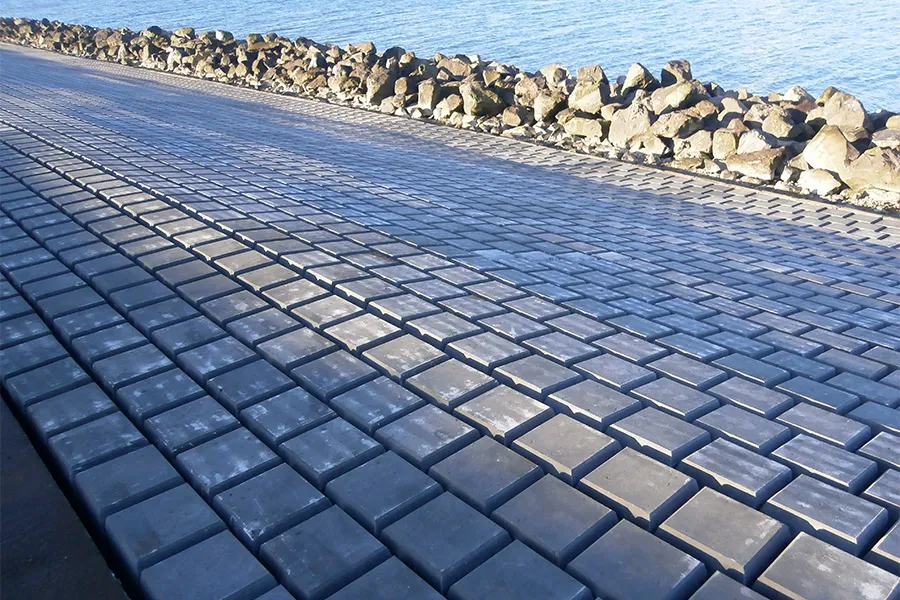
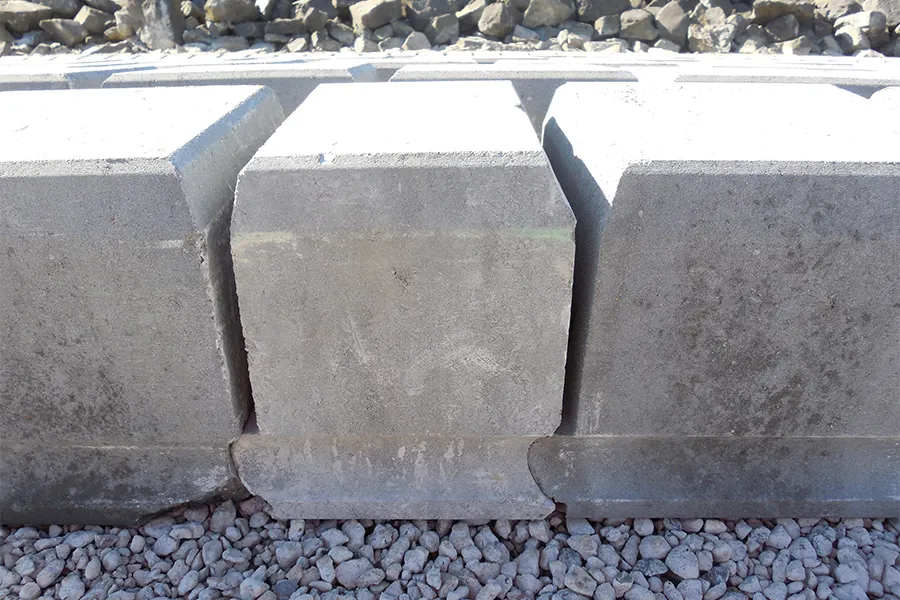
Unlike conventional dike protection using concrete columns, Verkalit is not a column system at all, but an interlocking system, says Hans Kamminga of LBN Betonproducten. “And that is precisely Verkalit’s strength.” He explains with an example. “With a standard concrete column, from any manufacturer, stability is achieved by filling the gaps between the blocks with crushed stone. During a storm, the crushed stone may be washed out, putting the stability of the dike at risk. The dike protection therefore has to be inspected after every storm and topped up with crushed stone if necessary. Verkalit avoids this problem because its stability comes from the interlocking tongue-and-groove system. Stability is ensured at all times, so inspections after every storm are no longer necessary.”
Water Act
Although Verkalit blocks have been used as dike protection in Germany for more than thirty years, they are relatively new in the Netherlands. Or rather, new to the Dutch market: LBN Betonproducten promoted the concept here years ago. “The product was then extensively tested and trialled, including in the Delta Flume at Deltares in Delft,” says Hans. “It also passed the Steentoets, as required under the Water Act. A 2,000 m2 pilot project was then built at Kreyl on the IJsselmeer, and since 2019 the system has been used on a large scale, first in Friesland and now in Groningen on the Lauwersmeerdijk. The good experience of the construction consortium with the product has also played a part. The blocks are made from recycled concrete in Burgum, Friesland, so transport distances are minimal.”
Higher density
In total, around 80,000 m2 of Verkalit blocks will be used to protect the Lauwersmeerdijk. “Each block (30x30x30 cm) weighs 65 kilograms,” says Hans. “As we opted for a 30-centimetre layer, we had to increase the concrete density to 2,650 kg/m3. The blocks are installed mechanically by Boot G.W.W., which is very proficient at the work. The company has developed its own clamp, allowing it to lay 2 m2 in a single operation. This enables it to achieve an impressive output of 1,000 m2 per day with one excavator. That is a remarkable feat. You cannot get anywhere near that with other systems. The blocks interlock to form a hinged concrete mat that follows the dike profile. This compensates for unavoidable weak spots in the dike structure and makes any damage clearly visible.”
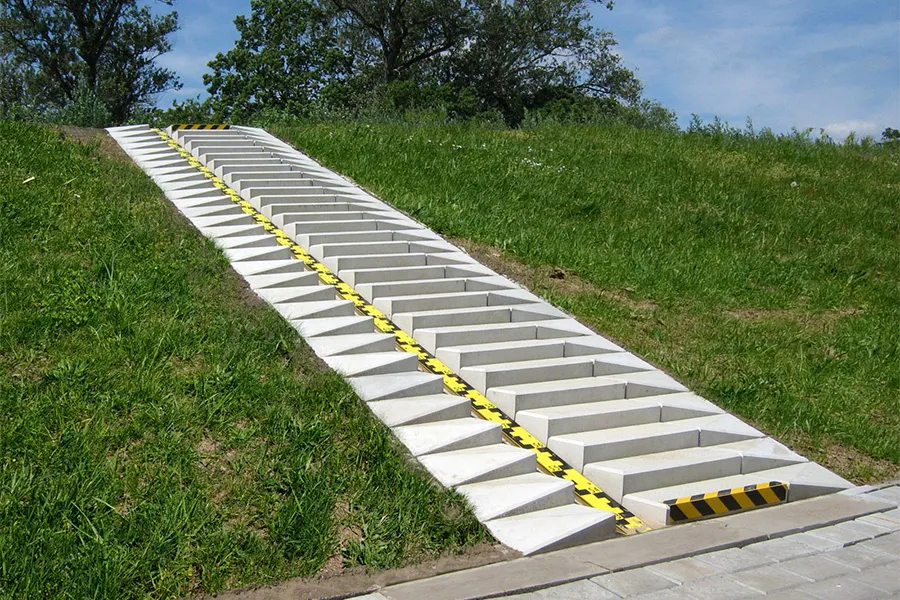
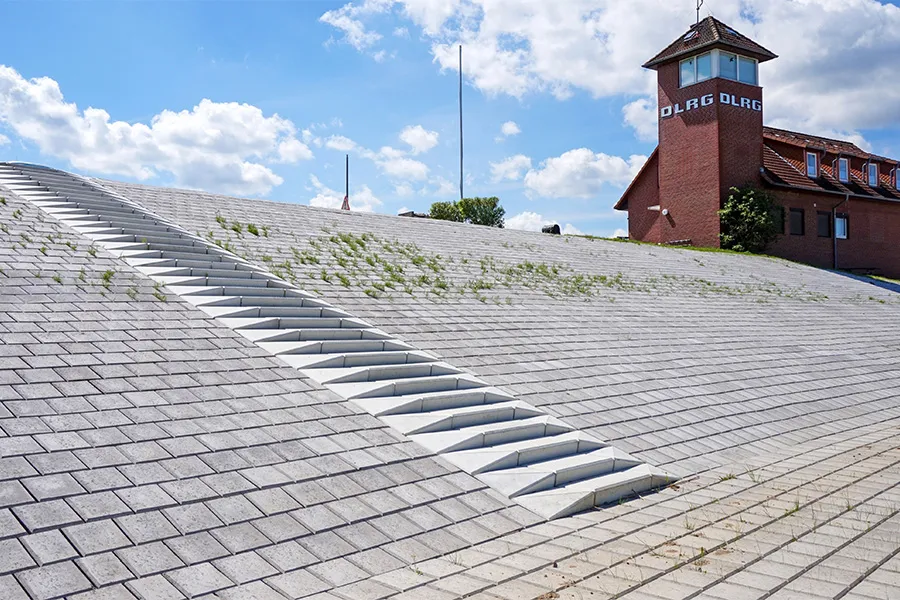
On a small section at the head of the dike, Verkalit blocks of varying heights, 20 and 35 centimetres, have been used. “Here, waves are driven into a corner and may run up too high. The grid profile helps to slow them down further,” Hans explains. LBN Betonproducten manufactures the blocks in heights ranging from 15 to 40 centimetres. “They are, of course, supplied with KOMO certification, and freeze-thaw and salt tests show that they are highly suitable for use in salt water. Finally, nature has room to develop between the blocks. The sections already laid are taking on a green tinge. From a distance, it will look like a natural, green dike, while still withstanding severe storms.”
Question about this story? Ask your question
Who worked on Lauwersmeerdijk-Vierhuizergat
- contractorHeijmansMentioned in Water board aims to cut CO2 emissions by 95% during Lauwersmeerdijk-Vierhuizergat dike reinforcement
- water boardwaterschap NoorderzijlvestIn this story
Keep following this
Get an email when a new story is published. No account needed.
- ProjectLauwersmeerdijk-Vierhuizergat
- ThemeMaterials and techniques for infrastructure
- SubjectConcrete
- Companywaterschap Noorderzijlvest