Concrete retaining walls to become 100% circular in time
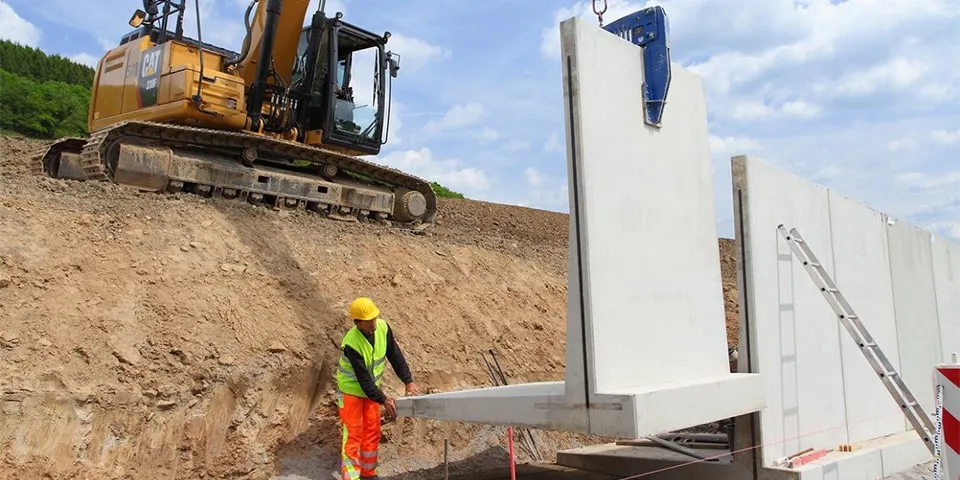
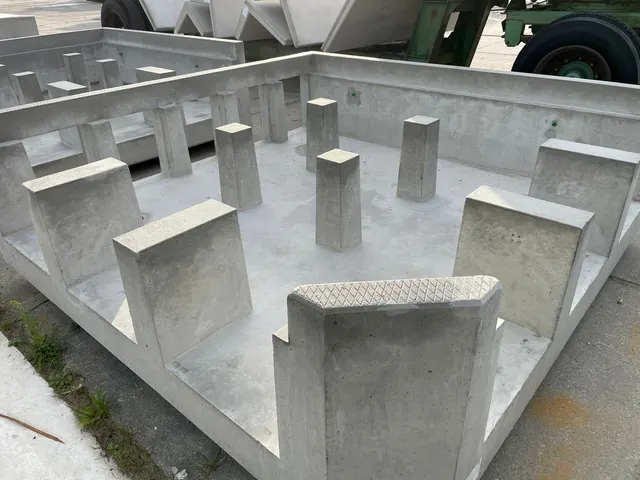
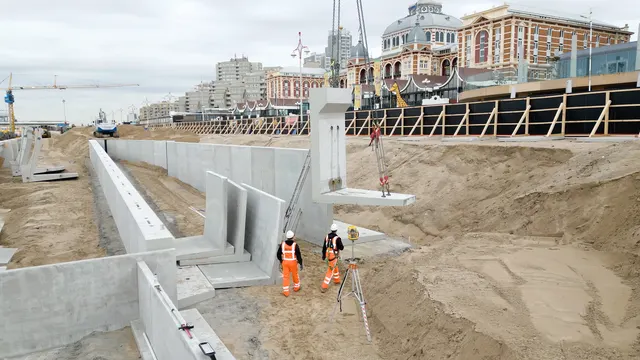
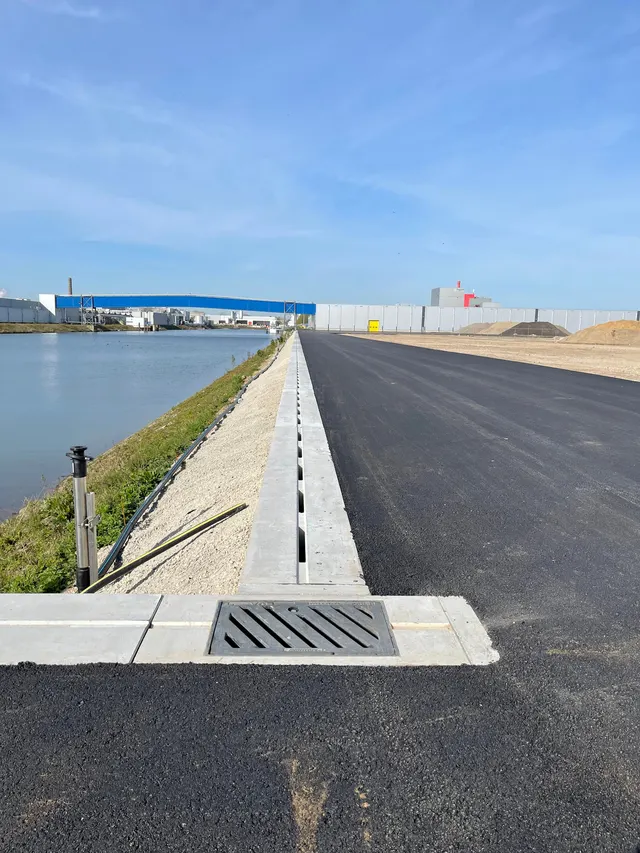
The drive towards a 100% circular economy brings its fair share of challenges, particularly in the world of concrete. Current standards allow renewable raw materials to be used in structural applications only up to a limit of 20%. Nevertheless, Bosch Beton has taken an important step by building a completely new factory that will eventually be capable of producing retaining walls on a 100% circular basis.
“We are seeing more and more opportunities to make concrete more sustainable, both in terms of its composition and its production,” says Brechtje van den Beuken-van den Bosch of Bosch Beton. “Our new concrete factory in Barneveld has been operational since 1 June this year and is entirely geared towards a sustainable process. It is unique by Dutch standards.” Energy consumption is offset by more than 18,000 solar panels on the roof, while process water is also managed in a closed-loop system. It is collected, filtered and reused. The factory was designed to achieve BREEAM Outstanding. But the retaining wall manufacturer is going a step further.
High-strength concrete
Giving a product a second life requires high quality. Bosch Beton therefore prefers high-strength concrete. “Retaining walls made from C60/75-grade concrete have a very fine pore structure and are more resistant to the penetration of acids, frost and de-icing salts. This may be somewhat less relevant in the Netherlands, but it is an important consideration in neighbouring countries. The higher the quality, the longer the product lasts. With a service life of fifty to as much as a hundred years, a retaining wall can, for example, be given a second life very easily.
A second advantage of high-strength concrete is that it makes it possible to build up to 40% more slenderly. Deutsche Bundesbahn, for example, specifies C30/40-grade concrete with a wall thickness of 25 centimetres to ensure the intended service life. We can guarantee that same service life with a wall just 15 centimetres thick. The initial investment may be higher, but it ultimately delivers considerable savings.”
Geopolymer concrete
According to Van den Beuken: van den Bosch, achieving a circular economy will ultimately require a different approach to investment. “The initial investment should not be the deciding factor. Take the long-term view and give products a second life. Innovation is moving very quickly, and exciting developments are taking place. We have high expectations for geopolymer concrete, which could eventually replace cement concrete. We also expect a shift towards custom-made products, using surplus materials supplied by the client. Our new factory is already equipped for this. After all, we will need to work together with our clients and contractors to make the journey towards a 100% circular economy.”
Bosch Beton
Grote Bosweg 1, 3771 LJ Barneveld
T 0342 44 1050
www.keerwand.nl
A business enquiry for Bosch Beton? Get in touch
Companies in this story
Keep following this
Get an email when a new story is published. No account needed.
- ThemeLower emissions and more reuse
- SubjectConcrete
- CompanyBosch Beton