BRL K11002: substantiating sustainable choices with figures
Text and images Betonhuis
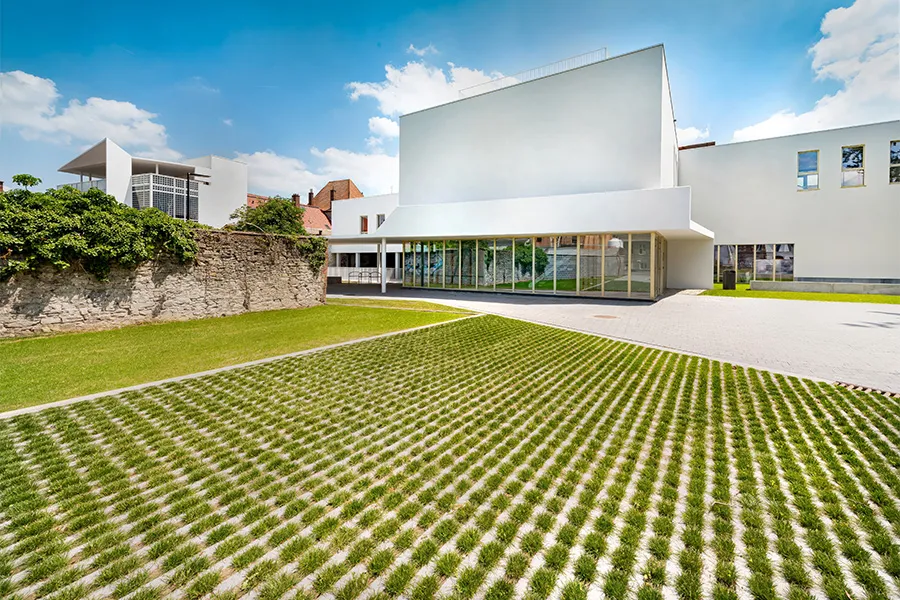
Sustainable, circular and climate-adaptive paving? It can be done. The Dutch concrete paving industry shows that concrete is no longer ‘grey’. With innovative materials, a strong focus on climate adaptation and clear environmental performance, the sector is taking concrete steps towards a sustainable public realm. BRL K11002 is an important tool in this, for both producers and clients.
BRL K11002 for clear environmental data
Reliable data is needed to procure sustainably. That is precisely what the BRL K11002 assessment guideline provides: a practical and verifiable method for objectively assessing the environmental performance of concrete paving blocks, slabs and elements. This gives municipalities and other clients insight into the actual environmental impact of the products they purchase, without having to carry out complex checks themselves. While many sustainability certificates stop at a ‘green logo’, BRL K11002 goes further. Independent assessment based on current standards guarantees transparency throughout the supply chain: from raw materials to production, and from transport to recycling.
The key benchmark: the MKI
The central benchmark under the BRL is the Environmental Cost Indicator (MKI), a standard method for translating environmental impact into a single, easy-to-understand figure. This makes products easy to compare and enables public authorities to set firm requirements in tenders. The MKI value is based on a full life cycle assessment (LCA), including raw material use, energy consumption, CO2 emissions, transport and end of life. Using the MKI provides objective data and encourages producers to keep innovating. The lower the MKI, the better the score, and therefore the more attractive the product in a sustainable tender.
The street as a test bed for circular concrete
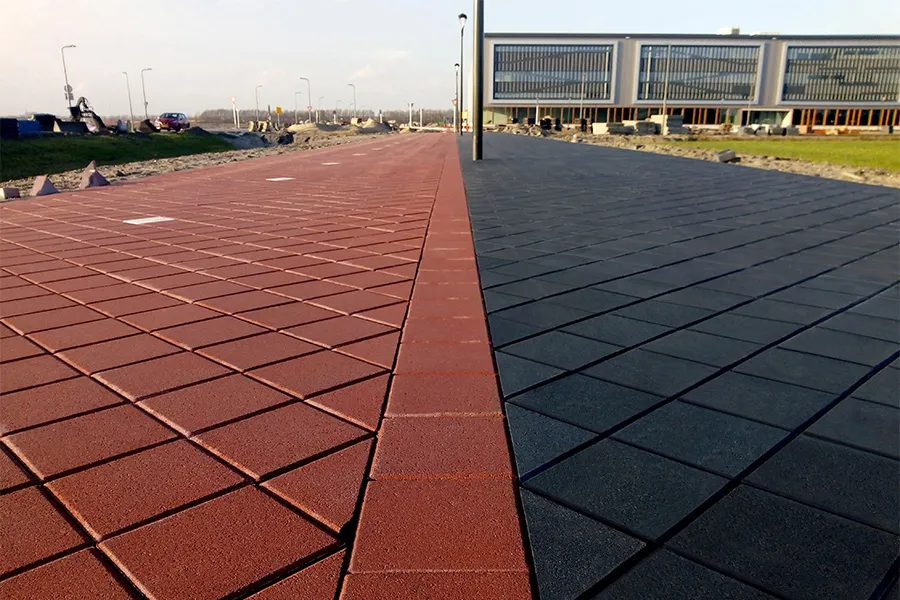
The concrete paving products sector produces around 18% of all concrete in the Netherlands. Precisely because there are no structural requirements, such as reinforcement, it is an ideal test bed for sustainable innovations. These include low-cement or even cement-free concrete types, and the use of secondary raw materials such as recycled aggregate. On average, paving concrete already contains 15% recycled material. These innovations make a difference: using less cement directly means lower CO2 emissions. Tools such as the CEMsaver are also used to make more efficient use of cement. Alternative binders, such as geopolymers, are also gaining ground.
Responding to climate challenges
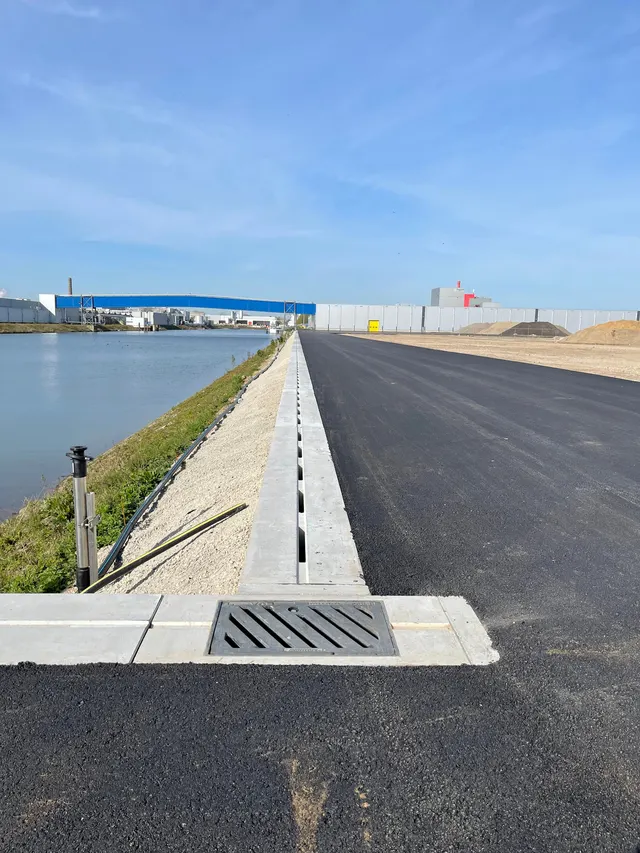
Concrete paving is also playing an increasingly important role in climate adaptation. Light-coloured paving, for example, helps to reduce heat stress in urban areas. Water-permeable and water-infiltrating elements reduce the pressure on sewer systems during heavy downpours. Grass concrete slabs combine load-bearing capacity with water infiltration and greening. The members of Betonhuis Bestrating, who produce in accordance with BRL K11002, are turning these solutions into reality. By combining innovation with certified environmental performance, they offer products that are future-proof not only technically, but also ecologically.
A tool for collaboration across the supply chain
BRL K11002 is more than a quality mark: it is a tool for collaboration across the supply chain. Thanks to the guideline, producers, designers, contractors and clients can work with the same figures, making choices more transparent and easier to explain. For public authorities, it is an indispensable part of sustainable procurement: choosing products certified under BRL K11002 means choosing substantiated quality and environmental accountability.
Sustainability is a prerequisite
At a time when sustainability is no longer an afterthought but a prerequisite, BRL K11002 offers clarity, reliability and an incentive to innovate. By choosing certified concrete paving, the civil engineering sector is investing in a future in which the street is just as sustainable as the policy that
precedes it.
Question about this story? Ask your question
Keep following this
Get an email when a new story is published. No account needed.
- ThemeLower emissions and more reuse
- SubjectConcrete