Betonhuis Bestrating champions sustainable and transparent concrete
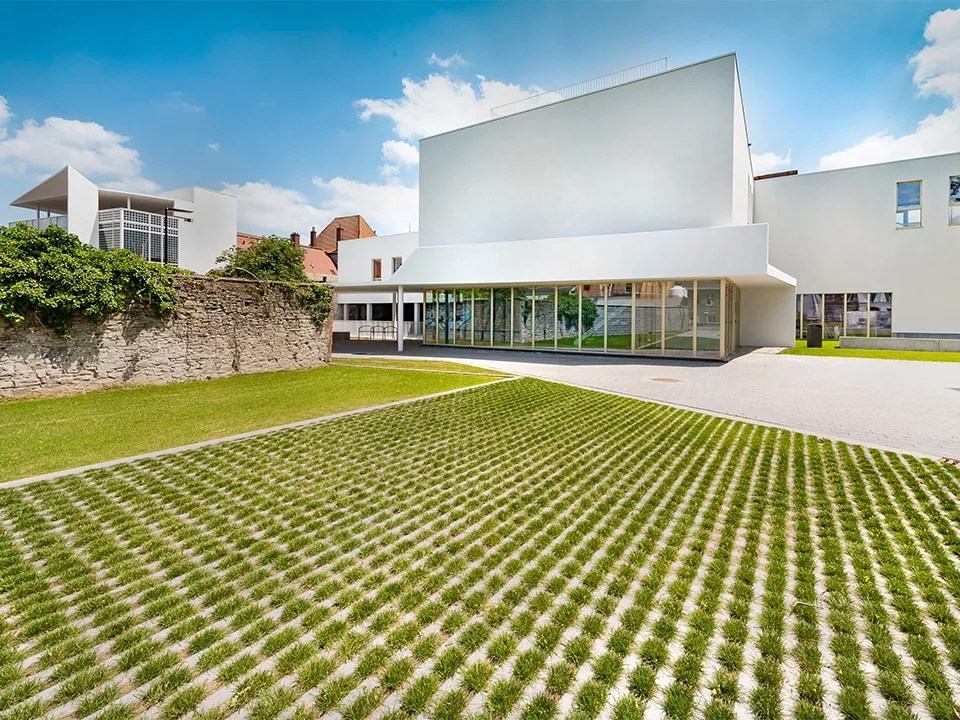
Concrete with less or no cement, and the use of circular materials: the concrete paving industry is ideally placed to introduce innovations in sustainable concrete.
The industry also offers a range of solutions to the effects of climate change, such as heat stress and flooding caused by more extreme downpours. Transparency plays a major role here: in a volatile landscape, where it is sometimes still unclear exactly how to make the transition to a sustainable, circular economy, producers affiliated with trade association Betonhuis Bestrating deliver on their promises. They demonstrate this, among other things, through BRL K11002, ‘Generating Environmental Profiles for Concrete Infrastructure Products’. This BRL helps public authorities make green, responsible choices.
More freedom to experiment
The Netherlands faces a major challenge when it comes to sustainability. “As a sector, we can have a significant impact,” says Eric de Groot, CCO at BTE Nederland, which includes De Hamer Beton. “Concrete paving products account for around 18 per cent of all concrete produced in the Netherlands, including ready-mix concrete. Our industry has the advantage that we can take a little more risk than other concrete sectors. We don’t have to consider the structural safety of buildings. That gives us more freedom to experiment, for example with new concrete mixes. The lessons we learn can help the rest of the concrete sector make further progress in improving concrete’s sustainability.”
Circular concrete
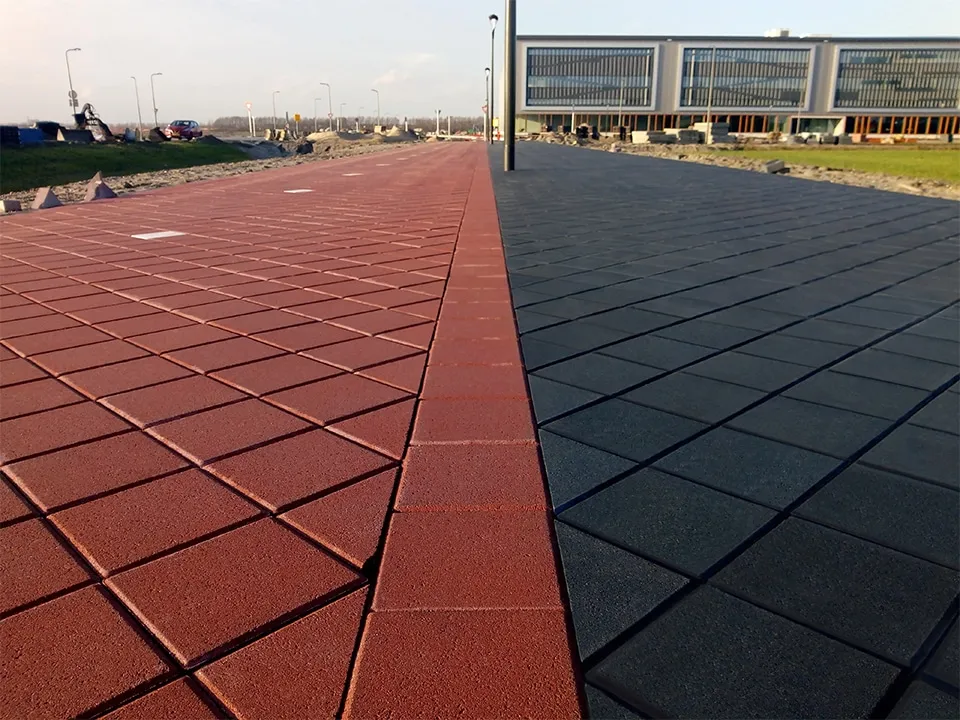
One of the steps towards a circular economy is using recycled materials in concrete. “We aim to use 15 per cent secondary material in our concrete products,” says Alfons van Woensel, director of APG Benelux, which includes Struyk Verwo Infra. “We can use a higher percentage of recycled material, and do so when requested. But we would rather supply products across the board with 15 per cent aggregate. This is because high-quality aggregate is not sufficiently available to include a higher percentage in all concrete products. You also need to ensure that any sustainability gains from maximising the amount of recycled material are not offset elsewhere. In some cases, more cement is needed to achieve the required strength. We need to be transparent about that.”
Less or no cement
The sector is also working to reduce the cement content of concrete products. Cement is responsible for most of the CO2 emissions from concrete production. “Using less cement or a different type of cement is nothing new,” says Jan Dirk Staman, managing director of V.d. Bosch Beton. “We’ve been doing it since the 1980s. The Netherlands also performs well compared with other countries: a lot of blast-furnace slag is used here instead of Portland cement. That cuts CO2 emissions. Alongside reducing the proportion of cement, we are also looking at other binders, such as geopolymer.” MBI has another solution for reducing cement use. “Thanks to CEMsaver, we can use less cement,” says Marcel Bettonvil, director of MBI. “When making concrete, there is always cement that does not react. Using a sustainable additive allows us to use 30 per cent less cement in our concrete paving blocks. Across the entire concrete supply chain, that reduces CO2 emissions by up to 35 per cent.”
Transparent concrete
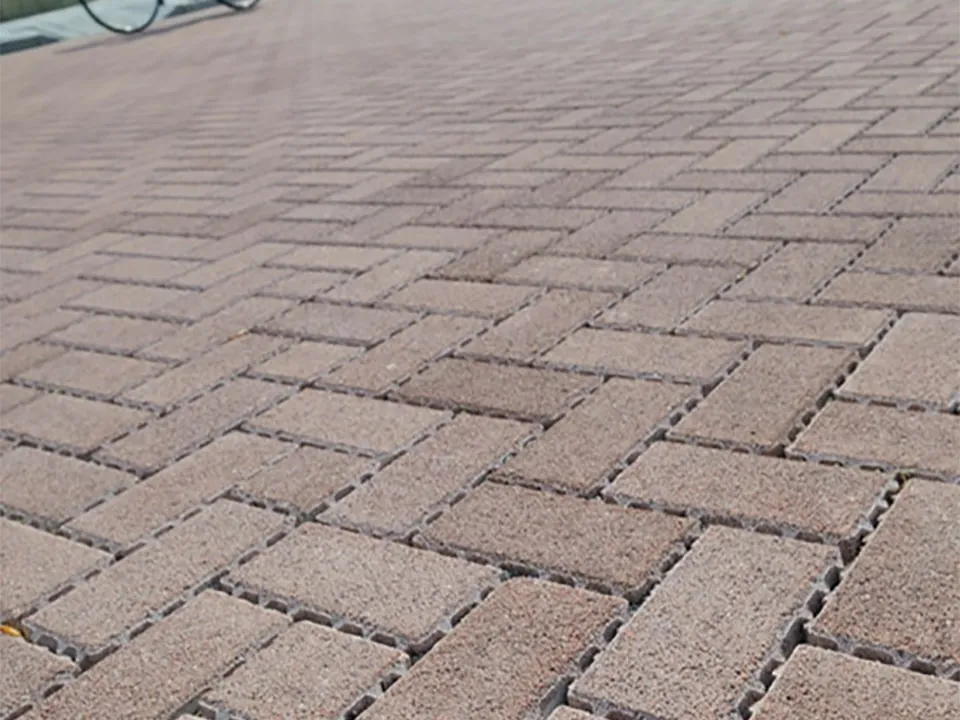
“Public authorities are looking for products with lower environmental cost indicators (MKIs) and are therefore willing to give new products a chance. However, the drive for sustainability also poses threats to the sector,” says De Groot. “Public authorities want to buy sustainably, but sometimes they lack the necessary knowledge. Clients sometimes come to us with requirements that are practically impossible to meet. It is up to us as a sector to explain what we do and show what we are working on. That is what we mean by transparent concrete. We have already made a great deal of progress.”
BRL K11002
The sector has agreed on the proportion of circular material in its products, as set out in the Assessment Guideline BRL K11002, ‘Generating Environmental Profiles for Concrete Infrastructure Products’. “This gives clients in the civil engineering and infrastructure sector a practical, consistent means of assessment. BRL K11002 was developed by Kiwa together with the trade association for manufacturers of concrete paving materials. It assesses whether manufacturers make their products in accordance with the required environmental profiles. The assessment guideline covers matters such as the nature and origin of raw materials, mix compositions, the use of secondary raw materials, energy-use data, qualified personnel, validated software tools, and compliance with national and international standards and regulations. The sustainability declaration issued to the manufacturer ensures verified environmental profiles for the products described.”
The street of the future
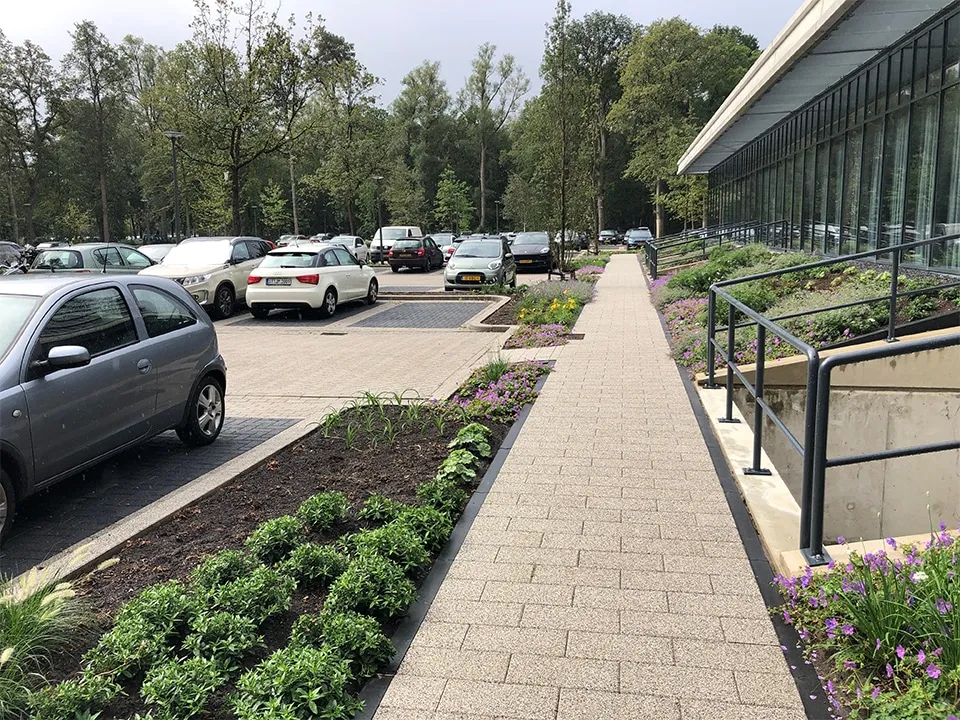
Concrete is often not seen as one of the most innovative materials. Yet the sector is undertaking all kinds of initiatives to find the best solutions to a range of challenges. This is true not only of sustainability and the environment, but also of other areas, such as climate change. The industry is keen to work with clients and do everything it can to respond to market demands. Transparency is important to the sector. “We want to tell our story and show that we deliver on our promises.”
Question about this story? Ask your question
Companies in this story
Keep following this
Get an email when a new story is published. No account needed.
- ThemeLower emissions and more reuse
- SubjectConcrete
- Companyv.d. Bosch Beton b.v.