









ViaCon BCT offers strong, sustainable and efficient corrugated steel structures for the renovation of civil engineering structures
Text Susan Peek Beeld ViaCon Bergschenhoek Civiele Techniek
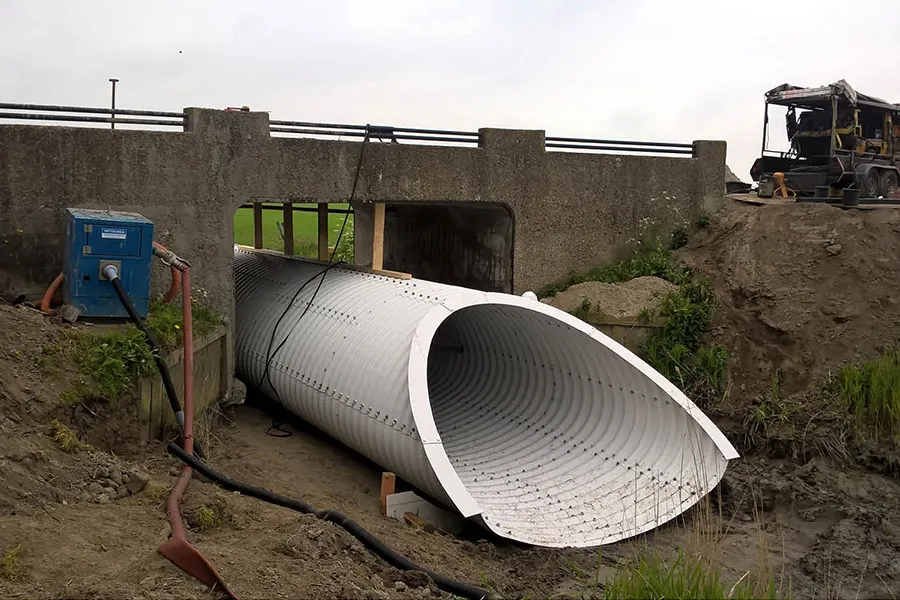
In the decades after the Second World War, a huge number of civil engineering structures such as bridges, tunnels and culverts were built. Many now require major maintenance or replacement. They are nearing the end of their service life or no longer meet the requirements for increased traffic volumes and loads. ViaCon Bergschenhoek Civiele Techniek (ViaCon BCT) offers a range of innovative, sustainable corrugated steel structures for the civil engineering sector.
“Completely replacing ageing bridges and culverts often causes major traffic disruption, lengthy project schedules and high costs,” says Dick van der Linde of ViaCon BCT. “Our corrugated steel structures are a cost-effective, sustainable solution that avoids extensive demolition and traffic diversions. Their fast and efficient installation causes minimal disruption to the surrounding area, making them an attractive alternative.”
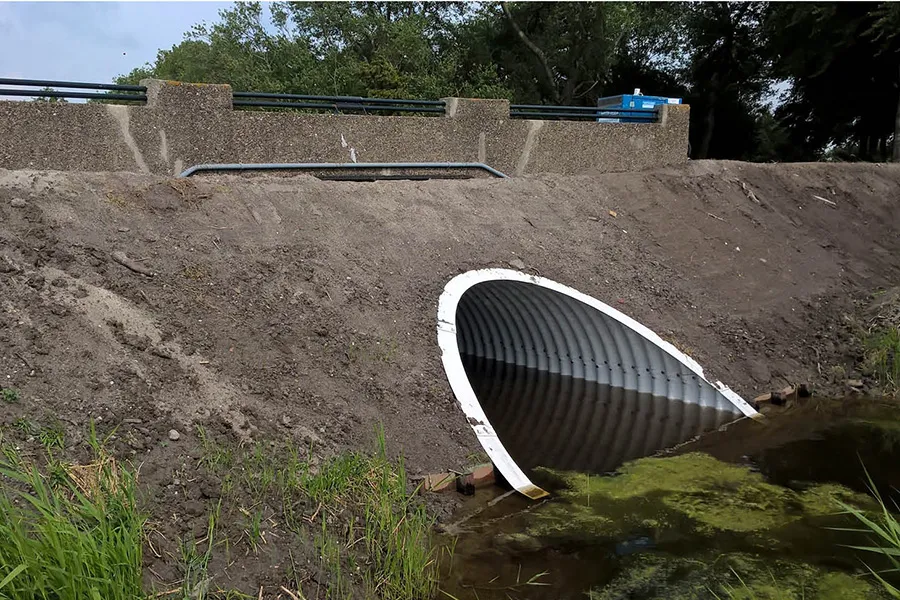
From culvert pipes to road tunnels
The ViaCon Group operates in nineteen countries across Europe and has extensive experience renovating civil engineering structures with corrugated steel, from small culvert pipes to large road tunnels. “Using project-specific data, we assess whether the existing structure can be renovated with a ViaCon BCT solution. Our library of more than 400 standard culvert and tunnel profiles allows us to recommend the best fit for each situation. We advise, calculate, engineer, manufacture and supply the structure. Naturally, we ensure that the design meets current requirements and standards for traffic loading,” Dick continues.
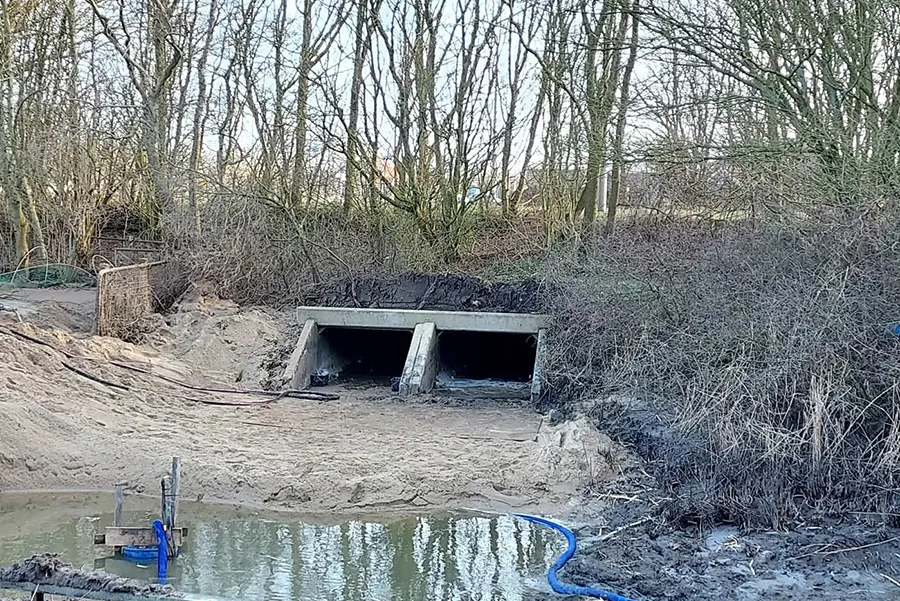
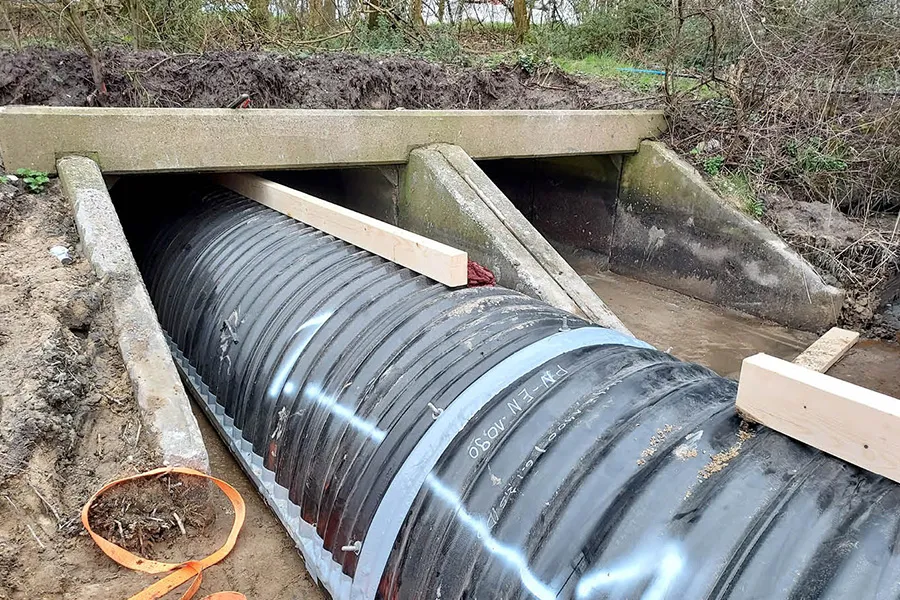
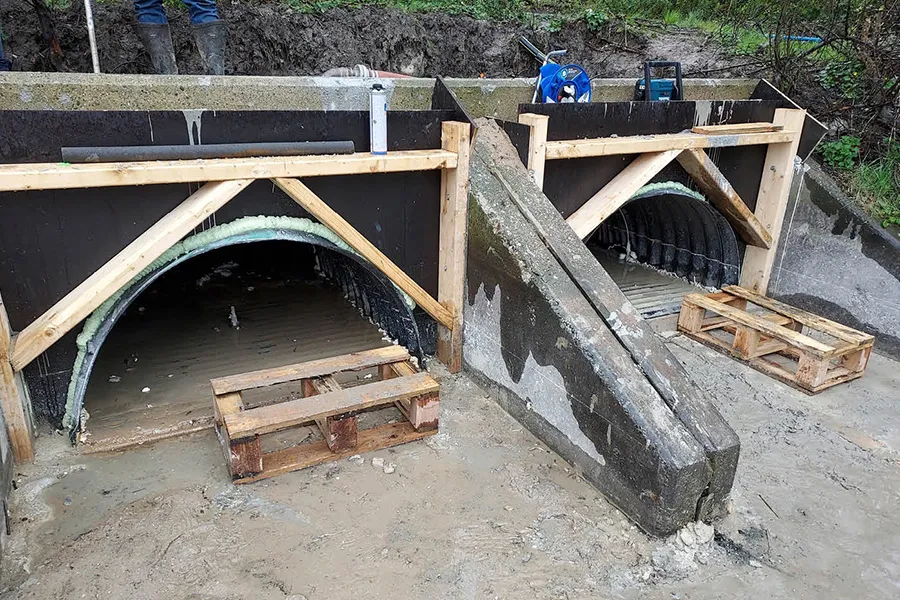
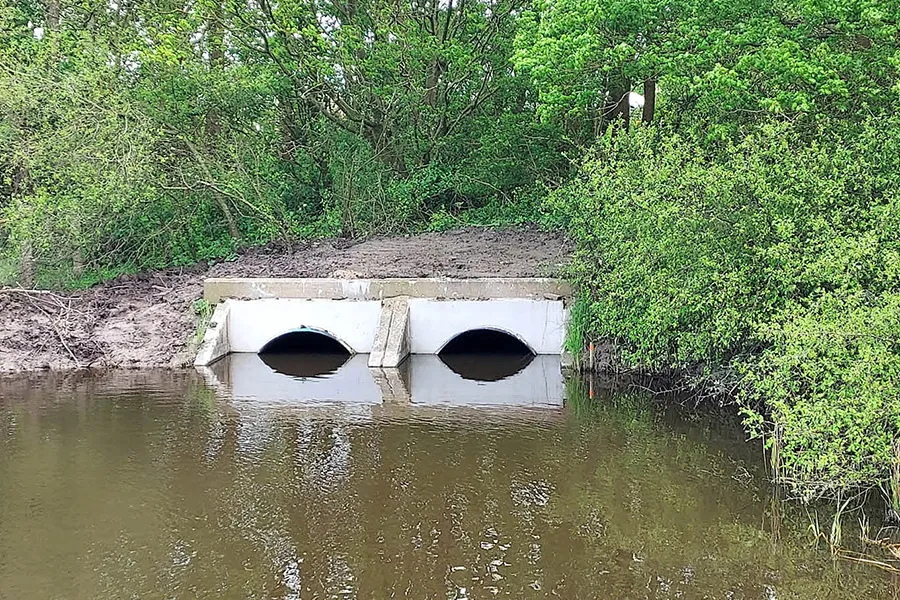
Bridge renovation using a long-span culvert profile.
Pull-in or Build-in method
Dick explains the two methods commonly used by ViaCon BCT: “With the Pull-in method, a new steel profile is pulled into the existing structure. This is often used where space is limited, such as beneath existing bridges. The Build-in method, by contrast, is used when there is enough room to build and assemble a new structure inside the existing one. It is also used on projects where any loss of flow area or reduction in the clearance envelope must be kept to a minimum, or where the existing structure changes direction along its length.” The corrugated steel plate sections are dimensioned and weighted so that the entire process can be carried out by hand, and have flanges for assembly from the inside. “Special sections such as bends and curves are accurately measured on site and custom-made in the factory,” Dick continues. With both methods, the space between the old and new structures is filled with a semi-fluid grout which, once hardened, provides supporting pressure to the new tunnel.
ViaCon BCT always carries out projects in partnership with a civil engineering contractor. “They handle dewatering, cleaning and, where necessary, installing the sliding beams and crane equipment. We take care of the rest.”
Why replace when renovation is an option?
Renovating with corrugated steel offers many benefits: faster construction, less environmental impact, an upgrade to the structure’s load-bearing capacity and significant cost savings. “It also minimises disruption to the surrounding area and traffic during renovation, as demonstrated by projects alongside busy roads such as the N9 near Alkmaar. With a design life of more than 100 years and minimal maintenance costs, it is a sustainable solution for ageing infrastructure and certainly worth considering,” Dick concludes.
Question about this story? Ask your question
Keep following this
Get an email when a new story is published. No account needed.
- ThemeExtending the life of roads and civil engineering structures
- SubjectBridge construction







