









BIM, Digital Twin and a digital environment applied across the Amsterdam Road Tunnel Improvement Programme
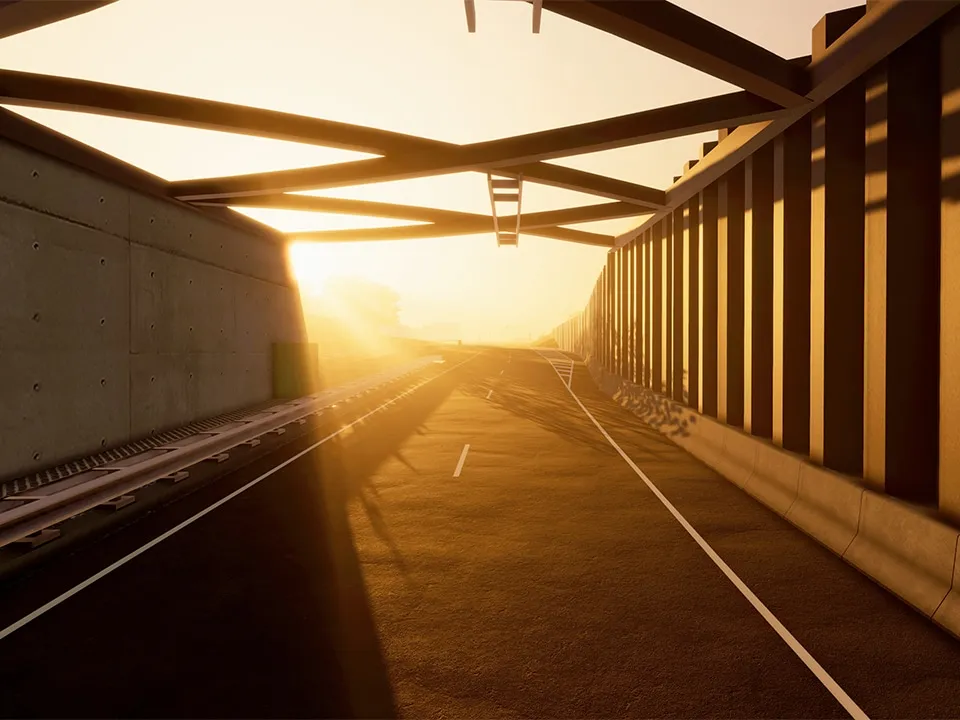
Alongside work on the Amsterdam Traffic Control Centre, the Amsterdam Road Tunnel Improvement Programme (AWA) includes the renovation of the Piet Heintunnel and the Arenatunnel, as well as modifications to the Michiel de Ruijtertunnel.
TEC, a permanent partnership between leading international engineering consultancies Royal HaskoningDHV and Witteveen+Bos, supports the design process and advises the municipality on making Amsterdam’s tunnels fit for the future. This includes developing a BIM environment and a Digital Twin, in collaboration with Infranea, a specialist in 3D design, BIM services and VR simulations for complex infrastructure projects.
Integrated approach to the entire tunnel portfolio
The programme takes an integrated approach, bringing together disciplines such as tunnel safety, fire safety, installations, and operating, control and monitoring systems. The associated work is carried out during the design, construction and commissioning phases. The BIM core team, comprising Maarten Visser (TEC/Witteveen+Bos), Roy van Hattem (TEC/Royal HaskoningDHV) and Peter Schakel (Infranea), not only ensures optimal collaboration between all parties involved, but also oversees the implementation of innovative, modern tools and techniques across all AWA projects.
A uniform, future-ready road tunnel system and traffic control centre
The AWA programme has two objectives. The first is to deliver safe, available road tunnels that meet all requirements. The second is to make the tunnels fit for the future. This is achieved by taking a generic approach and creating consistency across the individual projects. The result will be tunnels that are ready for the future: safe to use, easy to operate and straightforward to maintain.
A generic approach is also used to create consistency across the individual projects in the areas of operation and monitoring. The result is a functional, uniform and future-ready road tunnel system and traffic control centre.
BIM and Digital Twin
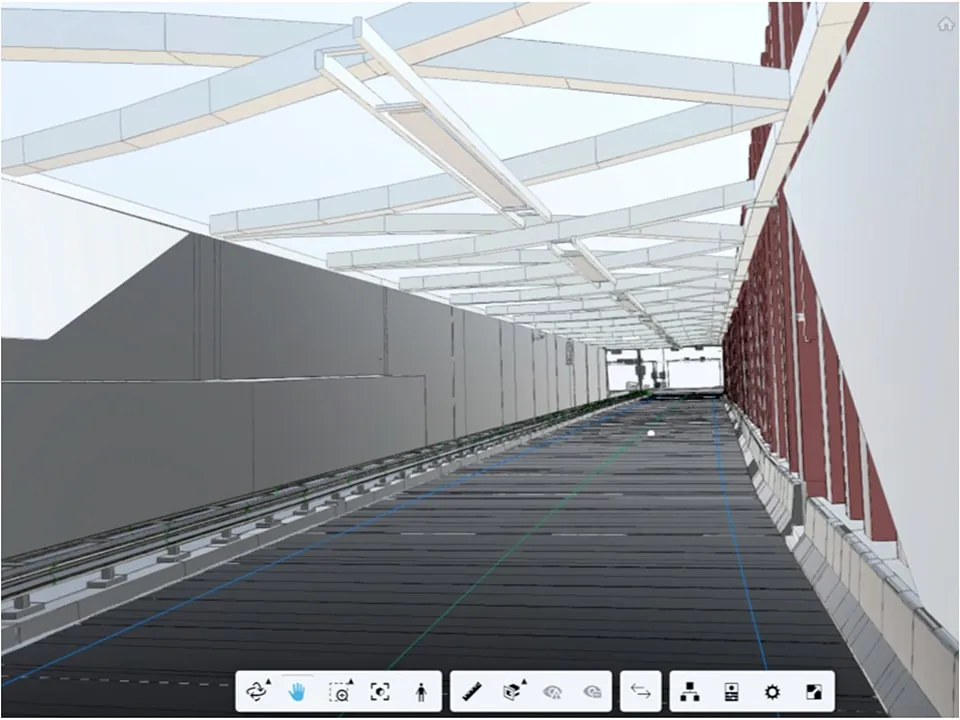
Roy van Hattem, BIM adviser at TEC, and Peter Schakel, Digital Twin expert at Infranea, explain that little digital data is available on the existing tunnels from the past. “So the first step is to gather information about the existing assets and draw up a good plan for how we will approach these projects: think first, then act. The existing tunnels were mapped using 3D tunnel scans. The point cloud produced by a 3D tunnel scan was used as the basis for creating the 3D BIM models. The design models were then added to this initial product. The Piet Heintunnel Alliance (Gemeente Amsterdam/Heijmans Infra/Siemens Mobility) is now developing the models further for the final design and construction design. We work together in a single digital environment, collaboration is going well and the models are being developed according to plan. BIM originally began as a prerequisite for creating a Digital Twin. For us, it is much more about Building Information Management: the 3D model is used to link data and make design changes quickly. Everyone contributes their own input to improve the BIM model, which is managed centrally, kept accurate at all times and accessible to all parties at every stage. This is crucial, especially at a time when we are dealing with the restrictions brought about by Covid.”
Digitalisation adds significant value
As BIM manager, Maarten Visser manages the programme’s integrated approach, which involves several teams working across different disciplines. “The programme has several modelling teams, each led by a BIM coordinator for the project. There are also various teams working on developing the Digital Twin. The BIM model provides the basis for the Digital Twin. Together, they have three main objectives. First, design verification and validation, to check that we have designed the right thing and designed it correctly. Second, testing and trials: using a Digital Twin means a great deal can already be tested digitally, helping us achieve the shortest possible tunnel closure. And third, supporting Training, Education and Exercises (OTO). The software and hardware systems must work together to ensure a safe situation. Using the tunnel’s Digital Twin, we provide the most realistic training and exercise environment possible.”
Digital environment
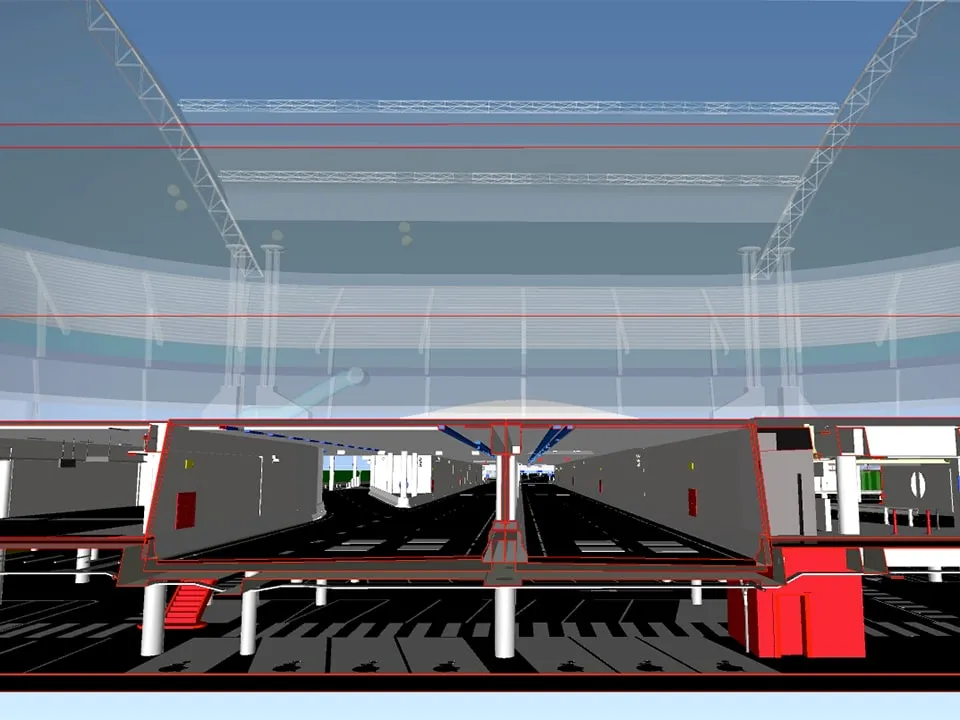
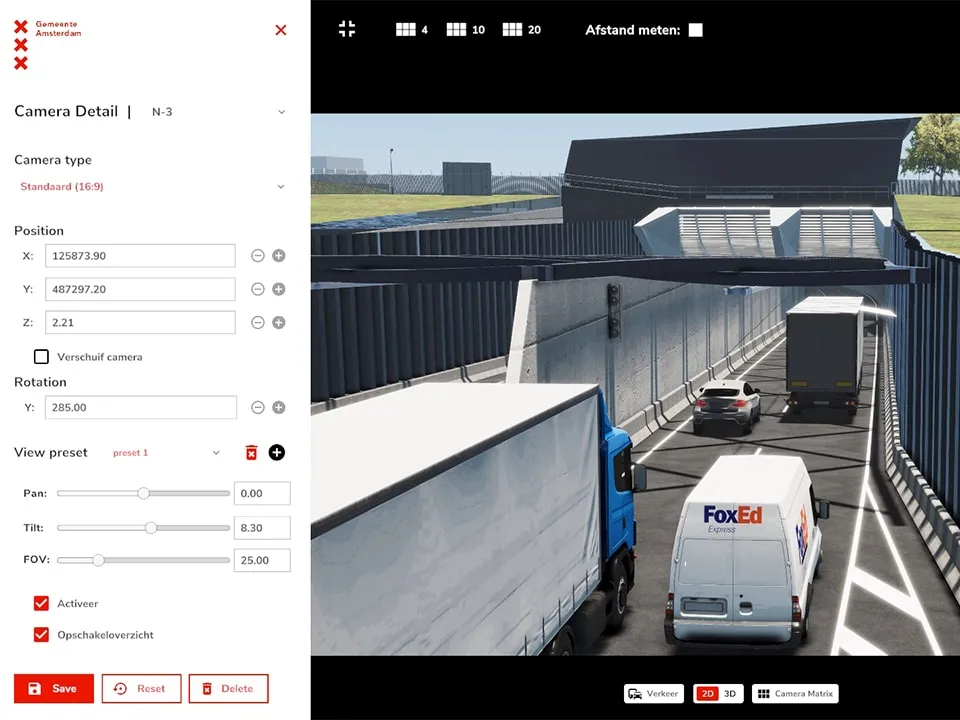
One component of the Digital Twin is the virtual CCTV camera validation tool. The camera plan for the Piet Heintunnel, prepared by the Alliance, has been loaded into it. “This gives you a perfect view of the sightlines and shows whether the cameras are in the right places to provide coverage of the entire tunnel,” explains Peter Schakel. “You can also experience it all through a Virtual Reality (VR) headset.” As mentioned, the digital environment is also used for training, education and exercises. Rik Teuben is the programme’s test manager. He knows that testing takes no time, it is resolving findings that takes time. By enabling software-based digital testing, TEC and Infranea bring this forward in the process, allowing findings to be resolved earlier and saving time and money. This shortens the project’s lead time and prevents risks.
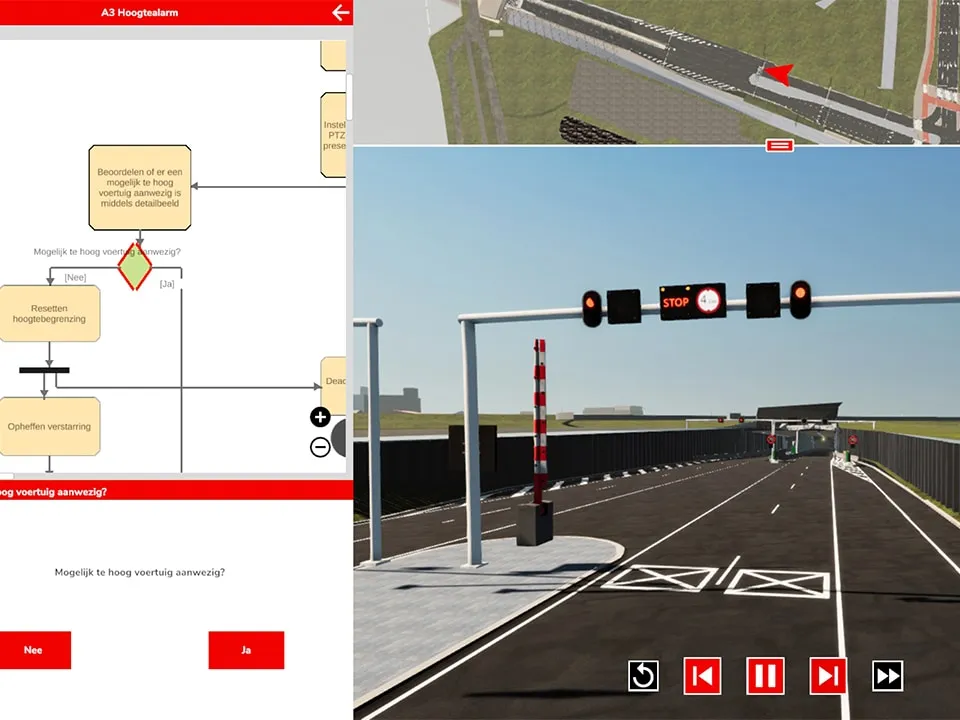
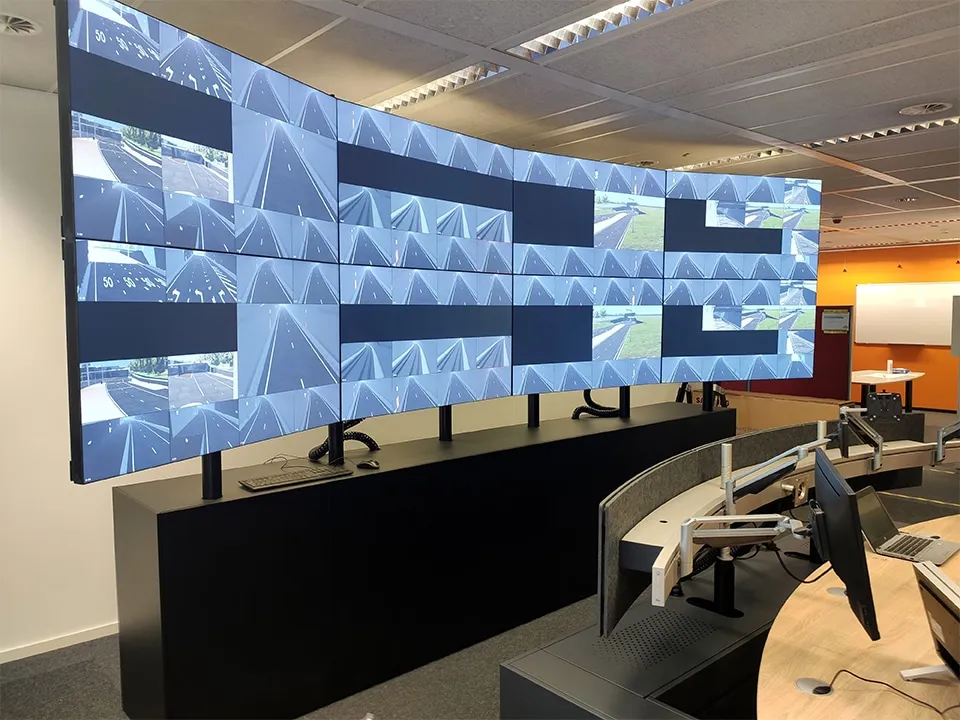
“It is fantastic to see what we can do these days,” says Maarten Visser. “The traffic controller sits at their own workstation behind the operating desk and sees an image from the digital environment instead of a camera feed.” Peter Schakel adds: “The trainer can introduce all kinds of scenarios into the simulation, allowing procedures and protocols to be practised. The traffic controller’s actions are also reflected in the behaviour of the tunnel system in the digital environment. The trainer can make changes to the scenario at any time and assess how the traffic controller responds and deals with the feedback. Because it is so realistic, people receive better training and can be demonstrably assessed as competent.” The Digital Twin is therefore an integral part of the Training, Education & Exercises programme, drawn up by Marcel van Wijk, project leader for the OTO programme.
Management and maintenance
“A Digital Twin has never before been used for a tunnel by Gemeente Amsterdam. Naturally, this requires a lot of coordination upfront,” says Maarten Visser. “It is a big step. Digitalisation does not come naturally to everyone,” adds Peter Schakel, continuing: “TEC and Infranea play an important role in making it accessible and establishing a solid foundation.” Roy van Hattem says: “The investment in all these digital technologies aims to minimise and manage the impact and disruption before, during and after the tunnel renovation, reduce the cost of failures and shorten the tunnel closure. Other elements of this approach include safeguarding safety, preserving knowledge, training and educating competent professionals, and transferring the tunnel to management and maintenance. The Digital Twin will be able to support the tunnel manager and contractors, both during emergencies and for routine maintenance. The consistency and reusability of the processes at the Piet Heintunnel provide the basis for the other tunnels. This gives the municipality a good frame of reference. By learning from this, you can make improvements, and that is a real gain.” He concludes: “This is no longer the future, this is what we are doing now!”
Question about this story? Ask your question
Keep following this
Get an email when a new story is published. No account needed.
- ThemeDigitalisation from design to construction
- SubjectBridge construction







