









Want to dig for less? Hire the biggest excavator you can!
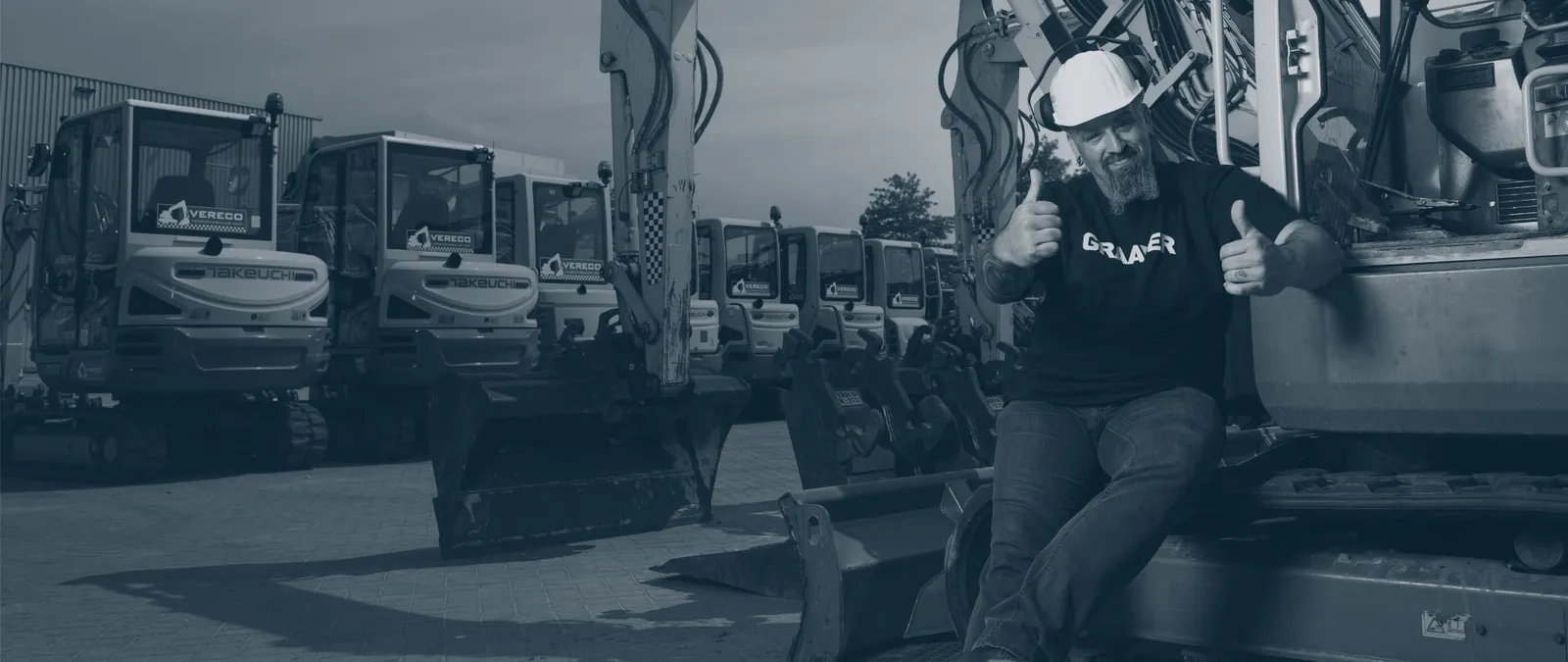
It may seem like strange advice. But if I can offer you one tip... always hire the biggest excavator you can!
You may think I’m trying to make you spend more. A quick look at our website shows that the bigger the machine, the more expensive it is to hire. Yet in many cases, the opposite is true. Choosing the right machine, which may mean a slightly bigger one, can save you a lot of money. In this blog, I’ll explain exactly how.
Once you know what the job involves and where it needs to be done, you can decide how big your machine needs to be. You can’t exactly use a 15-tonne excavator to landscape a small urban garden. It simply won’t fit. On the other hand, using a (too) small machine for a large job wastes a lot of time and fuel.
DIG FOR LESS? HOW DOES THAT WORK?
A small machine needs to be repositioned much more often while you’re working. For example, a 2-tonne excavator needs to be repositioned twice as often as a 10-tonne excavator, which has a much larger working range. Repositioning takes time and fuel. And while you’re moving the machine, you’re not digging.
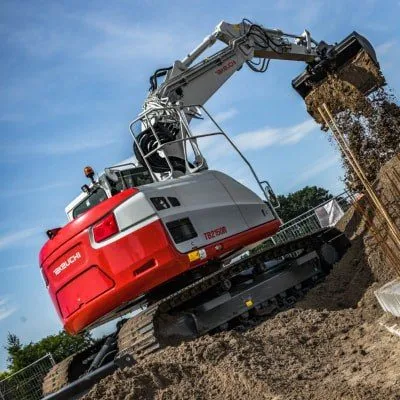
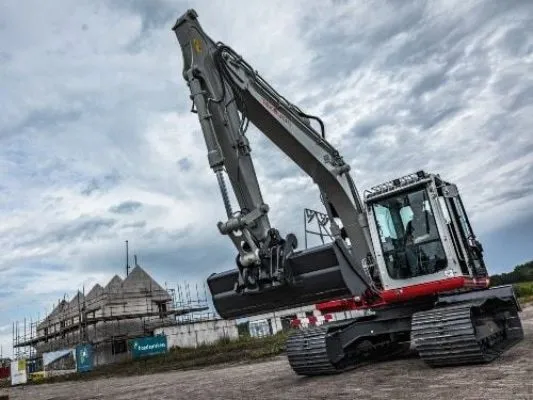
Here’s a simple calculation to illustrate the point:
- With a 1.5-tonne excavator and a ditching bucket about 1 metre wide, you can move around 100 litres per bucket and 4 buckets per minute. But because the machine needs to be repositioned, the effective rate is only 3 buckets per minute.
- At 6 hours of intensive work, that’s 108 m³ per day. Fuel consumption will be around 20 litres per day. That works out at 0.185 litres per m³ of excavated soil.
- With a 10-tonne excavator and a 2-metre ditching bucket, you can move around 450 litres per bucket and 3.5 buckets per minute. Allowing for necessary repositioning, the effective rate is 3 buckets per minute.
- At 6 hours of intensive work, that’s 486 m³ per day. Daily fuel consumption will be around 40 litres.
- That works out at 0.08 litres per m³.
- This example shows that a 10-tonne excavator works more than 4 times faster and uses only half as much fuel per m³ of soil moved as a 2-tonne excavator.
This example shows that a 10-tonne excavator works more than 4 times faster and uses only half as much fuel per m³ of soil moved as a 2-tonne excavator.
Once again, this is a hypothetical job that doesn’t actually exist, used here as an example. But the differences are so great that it’s worth taking a moment to think about your choice of machine.
Of course, there are a few factors to bear in mind when choosing your machine.
SITE CONDITIONS
How big is the site? You’ll have more room on an estate than in an urban garden. Is the job inside a building, or under trees or overhead power lines? If so, bear height restrictions in mind. Need to dig alongside a wall, road or railway? Choose a zero-tail-swing excavator. Are you working on a construction site or a golf course? On a construction site, they don’t mind ruts, but that’s not the case on a golf course.
SIZE OF THE JOB
If you need to dig a hole for a trampoline, you don’t need a 15-tonne excavator. But you will for excavating the foundations of a huge livestock shed.
TRANSPORT COSTS
Transporting a machine can cost a fair bit. The cost of a low-loader for a 15-tonne excavator is considerably higher than that of a trailer for a 2-tonne excavator. You’ll probably finish much sooner with the 15-tonne machine, but in this case the benefits, finishing quickly and therefore having a shorter hire period, probably don’t outweigh the drawbacks, namely high transport costs. So ‘bigger’ isn’t always ‘better’.
Looking to hire an excavator near you? Visit www.graaver.com to see what’s available and check the prices!
This blog was written by Graaver, in collaboration with Dick Kroesbergen
Question about this story? Ask your question
Keep following this
Get an email when a new story is published. No account needed.
- ThemeConstruction equipment and transport in motion
- SubjectBouwMat







