









The switch to optimising operations through digitalisation is easy to make!
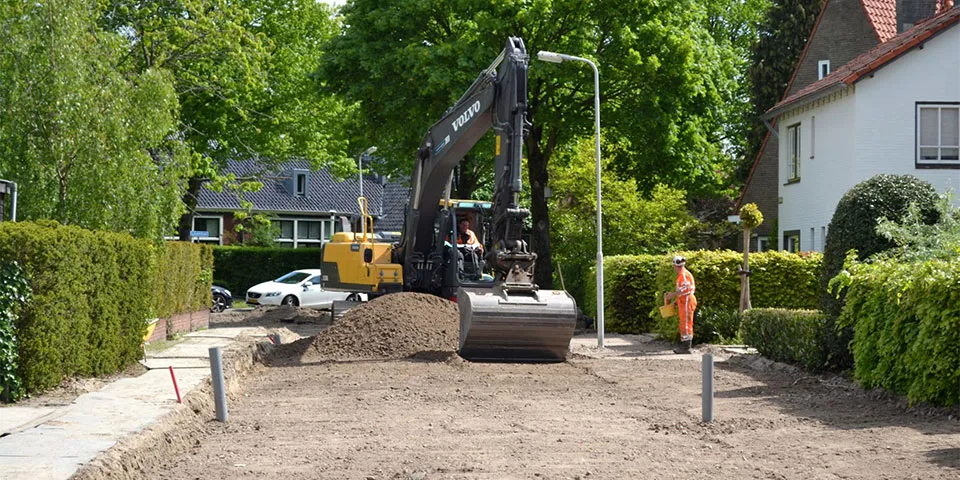
He graduated just two years ago and was immediately offered a contract. At Cnossen Infra, Jorn Kuipers is responsible for everything related to digitalisation. He uses Infrakit, which he says is indispensable.
“In my role as a work planner, I deal with digitalisation and setting out. We have made great strides in digitalisation over the past year: we have switched to 3D machine control and, among other things, locate cables and pipelines,” Kuipers begins.
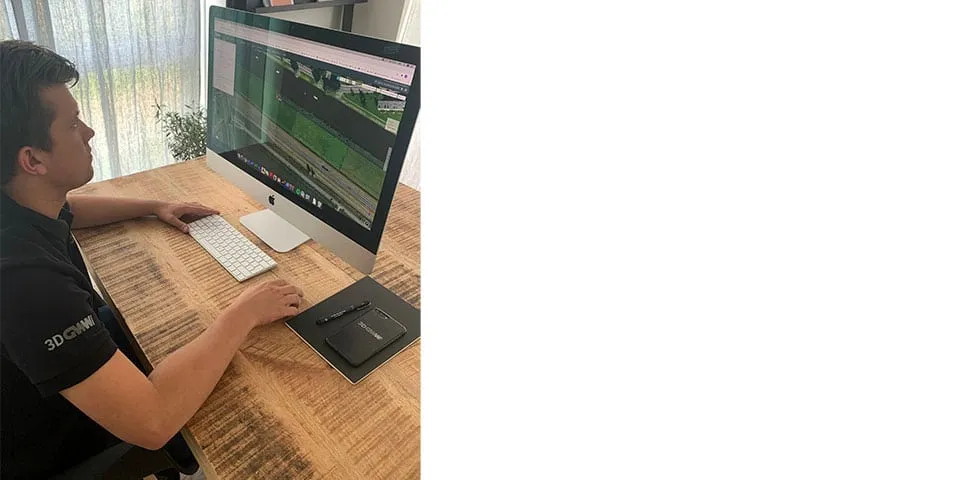
Third parties can also benefit from the expertise available
Kuipers notes that there is a need for support with digitalisation in the civil engineering sector. “3D machine control is highly complex for anyone unfamiliar with it, and companies sometimes struggle to see the wood for the trees. To help them, Cnossen Infra has set up a new business unit called 3D GWW. I am responsible for that department. The digital services we offer other companies include setting out, surveying, staking out and creating 3D models for GPS-controlled earthmoving machinery. We can also use ground-penetrating radar to locate cables and pipelines.”
From analogue to digital in record time
“When I was still doing my work placement, most things here were still analogue. People waited for drawings to come back from site before preparing the as-built drawings. You never knew whether you would receive anything, or what condition it would be in. When a sewer reconstruction project in Leeuwarden came up, we were faced with a number of requirements. For example, we had to submit a schedule of quantities every Monday for the new week. The information needed for this had to get from the project to the office as quickly as possible. That was when Infrakit came in. They looked over our shoulders and advised us on how to use their software, so that we could get data and images to the office as quickly as possible.”
In Kuipers’ view, Infrakit makes it possible to provide perfect evidence. “Our people in the field can prepare the required schedules of quantities on site and send them straight to Infrakit’s cloud environment, where the office can access them immediately. The invoice can then be prepared. One advantage of this approach, with its comprehensive and reliable supporting evidence, is that payment comes much sooner. The client has a ‘ready-made package’ on their desk, backed up by images and drawings.”
An exceptionally practical photo tool
“We use Infrakit’s photo tool for the initial site survey and during the works to record any deviations. The team on site also takes a photo of every new property connection and gully connection, so that a digital photo book can be compiled afterwards as a reference,” Kuipers explains. “Finally, we also use the photo tool to prepare what we call partial work orders. During the preliminary survey for one of these work orders, for example, we send a paving foreman out with a tablet. He records the condition of the existing surfacing. Afterwards, the survey locations are marked on a background drawing, and a photo book and schedule of quantities are also prepared. The office can view all of this.”
From USB to cloud
Previously, 3D models for machine control were transferred to the machine on site using a USB stick. “That worked at the start, but every change meant someone had to drive to site with a USB stick. With Infrakit, we send data directly to the relevant machine via the cloud. This also gives us good control over progress. It saves a huge amount of time and reduces errors. Infrakit works so quickly that it cuts machine downtime to an unprecedented minimum.”
‘As-built data’
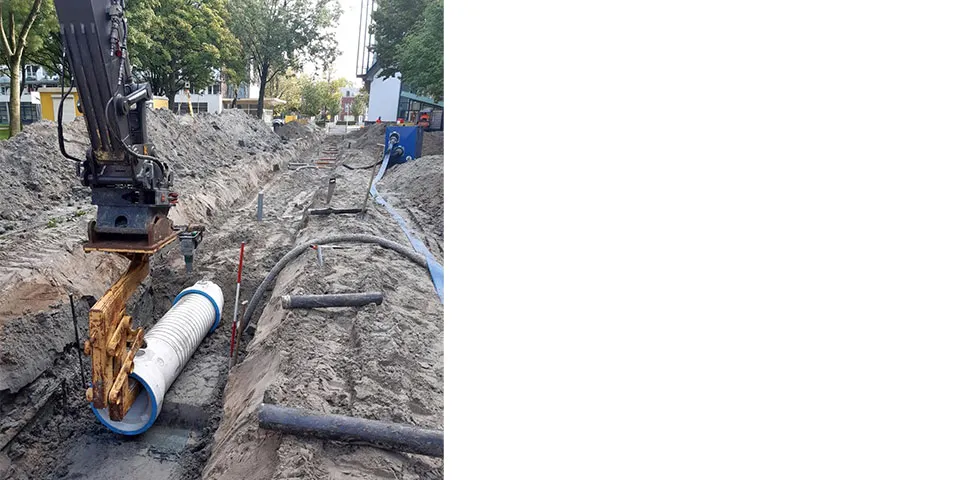
Working with Infrakit opens up unprecedented possibilities. Kuipers explains: “For example, we have the machine measure ‘as-built’ points every 5 to 10 metres. This information is sent straight to the Infrakit cloud environment. The office can monitor the model live and spot in good time if anything is going wrong. With Infrakit, we work more reliably than ever. We convert theoretical cross-sections from the specification into 3D models for the machine. This means any discrepancies in the specification come to light very quickly. The office also uses the ‘as-built data’ to prepare the as-built drawings.”
To make the process as complete as possible, Cnossen Infra also uses a foreman who carries out an additional check survey on site, just to be sure, linked to Infrakit. The data goes straight into the digital schedule of quantities. “At the end of the day, we can review the day’s entire output. And the great thing about Infrakit is that everyone uses the same data. That helps prevent errors too,” Kuipers concludes.
A business enquiry for Infrakit? Get in touch
Companies in this story
Keep following this
Get an email when a new story is published. No account needed.
- ThemeDigitalisation from design to construction
- SubjectBouwMat
- CompanyInfrakit







