Eilandspolder dike reinforcement: doing only what is truly necessary
Text and images Rick van der Meijs, Iv
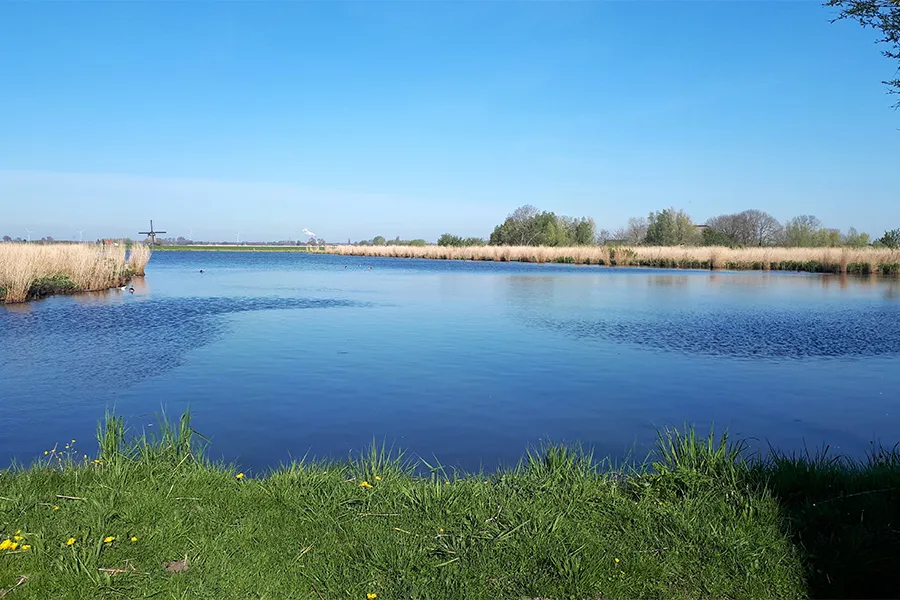
How do you strengthen 27 kilometres of dike in a Natura 2000 area without making unnecessary changes to the landscape and living environment? In the Eilandspolder, engineering consultancy Iv, commissioned by the Hollands Noorderkwartier Regional Water Authority (HHNK), reduced the reinforcement requirement from 13 to just 8 kilometres. This was achieved through rigorous assessment, detailed analysis, tailored solutions and agreements with the road authority.
Dike reinforcement in a sensitive area
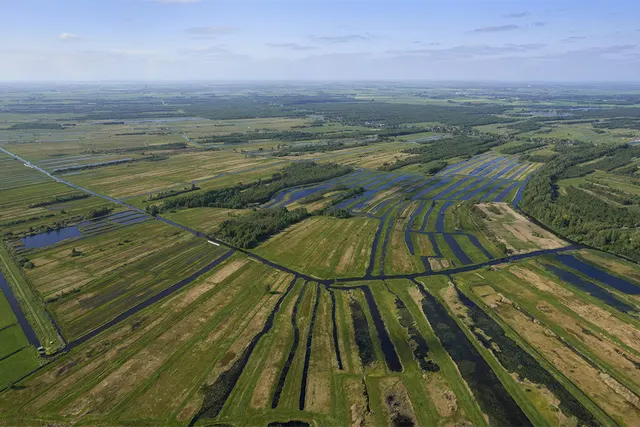
The dike protecting the Eilandspolder, an important nature and residential area, no longer met the requirements in some places for withstanding extreme rainfall and high water levels. The province of North Holland requires the dike around the Eilandspolder to be demonstrably safe from flooding by 2030. The challenge is that this is a sensitive Natura 2000 area where space is limited, permits are complex and every design must take account of ecology, landscape and residents’ interests.
Reducing the scope
Commissioned by HHNK, Iv began with a detailed assessment of the flood safety of the 27 kilometres of dike. This covered all failure mechanisms, including stability, height, piping, microstability and revetments. Assessing each section in detail would have taken too long. An efficient approach was therefore chosen, dividing the dike into logical assessment sections based on form, use and loading. Each section covers a stretch of dike with similar characteristics. For example, a grass-covered dike with little traffic, compared with a stretch used daily by heavy agricultural vehicles. A detailed assessment was carried out for each section. This approach made it possible to determine efficiently and on a sound basis where the dike met the requirements and where reinforcement was truly needed. The result: closer inspection showed that around half of the original 27 kilometres met current safety standards. This reduced the scope to 13 kilometres.
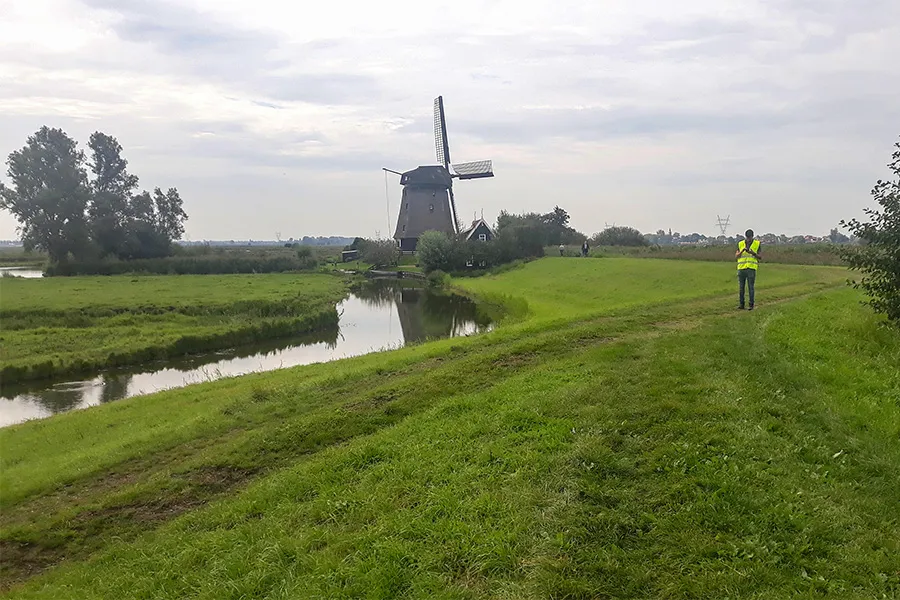
But the principle was clear: we wanted to make the most of the existing dike, minimise the impact on the surrounding area and reflect actual conditions as accurately as possible. Iv and HHNK therefore agreed on a proposal for further investigation of the remaining 13 kilometres. More accurate surveying of the dike, drilling and laboratory tests on clay and peat samples enabled parameters to be determined more realistically. This provided a clearer picture of the dike’s strength and composition. The area was also divided into smaller units, with site-specific factors such as the position of ditches, the presence of rubble-filled trenches and traffic loading assessed at each location. This made significant progress towards substantiating the approval of more kilometres of dike, so that only the sections of the ring dike where the real problem lay needed to be addressed.
Designing with space, residents and nature in mind
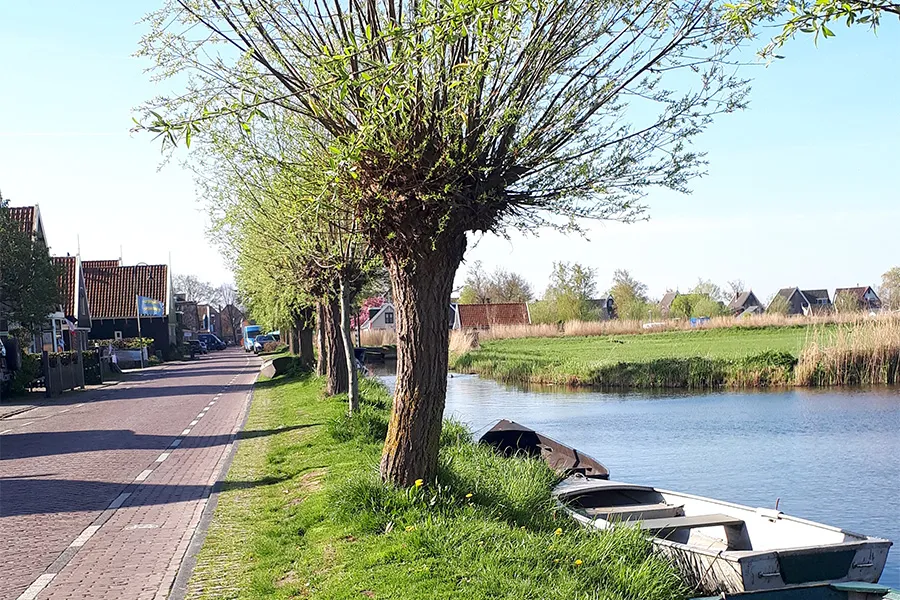
In many places, physical space was limited: the dike runs between homes, gardens, roads and parking bays. In some cases, no more than half a metre remains between private property and the paved surface. At the same time, water storage cannot simply be removed, as this would increase runoff and peak flows elsewhere in the water system. Reconciling all these requirements within a few square metres is a complex puzzle. Iv therefore worked closely with HHNK and residents to design suitable reinforcement solutions for each situation, with sustainability a key consideration.
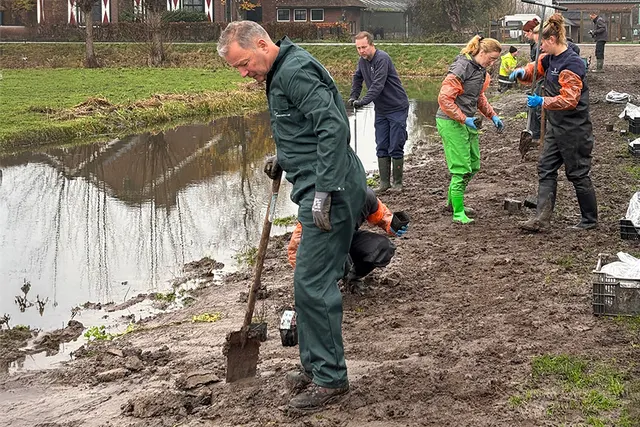
Solutions included adding berms on the landward side to improve stability and prevent the dike from slipping during high water or when saturated by heavy rainfall. As the dike could not be reinforced everywhere, some sections will be realigned towards the boezem. At the same time, a nearby island will be redesigned as a nature area with a wetland habitat, compensating for the water that has been impounded and enhancing biodiversity. For sections running through private gardens, solutions were developed in close consultation with residents to improve flood safety without taking up unnecessary space.
Robust and realistic
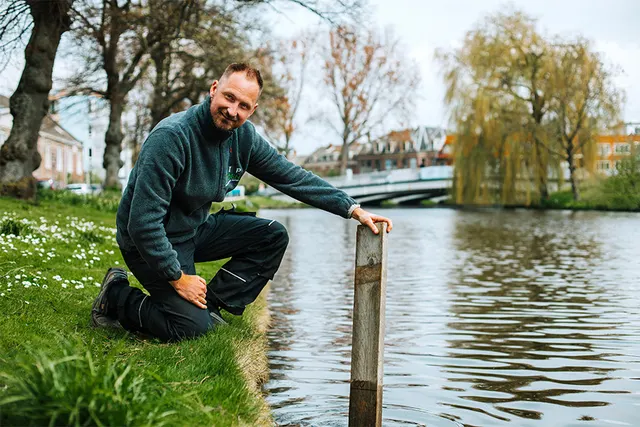
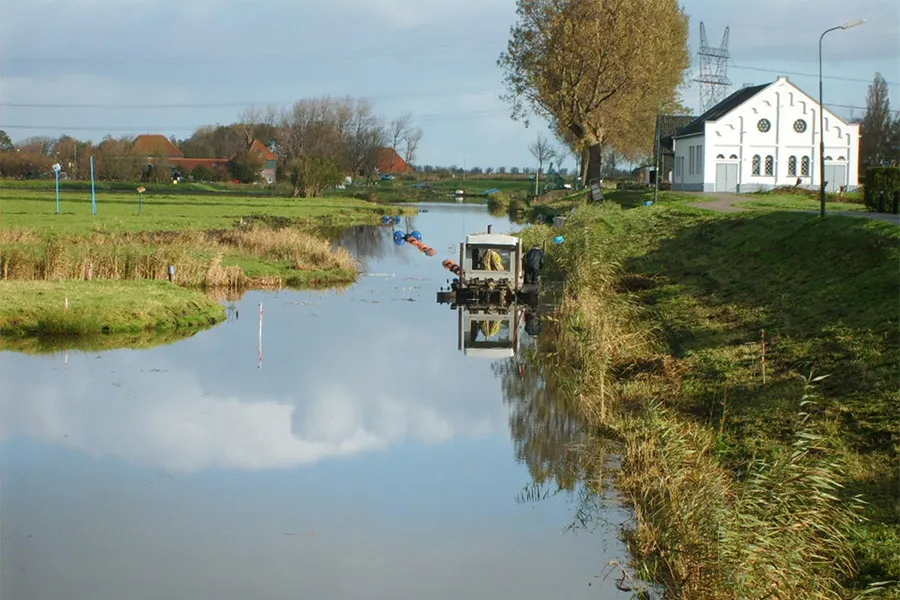
Alongside detailed investigations, it was essential to understand the local conditions. Finding suitable solutions meant getting to grips with what was happening in the polder and linking that to the technical assessment. Jesper, senior designer and flood safety project manager at Iv, explains: “We think it is important to stay in touch with the situation on the ground. We didn’t just follow a step-by-step process and wait to see what came out of it. We went out into the field to check the results against reality. If an assessment shows that a section of the flood defence is in poor condition, we go out with HHNK’s project team to see whether there is any damage or other relevant features that need to be taken into account in the design. Working with HHNK, we derived specific assumptions for each location. In this way, we brought theory, practice and experience together in the assessment.”
Rick van der Meijs, senior project manager and head of projects, water engineering sector at Iv: “Part of the project area lies within the boundaries of the Eilandspolder Natura 2000 area. Simply reinforcing 13 kilometres of dike there would have a huge impact on the ecology and residents. That gives us an extra incentive to do only what is truly necessary. The solution must, of course, be robust enough to keep people’s feet dry, but it must also be realistic: do no more than is strictly necessary.”
The principle was simple but well considered: make use of what is already there and do no more than necessary. This is not only cost-effective and quicker to deliver, but also more sustainable. Removing something and making a dike wider may seem like the easiest solution, but it is by no means always feasible or desirable. These are precisely the situations that call for a sharp technical eye to identify smart, well-substantiated alternatives. That is exactly where Iv adds value.
Tailored solutions through collaboration
Collaboration between Iv and HHNK was essential to this success. Intensive working sessions, sharing expertise and agreeing design choices together helped maintain trust. “Because we could explain each step and work through it together, we built support. We did only what was really necessary, no more. This led to robust, well-supported designs that do justice to the area, its ecology and the people who live there,” says Rick. What began as a wide-ranging reinforcement programme thus became an example of carefully assessed and designed flood protection. It was precisely by avoiding the easy option and choosing the smart one that this project succeeded.
Question about this story? Ask your question
Who worked on it
Eilandspolder
- engineering consultancyIv
Keep following this
Get an email when a new story is published. No account needed.
- ProjectEilandspolder
- ThemeFlood protection and climate-resilient water management
- SubjectSustainability & innovation
- CompanyIv