Circular construction with BioBlocks
Text Roel van Gils Image BioBlocks
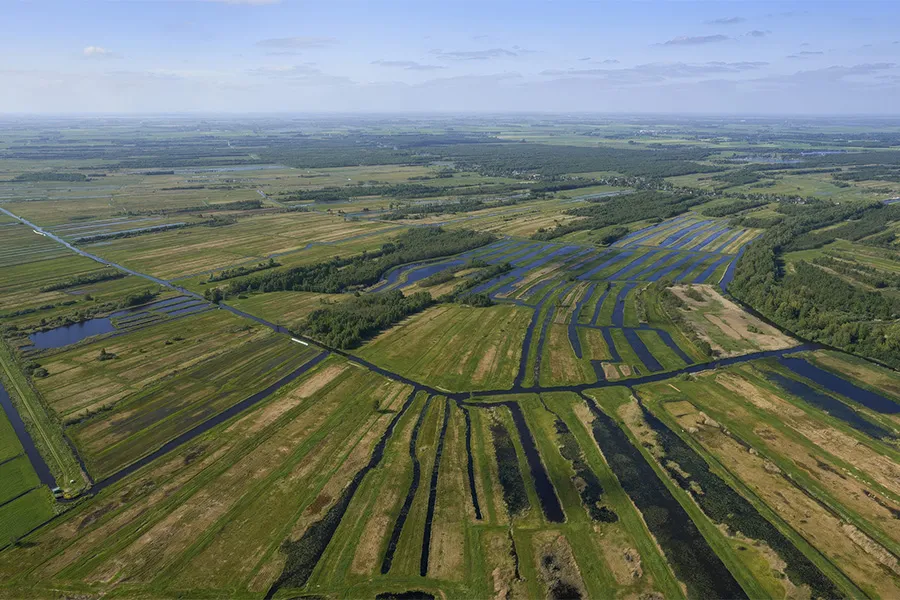
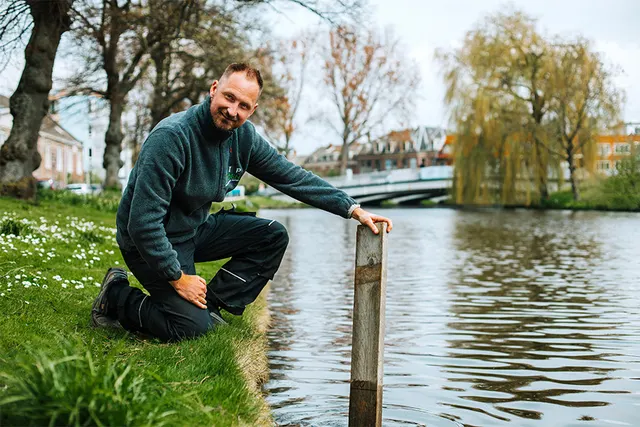
Building has been part of the Voets families’ trade for generations, but the rise of sustainable building materials sparked a new idea ten years ago: filling gabions with BioBlocks, made from natural residual materials from the Netherlands’ largest raised bog, Weerribben-Wieden National Park. Teun Voets, one of the people behind the initiative, gives us a glimpse behind the scenes and shares his ambitious plans for the future.
The search begins
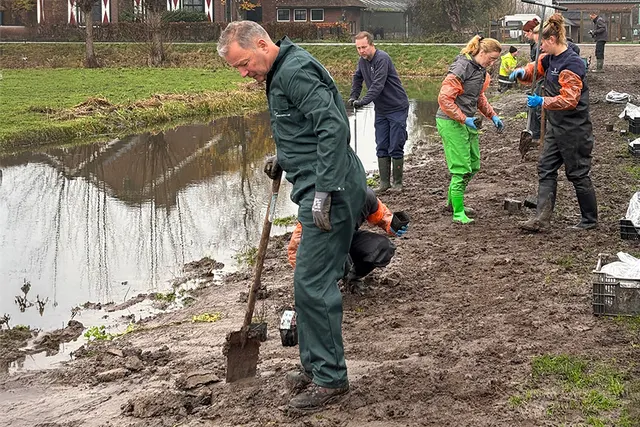
Across construction projects throughout the country, the Voets families build reinforced soil structures and natural stone surfacing. Bound by friendship and craftsmanship, the two families joined forces to develop high-quality gabion facings. “Gabions have traditionally been filled with crushed stone, usually sourced from quarries outside the Netherlands,” says Voets. “Architects and clients were increasingly asking whether the fill could be ‘greener’.” Their search led them to a unique area: Weerribben-Wieden National Park, the largest raised bog in north-western Europe. Peat was extracted here for centuries, creating a distinctive landscape of weren, ribben and petgaten, with long, narrow stretches of water that now form a remarkable ecosystem of reed marshes, floating mats, open water and quaking bog.”
Rich in stored CO2
The landscape of Weerribben-Wieden National Park is unique. Without management and maintenance, the area gradually becomes overgrown and will eventually turn into dry land. “That is why it is essential to maintain an ecological balance between open water, reed beds and marshland. To preserve the rare flora and fauna, old petgaten and waterways are dredged. They contain huge amounts of stored carbon, many times more than an average forest. If this material is spread on the surface, it oxidises in the air and releases CO2. The question was: could we turn this peat-like residual material into a new building block, while also limiting these CO2 emissions? That was the starting point for BioBlocks.” The first trials yielded 50,000 blocks, all made by hand. They were used in gabions at a bridge abutment alongside the Gouwe Aqueduct near Gouda. “Ten years later, they are still looking good, with vegetation growing around them. It proves the concept works, and should be developed further,” Voets acknowledges.
A unique production site
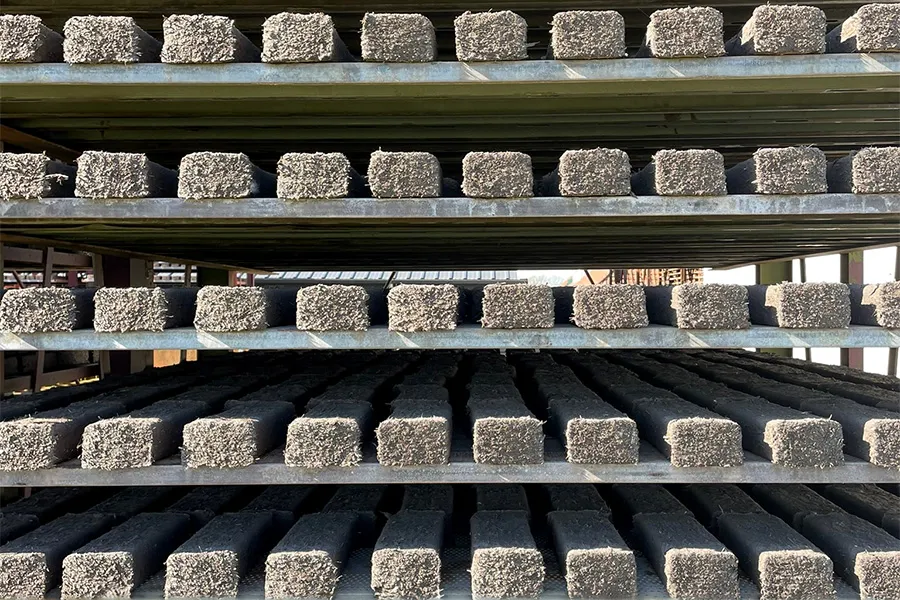
BioBlocks production has since moved to a former farm in the heart of Weerribben-Wieden National Park. “The former cowshed now serves as a production area, while the potato sheds are used for storage and the prefabrication of the gabions. We do everything as locally as possible to reduce transport.” According to Voets, the composition of the blocks has improved considerably over the years. “Mixing in reed fibres, sourced from maintenance work in the area and from local reed cutters, gives the blocks more structure and strength. After pressing, the blocks are left to dry outdoors for two months. Their weight then drops from three kilos to one and a half kilos. This drying process makes the blocks robust enough for use in construction.”
The beginning of a new era
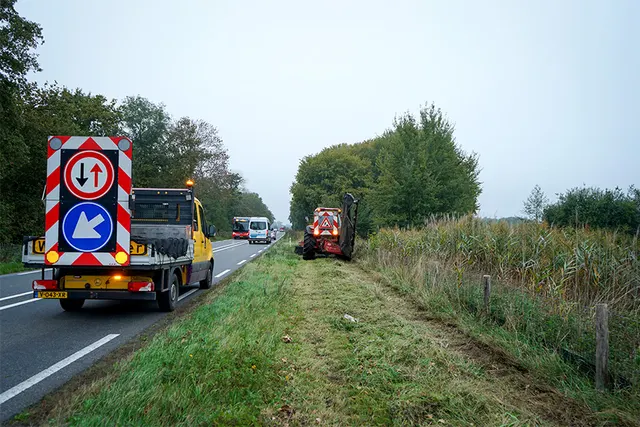
BioBlocks have gained tremendous momentum in recent years. “Introducing a new sustainable building material simply takes time,” Voets knows from experience. “We have now delivered many projects and are on the cusp of starting several major new ones. For the N211 Wippolderlaan, we are supplying and installing 2 by 1 metre cassettes filled with almost 300,000 BioBlocks, as a facing for noise barriers and reinforced soil structures.” But their ambitions go much further, including the development of fully bio-based elements made from sustainable materials sourced in the Netherlands. These will be suitable not only for gabions, but will also make any desired wall finish possible. “In short, we see great opportunities for BioBlocks, and we are only at the beginning of a new era of building with natural residual materials,” concludes an ambitious Voets. There is undoubtedly more to come!
A business enquiry for BioBlocks? Get in touch
Companies in this story
Keep following this
Get an email when a new story is published. No account needed.
- ThemeLower emissions and more reuse
- SubjectSustainability & innovation
- CompanyBioBlocks