Waalwijk family business invests in electric plant, but takes a pragmatic view of pace, technology and returns
Text Armand Landman Image Staad
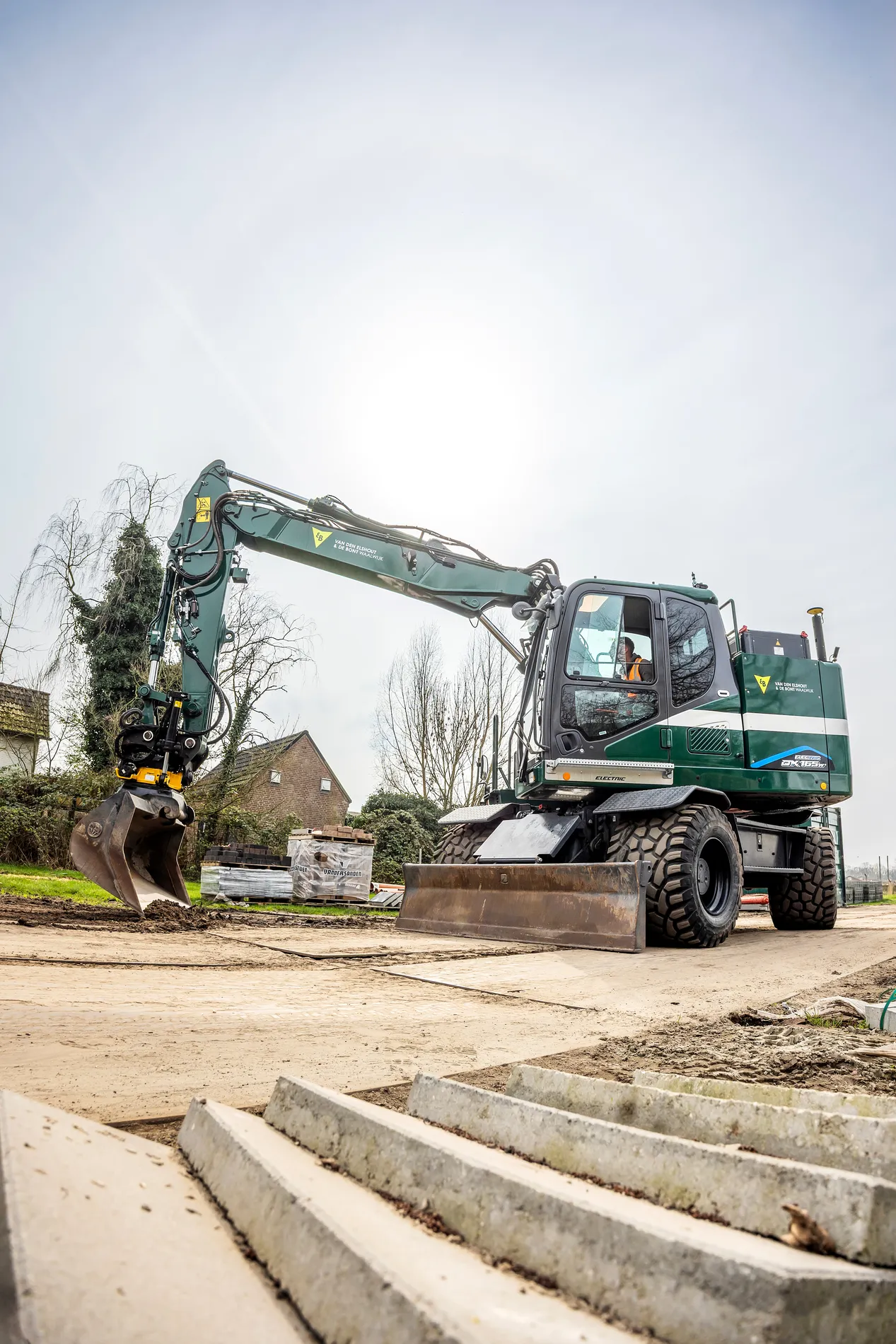
Talk to Erwin Muijs about his business and it quickly becomes clear that the conversation starts not with machines or projects, but with people. This year, contractor Elshout & De Bont from Waalwijk celebrates its 85th anniversary, and is still characterised by long-serving employees and a strong family culture. At the same time, the company is at the heart of a fast-changing sector, not least because of the rise of zero-emission plant
“We’re a traditional contractor for the modern age,” says Erwin Muijs. “We have a lot of our own people, our own plant and our own workshop. When we work somewhere, we’re really there doing the work ourselves.” This blend of tradition and innovation runs through the company, which employs around 70 people and operates in Central and West Brabant, working mainly for local authorities and other public-sector clients.
A contractor built for the future
Elshout & De Bont’s roots go back well before Muijs and his brother-in-law Frans de Bont took over in 2002. They deliberately kept the name. “I never considered changing it,” says Muijs. “It’s part of the company.”
After Frans de Bont’s sudden death in 2021, Muijs took on full responsibility, but says Frans’s presence is still felt throughout the company. Employee loyalty stands out. Lengths of service of 40 to 50 years are not unusual. At the same time, the company is actively bringing in younger people. “We have a lot of young people, interns and apprentices. You also have to invest in the future,” says Muijs.
That vision for the future is reflected not only in its workforce, but also in how the company presents itself to clients and the wider community. Projects are routinely reviewed with clients and receive average scores of between 8.5 and 9. “Every completed job is an invitation to do the next one,” says Muijs.
Electrification as the logical next step
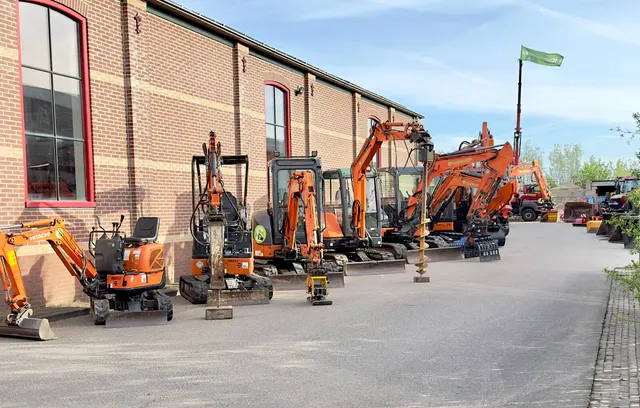
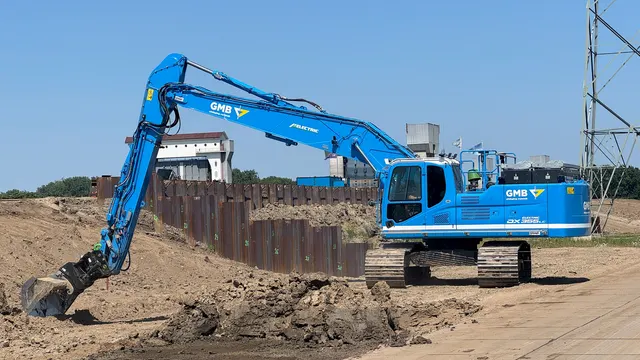
The move to electric plant did not come out of the blue for Elshout & De Bont. The company began electrifying smaller earthmoving machines, such as mini excavators and knickmops. It now also operates two electric wheeled excavators, one converted and one new, factory-built electric model.
Muijs says there are two reasons behind the move. “You run a business in response to what the market wants, but also according to your principles. Everyone can see that something needs to change in the world. At the same time, you have to be able to make the investment pay.”
The economic reality is a major consideration. Electric earthmoving machines require higher investment, while clients are not always willing to cover the full additional cost. Even so, Muijs sees the business case gradually improving, partly through notional discounts in tender assessments and projects that explicitly require zero-emission working.
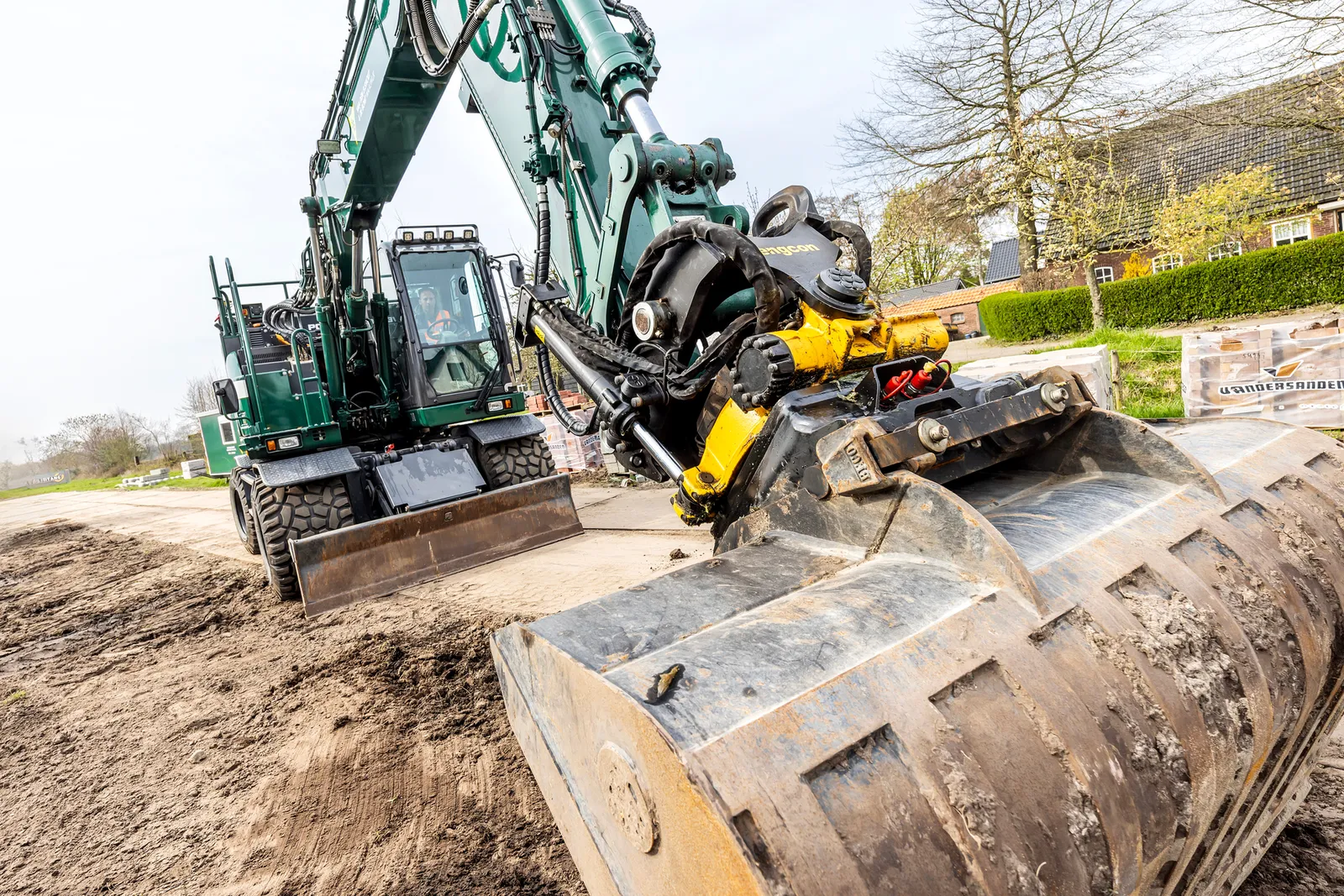
DX165W Electric
The electric wheeled excavator, a DX165W Electric supplied by Staad, is now being used on several projects. These are often jobs in urban areas or nature projects with emissions requirements. “The first project was in a nature reserve where zero-emission working was required. After that, it worked in central Breda and at several other sites where clients were willing to pay the additional cost of a more expensive zero-emission excavator,” says Muijs.
The operator’s experience
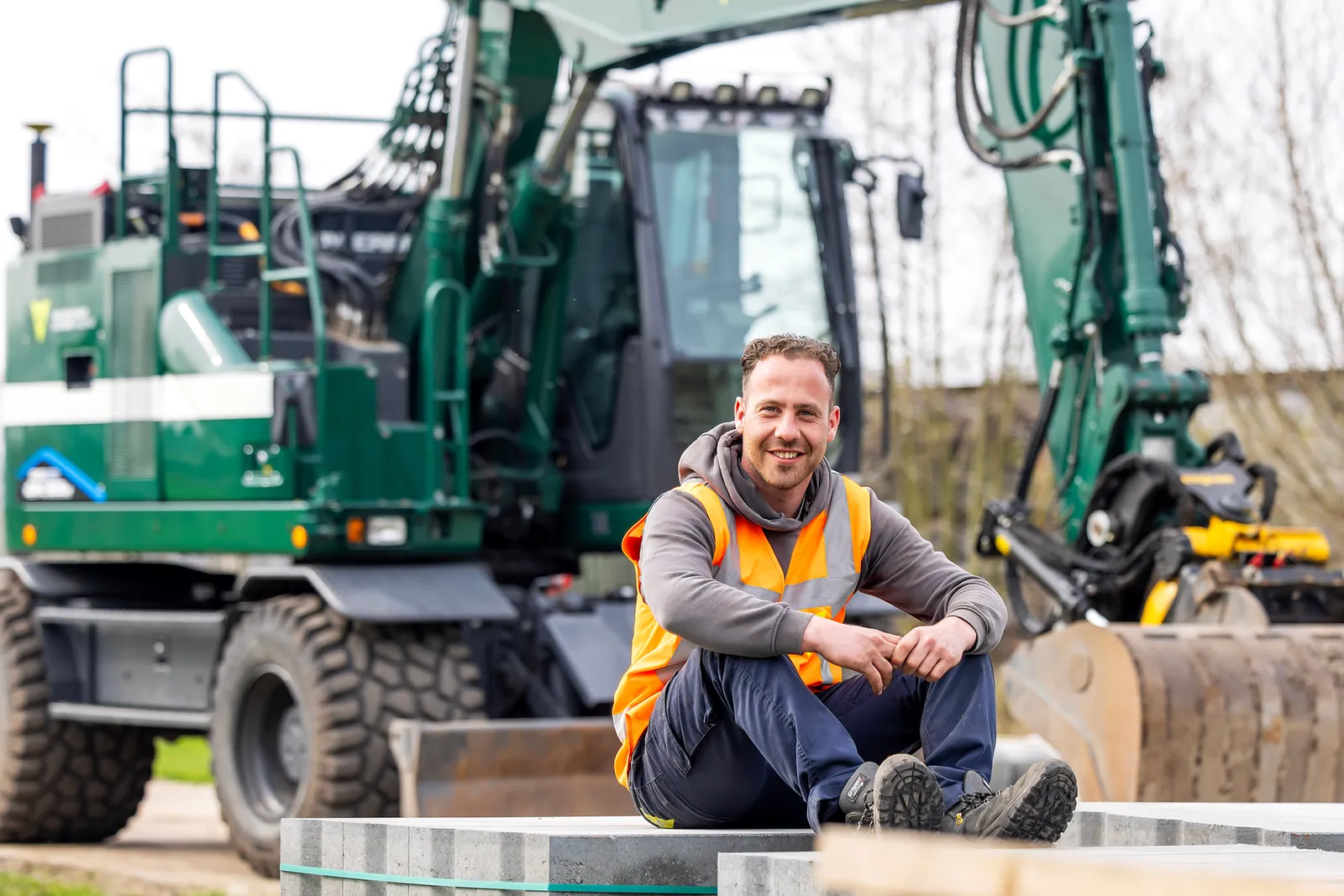
Plant operator Joris Heesbeen now works with the DX165W Electric and experiences the differences from conventional plant every day. While it took some getting used to, particularly charging and planning, his experience has been positive overall. For Heesbeen, the switch meant a clear change to his daily routine, not so much in operating the excavator itself as in everything around it. “Operating it isn’t even the biggest difference,” he says. “But you have to think ahead all the time. You simply need a charging point. That shapes your day.”
This reliance on electricity makes the work less straightforward than with a diesel machine. Where you would normally carry on without giving it a second thought, working electrically requires planning. “You can’t just think: I’ll work for another hour. You need to know where you’re going to charge and whether it will actually be possible. That’s different.”
Heesbeen says you soon get used to it, but it takes discipline. “It does make you more aware. You look at your working day differently. Even though a fully charged wheeled excavator can easily work a whole day, you still need to keep track of where and when you can charge.”
At the same time, he sees clear benefits. The lack of engine noise in particular changes the working environment. “It’s much quieter. You can hear what’s going on around you better. It makes working more pleasant,” he says. The immediacy of the electric drive is also noticeable. “It responds straight away. It’s a pleasure to drive.” This makes a difference on projects in urban areas or sensitive environments. Less noise and no emissions mean less disruption, something clients increasingly value too.
Charging infrastructure the biggest challenge
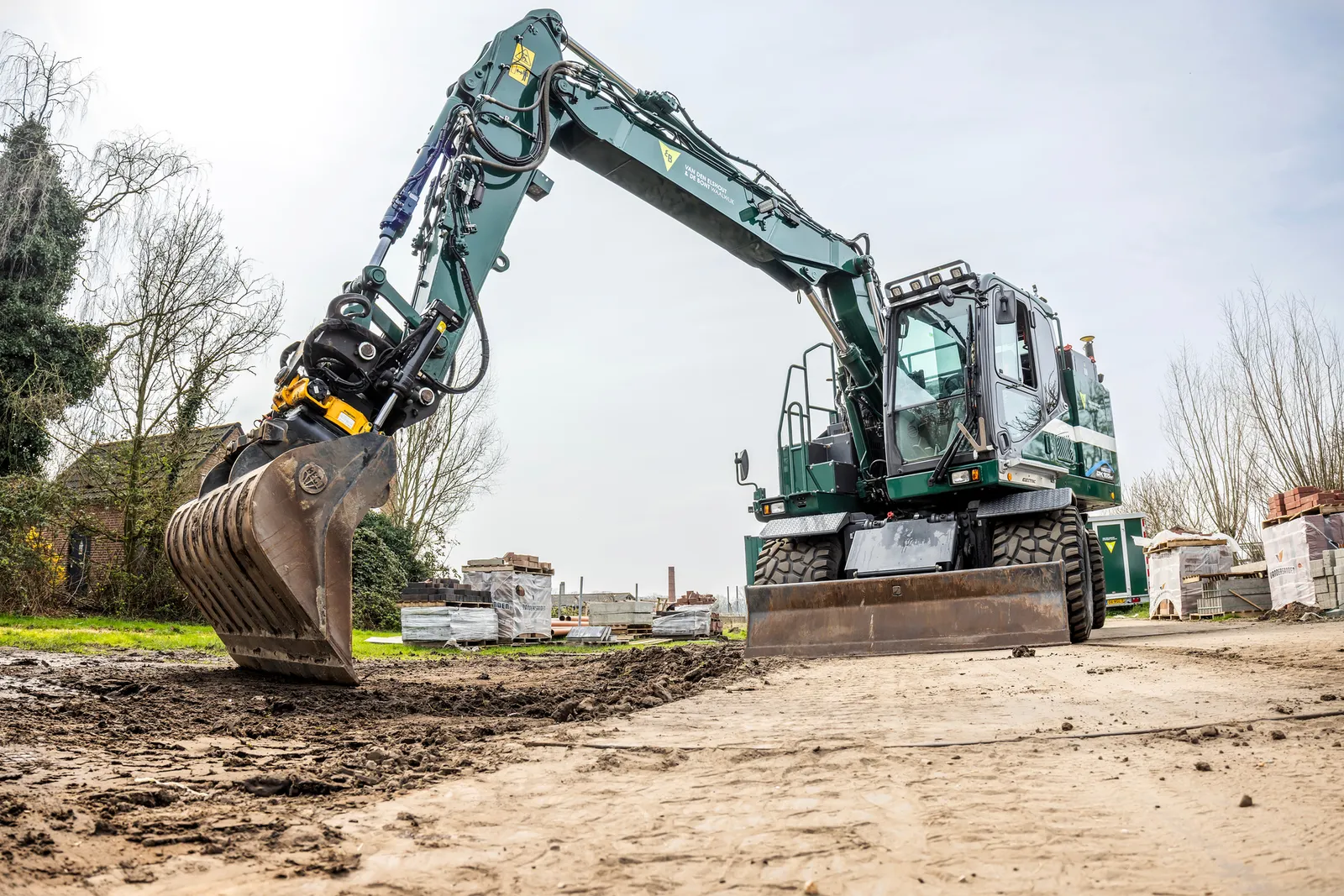
The biggest challenge is not the earthmoving machines themselves, but the power supply. Many projects lack sufficient charging capacity. “Every time, you have to work out where you can charge. Often that means a nearby farmer or business. Sometimes it works well, sometimes it doesn’t,” says Muijs.
Elshout & De Bont plans to continue electrifying its fleet over the coming years, in close collaboration with the specialists at Staad. The aim is to have around a third of its fleet running on electricity by 2027.
Electrification is not happening in isolation. The company is also investing in sustainability at its premises, including insulation and greening the site, with plans to eventually disconnect from the gas network.
Even so, the company’s core remains unchanged: delivering quality, responding quickly to clients and investing in people. For Elshout & De Bont, the real satisfaction comes from working together: a close-knit team tackling projects that everyone feels responsible for, today and with an eye to the future.”
Have a business enquiry for Staad BV? Get in touch
Companies in this story
Keep following this
Get an email when a new story is published. No account needed.
- ThemeConstruction equipment and transport in motion
- SubjectMachines & equipment
- CompanyStaad BV