Sustainable choices in modern road construction
Text Roel van Gils Image ADUCO
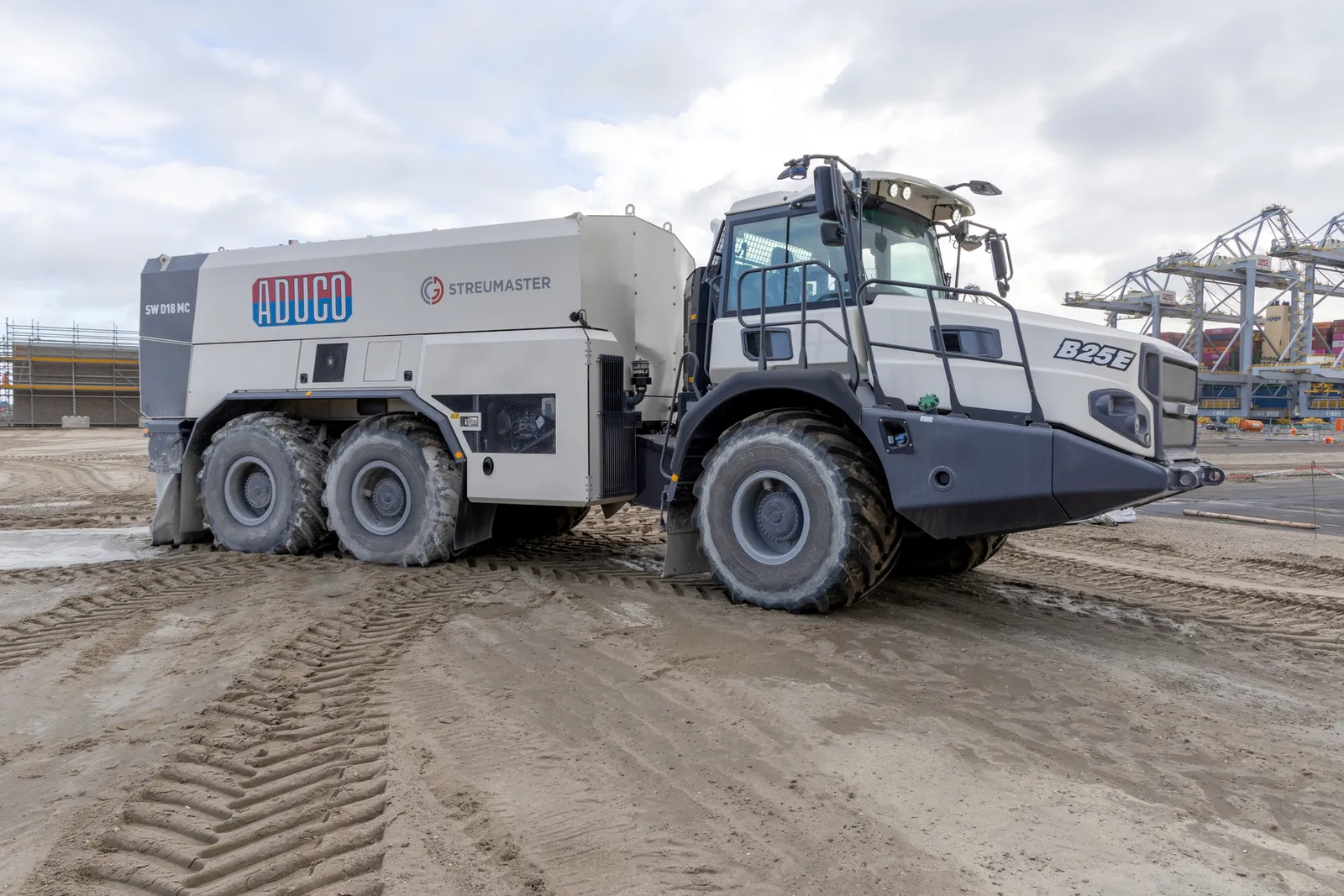
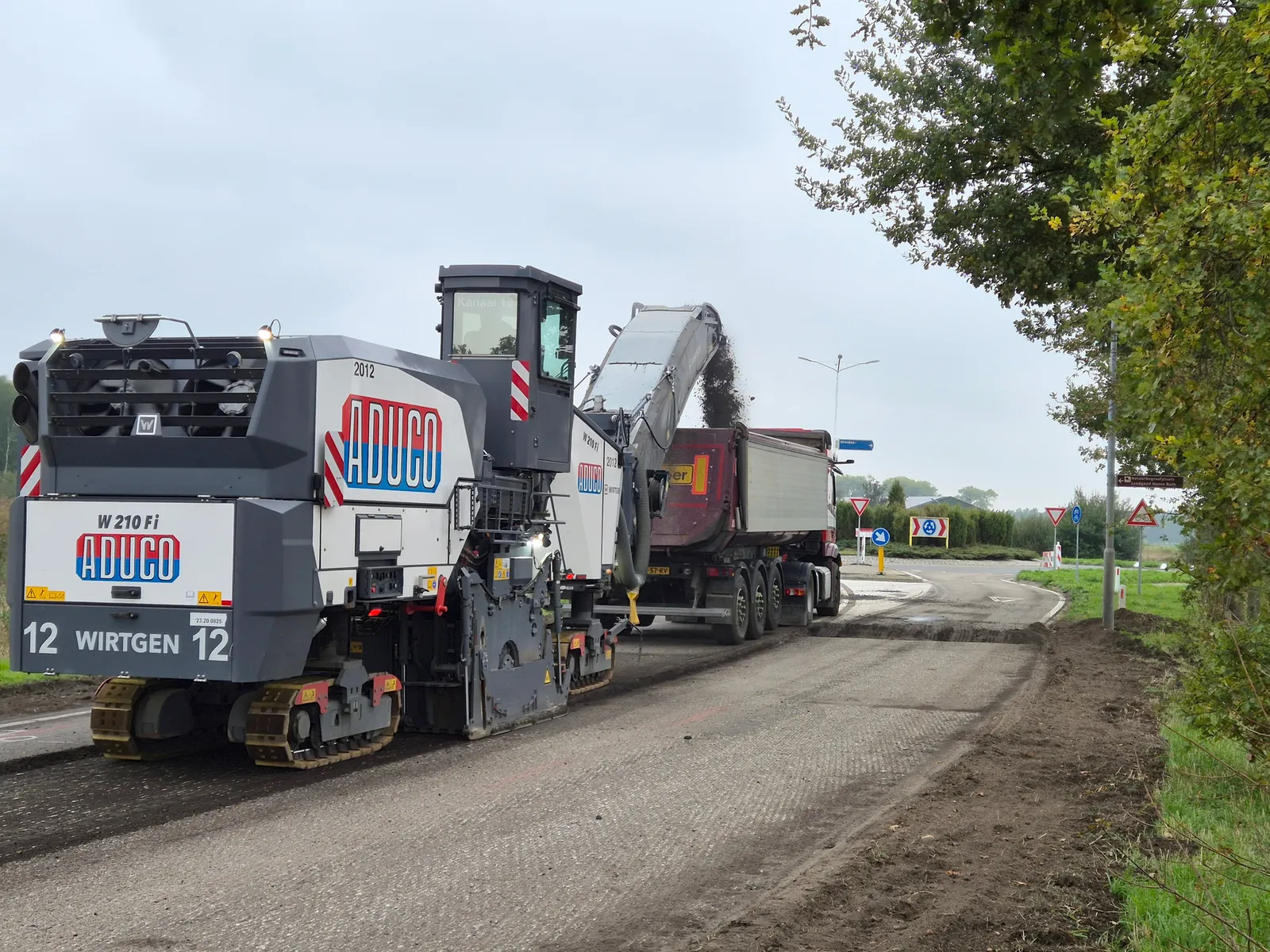
GPS-guided asphalt milling and cement-bound foundation construction
The road construction sector is seeing growing demand for circular, technically advanced solutions. One good example is the use of cement-bound asphalt granulate (Agrac) as a sustainable alternative to traditional foundation structures. Boskalis is making extensive use of it on the A2 widening project between the Het Vonderen and Kerensheide interchanges. ADUCO is laying no less than 385,000 m2 of asphalt-granulate foundation on the project, while also making major advances in asphalt milling.
From the tender stage, the team actively looked for good alternatives to the standard foundation design, says Otto Salomons, director of ADUCO. “One promising solution proved to be a cement-bound foundation made from asphalt granulate. Boskalis and the tender team worked this alternative up in close consultation, and it was ultimately adopted. The great thing about a cement-bound foundation is that reclaimed asphalt granulate can be reused on site in the new foundation. It makes use of materials already on site, without transporting materials in or out. This significantly reduces vehicle movements and delivers substantial environmental benefits.”
Construction road
The Agrac foundation structure starts with a sub-base onto which we lay 25 centimetres of asphalt granulate, Salomons explains. “During the project, this structure serves as a construction road or haul route. That is an added benefit of this foundation method. About ten days before paving, we spread cement over the asphalt granulate at a dosage of 2 per cent. We then mix it in with a stabilisation planer to create a carefully designed foundation structure. Standard road construction equipment is used to profile the top layer, and the asphalt can be laid ten days later.”
A future-proof construction material
The cement-bound structure gives Agrac a load-bearing capacity at least five times greater than that of a traditional unbound rubble foundation, according to Salomons. “This means less rutting, a longer-lasting foundation and maintenance focused mainly on the surface layers. We also use blast furnace cement with only a small proportion of Portland cement, making Agrac a relatively environmentally friendly cement-bound solution. In a market with a large surplus of asphalt granulate and high disposal costs, this is certainly a future-proof construction material.”
Diamond picks
ADUCO is also making major advances in asphalt milling, as it has already demonstrated during several weekend closures on this project in Limburg. “We use GPS-guided equipment, so the profile is milled exactly to the design, without having to mark the road. Another unique feature is the use of diamond picks. These deliver more consistent quality and a much flatter finish, while reducing downtime for pick changes. This improves ergonomics for our operators, who are also sheltered in a comfortable cab with heating and air conditioning.” With this development, ADUCO is showing that sustainability, quality and being an attractive employer go hand in hand.
Have a business enquiry for Boskalis Nederland? Get in touch
Companies in this story
Keep following this
Get an email when a new story is published. No account needed.
- ThemeExtending the life of roads and civil engineering structures
- SubjectMachines & equipment
- CompanyBoskalis Nederland