Specialists deliver sustainable solutions tailored to the job
Text Kees Beijer Images Van den Heuvel
Matching the choice to specific tasks or conditions
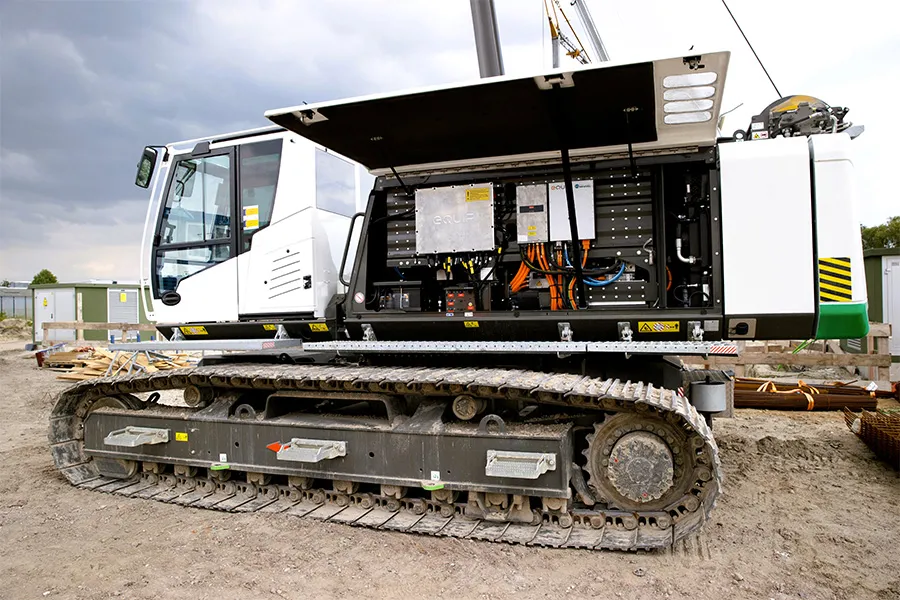
To reduce emissions from construction machinery, Van den Heuvel is joining forces with three industry specialists. Working with Accenda, eQuip and SDK Engineering, the partners can provide a bespoke solution for every challenge and application: Stage V retrofits, hybrid, hydrogen or battery-electric. An engaging conversation with the management teams of four innovation partners.
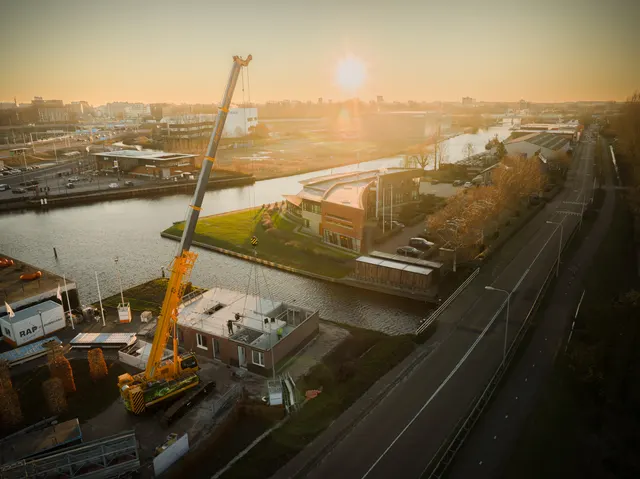
Van den Heuvel, which is not only a dealer for Sennebogen Crane Line but also specialises in modifying and building cranes and foundation equipment, has seen customers in these niche markets actively seeking to cut their environmental impact. “We don’t believe in a one-size-fits-all solution, nor do we claim to have all the expertise in-house,” says director Marc Timmerman.
“That’s why we work with companies specialising in electric drives, hydrogen technology or hybrid systems. Together, we can help customers choose the right approach for their machine and the work it needs to do.”
A practical solution
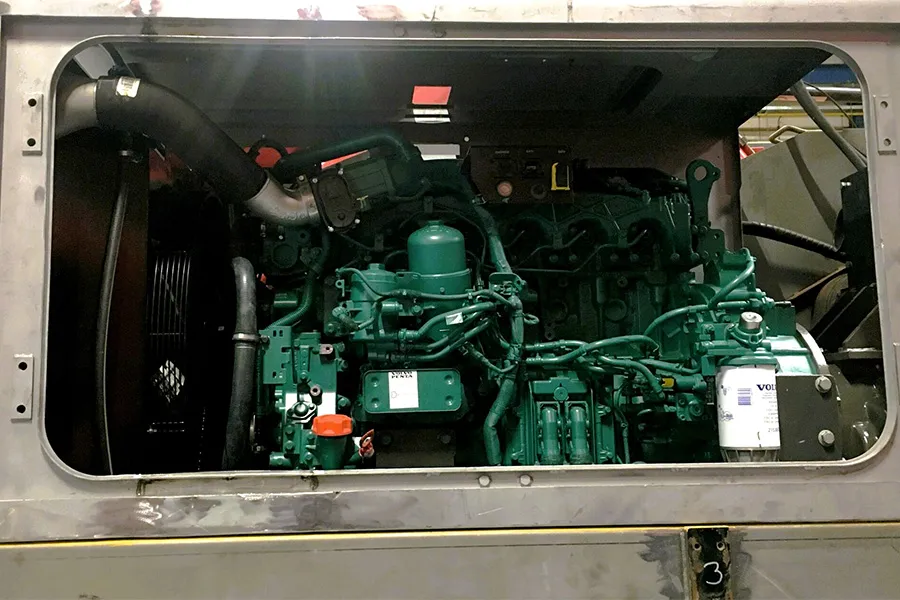
The partnership with Accenda, eQuip and SDK Engineering grew out of a shared vision: sustainable construction machinery requires technical expertise, bespoke solutions and knowledge of regulations. “Each of the four companies brings its own specialism,” says Timmerman. “We integrate the systems in our workshop and take care of CE marking, inspection and training. That’s how we turn innovative technology into a machine that works on site.”
Together, the partners can offer a broad range of solutions, from Stage V retrofits to full electrification or hydrogen. “There is no single best technology,” Timmerman stresses. “The location, the work and the power requirements determine what is technically and economically viable. That’s why we always start by asking the end user the right questions before making a recommendation.”
Electric where possible
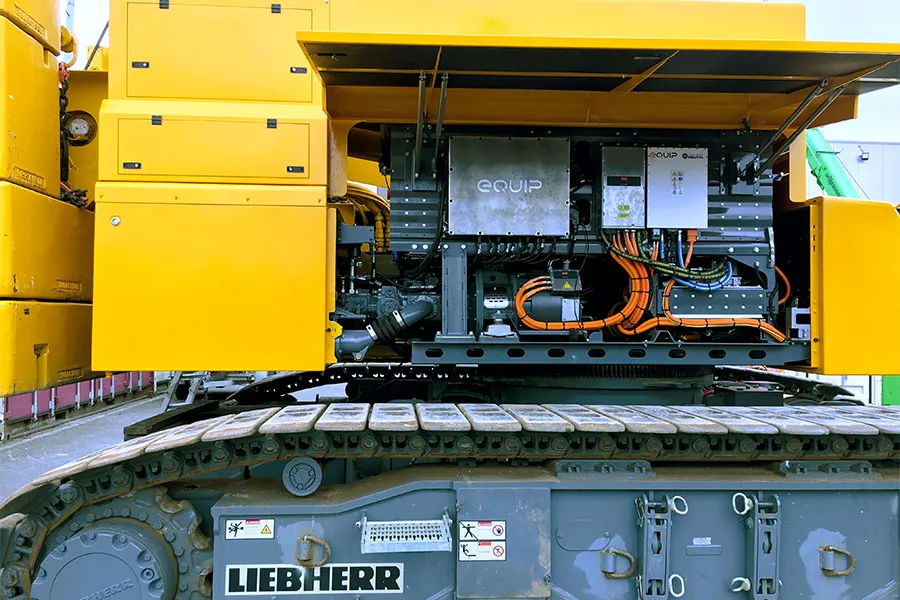
“If battery-electric is an option, it is the most efficient route in most cases,” says Adis Bajric of eQuip, a specialist in electric drive systems for heavy machinery. “Batteries have the highest energy conversion efficiency and are reliable. But they do require good charging infrastructure. If that is lacking, or the power demand is too high, you look at alternatives to make the machinery more sustainable.”
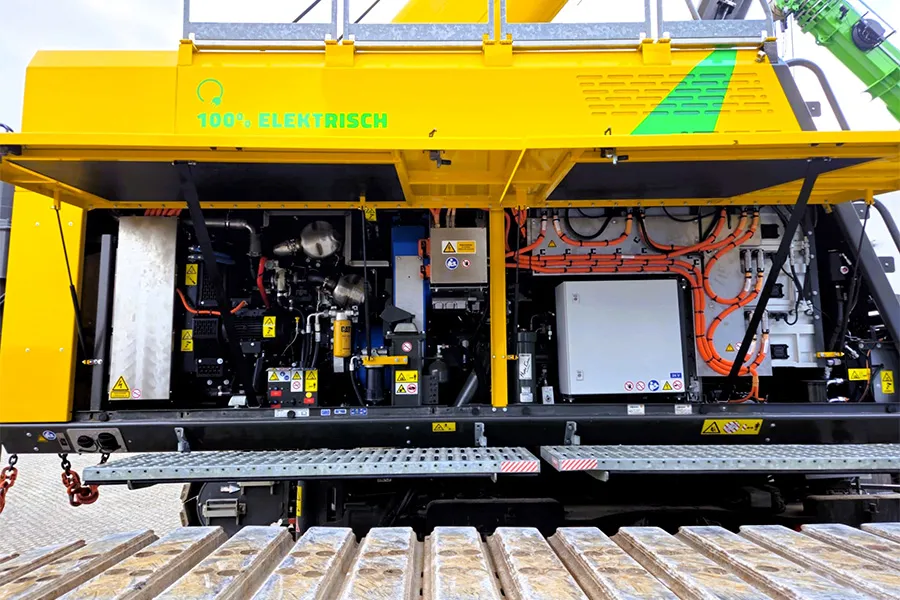
Timmerman agrees: “We have built cranes with battery packs of 200 to 400 kWh. They can easily run for a full working day and be charged overnight, provided you set up a smart charging arrangement. In many cases, that’s perfectly feasible if you’re willing to think differently. We firmly believe this is the future.”
Hybrid and hydrogen
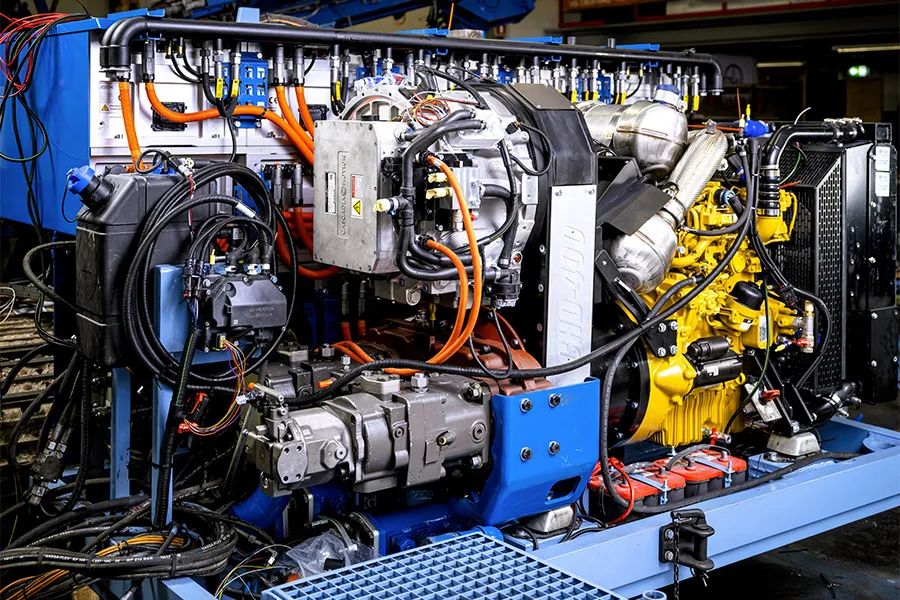
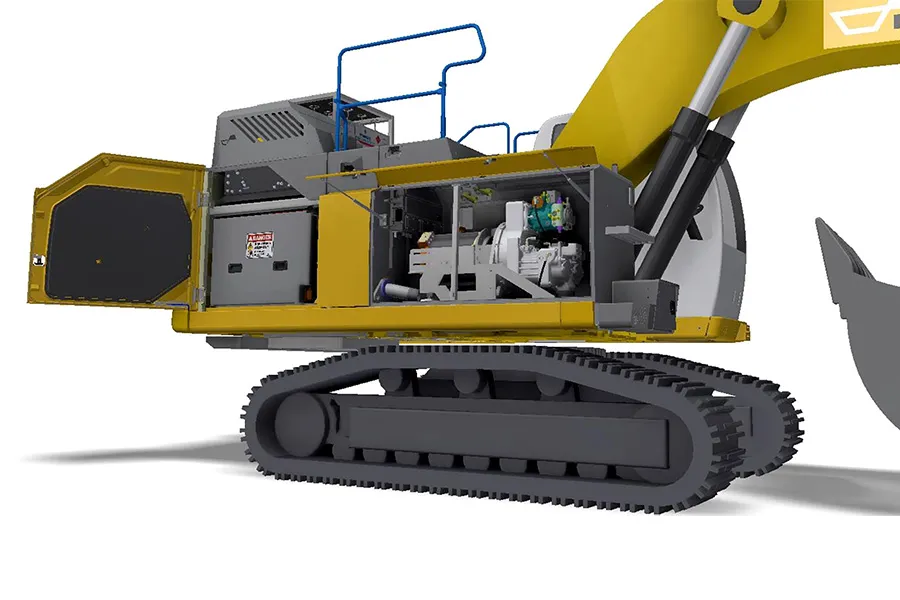
When battery capacity falls short or charging time is a problem, hybrid or hydrogen comes into the picture. SDK Engineering develops hybrid systems in which a smaller diesel power source works alongside a battery pack. “Originally designed to save fuel, they have since been further developed towards zero emissions,” explains Steven de Kam. “With a larger battery pack, you can even work fully electrically, with the diesel engine as a back-up or to charge the battery. The control system is software-based.”
Hydrogen offers an alternative for situations involving prolonged heavy work without the option to recharge. “We use hydrogen fuel cells as range extenders,” says Martin Seiffers of Accenda. “A hydrogen combustion engine is not entirely zero-emission and is less efficient. A fuel cell can charge the battery while the machine is working, while the combined power sources provide the peak output. This means you can work with a smaller battery pack and still run for a full working day.”
Retrofit as an alternative
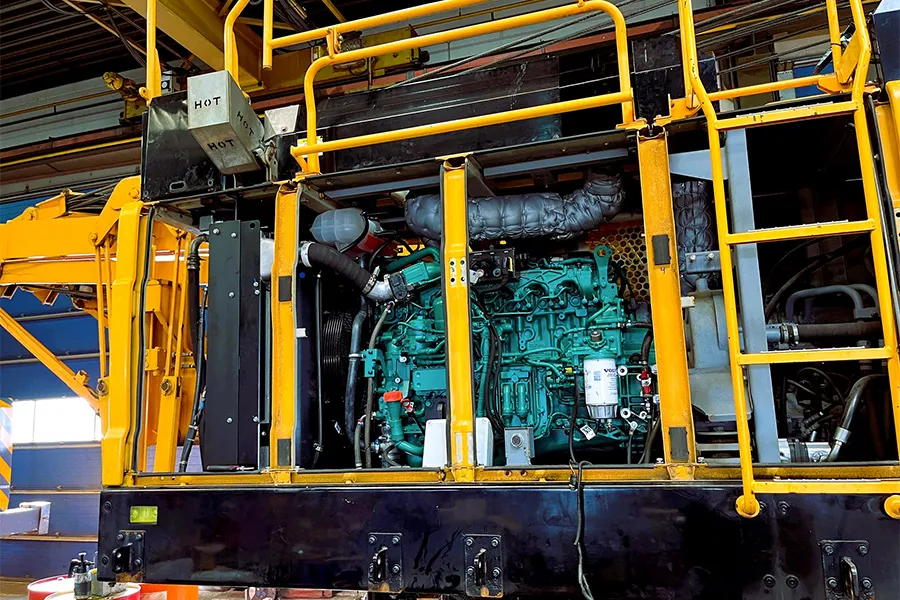
Retrofit is another key pillar for Van den Heuvel. “Foundation equipment can sometimes last as long as 30 years,” says Timmerman. “Upgrading a crane from Stage II to Stage V already delivers a substantial environmental benefit, especially when combined with an overhaul. For many companies, retrofit is a cost-effective and sustainable solution.”
Van den Heuvel has the expertise for this in-house. “But for battery-electric, hybrid and hydrogen, we rely on our partners. Accenda, eQuip and SDK have in-depth knowledge of drive systems, while we bring expertise in machine building, regulations and integration. We complement each other and develop innovative solutions together to tackle the construction sector’s nitrogen challenges head-on.”
Reliable technology
Timmerman emphasises that making machinery more sustainable involves more than installing a different system. “The whole machine has to be designed around it. We ensure the correct installation, configuration and safety measures, and connect everything to the existing hydraulics and controls. The system also needs to be robust. The end user must be able to trust that it will work and keep working.”
According to Seiffers of Accenda, which was instrumental in developing the first 100% clean hydrogen excavator for Mourik Infra, a realistic approach is essential. “Zero-emission equipment requires different infrastructure and a different mindset. You can’t do everything the way you’re used to. But you don’t have to. Explain it properly and use the right components, and it’s perfectly achievable.” De Kam (SDK) adds: “The technology is reliable, provided it is used correctly.”
Fear of the unknown
According to Bajric (eQuip), there are many misconceptions about the safety and reliability of zero-emission equipment. “It mostly comes down to fear of the unknown, of hazards you can’t see. Many faults are caused by a lack of knowledge. Think of a muddy plug being shoved straight into the machine, or a site power box standing partly in water. If the battery then won’t charge, it’s not the technology at fault but the conditions.”
The four partners agree that the momentum behind sustainability cannot be stopped. “It may be moving more slowly than we would like, but the transition is irreversible,” says Seiffers. Bajric adds: “We are at the start of a technological shift, much like the move from horse-drawn transport to the internal combustion engine. That wasn’t problem-free either, with a petrol station on every street corner.” “Customers investing now may be a little ahead of the curve, but they are taking the right step,” says Timmerman.
One vision, several routes
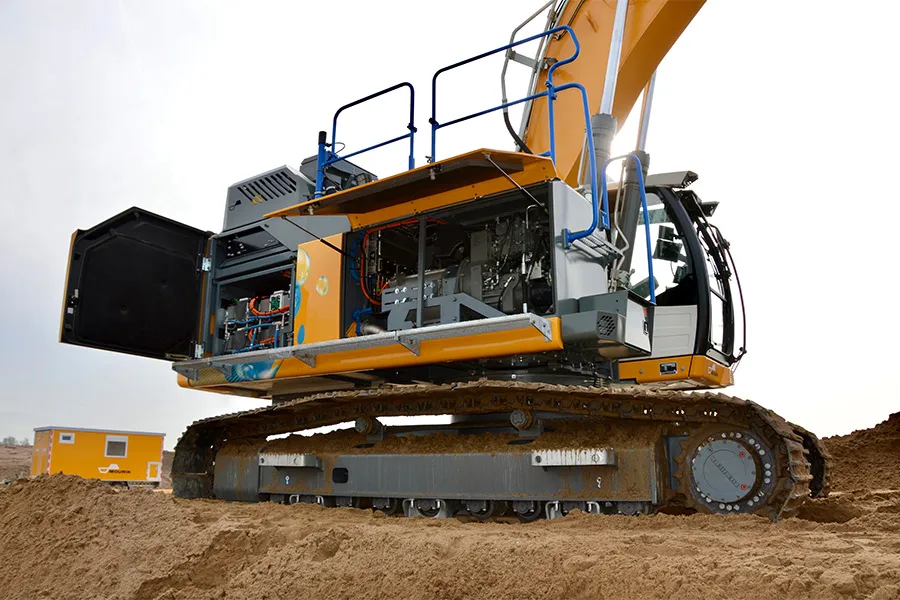
The strength of the partnership lies in combining areas of expertise, always with one goal in mind: a reliable, safe and sustainable solution for real-world use. “Every customer, machine and application calls for a bespoke approach,” says Timmerman. “That’s precisely why we join forces, together with the end user. Working together is the only way to make real progress.”
Have a business enquiry for Van den Heuvel? Get in touch
Companies in this story
Keep following this
Get an email when a new story is published. No account needed.
- ThemeLower emissions and more reuse
- SubjectMachines & equipment
- CompanyVan den Heuvel
- CompanyMourik