‘Asphalt should be pushed off, not tipped’
Text Roel van Gils Image Ludo Pauwels BVBA
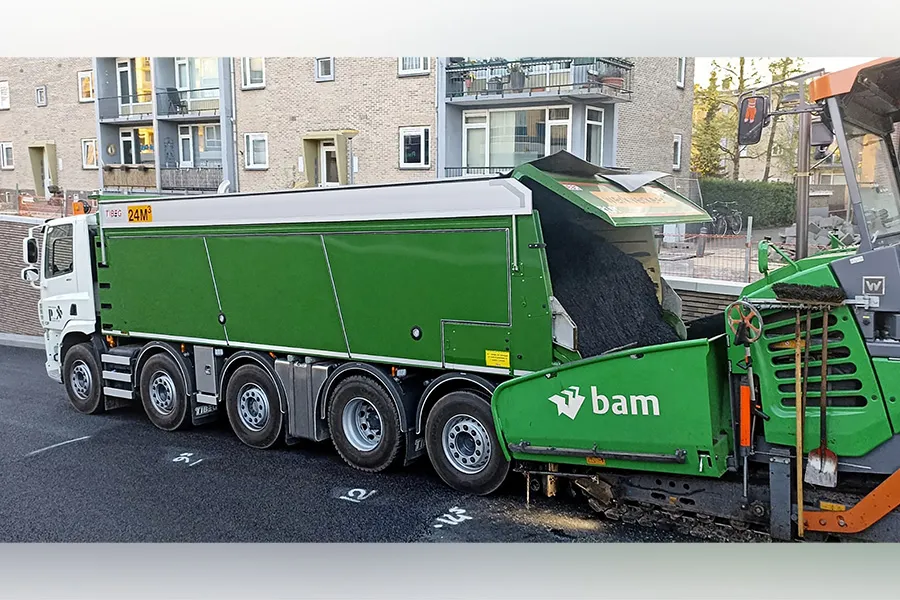
Now emission-free too
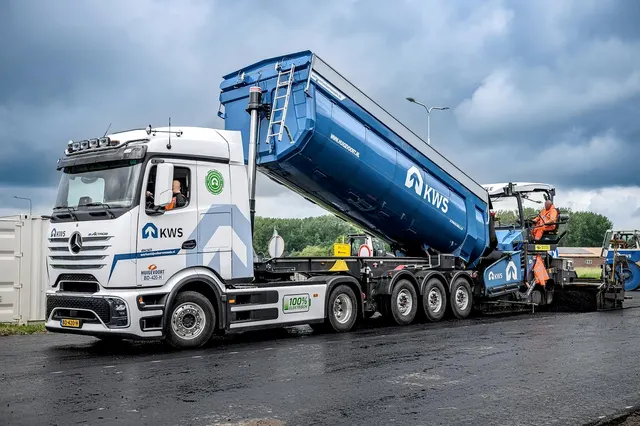
For fifteen years, Ludo Pauwels BVBA has made a name for itself in construction and infrastructure with Fliegl Baukom’s high-quality range. At TKD 2025, the company will unveil a first for transporting asphalt and other materials: an electric push-off system on a 5-axle MAN. The configuration has been developed specifically for the Dutch market and takes account of the country’s specific axle-load requirements.
Fliegl’s philosophy is that asphalt is better pushed off than tipped, says Pauwels. “There have always been advantages to this approach, but the new standards and the fact that asphalt is being produced at ever-lower temperatures work in favour of the push-off system. Asphalt is, after all, a mixed material. The longer it sits in the body, the more the asphalt mix is subjected to vibration and the more the bitumen settles. With a conventional tipper, the cooled aggregate falls out first, followed by the rest. This can leave ‘patches’ in the asphalt that are less well bonded. With a push-off system, the mix is discharged evenly, like ‘slices of bread’, into the paver’s hopper, resulting in a high-quality finished product.”
Optimal axle-load distribution
With Fliegl’s latest innovation, which Ludo Pauwels will present at TKD, the asphalt mix can now be transported with low emissions and discharged with zero emissions. “In the standard configuration, the cylinders that operate the sliding body protrude in front of it,” says Pauwels. “We have developed a special version for the Dutch market, however, in which the cylinders do not protrude. This gives the truck’s front axles a higher load. This configuration was built by Wierda. The push-off system uses hydraulic cylinders to operate the sliding floor and front panel. Normally, the oil pump is connected to the truck’s combustion engine. In this case, it is powered electrically by the e-PTO, and the body is also positioned closer to the cab for optimal weight distribution.”
More insulation
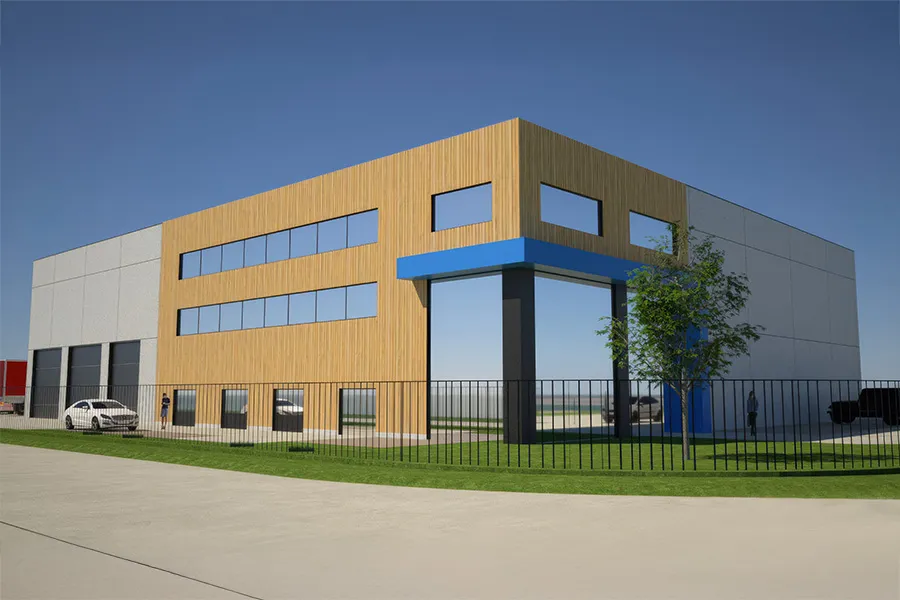
According to Pauwels, the new requirements and standards for asphalt mean that every detail of its transport needs to be reconsidered. He expects the Netherlands to return to using sliding tarpaulins in future. “The aluminium flaps currently in common use provide virtually no insulation. Smaller bodies combined with tarpaulins mean less cooling of the asphalt mix.” Fliegl’s bodies are, incidentally, insulated to the highest standard. “And our push-off system, combined with scrapers, keeps the body perfectly clean at all times. No residue is left behind,” Pauwels assures us, adding that the company is celebrating its 15th anniversary this year. “We are currently building new premises in Lokeren because we have outgrown our existing space. In recent years, we have sold a considerable number of push-off trailers in both the Netherlands and Belgium. Our new premises will have a much larger workshop, allowing us to carry out maintenance and repairs even more efficiently.”
Question about this story? Ask your question
Keep following this
Get an email when a new story is published. No account needed.
- ThemeExtending the life of roads and civil engineering structures
- SubjectMachines & equipment