Always working with the right data
Text Armand Landman Image Sitech
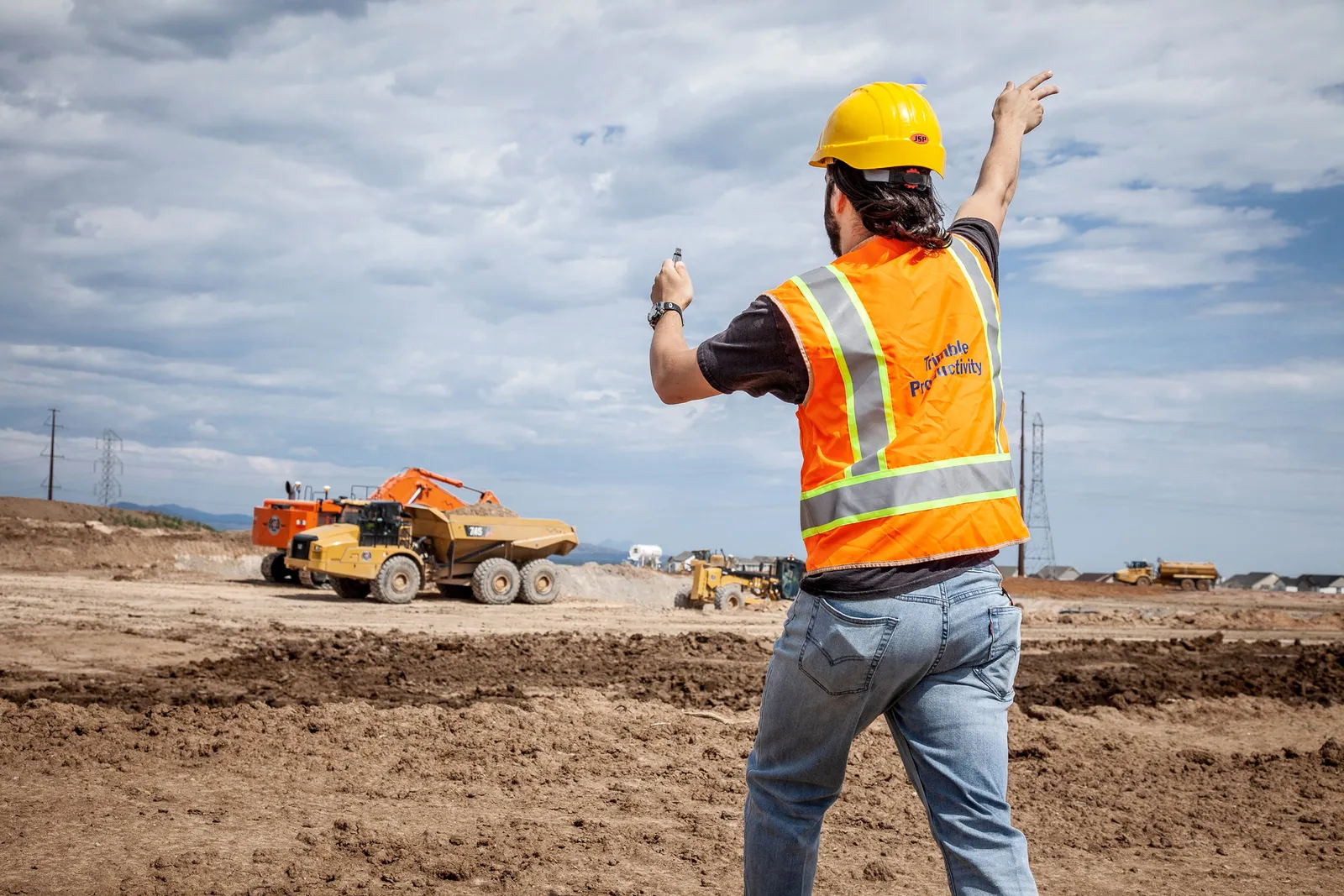
The promise of BIM on site has sounded compelling for years. One model, one source of truth, everyone working from the same information. In practice, that promise often gets bogged down in separate files, USB sticks and differing interpretations between the office and the site. According to Jeroen Agterberg and Willem Graaumans of SITECH, things can be different. Very different.
“If you look at how people have traditionally worked, it is still very much a local process,” says Agterberg. “Files are shared physically, first as drawings brought to the site office and later on USB sticks. That takes time and is prone to errors. And you see the impact straight away on site.”
According to him, this way of working leads to a familiar problem: downtime and frustration. “We call it ‘downtime and hassle’. Machine operators wait for the right version of the design. Or they get started anyway, with all the risks that entails. Before you know it, you’re 20 centimetres out. That is simply the cost of rework.”
From USB stick to data flow
Trimble WorksManager shifts this way of working from local to centralised. Designs are no longer distributed manually, but shared digitally through a single environment where all the parties involved work.
“Imagine: 20 machines on a project, and a site manager who has to visit each one with a USB stick,” says Agterberg. “That can easily take 15 minutes per machine. And if there is a problem with the file or its structure, it can be days before everyone has the right version.”
These delays add up, especially on projects where changes are being made constantly. “One change comes in, then another adjustment, and meanwhile everyone is working from a different version. That is exactly what you want to avoid.”
WorksManager breaks that pattern. “The design is stored centrally in the portal and sent straight to the machines. That prevents those kinds of delays and errors.”
Always the right version
One concern often raised in the sector is reliability. What happens if the connection drops? Does the system still work? “The internet is used to send data from the office to the machine. Once the machine has synchronised over the internet, the files are stored locally on the machine and work can continue.” This makes the system more robust than many people think. At the same time, the real challenge lies elsewhere: adoption. “People often still lack the necessary knowledge,” says Graaumans. “They do not know exactly how it works, so they leave it alone. Then they end up going back to the old way.”
According to Agterberg, contractors also have a clear responsibility here. “It starts at the beginning of the project. If you know which machines will be coming in, you need to make sure they are all in the same environment. That takes preparation and people who understand the system. Ultimately, the machine operator needs to know exactly what to do. And that is only possible if the information on the machine is complete and correct.”
Data as a new prerequisite
Remarkably, the technology is now ahead of what clients are asking for. It is already possible, for example, to feed data from machines back to the office in real time, including as-built information. “Those solutions are available,” says Agterberg. “But demand is still limited. Clients often still ask for a 2D as-built drawing. That means the 3D information goes unused.”
He even describes it as a ‘2D bottleneck’ that data has to pass through. “A lot of money is spent at the outset on surveys and scans, but only a limited amount of that information reaches the teams carrying out the work. That holds back progress.”
According to Graaumans, clients have a clear role to play here. “If you really want BIM to work, you need to make those data flows available and put them to use.”
Graaumans perhaps sums it up best with a comparison from everyday practice. “Contractors know exactly how to arrange diesel or electricity. It is always included in the plan. But when it comes to getting data onto the machines, it is often a case of ‘we’ll get started and see how it goes’.” He says that needs to change. “Data is just as essential as fuel. If you do not organise it properly, your project grinds to a halt.”
Have a business enquiry for SITECH Nederland BV? Get in touch
Companies in this story

Keep following this
Get an email when a new story is published. No account needed.
- SubjectMachines & equipment
- CompanySITECH Nederland BV