









Innovations in underground infrastructure
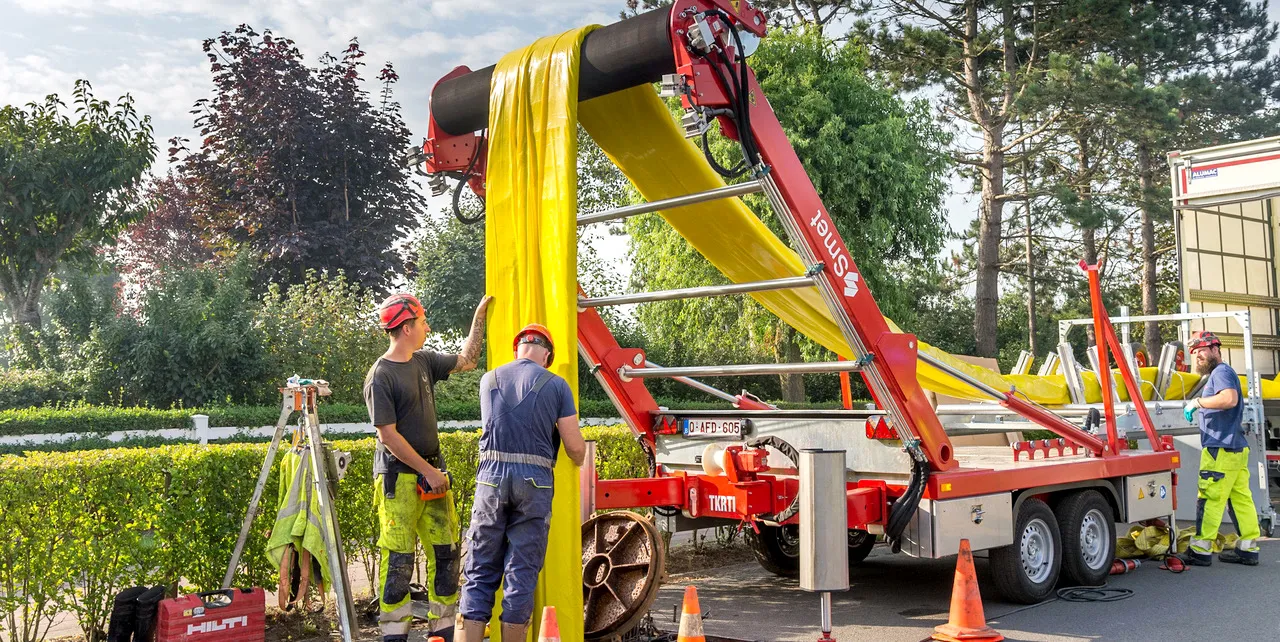
For around a decade now, the family business has also been building its expertise in trenchless pipe rehabilitation. As these projects have grown in scale, Smet-Tunnelling has split its operations into two divisions: Tunnelling and Pipe Rehabilitation. We spoke to the heads of these divisions about the latest developments and some interesting projects.
Around ten years ago, Smet-Tunnelling began using cured-in-place pipe lining to repair damage to existing sewers. “We have continued to develop our expertise in this market and can now offer virtually every solution, including the installation of shell sections and the application of sprayed concrete,” says Gert Van Gorp, head of the Pipe Rehabilitation division. “Every rehabilitation issue is unique and calls for a specific solution, or sometimes even a combination of solutions.”
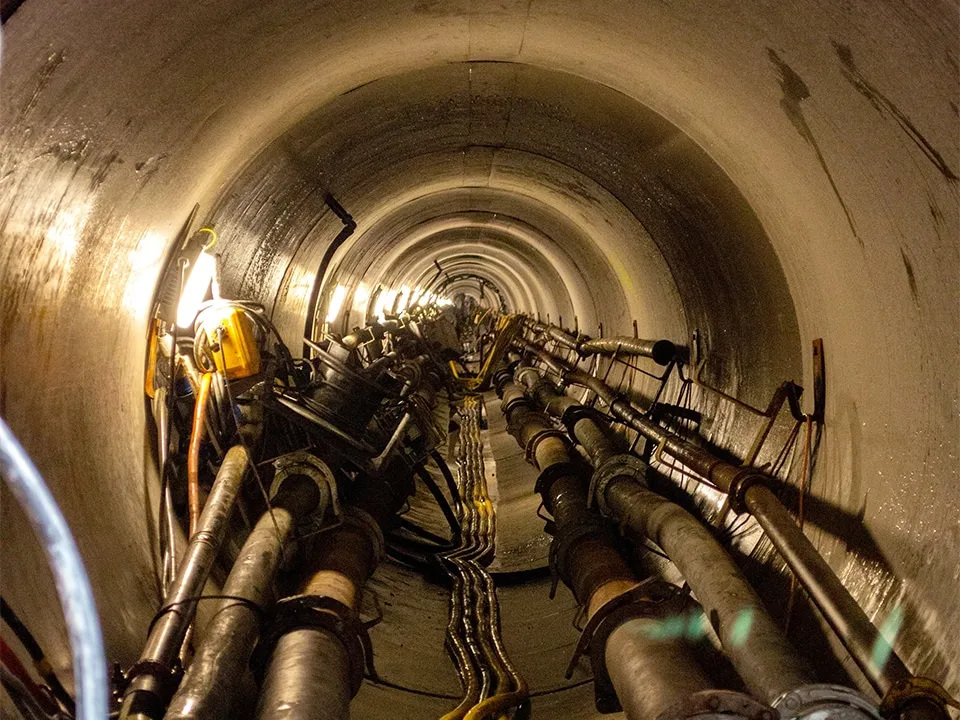
Water main rehabilitation
Water mains and pressure pipelines requiring repair are a relatively new area for the pipe rehabilitation sector. According to Van Gorp, this market is still in its infancy. “The same techniques are often used as for sewer rehabilitation, but water mains and pressure pipelines have different, and higher, quality requirements. We have the solutions for those too. We can also switch easily from one technique to another if needed. If a pipeline cannot be repaired or an area proves inaccessible, we can always call on our Tunnelling division, and vice versa. The Pipe Rehabilitation division was set up to provide clients with support from start to finish. Once a pipeline has been installed by the Tunnelling division, we can also maintain and repair it.”
Pipe bursting
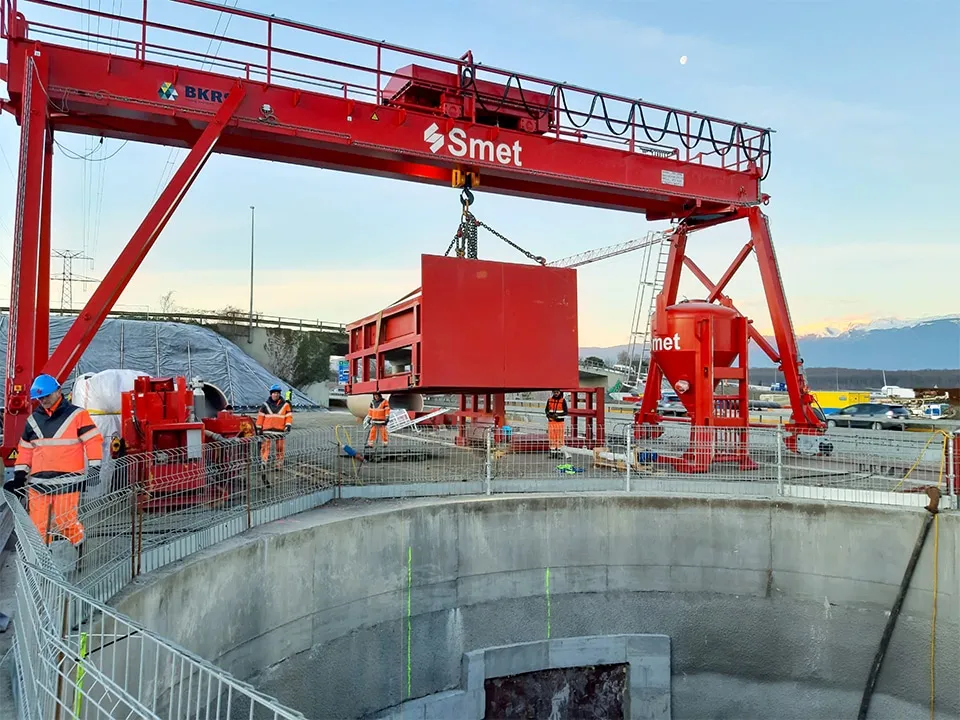
While the Pipe Rehabilitation division is mainly active in the Benelux, the Tunnelling division operates across Europe. “We currently have several projects under way in Denmark, Switzerland and Germany,” says Wouter Roels, head of the Tunnelling division. “One of our best-known activities is pipe jacking with an open or closed face, also known as microtunnelling. These horizontal bores range from 400 to 4,000 millimetres in internal diameter. We also specialise in jacking precast concrete and/or steel tunnel sections or bridges, carry out auger boring and work with pipe bursting. The latter technique is more closely associated with the rehabilitation division. At the end of a pipeline’s service life, we can use pipe bursting to displace it into the surrounding ground while pulling in a new pipeline at the same time. That brings us full circle.”
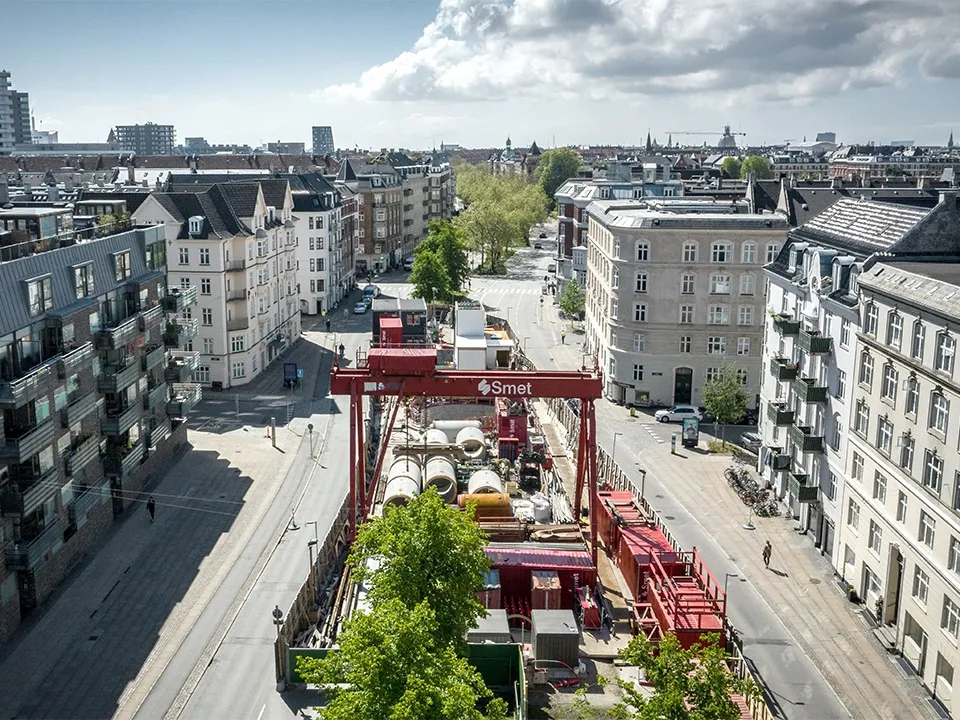
Smet-Tunnelling’s techniques are suited to a very wide range of applications in underground construction that are highly relevant today. “These include climate adaptation programmes to retain as much rainwater as possible locally, and the Blue Deal, which sets out measures to minimise the risk of water shortages and flooding under the Flemish Climate Adaptation Plan 2021-2030. Our techniques are also used to improve wastewater treatment, which must meet a certain treatment standard under European regulations by 2027, as well as for the energy transition and underground logistics transport. We also build so-called pipe roofs, made up of interconnected bored pipes that serve as a roof slab for underground metro and railway stations, cycle tunnels or car parks. The possibilities are endless, and the methods are less disruptive than conventional cut-and-cover methods. We do not always take the easiest route, but choose the most suitable solution for each project.”
Question about this story? Ask your question
Keep following this
Get an email when a new story is published. No account needed.
- ThemeUnderground construction
- SubjectBouwMat







