









Hydrogen blending can significantly reduce emissions
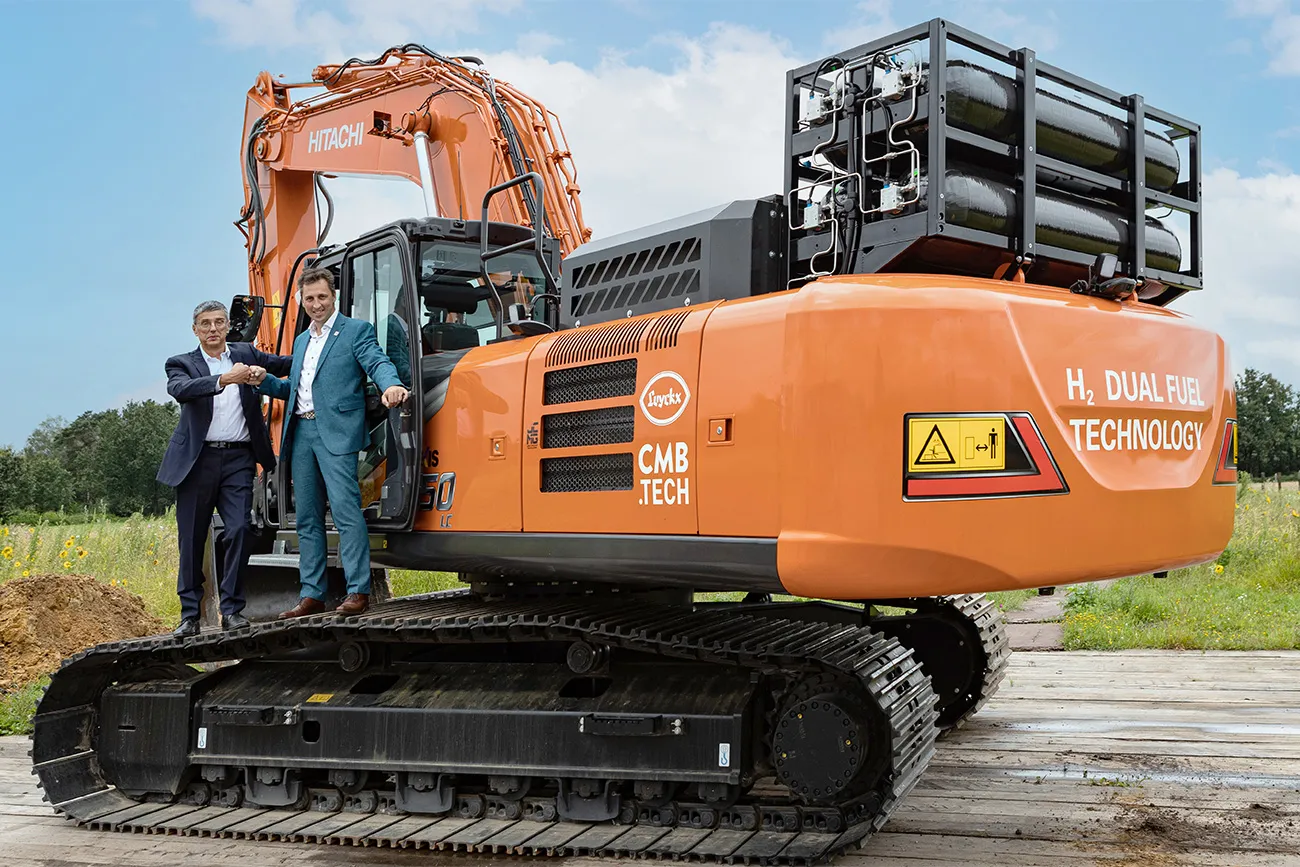
Diesel or hydrogen? This time, machinery distribution and service specialist Luyckx did not want to make a firm choice. Instead, working with CMB.TECH, it developed its first dual-fuel excavator. As a Hitachi dealer, Luyckx chose to convert a 37-tonne ZX350LC-7. It runs on diesel blended with hydrogen, which can halve CO2 emissions.
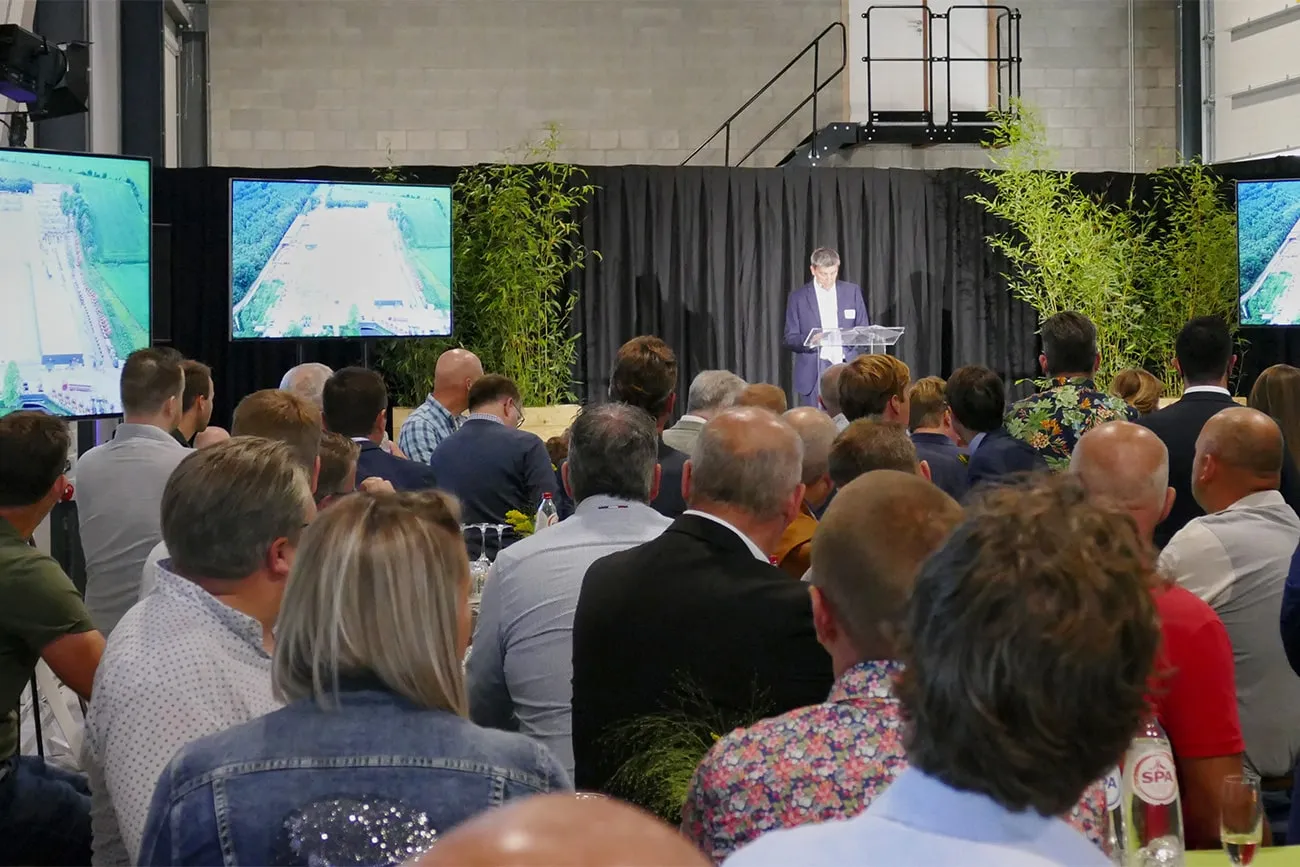
The converted Hitachi ZX350LC-7 featured prominently on Luyckx’s stand at MATEXPO, having won third prize in the Green Awards. And deservedly so. Hydrogen blending is significant news for our sector. It has been used for some time in small-scale shipbuilding, which is also why Luyckx joined forces with CMB.TECH. This Antwerp-based subsidiary of shipping company Compagnie Maritime Belge presents itself as an active developer and integrator of hydrogen solutions, focusing on engineering, hydrogen production, industry and marine applications. The adapted Hitachi ZX350LC-7 is now helping to accelerate the gradual greening of the heavy construction and earthmoving sector. Dual-fuel technology gives companies an affordable way to make significant progress with the energy transition using their existing machinery, without becoming permanently dependent on hydrogen availability, the companies say.
From challenge to vision
For Jos Luyckx, CEO of the company based in Brecht, the rationale is clear: “Driven by the needs of our end users and fleet owners, we launched a feasibility study on our own initiative to explore possible alternative solutions that would help reduce CO2 emissions, make machinery fleets more sustainable and support socially responsible business practices. We have been looking for the right solutions for several years. The main challenge lay in the energy requirements of heavy machinery. This vision led us to start working with CMB.TECH.”
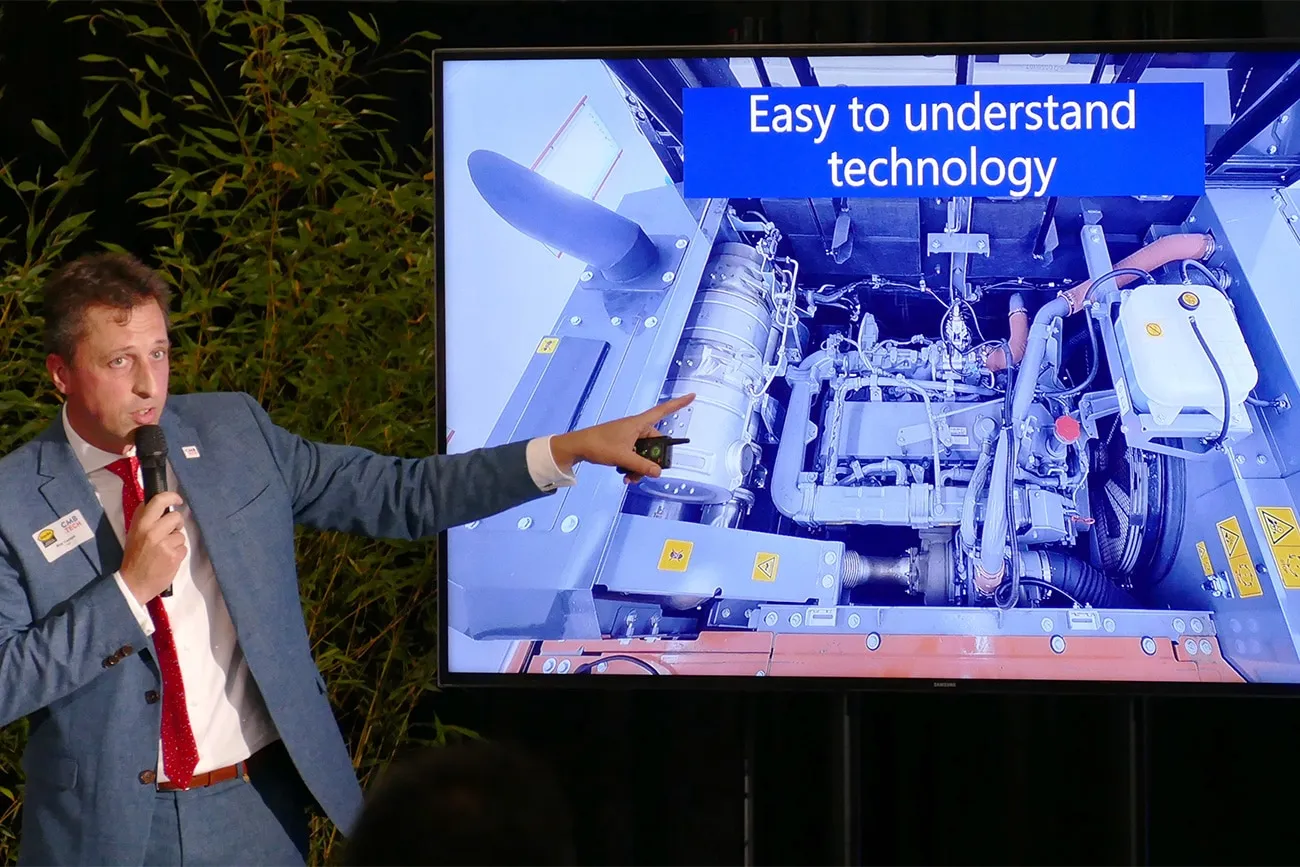
The conversion to dual-fuel technology involved few changes to the Isuzu engine, so maintenance can be carried out in much the same way as usual. The excavator starts on diesel, with hydrogen added only once the engine has reached operating temperature. The hydrogen comes from tanks clearly visible behind the cab.
An affordable solution
Fully electric drivetrains are still fairly expensive and, with current technology, are not suitable for the heaviest machinery. Choosing electric drivetrains alone could therefore hinder the energy transition more than it helps it at present, making an interim solution a more practical option. From this perspective, the use of dual-fuel technology is currently well justified.
Roy Campe, technical director at CMB.TECH, puts it this way: “The additional cost of the machines in this sector is relatively limited, while every kilogram of hydrogen used immediately reduces CO2 emissions. From now on, we will offer applications that can deliver up to 8 tonnes of CO2 savings per site per day, at the lowest possible cost and without operational restrictions, anywhere in the Benelux.”
Mobile hydrogen refuelling station
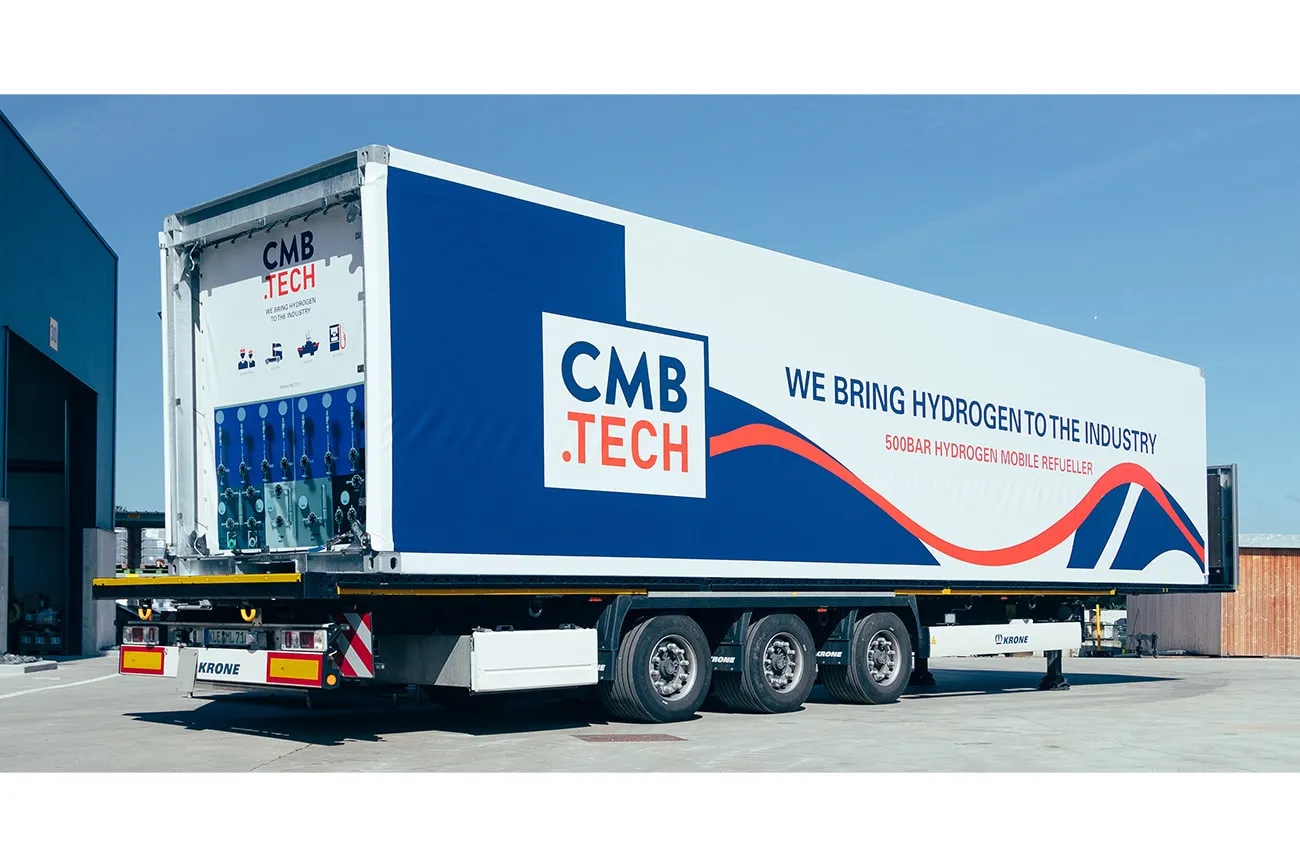
Since hydrogen supply is another major bottleneck, CMB.TECH presented a mobile hydrogen refuelling station alongside the dual-fuel excavator. Built on a closed trailer, it can deliver up to 600 kg of green hydrogen at a pressure of 350 bar to machinery anywhere a truck can reach. It can be used not only for excavators and other machinery, but also for lorries, generator sets and similar equipment. Roy calls the mobile refuelling station “the answer to hydrogen supply for marine and industrial applications”.
Een zakelijke vraag aan Hitachi Construction Machinery Nederland? Get in touch
Companies in this story
Keep following this
Get an email when a new story is published. No account needed.
- ThemeConstruction equipment and transport in motion
- SubjectBouwMat
- CompanyHitachi Construction Machinery Nederland







