









Electric came first, now it’s hydrogen’s turn
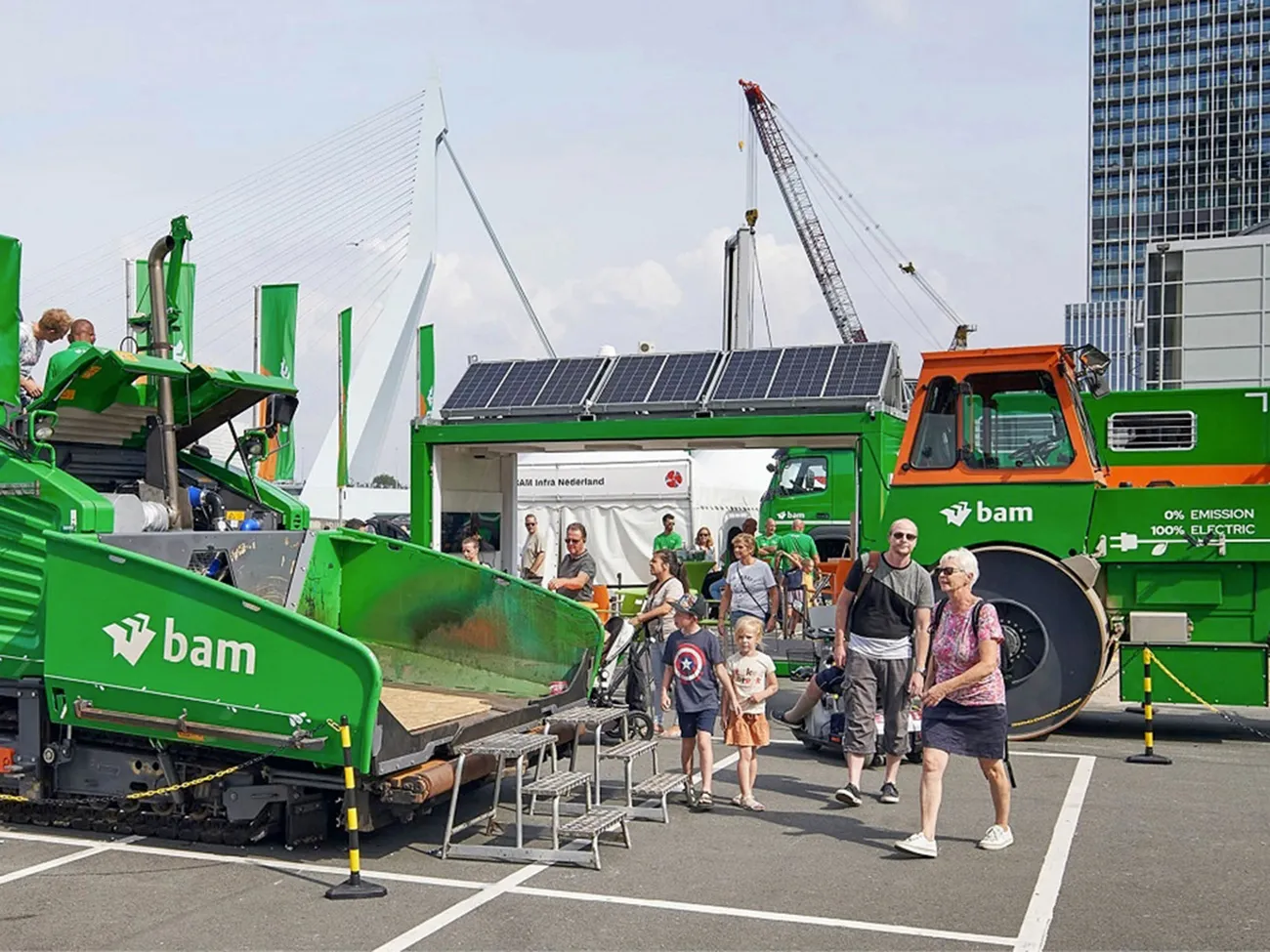
As part of De Groene Koers, more and more construction sites across the country are carrying out some or all of their work with zero emissions. Contractors typically use battery-electric machines, but hydrogen-powered equipment is now making regular appearances too. The Construction Site of the Future is taking shape.
Hydrogen-powered machines are becoming a regular sight on construction sites
With help from Accenda, Mourik converted a Liebherr R926 into the world’s first operational hydrogen-powered crawler excavator. It is now exactly a year later, and the war in Ukraine has completely changed the world. The consequences are particularly far-reaching in the energy sector: for the first time in history, diesel costs more than petrol, and electricity prices have risen by a factor of 3 to 4, even for large consumers. Inflation is also at a historic high, reaching 13.7% in August and 17.1% in September, according to Statistics Netherlands (CBS). Not exactly the climate for investment or innovation, but fortunately not everyone sees things the same way.
A fine example
Following the arrival of electric equipment, fuel-cell-powered machines are now also gradually making their way onto construction projects in the Netherlands. A fine example is BAM Infra’s brand-new asphalt paver, which was unveiled to employees and business contacts at a special event in early September. Earlier this year, the company also commissioned a battery-electric Vögele finisher. As part of its drive to work with zero emissions, BAM worked with Koninklijke van Twist of Dordrecht to convert a diesel-powered asphalt paver into a hydrogen-powered machine.
Hydrogen systems often use a complex fuel cell. In this case, however, the machine is powered by a hydrogen combustion engine. Unlike a fuel cell, it does not require hydrogen of a particular purity, so the asphalt paver can run on hydrogen of any quality. This saves on purification during hydrogen production and even makes it possible to use waste hydrogen streams as fuel. BAM expects the zero-emission machine to save around 150 litres of diesel per 8-hour working day, equivalent to a reduction of more than 80.4 tonnes of CO2 emissions a year. Another advantage is that the hydrogen tank can be refilled in ten to fifteen minutes.
Green hydrogen
If so-called green hydrogen is used, emissions are reduced by 100% in terms of CO2. The same applies, in effect, to electric machines running on green electricity generated on site, for example by solar panels, wind turbines or formic acid. The construction sector still aims to reduce nitrogen emissions by 60% by 2030. Accelerating that transition means pursuing several routes at once. Hydrogen technology offers a number of advantages, including a system that is generally lighter than battery-electric drive. And everyone knows that weight is often a major consideration in construction. Hydrogen can also be refuelled faster than batteries can be recharged, and many projects still have no site power supply. Cost remains a weak point, particularly with fuel-cell technology. Generating electricity takes an average of twice as much energy, so in principle twice as many solar panels or wind turbines are also needed.
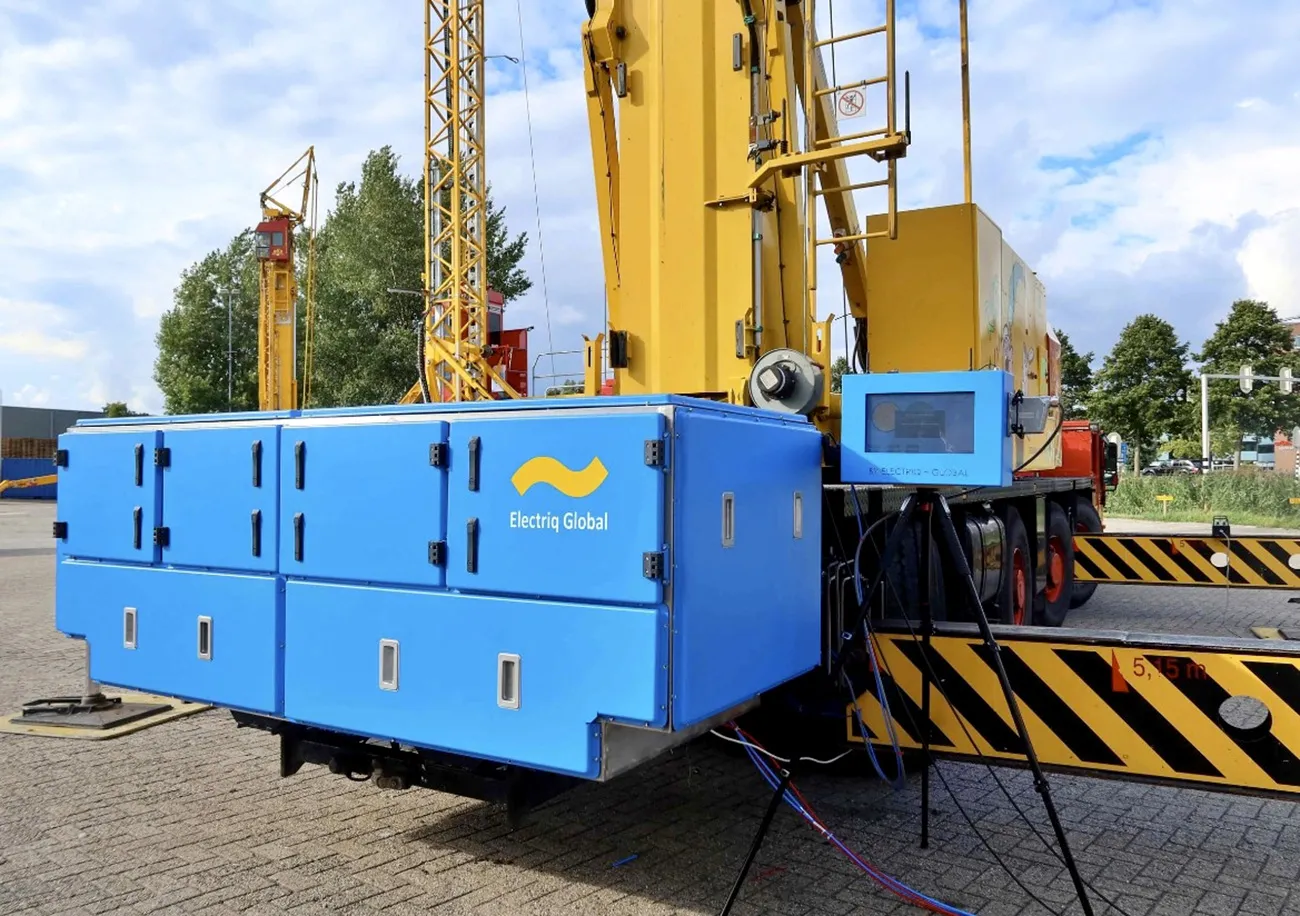
Hydrogen technology is still under development. Take Van Twist’s hydrogen combustion engine, for example. Or hydrogen powder instead of liquid hydrogen, which could address the risks of refuelling at high pressure on site. Electriq Global has developed 250-gram tablets as a safe alternative. They can be stored for years without losing energy, and after use the powder can be recharged without external energy, heat or pressure, allowing it to be reused indefinitely. In mid-September, Electriq Global unveiled the world’s first hydrogen-powder generator at crane hire company RKB in Ridderkerk. The Joshua has an output of 8 kW/80 kWh, meaning that 5 kilos of hydrogen can power it at full capacity for up to 10 hours. According to the Israeli company, hydrogen in powder form is a new, scalable energy source that can support the global energy transition and significantly lower the barriers to using hydrogen as a fuel.
The entire value chain
According to William van Niekerk, chair of the NWBA (Netherlands Hydrogen and Fuel Cell Association), the energy transition is a systems challenge involving the entire value chain. “When we think of hydrogen, we often focus on a single element, such as production, transport, storage or use. I’m convinced that the hydrogen economy will only succeed if we think about the entire chain. Once we manage to connect all the elements properly, we will see real breakthroughs. When all these individual innovations work together, we can make a much bigger leap. Hydrogen is already cost-competitive with battery-electric technology. We can improve that further by building many more hydrogen refuelling points. There is little room left to improve electric charging and charging speeds, whereas there is still plenty of scope to expand the network of hydrogen refuelling points. But we need many more users.”
A business enquiry for Mourik? Get in touch
Companies in this story

Keep following this
Get an email when a new story is published. No account needed.
- ThemeLower emissions and more reuse
- SubjectBouwMat
- CompanyMourik







