









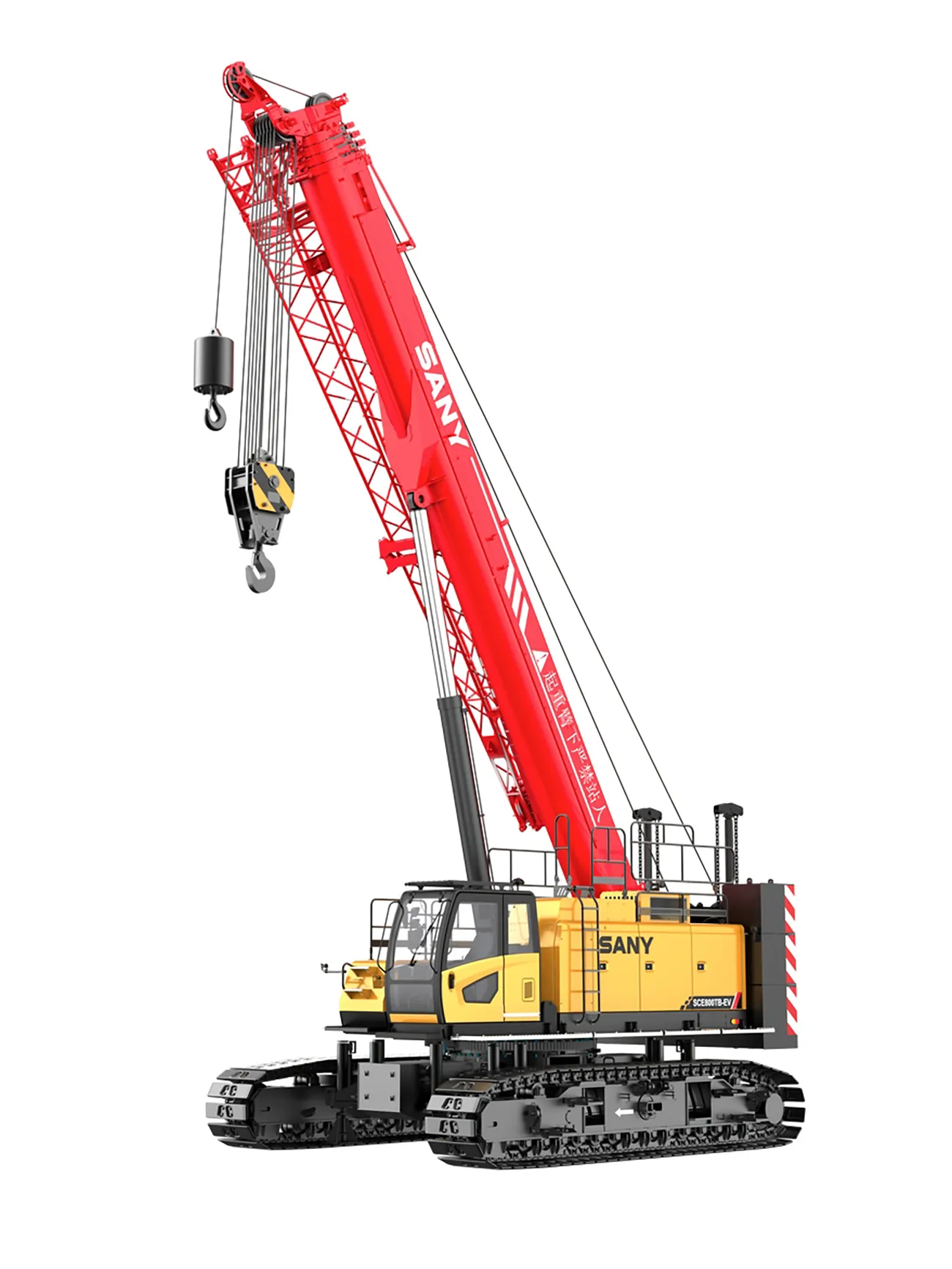
150-tonne telescopic crawler crane also coming soon
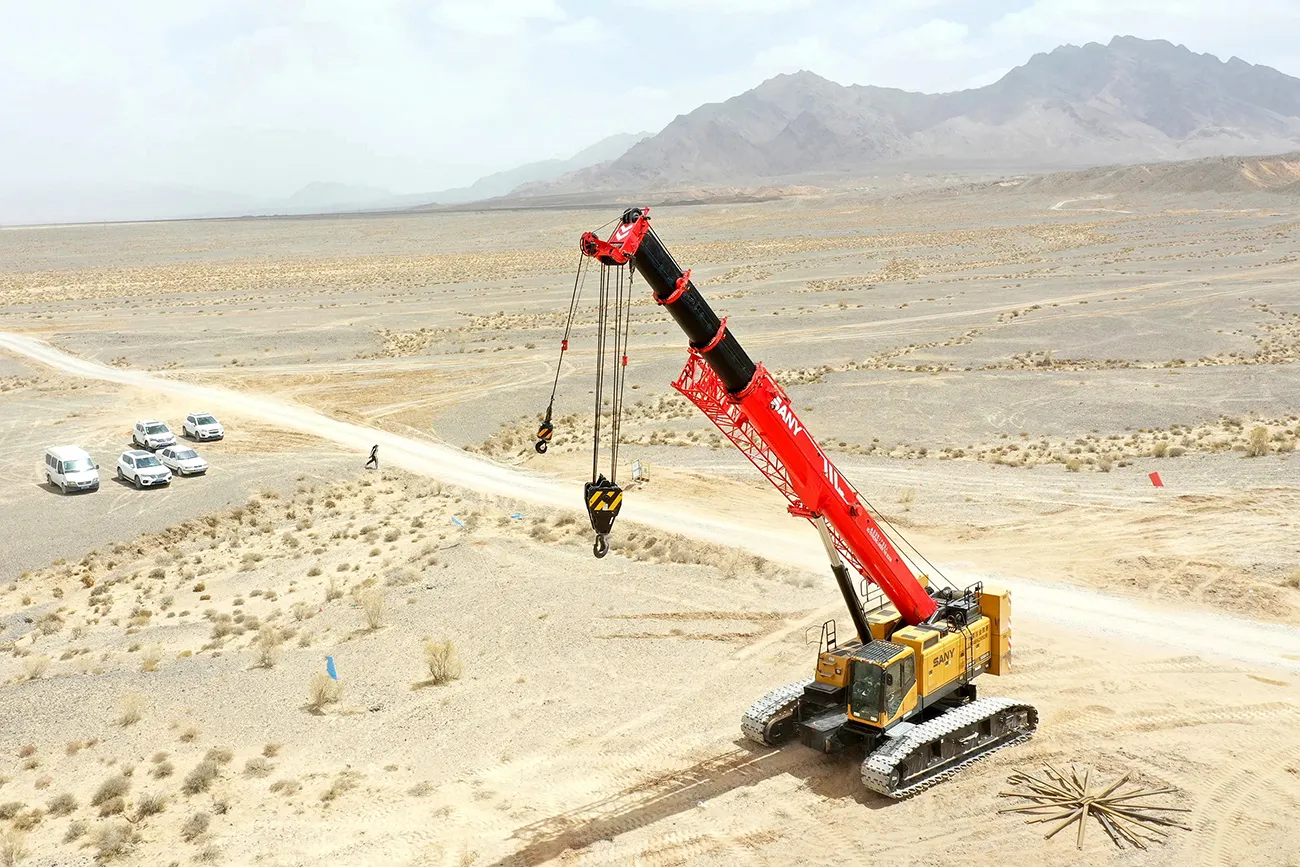
39 battery-electric Sany crawler cranes sold so far
Sany’s fully electric crawler cranes are selling like hot cakes. Dutch company UCM Holland, which markets the machines in the Benelux, has sold 39 in the Netherlands and Belgium since the launch of the 80-tonne SCE800TB-EV telescopic crawler crane, followed later by the 100-tonne SCE1000A-EV and 135-tonne SCE1350A-EV lattice-boom cranes. “We’re leading the way in this field,” says Jack Donker of UCM Holland.
“There’s barely a market left for diesel machines in the Netherlands,” says Donker. “That’s hardly surprising, given the strict rules on nitrogen and CO2 emissions. The Netherlands, and now Norway too, are leading the way on regulation, which means demand for electric cranes is currently enormous.”
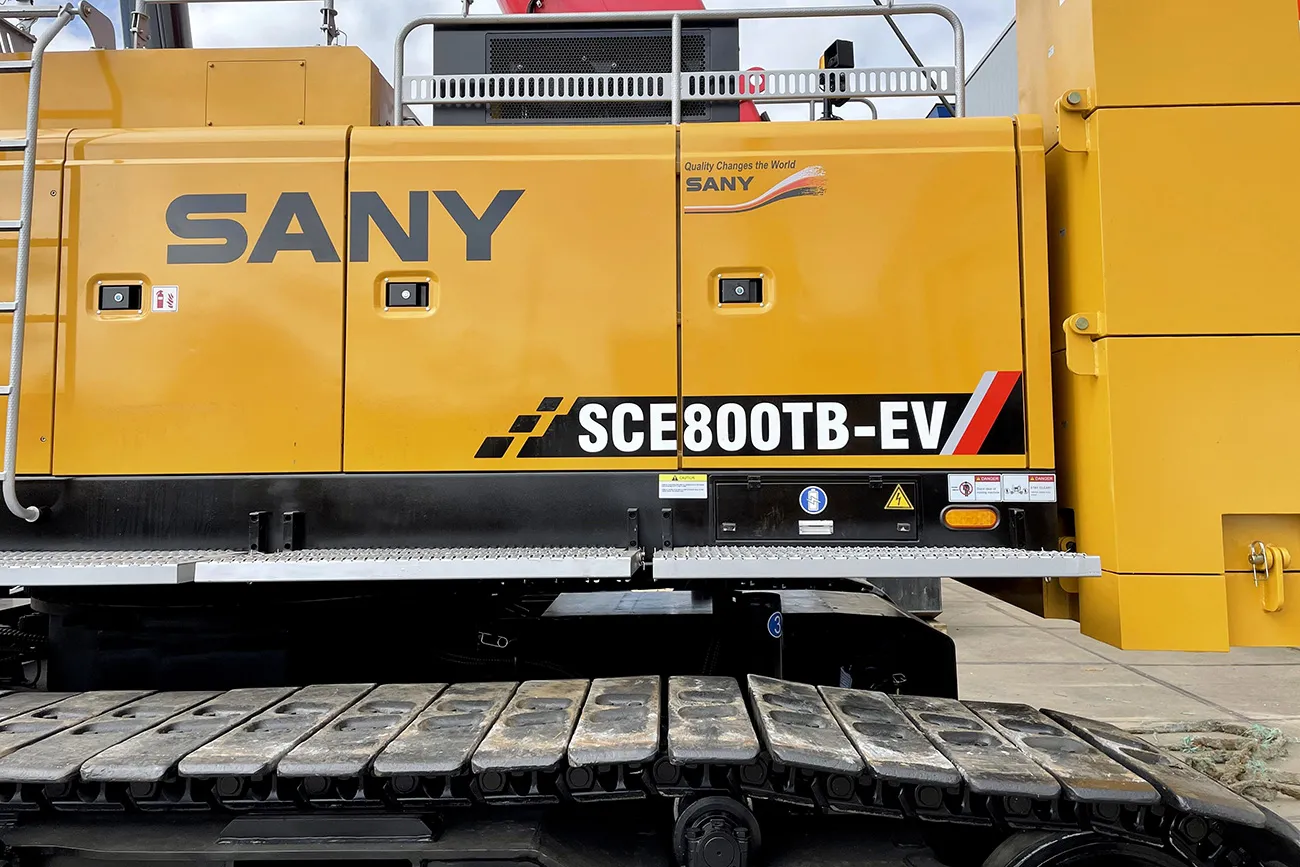
Although Chinese multinational Sany is already well advanced in electrification across several machinery markets, this innovation in the crane sector originated in the Netherlands. “The first request for a fully electric crane came from us as the importer,” says Donker. “Sany then designed and built the machine in-house. For now, it is still assembled on its own European production line. And although it’s a large company, we have direct access to Sany and dedicated contacts there. We also maintain good contact with Sany’s European branch. We started with Stage V machines and gradually upgraded them in many respects to meet our requirements for the Dutch market. Meanwhile, we were seeing demand for electric machines continue to grow.”
As the diesel-powered SCE800TB was UCM Holland’s best-selling crane, it was decided to electrify that model first. Sany’s 100- and 135-tonne lattice-boom cranes, the SCE1000A-EV and SCE1350A-EV, followed.
150-tonne telescopic crawler crane
“The 150-tonne telescopic crawler crane will also be available as a fully electric model from the end of this year,” says Donker, with evident pride. “As the machines get bigger, there is more room for larger battery packs. They now offer 336 kWh of battery capacity, up from 282 kWh, allowing them to work for longer before needing to recharge.”
Charging capacity on Dutch construction sites remains a concern. Donker says: “It could be higher. That would let us charge much faster. Another thing that still happens regularly is that the power supply on construction sites fails, leaving the machine not fully charged the next morning. That’s why Sany provides an app that lets you check everything on the machine remotely, including its state of charge. If you see that charging has stalled, it’s a good idea to check whether the power supply on site is still working properly.”
One notable feature of Sany’s fully electric cranes is that they are delivered factory-built. “For a while, we looked into converting diesel cranes to electric, but we estimated that the conversion market in the Netherlands wouldn’t have the capacity to handle it,” says Donker. “An electric drive also requires a different crane configuration. Sany’s R&D department in China is operating at a very high level, so this proved to be the best solution. And given that they’re now such a huge hit, it was the right choice.”
Training
The Sany Cranes.Services team provides buyers of electric cranes with a dedicated course for operators. Operating an electric crane is slightly different, and handling the battery charging process also requires a different approach. Manuals are also available in Dutch. Sany Cranes.Services ensures that the electric cranes being delivered are tested and inspected at its own premises.
Question about this story? Ask your question
Keep following this
Get an email when a new story is published. No account needed.
- ThemeLower emissions and more reuse
- SubjectBouwMat







