









Where have we come from? And where are we now?
In fact, the vibrations caused by piling rigs have always led to problems, although little attention was paid to them in the late 1950s. There was not much point in doing so either: driven piling was simply the only way to provide foundations for buildings. Ed Revoort traces the history of foundation engineering, from pounding pile drivers to today’s vibration-free techniques.
Ed Revoort, director of Funderingstechnieken Verstraeten, has been working in the foundation industry for over 40 years and has followed developments closely. “Looking back, nobody was happy with the pile driver,” he says. “The vibrations caused problems in the immediate surroundings from the outset. The problems may have been less serious, but they certainly raised questions.”
Piling with heavy blows
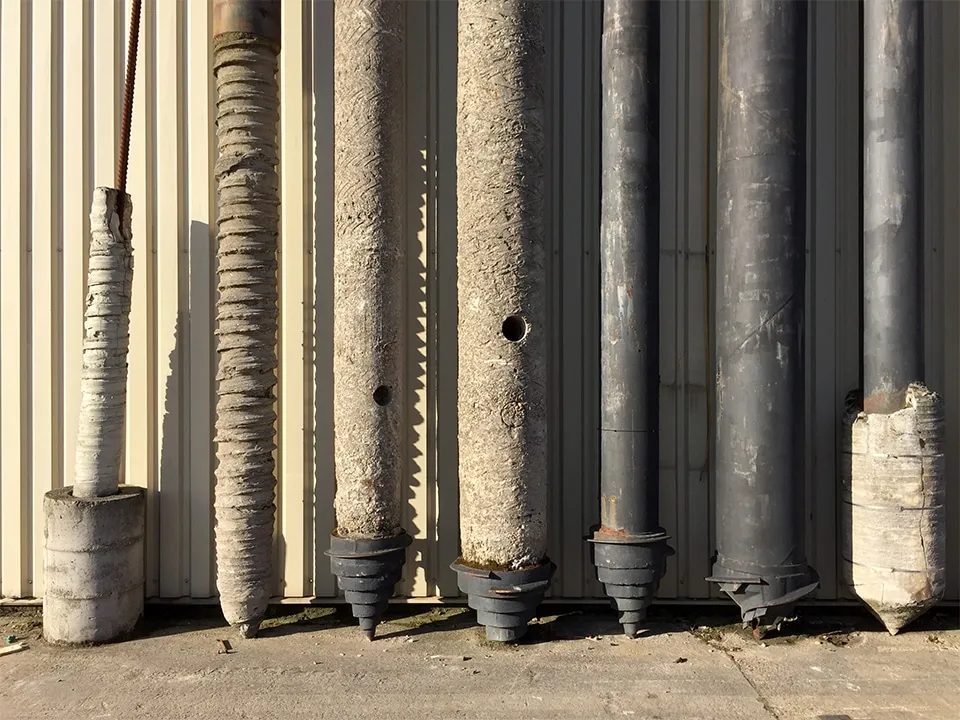
In basic terms, a foundation transfers a building’s load to a load-bearing stratum, located using piles. “Initially, timber piles were used,” says Revoort, “driven into the ground with heavy blows. But from the very beginning, people were considering other methods. We envisaged piles that could be drilled into the ground with a rotary motion, preferably displacing the soil so that no excavated material had to be transported away.”
Displacement piling
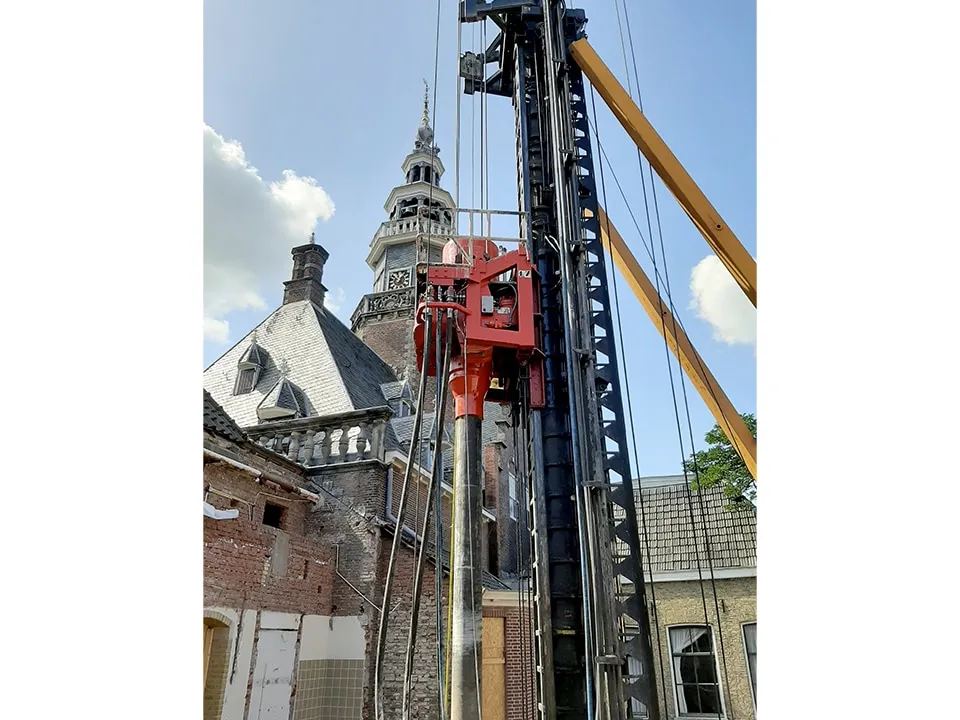
At the time, the firms De Wit and De Waal were already marketing a soil-displacement foundation technique. It offered unprecedented advantages. Once installed, the piles no longer settled further into the ground, so they could be loaded to their full capacity. There was no disruptive noise, cracking or subsidence in nearby buildings, and many foundation companies later adopted the technique.
Foundation rigs
“This was the moment for Funderingstechnieken Verstraeten to develop the machines that could drill piles into the ground,” says Revoort. “We set up a separate private limited company for the machine-building business and protected the designs with patents. The foundations of Fundex foundation techniques were laid: an innovative approach to vibration-free drilling. Other (family) businesses specialised in foundation engineering more broadly and later sold their companies to major contractors. This enabled them to offer several methods. Fundex, however, remained independent.”
Sound advice on foundations
‘This wider choice created a need for advice. When could precast concrete piles be used? Did they meet safety requirements, and could they provide the required load-bearing capacity? “In 2017, the government (NEN) ruled that where a company could not answer the latter question precisely, the parameters had to be reduced by 30%. The rule was intended to encourage companies to return with sound, proven test results. But contractors simply increased the number of piles, with no ambition yet to improve sustainability, cut CO2 emissions or save energy.”
Sustainable. Vibration-free. Low-noise
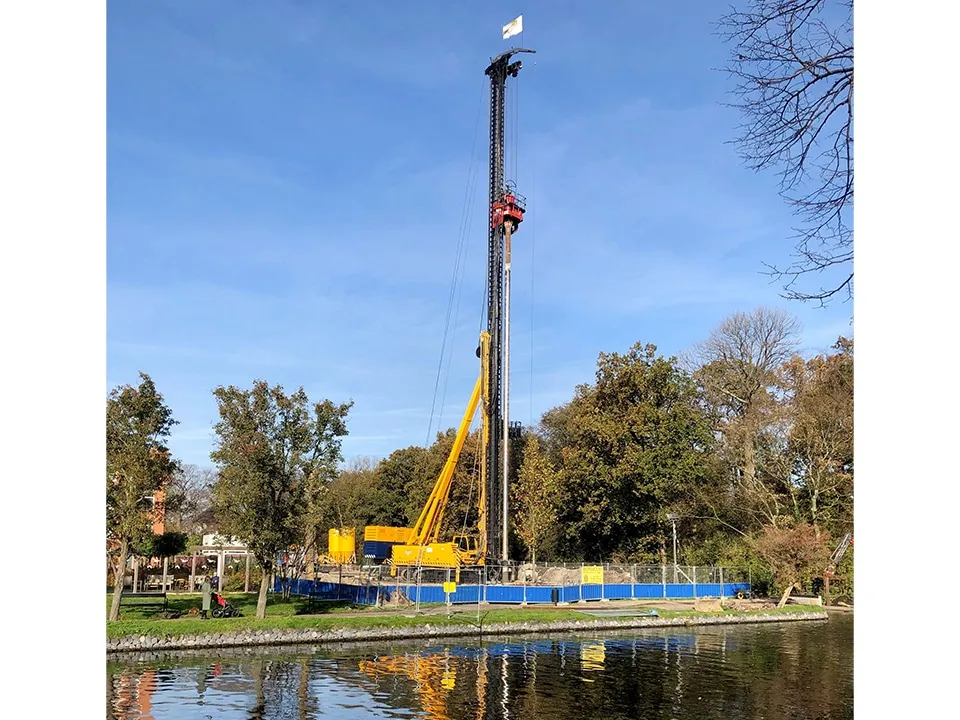
“Fortunately, that period is behind us too,” Revoort concludes. “Like many other foundation companies, Funderingstechnieken Verstraeten has a calculation method that determines load-bearing capacity to the nearest kilo. We also have the techniques to install piles to depths of 60 to 70 metres, suitable for today’s high-rise buildings. We can install new foundations and adapt existing ones, all with low noise levels and no vibration. We helped develop the drilling technique. You can tell.”
Een zakelijke vraag aan Fundex Equipment B.V.? Get in touch
Companies in this story

Keep following this
Get an email when a new story is published. No account needed.
- ThemeUnderground construction
- SubjectUnderground infrastructure
- CompanyFundex Equipment B.V.







