









Underground pipeline systems: The motorway for water, gas, oil and other products
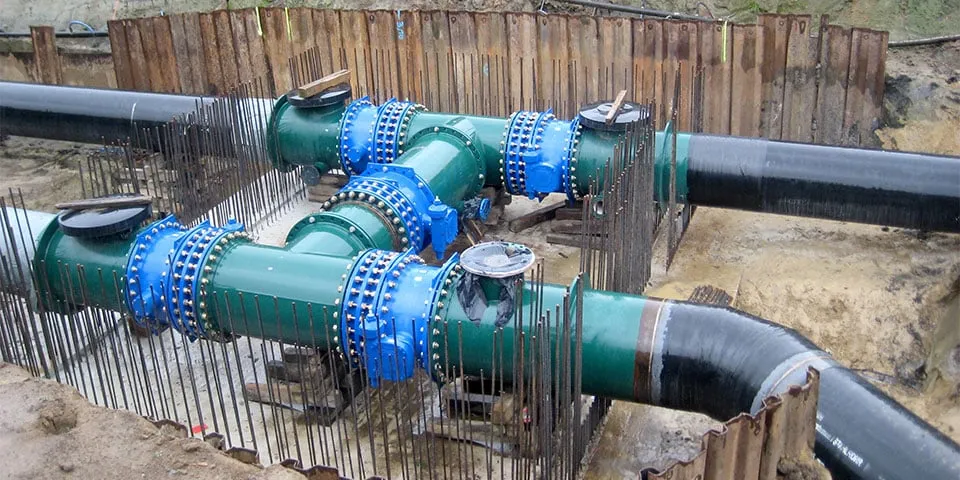
We rarely give it a second thought. Yet beneath the ground lies a transport network almost as busy as the one above it. Large volumes of gases, liquids and raw materials flow safely from A to B through a network of pipelines neatly laid beneath the surface. Specialists select the pipeline systems best suited to the task.
Many ingenious systems have been developed for constructing underground pipeline networks. One of the leading names in this field is CCI Leidingsystemen, based in Klundert, with a sales office in Belgium. The company made its name with ‘cement lining’, a technique in which the inside of steel pipes is coated with a thin layer of concrete. This thin concrete lining makes the pipes suitable for transporting drinking water, cooling water and fire-fighting water in particular. CCI Leidingsystemen has since significantly expanded its offering, and contractors, engineering firms, industrial companies and government bodies can also turn to the company for pipeline systems made entirely of steel or Glass Fibre Reinforced Plastic (GRP), as well as specialist welding techniques.
Cement lining
“Cement is a natural product,” says Jack Sweere, Sales and Marketing Manager at CCI. “That makes steel pipes with cement lining ideal for transporting drinking water, cooling water and fire-fighting water. The thin cement layer protects the steel against corrosion, safeguarding the quality of the water.” Steel pipes with cement lining are supplied in sizes from Ø 80 to Ø 2500 mm. Any required route can be created using bends, T-pieces, Y-pieces, reducers and flanges.
GRP pipeline systems
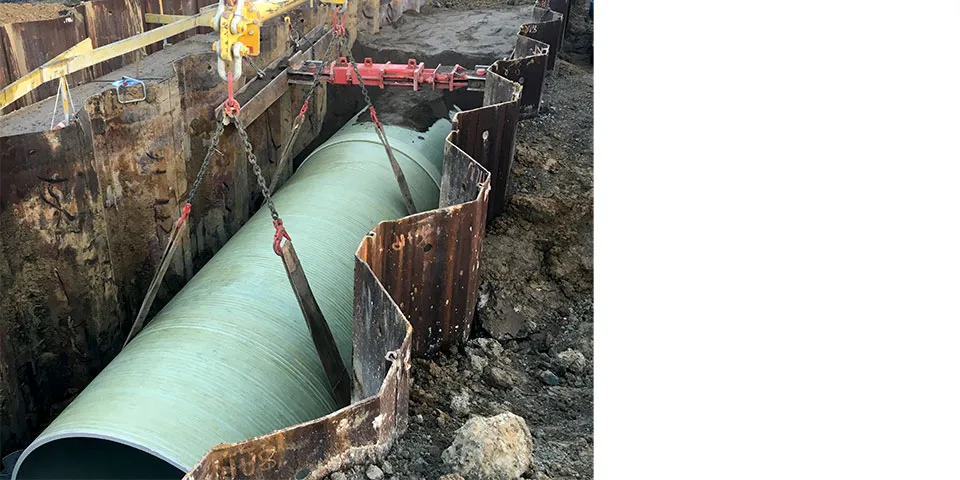
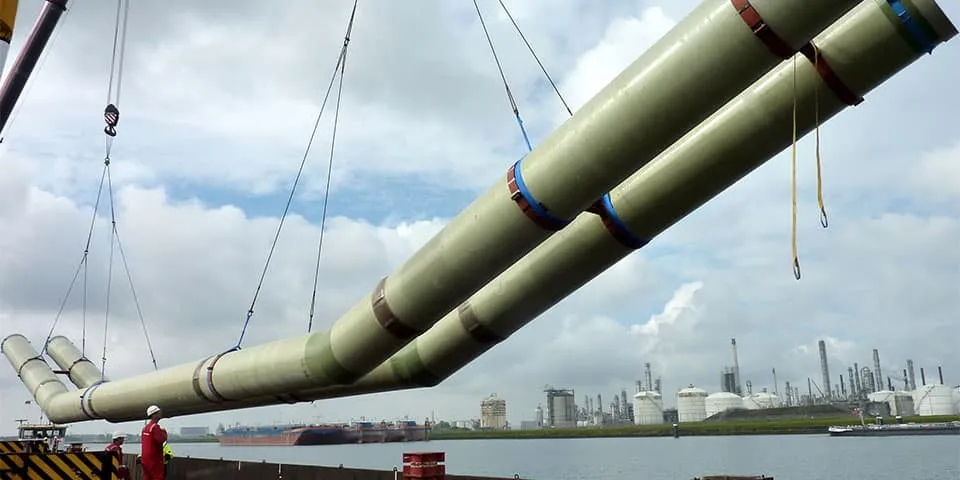
GRP pipeline systems offer other advantages. To start with, this pipe is considerably lighter than its steel counterpart, making it suitable for less load-bearing soils. “GRP pipeline systems are also used to transport and store cooling water, wastewater and fire-fighting water. The material is also suitable for the petrochemical industry,” says Marcel Blaauw, Commercial Manager Netherlands. “GRP is highly resistant to chemicals, does not corrode and is easy to work with.” With diameters ranging from 300 to 4,000 mm, GRP pipeline systems provide a solution for almost any liquid transport application.
Quality products only
By supplying pipelines, CCI Leidingsystemen operates in a niche market. There are few companies in Europe active in the same sector. Even so, this has never been a reason for the 40-year-old family business to rest on its laurels. It strives for quality in everything it does. Not only are its pipelines, raw materials and processes certified, but its employees also meet the highest attainable quality standards. The company has a fully equipped workshop for cement lining the inside of pipes, coating the outside and prefabricating steel pipes and fittings. It also supplies pipelines for kerosene and CO2 capture.
Sweere: “Thanks to this ambitious approach, and certainly also to its favourable geographical location, close to the deep-water ports of Rotterdam and Antwerp, CCI Leidingsystemen can now count itself among the world’s leading pipeline system suppliers.”
Een zakelijke vraag aan CCI Leidingsystemen? Get in touch
Companies in this story
Keep following this
Get an email when a new story is published. No account needed.
- ThemeUnderground construction
- SubjectUnderground infrastructure
- CompanyCCI Leidingsystemen







