









‘The Netherlands needs a complete overhaul’
Text and images Bouwend Nederland
Harold Lever, chair of the Underground Networks and Groundwater Management Section at Bouwend Nederland
“More homes are needed, we need more road infrastructure, our electricity grid
has to be adapted to current demand and power feed-in, and we need
climate-resilient drainage systems. In short, the Netherlands needs a complete overhaul.”
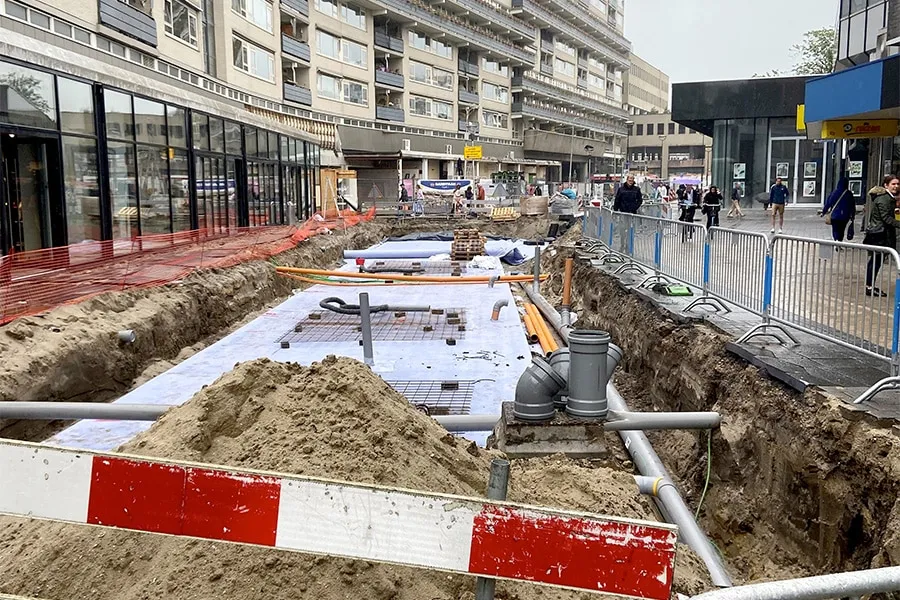
Speaking is Harold Lever, chair of the Underground Networks and Groundwater Management Section at Bouwend Nederland. “This is less of a challenge in rural areas than in our major cities. In inner-city areas, everything underground is packed. That has a major impact on how work needs to be carried out.”

Choose the ‘big bang’ approach or work for longer?
Given the huge amount of underground work ahead and the associated challenges in inner-city areas, Harold believes there are two possible approaches. “One option is the ‘big bang’ approach, where we work as quickly as possible, causing disruption, but with a tight schedule and a clear completion date in sight. With the right stakeholder management, disruption can still be minimised within that framework, but pressure on the surrounding area is inevitable. The alternative is to make projects entirely subordinate to the needs of the surrounding area and take longer, while keeping disruption to a minimum each day. Which method is preferable will also depend on the area and the nature of the work.”
New technologies offer a solution
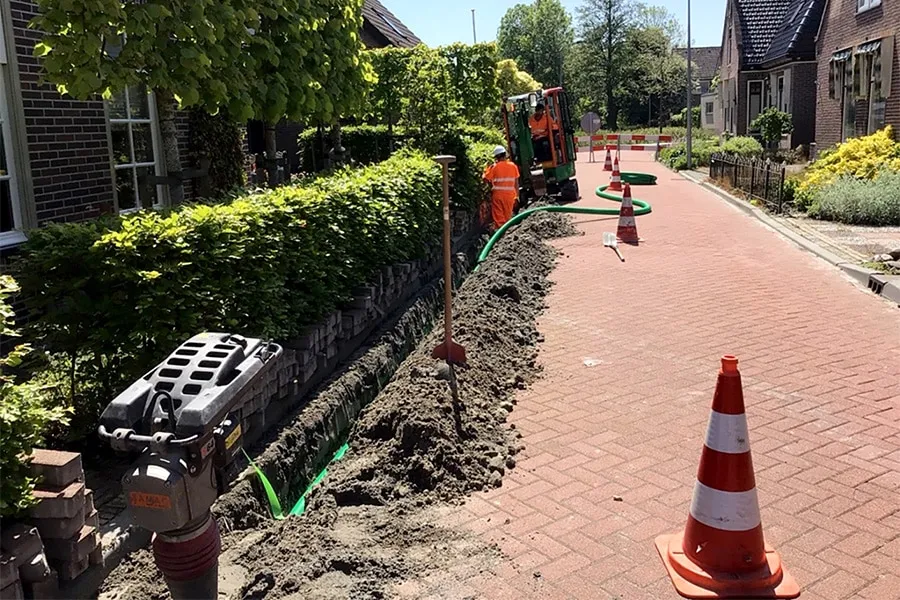
For Harold, it is clear that the latest trenchless technologies already make a huge difference when it comes to minimising disruption. “Add to that the trend towards making equipment ever smaller without compromising performance, and you have a win-win situation. Where possible, we can already work trenchlessly in very confined spaces. That is obviously ideal for city centres. The challenges of working in inner-city areas have acted as a catalyst for more sustainable infrastructure. Smaller equipment, vibration-free working, electrification, and so on. Incidentally, the province of Noord-Brabant is by far the leader in sustainable procurement, in both urban and rural areas,” says Harold.
The ground has reached its limits
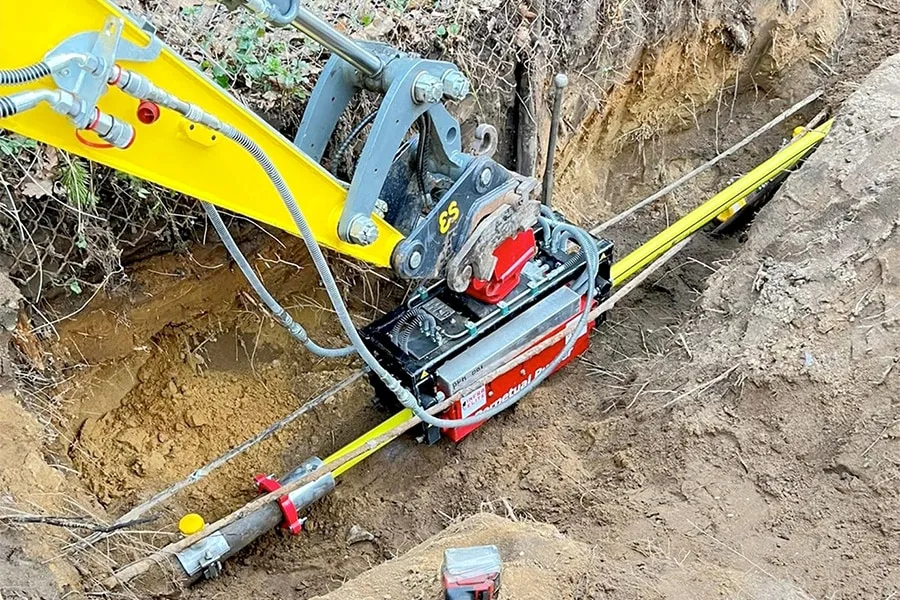
“In some places, the ground is nearing the limits of what it can accommodate. The paradox is that work is becoming more expensive, complex and slow, while the energy transition demands ever faster progress. Building new energy networks is currently the biggest task. In addition, replacement work is increasing in the medium-voltage network. The connection network needs greater capacity. This is due to power feed-in and rising energy demand, for example from charging electric cars.”
Harold says network operators need to map the locations of their cables accurately and submit correct data to the Land Registry. “Excavation contractors also need to be more accurate in their notifications. Non-invasive techniques are getting better all the time, but if the map is wrong, you still end up digging trial trenches. What a waste! We now have excellent digital tools for requesting data, reporting changes and keeping everything up to date. More attention should be paid to the accuracy of records. Major strides are now being made through the standardisation of data, and the Land Registry is actively involved. Accuracy must be expected at every level of a project, from the design office to the subcontractor.”
Much remains uncertain
Harold hopes there will soon be greater clarity about alternative energy sources, such as hydrogen. “I hope there will be enough green gas and hydrogen, and that we can use the existing gas pipelines for them. Because no one knows what the future holds for hydrogen and green gas, investors are staying away. It seems like a vicious circle. Someone has to be the first to invest confidently in these energy sources.” There are also concerns about our groundwater. Harold says: “In many parts of the Netherlands, dewatering is necessary. This affects groundwater levels, although we are getting better at monitoring them. Heating and cooling systems also put demands on the subsurface. The challenge in the years ahead is to maintain groundwater levels and ensure our drinking water is not affected. In short, everything is interconnected and there is still a lot of work to do. Collaboration is needed to build an overarching picture. That is the only way we will find a solution.”
Question about this story? Ask your question
Keep following this
Get an email when a new story is published. No account needed.
- ThemeUnderground construction
- SubjectUnderground infrastructure







