









Soil-led design with ductile iron
Text Roel van Gils Beeld Saint-Gobain PAM Nederland

Better for people and the environment
In everyday life, underground pipeline systems play a crucial role in transporting water, gas and other liquids safely and efficiently. An approach that has been gaining popularity in recent years is soil-led design using locally sourced soil. Using PAM Ecopose ductile iron to design underground pipeline systems in this way delivers significant savings for both people and the environment.
Soil-led design integrates the natural properties of the ground with the technical requirements of the infrastructure, says Esther Lindeman, Managing Director of Saint-Gobain PAM Nederland. “This provides sustainable and efficient solutions that benefit both people and the environment.”
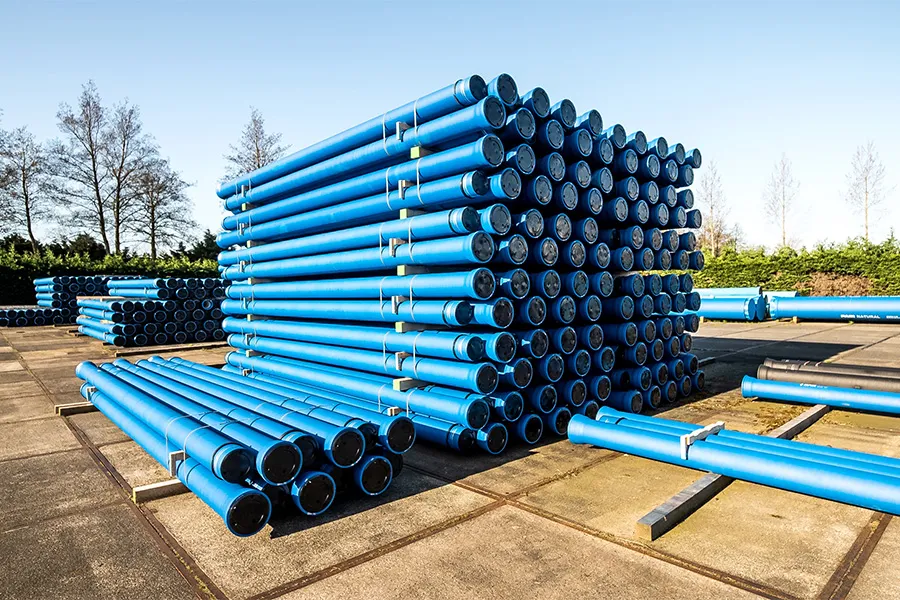
PAM Ecopose
Ductile iron is widely used in the construction of underground pipeline systems because of its durability, strength and long service life. The material is suitable for a range of applications, from water mains and sewer systems to pipelines for industrial use. “Ductile iron is so well suited to soil-led design because the pipes are very strong (high ring stiffness, ed.) and the excavated soil can be reused to backfill the trench. We call this PAM Ecopose,” says Esther. “This significantly reduces the environmental impact, by up to 50%.” PAM Ecopose eliminates the need for clean sand, which has to be transported from far away, and there is no need to remove the excavated soil. “That means a huge reduction in transport movements and associated emissions. What’s more, the joints allow the pipeline to move with the ground without stress, making it resistant to damage caused by subsidence and vibrations.”
By minimising earthworks and using PAM’s sustainable ductile iron pipes, soil-led design helps reduce CO2 emissions and the ecological footprint of projects, Esther concludes. “Soil-led design of underground ductile iron pipeline systems offers a sustainable and efficient solution to the challenges facing modern cities and communities. By integrating natural and technical considerations into the design process, infrastructure projects can be delivered that are not only functional and cost-effective, but also contribute to a healthy and resilient living environment for current and future generations.”
A business enquiry for Saint-Gobain Weber? Get in touch
Companies in this story

Keep following this
Get an email when a new story is published. No account needed.
- ThemeUnderground construction
- SubjectUnderground infrastructure
- CompanySaint-Gobain Weber







