









Portfolio approach future-proofs five South Holland national tunnels in nine years
Text Roel van Gils Images TEC, Rijkswaterstaat
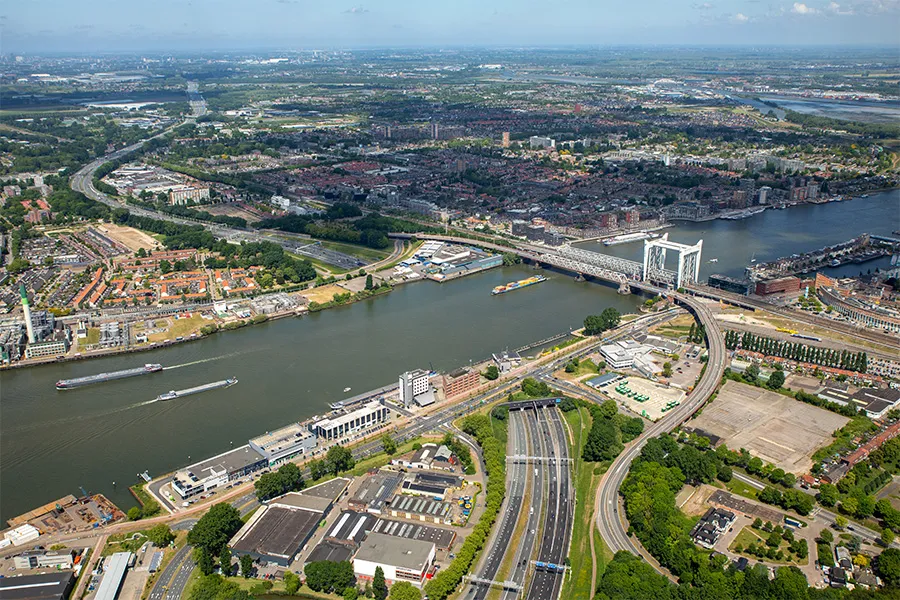
Most tunnels in South Holland were built in the late 20th and early 21st centuries. Ageing and intensive use mean they need to be renovated to ensure they remain safe and available in the future. As part of the South Holland Tunnel Renovations Project (PTZ), Rijkswaterstaat has deliberately chosen a portfolio approach: a coordinated programme delivering five tunnel renovations by 2032. This will accelerate the complex task ahead and enable much more effective collaboration with the market, sharing and retaining knowledge. Tunnel Engineering Consultants (TEC), a joint venture between Haskoning and Witteveen+Bos since 1988, has been appointed to provide engineering services.
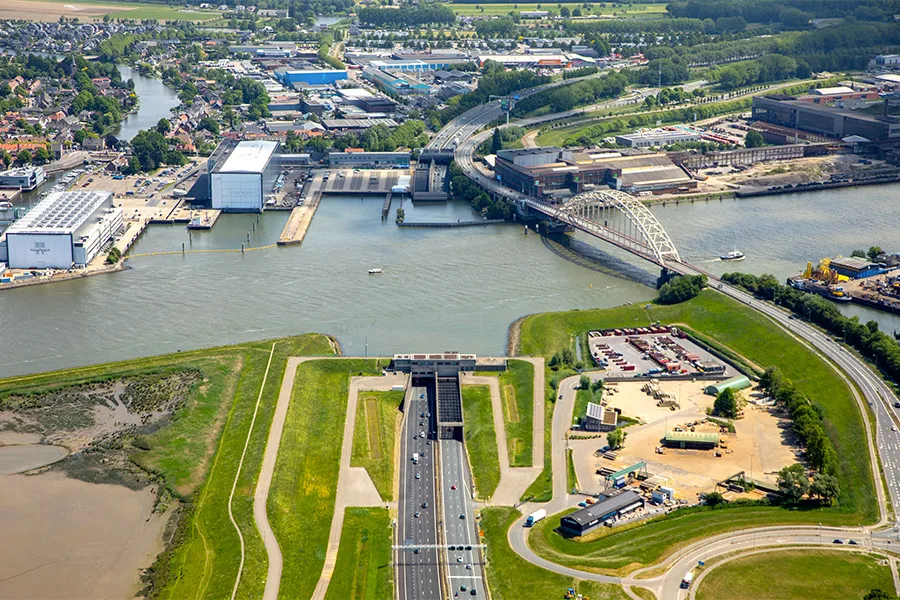
Portfolio approach
The PTZ project covers the Noordtunnel (A15), Beneluxtunnel (A4) and Tweede Heinenoordtunnel (A29) (portfolio 1), as well as the Drechttunnel (A16) and Sijtwendetunnel (N14) (portfolio 2). “Given the scale of the task, increasing output is important for Rijkswaterstaat. Bundling these five tunnels allows us to carry out more work in parallel than we could with a tunnel-by-tunnel approach,” says Rik Sonneveldt, Rijkswaterstaat project manager for PTZ. “This means we can renovate five tunnels over a nine-year period. That is considerably faster than the traditional approach, mainly thanks to efficient preparation. For that reason, we signed a single long-term, nine-year contract with engineering consultancy TEC. The contract was awarded at the end of 2022.”
Off to a flying start
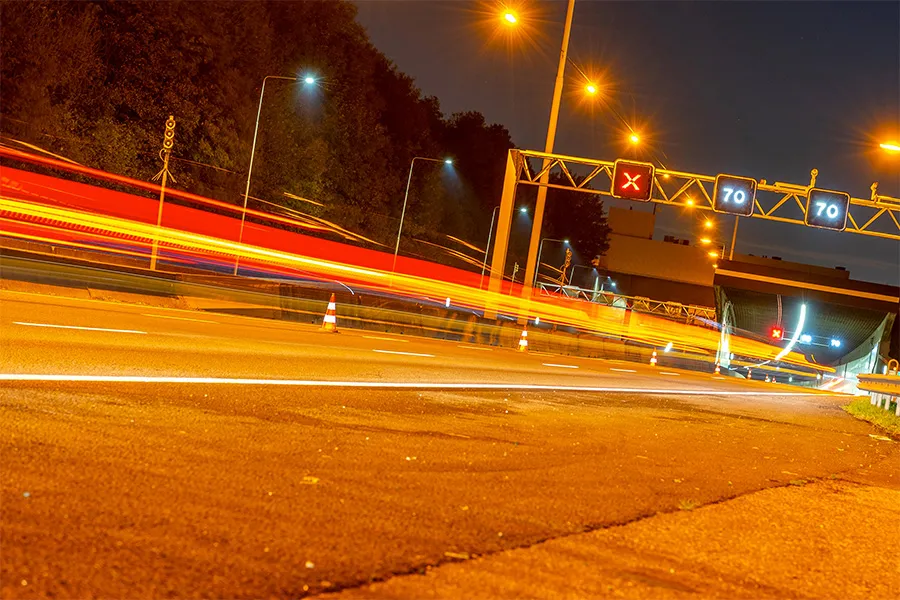
TEC and Rijkswaterstaat staff are working together as one team to prepare, tender and deliver the tunnel renovations. “We invested a lot of time at the outset in getting to know each other, which gave us a flying start,” says Johan Kornet, TEC project manager for PTZ. “On the ‘shop floor’, you can no longer tell who works for TEC and who works for Rijkswaterstaat.” The benefits of this strong start to the collaboration are already evident in the contract preparation and tendering for the tunnels. Kornet says: “A single tunnel would normally take seven years. We have now tackled three tunnels in 2.5 years, with their schedules overlapping like roof tiles. That means the tunnels are being worked on consecutively, with some activities running in parallel. Alongside the work specific to each tunnel, there is a lot of repeat work, which allows us to retain all our knowledge within the team. Preparing the second tunnel is much more efficient than preparing the first, and each subsequent tunnel benefits from the routine we build up. So far, we have met every milestone.”
Learning & Development
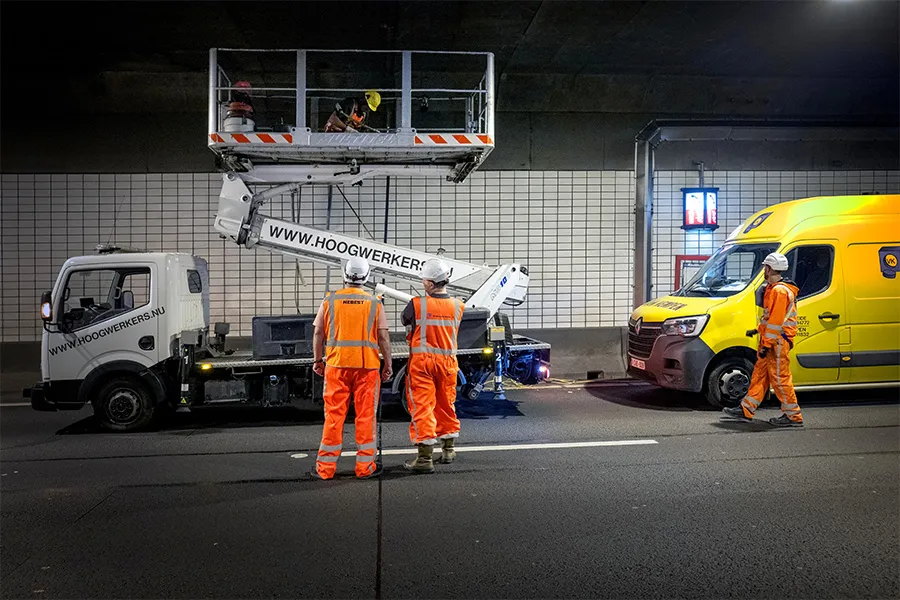
The PTZ project is divided into two contract portfolios. “That means we only need to run two procurement procedures for the five tunnels,” Sonneveldt explains. “The idea is that, following a negotiation process, the contractor will also carry out the follow-on work. This saves on procurement costs, gives the contractor the desired deal flow, and allows us to learn together from previous experience.” Learning & Development is also one of PTZ’s project objectives. “The idea is to gather all our knowledge so that we can deliver the repeat commission better, smarter and faster, with fewer people,” says Ashna Bainathsah, Rijkswaterstaat project controls manager. “TEC has specifically appointed a lead for this role, filled by Arlette Nieswaag as Learning and Development Manager. So within PTZ, we are dedicated to encouraging learning and development.”
Centre for Underground Construction (COB)
The Learning & Development team organises monthly online themed sessions, open to the entire project team. “Colleagues focus on a specific topic they are working on,” says Nieswaag. “We also organise knowledge-sharing sessions with the COB. These are in-person meetings that encourage interaction between PTZ and the market. The main aim is to share knowledge, but also to avoid becoming an island of our own in the tunnel sector.” Bainathsah adds: “At certain points, we deliberately put the PTZ project in the spotlight, extending our reach beyond the project and sharing the knowledge we have developed. Our colleagues are also regularly asked to share their experience with project teams working on other projects.” Nieswaag says it is striking to see how Learning & Development has been embraced within PTZ. “It is part of the project culture.”
Smart and efficient
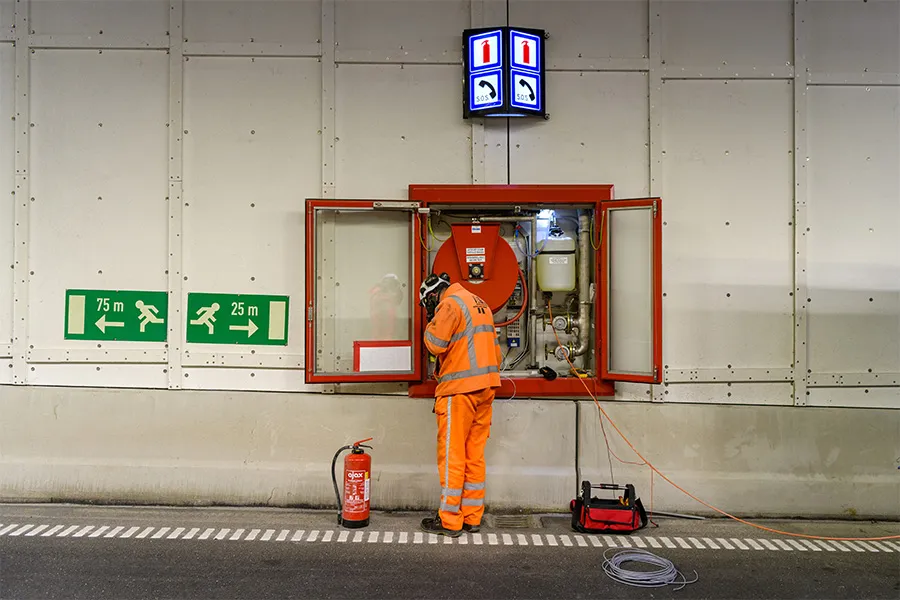
Under PTZ, the five tunnels are being upgraded to meet the National Tunnel Standard. “From a technical perspective, we are following two main tracks: replacing the tunnel systems and upgrading the civil structures, so that they will need no major work for the next 30 years,” says Willem Hijmans, Rijkswaterstaat technical manager for portfolio 1. “If you focused solely on designing and building efficiently, you would ideally close the tunnel for months. You would first remove the old systems, then install the new ones. But we have deliberately chosen not to do that, partly because of the impact on an already busy road network. We want to work as smartly and efficiently as possible. We will do that by closing the tunnel for a shorter period, carrying out the civil works and, in parallel, starting to install the new systems. ′
The tunnel then reopens while we continue installing the systems, with the tunnel remaining open to traffic and the existing systems still in operation. Once all the new systems and equipment have been tested and validated, the tunnel will be closed for a second short period and everything will be switched over to the new system.”
Sustainable maintenance
The tunnels were built before the National Tunnel Standard existed. “We will upgrade the tunnels to new-build standards as far as possible,” says Mario Mies, senior structural engineer at TEC. “Where that is genuinely not possible, we will still aim to get as close as we can to the target standard and document why we have deviated from it. We are also making improvements to make the tunnels easier to maintain and reduce disruption to traffic. Service hubs are a good example. These cabinets are installed every 50 or 100 metres along the tunnel and act as ‘intermediate stations’. They connect all the systems to the main network and supply them with power. This means we need far fewer cables, which makes maintenance easier. We will also position fans more intelligently, placing powerful fans outside the tunnel rather than above traffic inside it. This prevents high lorries from damaging the fans. The system that helps the operator respond quickly to an incident in the tunnel will also be upgraded with intelligent cameras, and a separate surface water drainage system will be installed.”
Multidisciplinary project
What makes PTZ special, according to Mario Mies, is that it is a genuinely multidisciplinary project. “We work in large teams with many specialists, each speaking their own language. The technical complexity and integration are a major challenge, which makes the work genuinely interesting. Renovating a tunnel is much more complex than building one from scratch.” A complex renovation of this kind also affects the surrounding area and traffic flow, which is already under considerable pressure because of the largest infrastructure renewal programme ever undertaken in the Netherlands. “Traffic models paint a bleak picture when tunnels or tunnel tubes are closed,” says Kim Stelleman, Rijkswaterstaat environmental manager for PTZ. “Early in the process, we look at how we can limit disruption by comparing different construction options. We ask the contractor whether there is an even smarter way of doing it. Before and during the work, we communicate clearly about the disruption people can expect and advise them on possible alternatives. Local stakeholders, including neighbouring municipalities, logistics companies, visitor attractions, public transport operators and the healthcare sector, are involved in developing these alternatives. It is a complex puzzle. The impact is substantial, so the surrounding area needs to adapt if we are to keep the region reasonably accessible during the tunnel renovations.”
A balancing act
PTZ also makes active use of expertise from the market to minimise disruption to the surrounding area. “Contractors have most of the hands-on delivery experience,” acknowledges Robin Gerrets, technical manager for portfolio 2. “We really want to make use of that knowledge. We cannot afford to close a tunnel for a long period. That would make the work much more efficient and cheaper. In the tender, we challenged bidders to see if they could do the work more smartly or quickly, and whether they could carry out some of it during the often quieter summer period. The downside is that the contractor’s delivery team would once again be unable to take a summer holiday with their families. That may sound like a minor issue, but if your employer asks you to do that every summer, it becomes a real problem. So it is quite a balancing act.”
In the 2.5 years since the PTZ project began, it has already achieved a great deal in terms of both delivery and collaboration. “After the first tender, the contractor complimented us on how well organised our project documentation was,” says Sonneveldt. “The biggest risk is coming across unforeseen issues ‘behind the wallpaper’. We want to avoid that by carrying out thorough preliminary investigations. We have made real progress in this area. Our ambition is that, by the time all the tunnels are completed at the end of 2032, no major renovations will be needed again. We also want the smarter, modular design of the tunnel systems to make them much easier to maintain, with less disruption. PTZ will therefore serve as a blueprint for other Rijkswaterstaat tunnels that are candidates for renovation.”
A business enquiry for Haskoning? Get in touch
Companies in this story
Keep following this
Get an email when a new story is published. No account needed.
- ThemeUnderground construction
- SubjectUnderground infrastructure
- CompanyHaskoning







