









New proximity switch for sheet pile profiles
Text Roel Bijlard Image ArcelorMittal
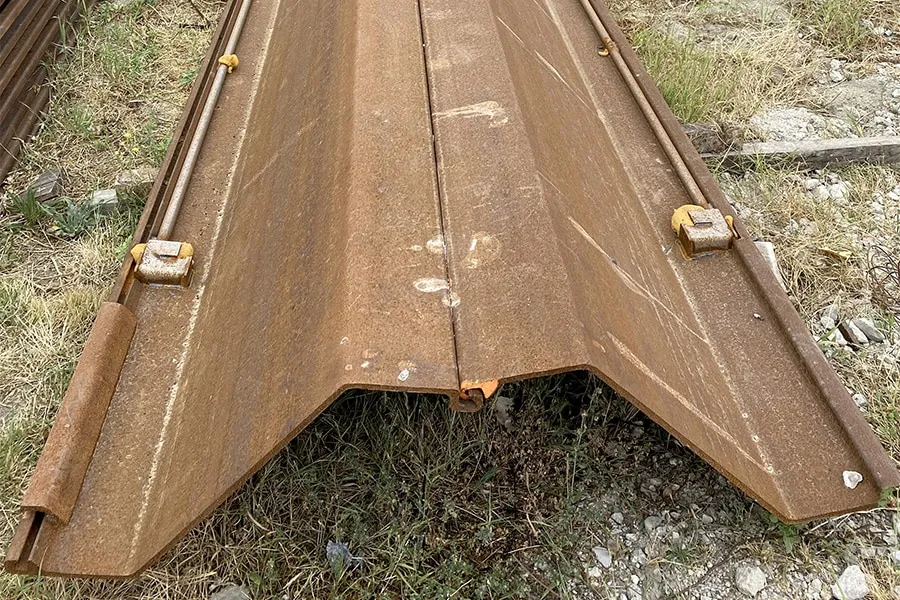
When building earth-retaining structures, it is important to install a continuous wall that prevents soil and water from escaping. Such a wall is generally made up of steel structures such as sheet piles or combi-walls for walls subject to heavier loads. Steel sheet piles and combi-walls are impermeable to soil and water, except at the interlocks required to install and connect the elements in the ground. To ensure a continuous wall, all sheet piles (and tubes) must be connected in each other’s interlocks. Since the interlocks are underground or underwater, they often cannot be checked visually. There is a risk that sheet piles will ‘disengage from the interlock’ during extremely heavy pile driving or when there are obstructions in the ground, potentially causing scour.
There are several ways to check whether a sheet pile interlock is connected to the preceding interlock during and after installation. The most reliable way to measure this is with electrical sensors, rather than the simplified method using mechanical detection. Electrical sensors can be divided into those that take discontinuous measurements and those that take continuous measurements.
Discontinuous measurement method with Dixeran™
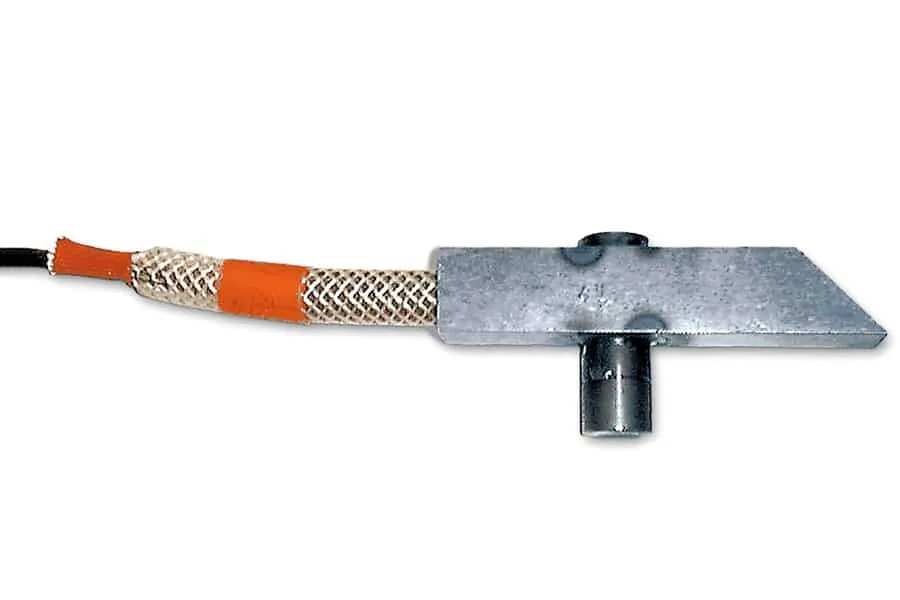
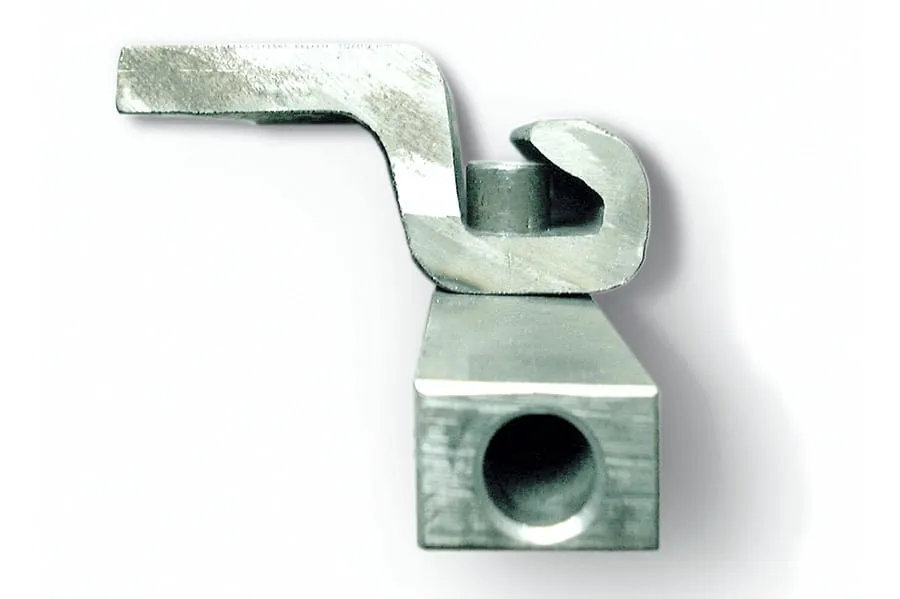
A discontinuous measurement method uses a sensor to check at a single level that no gap has formed in the interlock. ArcelorMittal uses the Dixeran™ system for this purpose. It consists of a break pin placed at the bottom of the leading interlock of the sheet pile. In a combi-wall, these sensors are installed in the interlock of the tubular piles. This interlock indicator detects whether the next sheet pile has remained in the interlock: as it reaches the required depth, the next sheet pile breaks off the sensor pin. This is registered by a meter box connected to the sensor at the top of the sheet pile. When the pin breaks, this confirms that the sheet pile has reached the required depth correctly and remains in the interlock.
If the signal on the meter box does not change, the sheet pile has disengaged from the preceding interlock. However, the height at which this happened is unknown. If it happens within the top metre, it is easy to rectify if detected immediately. If the sheet pile disengages from the interlock within the bottom metre, there may be no structural consequences at that depth. Not knowing the height at which the interlock opened affects the corrective measures that need to be taken.
Continuous measurement method with AM-SIS
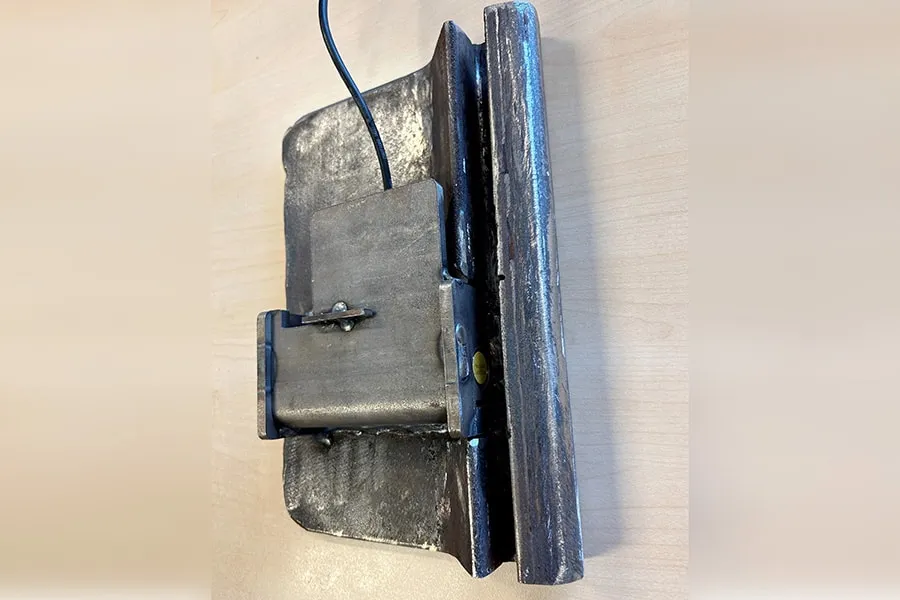
Where a discontinuous measurement detects whether the sheet pile is still in the interlock at just one level, a continuous system measures this along the full length of the sheet pile. A continuous electrical measuring system is also often called a proximity switch. It detects magnetic fields using an inductive switch to check whether the interlock is still connected. This type of switch is sensitive to pile-driving acceleration and impacts, which caused the system to fail during heavy pile driving in the past.
To improve reliability, ArcelorMittal developed AM-SIS. This new proximity switch has been technically improved and is more robust than comparable systems. The sensor has undergone extensive reliability testing under heavy pile-driving conditions on several projects in the Netherlands and Belgium. Following these successful tests, the system has been available and used on projects since 2022.
Installing the AM-SIS switch
The proximity switch is fitted to the bottom of the sheet pile to be installed. A steel tube is welded to the sheet pile, running from the sensor to the top of the pile, with the switch’s electrical cables routed through it. The wires are connected to a meter box before installation. This enables continuous monitoring during installation to check whether the sheet pile remains in the interlock. If the pile disengages from the interlock, this is registered immediately on the meter box. In that case, the pile is extracted and, after being checked for damage, installed again.
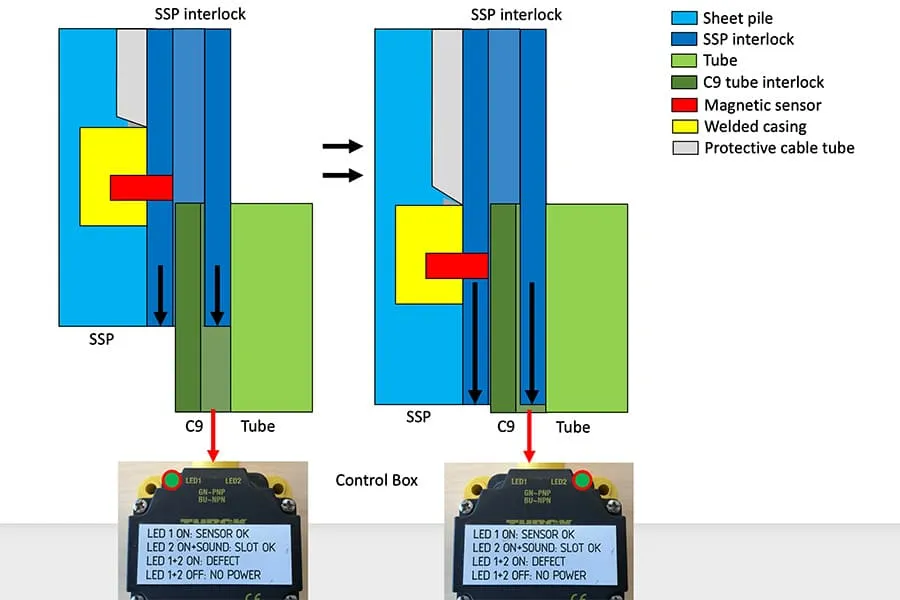
Immediate detection and continuous monitoring
This method differs from the break-pin method because disengagement from the interlock is detected immediately. This also gives the exact height, which is important when deciding on any corrective measures. Another advantage of AM-SIS is that the proximity switch continues to operate once the pile has reached the required depth. At a later stage, it is still possible to check whether the pile has been pulled out of the interlock by subsequently installed piles or by earthmoving or dredging operations.
Een zakelijke vraag aan ArcelorMittal Projects Europe B.V.? Get in touch
Companies in this story

Keep following this
Get an email when a new story is published. No account needed.
- ThemeUnderground construction
- SubjectUnderground infrastructure
- CompanyArcelorMittal Projects Europe B.V.







