









Groningen station to get underground passenger concourse and cycle parking
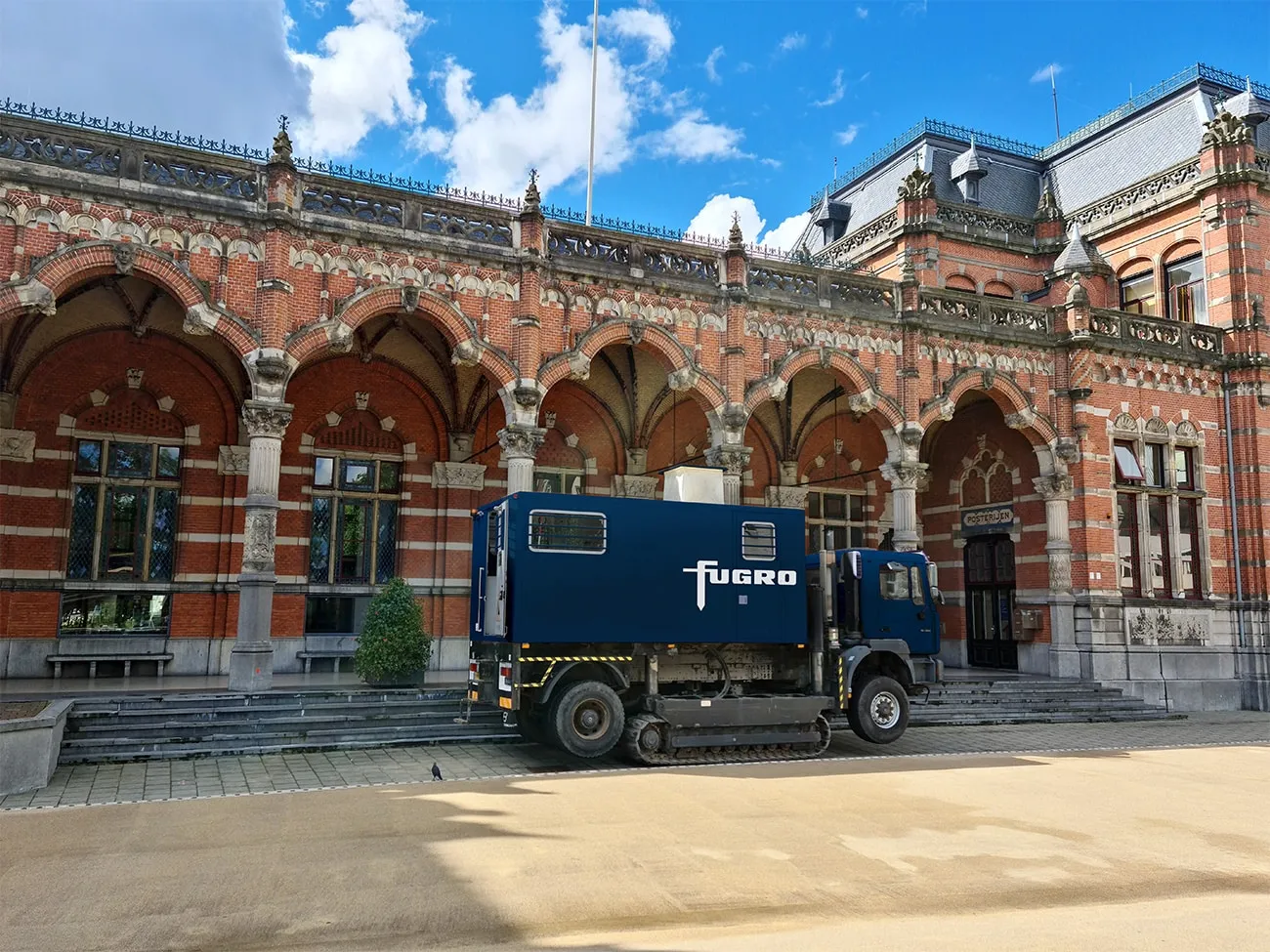
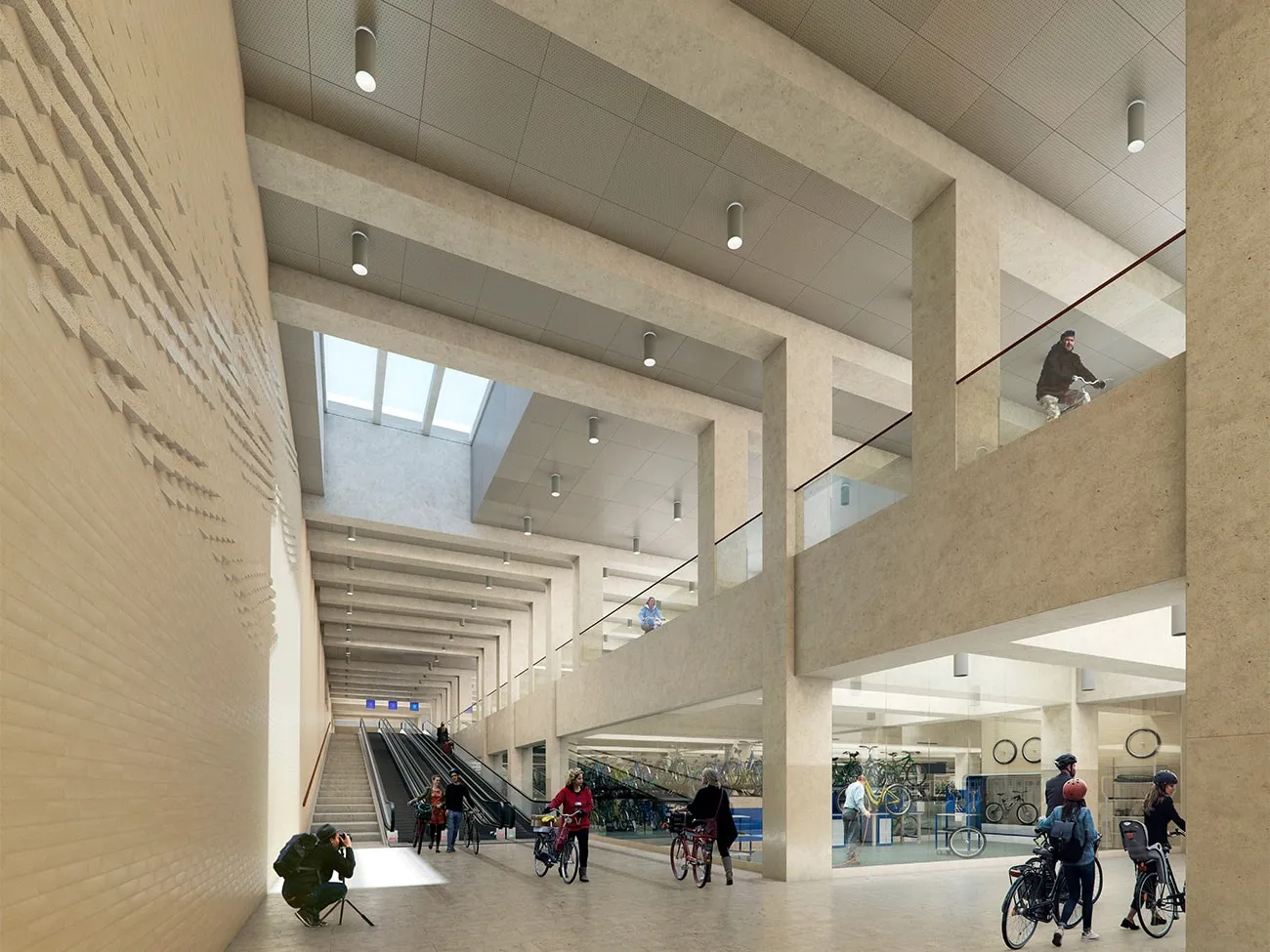
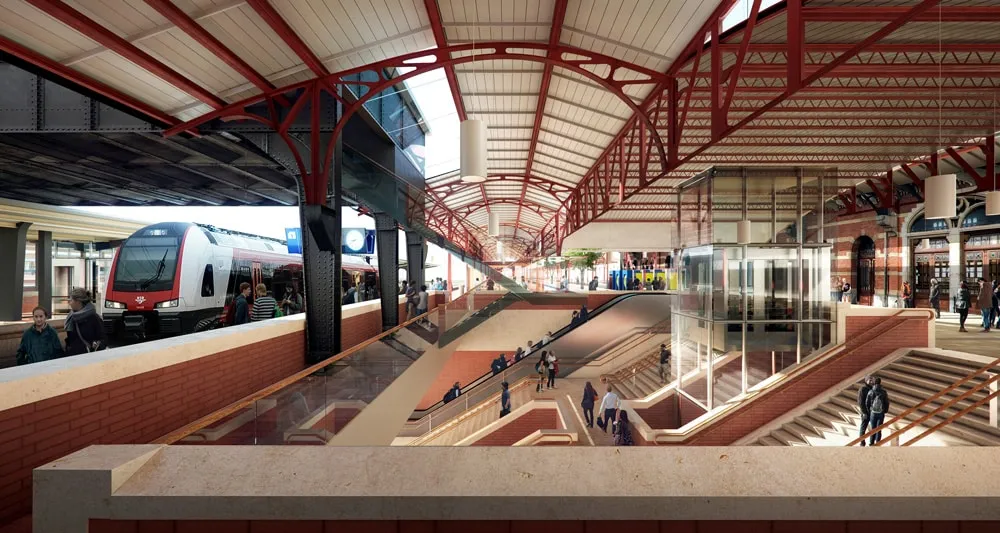
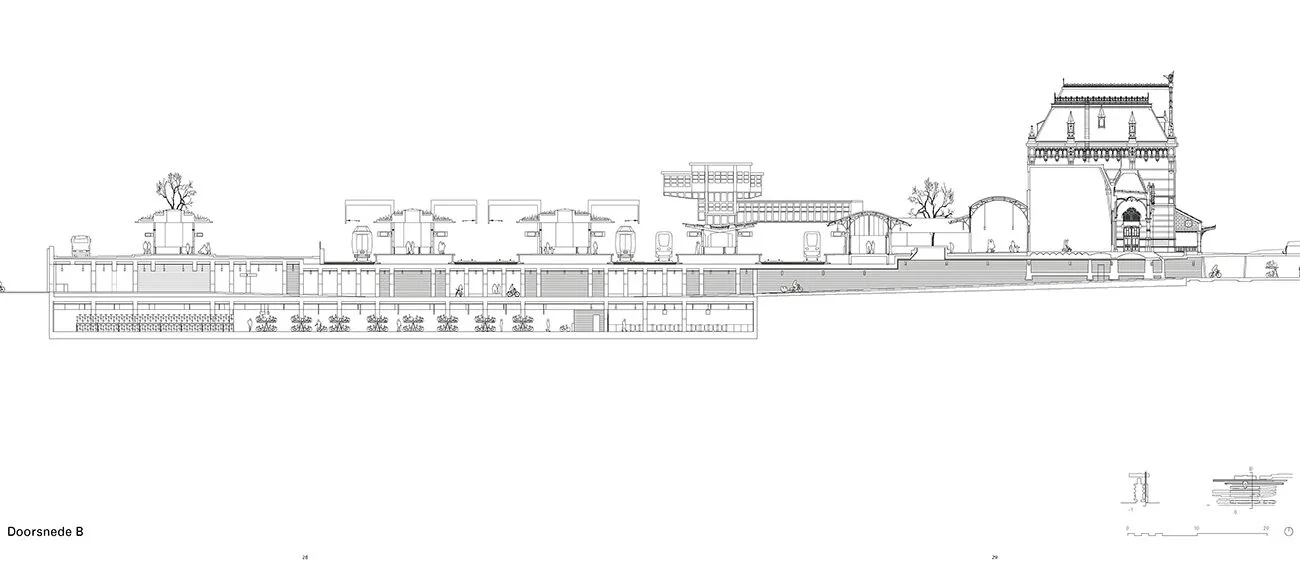
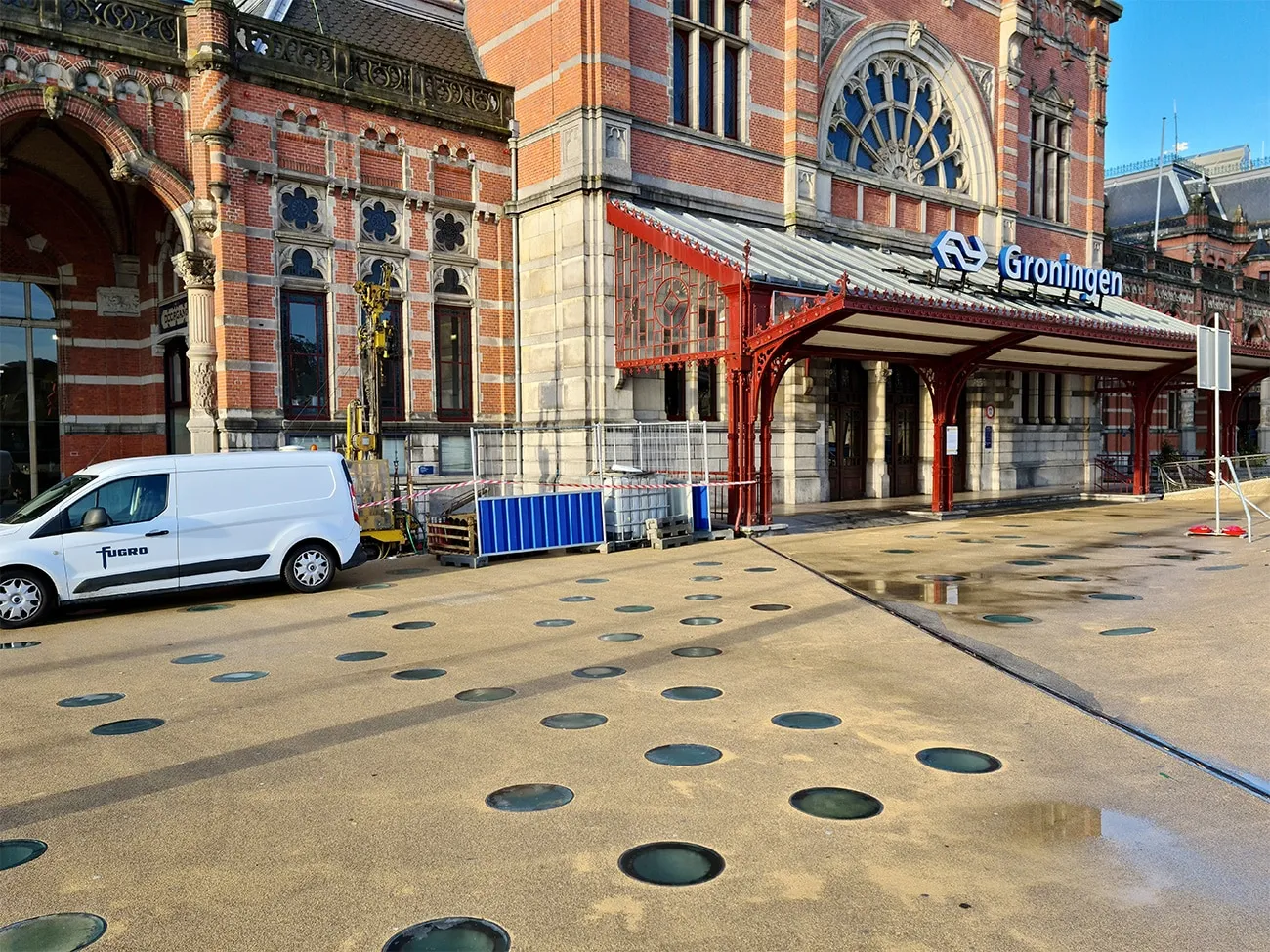
Groningen’s main railway station is being redeveloped into a modern public transport hub. A transfer concourse is planned directly behind the listed station building, beneath the old platform canopies. From here, passengers will be able to reach the platforms via an underground passage, which also runs beneath the tracks to the southern side of the city. “Alongside this passage there will be a cycle tunnel, with a large cycle park beneath the passage.”
ProRail is the delegated client on behalf of the project partners: the Province of Groningen, Groningen municipality, NS and ProRail. The project is part of the ‘Spoorplan Noord-Nederland’ programme. Strukton Civiel has been awarded the contract. Koen van Velsen architecten and Royal Haskoning-DHV are responsible for the design. They are working with an integrated project team that also includes Fugro. Fugro was brought on board during the tender phase to provide its geotechnical expertise. It was chosen because of its local knowledge of the ground conditions. Leon Schadee, Geotechnical Consultant at Fugro, and Peter Nelemans, Lead Consultant/Project Director at Fugro, discuss this remarkable project.
From terminus to transport hub
“Groningen station will no longer be a terminus, but a transport hub with six tracks,” Peter begins. “The marshalling yard has already been relocated to make room for the six tracks and a bus hub.” Leon adds: “Fugro is the geotechnical specialist on this project and was brought in because of our local knowledge of the ground conditions. We are very active in the north and have an office there too. We are drawing on our experience from other projects in Groningen. Our areas of expertise include foundation design, dewatering, excavations and their effects on the surrounding area.”
Preloaded clay layer
‘Pot clay’ is present at the site. Peter explains: “This is overconsolidated soil. The clay layer was preloaded during the late Ice Age. If you remove the top layer, the clay starts to move. It swells and shifts as a result. Fugro has in-depth expertise in this area. Removing the top layer or starting vibration work disturbs the ground’s equilibrium. We advise on what can and cannot be done.”
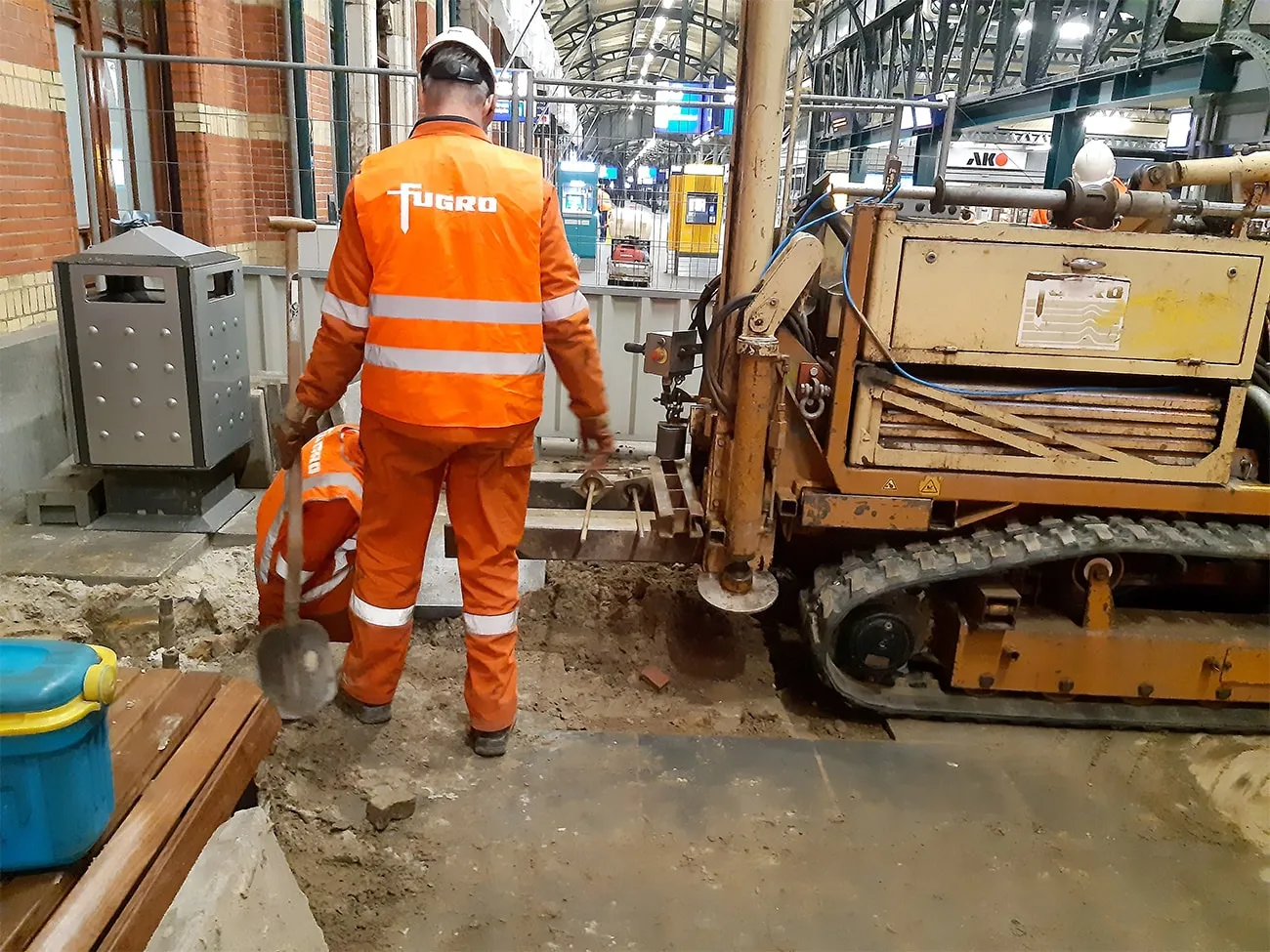
Fugro maps the ground conditions by carrying out cone penetration tests and boreholes, and testing soil samples in laboratories. To ensure the team was fully prepared, the project team brought Fugro on board as a member during the tender phase. “Ground deformation must be prevented, as the listed station is just seven metres from the excavation pit,” Leon continues. “Strict deformation limits have therefore been set, and these are monitored throughout the project. This requires extensive calculations in advance. Strukton carries out the settlement monitoring itself, but Fugro contributed by preparing the monitoring plans.”
Excavation in two phases
The first excavation, in the southern part of the project, is now under way. The second phase, covering the northern part, will follow after the railway has been diverted. “The northern part is the station. You enter at level -1 from the south with your bike,” says Peter. The passenger concourse will also serve as a link between neighbourhoods, connecting the southern districts to the city centre. “That’s good news for a cycling city like Groningen, of course.” Leon adds: “There are also plans to further develop the south. The station will thus become a connecting element.” Ground level is at 2 to 3 metres above NAP, and the excavation will reach 10 metres below NAP. “That means excavating 12 to 13 metres.”
Managing the swelling
Leon explains how the swelling of the clay soil is managed: “First, the excavation is carried out in dry conditions down to -3 NAP (that is,
5 metres below ground level). Water is then let into the excavation pit, and the remaining excavation work is carried out underwater.
This is necessary because the water pressure in the sand layer tends to push the glacial till layer upwards, in other words, cause it to heave. That is why we excavate underwater, as the water in the excavation pit provides counterpressure.” GEWI piles are installed only once the required depth has been reached. These are tension piles for the underwater concrete. By then, the swelling has already taken place, given the limited thickness of the pot clay. The GEWI piles are installed from a pontoon, with divers screwing the plates used to connect the underwater concrete onto the piles. The excavation pit is formed using diaphragm walls, which are installed before excavation begins. Diaphragm walls are constructed by digging a trench. Bentonite is pumped into the trench to prevent it from collapsing. Concrete is then poured to form a wall in the ground, which resists earth and water pressure.
Fugro’s view on underground construction
Peter says underground construction has undergone a real evolution over the past ten years. “Urbanisation and improvements to liveability, combined with climate adaptation, are leading to more and more infrastructure being built underground. That creates more space above ground for greenery. Infrastructure links are therefore routed underground, while more greenery above ground reduces heat stress and a more natural environment allows water to drain away more naturally.”
Fugro is becoming increasingly involved in underground projects. “Whereas in the past our focus was mainly on construction risks, our expertise is now also being called on to assess the effects on the surrounding area in the short, medium and long term. That is why we are increasingly working in multidisciplinary teams: together, we simply know more than we do individually. We use our practical knowledge to help the team choose the most effective approach. We also provide the necessary calculations and advise on how the work should be carried out,” Peter explains. “This also means that we are calculating an increasing number of options. Sometimes we work through as many as ten parametric designs at once so that we can compare the results. Our approach to underground construction is very different today from what it was in the past.”
Multidisciplinary working can produce surprises
Leon concludes that multidisciplinary working brings together different perspectives. He explains: “By bringing all the specialists together, you can choose the best solution. Sometimes it is a surprising one. For example, that is how the cycle park came to be located beneath the passenger concourse rather than alongside it. This offers major benefits, not only for the construction phasing, but also because it saves a great deal of space.”
All in all, Groningen station is a remarkable project for Fugro, despite the company’s extensive experience. Leon has been involved in the project for more than a year and a half. He concludes: “Knowledge, experience and trust in advisers are becoming increasingly important. We see people from different disciplines being brought together as early as the tender phase, so they can keep developing answers to new questions as they arise. The great thing is that together we know a lot, and everyone learns from one another. The subject matter is interesting to everyone!”
A business enquiry for Fugro? Get in touch
Companies in this story
Keep following this
Get an email when a new story is published. No account needed.
- ThemeUnderground construction
- SubjectUnderground infrastructure
- CompanyFugro
- CompanyStrukton Civiel
- CompanyHaskoning







