









Cast iron retains its properties, even after recycling
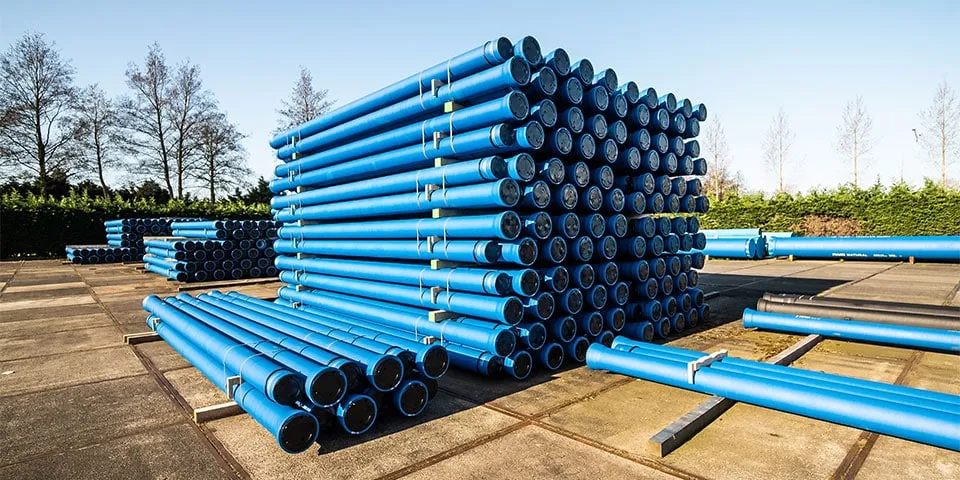
The first drinking water main was laid in cast iron in 1853 and, after 164 years, was replaced with cast iron once again, this time from Saint-Gobain PAM. Cast iron scores highly in terms of sustainability, strength and total cost of investment, making it one of the leading circular products in the civil engineering, infrastructure and water sector.
Saint-Gobain PAM is one of the multinationals producing ductile iron pipes. In the Netherlands, its subsidiary Saint-Gobain PAM Nederland is making its mark. From Almere, it promotes cast iron pipes suitable for transporting all types of water: drinking water, wastewater and firefighting water.
Outstanding properties
“Ductile iron is incredibly strong, tough and flexible,” begins Edwin Porssius of Saint-Gobain PAM. Once he gets started, he goes on to list a whole host of other outstanding properties. “It is made from iron ore, a natural material that can be recycled indefinitely. Metals have, after all, been reused for centuries. If a pipe is no longer needed, it can be melted down and turned into a new pipe with exactly the same ring stiffness and flexibility. Ductile iron retains all its original properties, even after recycling. That is a cast-iron guarantee.”
Short-term thinking
Yet major Dutch clients do not always choose ductile iron as a solution. “Leaving cast iron out of the selection process as an option shows a certain amount of short-term thinking. Cast iron lasts for more than a hundred years,” says Porssius. “That makes it exceptionally sustainable. It is also a strong, reliable product that requires no attention for decades. It deserves more consideration because, in many cases, ductile iron is a very good, and sometimes even better, alternative to plastic.”
What’s new in ductile iron
“Preventing leaks is high on our customers’ agenda. By supplying our customers with new pipes made from circular ductile iron, we contribute to the sustainable energy transition. Cast iron is also highly valuable as a residual material stream. This helps our customers reduce waste streams,” explains Porssius. Saint-Gobain PAM is committed to making underground infrastructure more sustainable with ductile iron.
A business enquiry for Saint-Gobain Weber? Get in touch
Companies in this story

Keep following this
Get an email when a new story is published. No account needed.
- ThemeLower emissions and more reuse
- SubjectUnderground infrastructure
- CompanySaint-Gobain Weber







