









A polder construction pit in the polder delivers the best results
Underground projects require a construction pit, which can be built in various ways. But what is the best, cheapest, quickest and safest way to create a practical construction pit?
The challenges of pumping groundwater
The right construction pit depends on a range of factors. A pit built in an urban area is subject to different requirements from one in open countryside. Ground conditions, groundwater levels and practical considerations also vary from site to site and all influence the choice of construction pit. The programme and permits play a part too. If there is enough time to obtain a permit for dewatering the pit, and the project schedule is not a constraint, an open pit without a basal seal may be the preferred option.
With plenty of space and no urban constraints, an open construction pit may seem the obvious choice, until the challenges of pumping groundwater literally surface. A pit with a high pumping rate brings significant construction risks, as abstracting large volumes of groundwater affects the surrounding area. The impact can be limited by returning the water to the ground through recharge wells. But even if groundwater can be discharged under normal conditions, large volumes always warrant attention, for example because of low-level contamination. This calls for intensive measures and brings a high level of risk. Every extra week or month means more pumping, and costs quickly mount up. More uncertain still is the risk that the pit becomes unusable at the slightest problem, for instance if pumps fail, heavy rain falls or groundwater levels rise. An unusable pit also leads to additional costs from construction failures.

Good construction pit advice is essential
When preparing advice on a construction pit or tendering the work, it is standard practice to start by comparing the costs of the various pit components (earth retention, dewatering, earthworks, foundations, basal sealing, etc.). But the most economical construction pit method can only be determined by calculating the total cost.
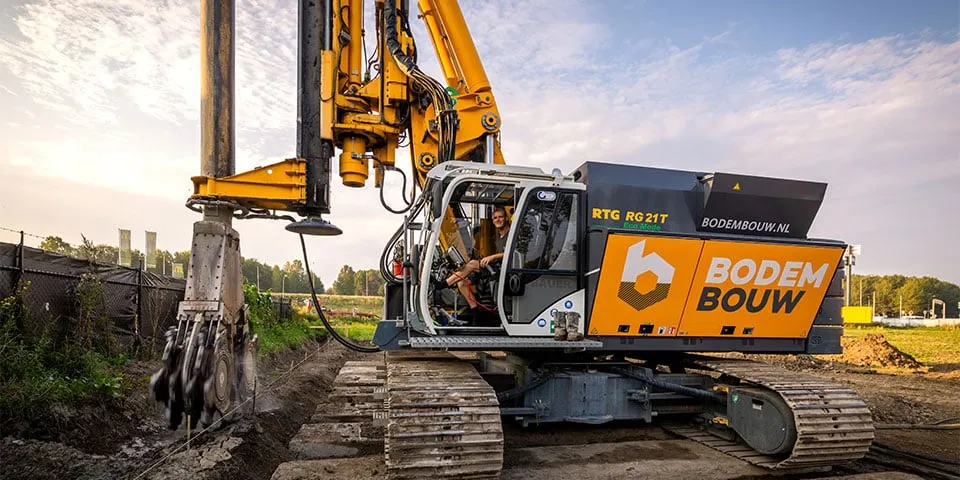
A deeper natural layer that restricts water flow is often not considered worthwhile, because extending the walls down to the toe level of this layer involves considerable cost and risk. However, this is not the case with the CSM system. Extending it to great depths does not entail any significant construction risk. A CSM wall can also be designed with reinforcement beams in just its upper section, giving that part of the wall a structural earth-retaining function. The lower section consists solely of grout mixed with the existing soil and serves only as a water barrier. This optimises the wall’s strength and material requirements, and therefore its cost.
The most economical construction pit is the most practical to work in
When the walls extend down into a deeper clay or loam layer, the result is what is known as a “polder construction pit”, with a low pumping rate that makes it easy to work in and manage, and therefore gives it a low risk profile. If there is enough space, a natural slope can even be left against the CSM walls to act as a berm. In that case, the CSM walls do not need steel reinforcement beams, creating a seepage cut-off wall that serves solely as a water barrier.
In many cases, the most economical construction pit is the one that is most practical to work in and easiest to manage, and therefore has the lowest risk profile. To identify this option in advance, the total cost must be calculated, including risks and costs arising from construction failures. That is exactly the approach taken by BodemBouw!
Question about this story? Ask your question
Keep following this
Get an email when a new story is published. No account needed.
- ThemeUnderground construction
- SubjectUnderground infrastructure







