









A future-proof tunnel linking the cycle parking facility and metro concourse
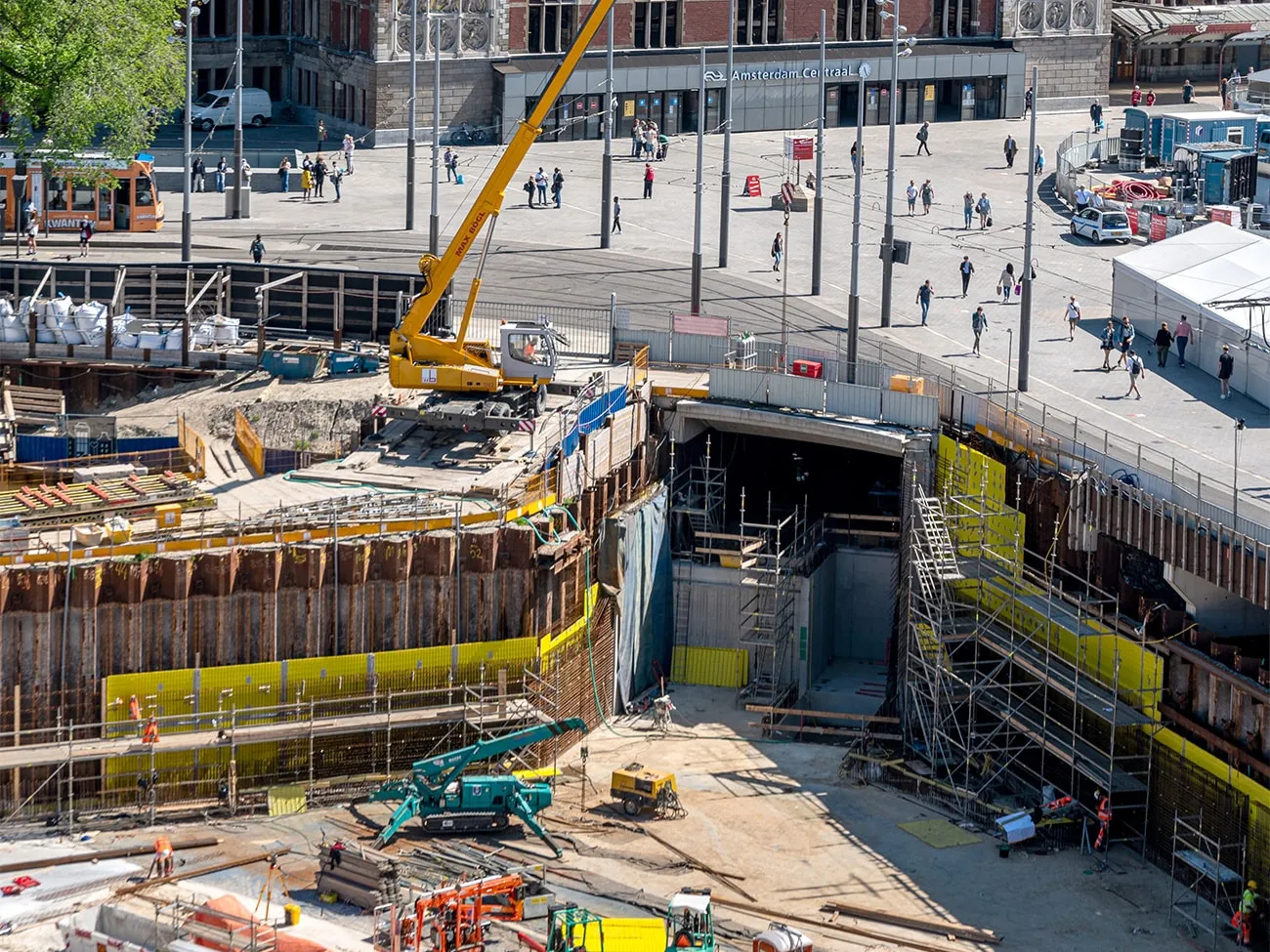
An earlier issue of GWW Magazine described the preparations for building the metro link tunnel between the new cycle parking facility and the metro concourse as part of the De Entree project.
At the time, sheet piles had been installed and the tunnel roof had already been cast. As this article is being written, the tunnel is already a tunnel in its own right, but it is not yet connected to the metro concourse. We speak to Celmis van Meerten, project manager for the metro link tunnel at Max Bögl & Partners.
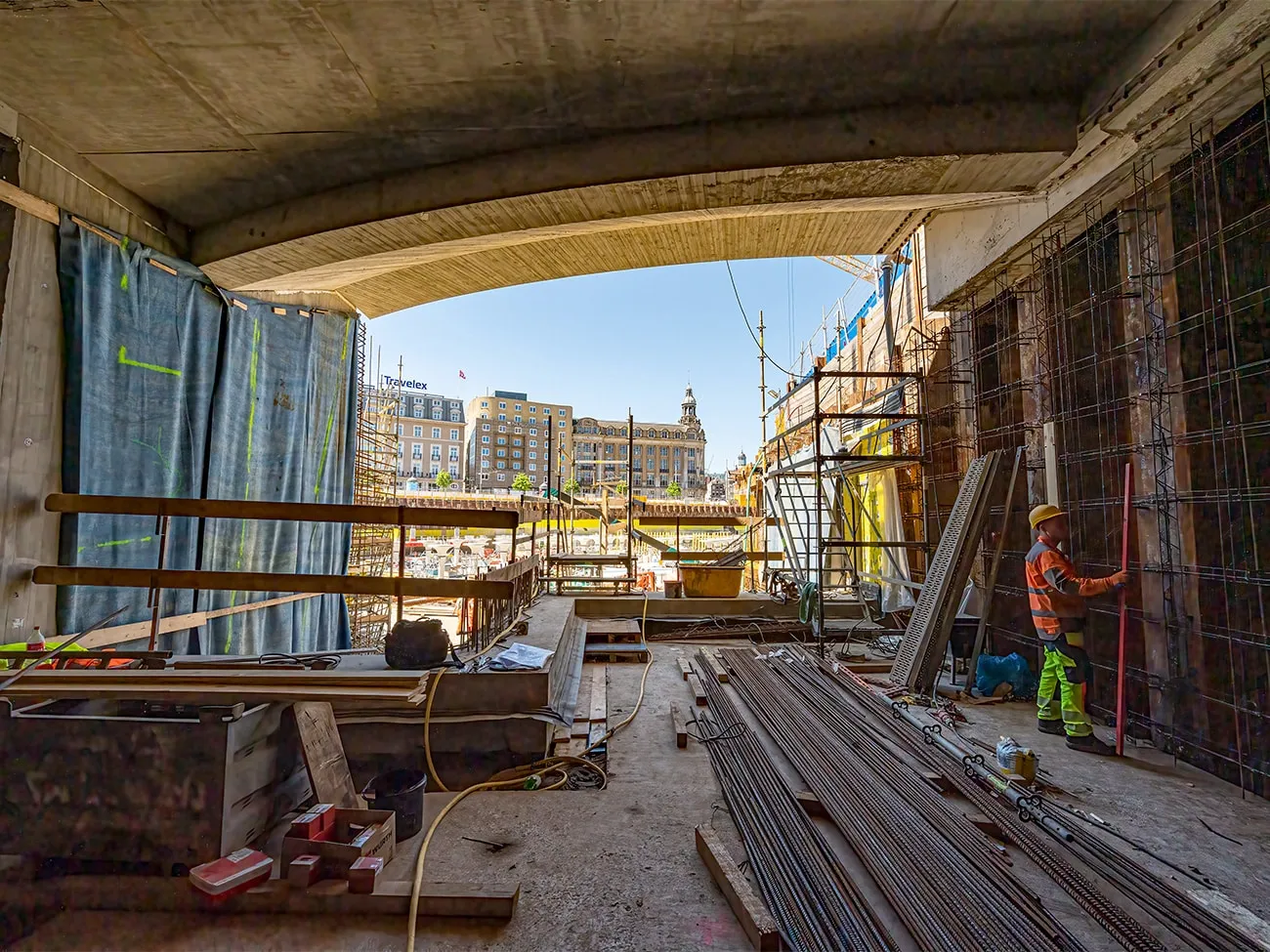
“In the summer of 2020, during TBGN 2 (the tram service closure), all the tram tracks on the west side of Stationsplein were replaced. The sheet piles were installed where the tunnel was to be built, and the concrete roof was cast in situ. The tunnel could then be excavated,” Celmis begins. He started on the project as the person responsible for cables and pipes, and is now responsible for breaking through into the metro concourse.
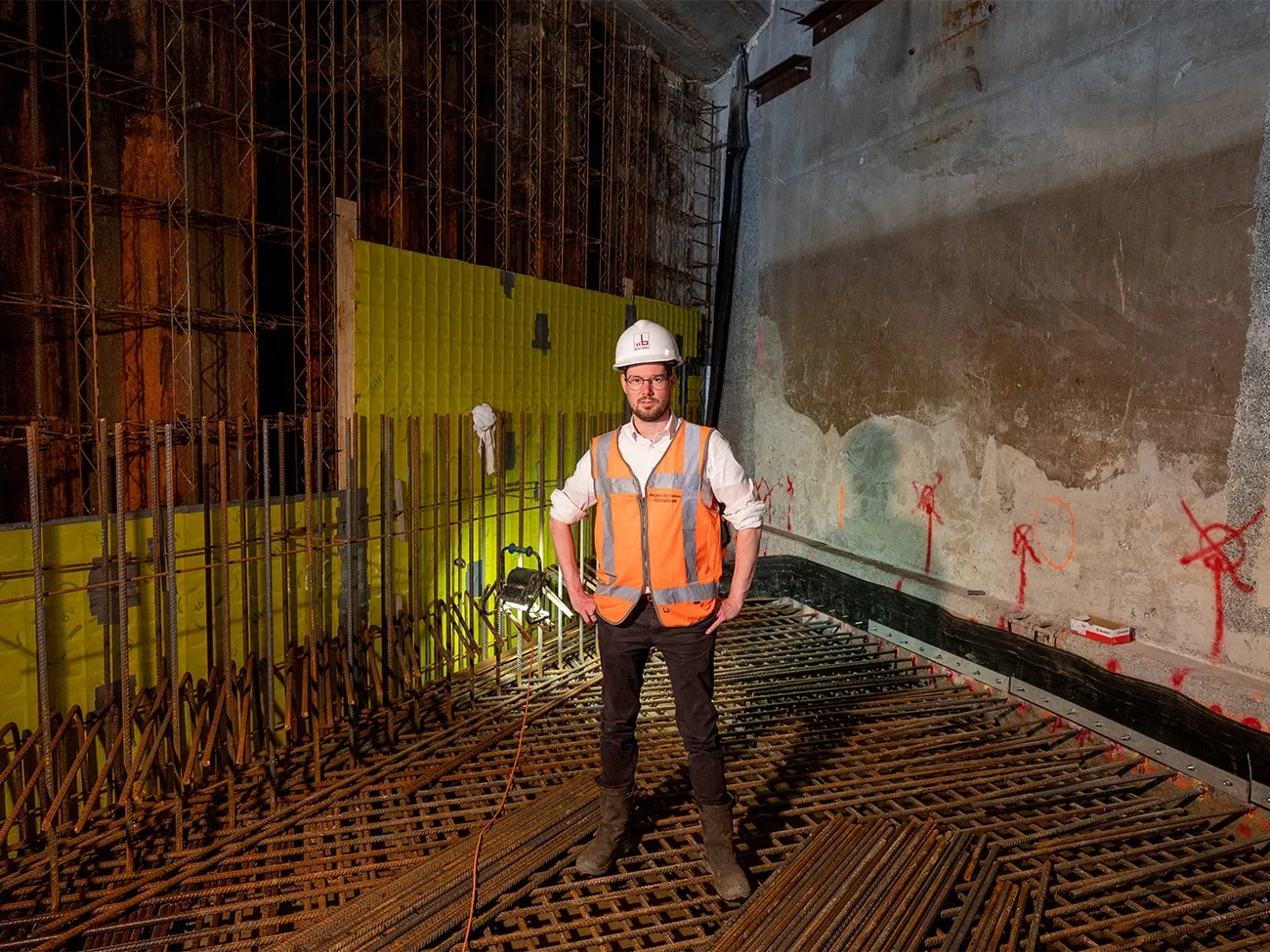
Almost light at the end of the tunnel
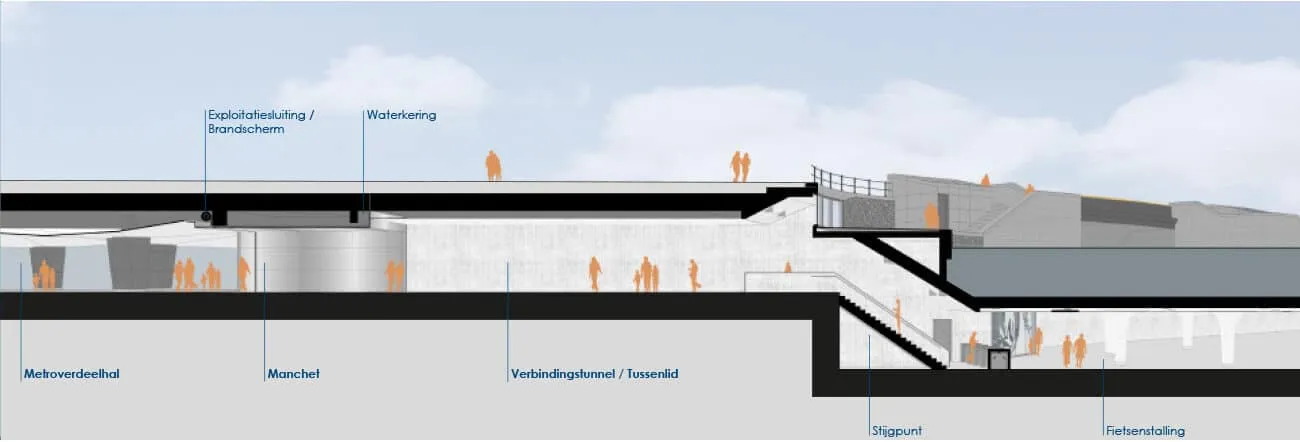
“We’ve just poured the floor of the collar. The collar forms the physical connection to the metro station. From inside it, you are looking at the wall that will eventually have to be removed to create the actual connection. The first breakthrough will be a modest opening, large enough to move materials through. It will be about 120 cm wide and 220 cm high. However, we can only make this working opening once we have fitted a so-called emergency door in the solid wall. This fire-resistant, watertight door provides a safe seal in emergencies such as fire and flooding. We can make the required working opening only once the emergency door has been mounted on the wall. So there’s almost light at the end of the tunnel: we’ll soon be able to get to work with the core drill and wire saw.”
Planning for tomorrow’s mobility too
The intermediate section is located beside the collar, towards the cycle parking facility. “In the future, this intermediate section can be removed to allow a metro tunnel to be built beneath the link tunnel, running from the East Line to Isolatorweg. At present, the Circle Line runs to Isolatorweg, but the final stretch between Isolatorweg and Amsterdam Centraal is not served by metro. The underground space has therefore been planned to allow the small tunnel to be removed, making it possible to build the missing metro tunnel.”
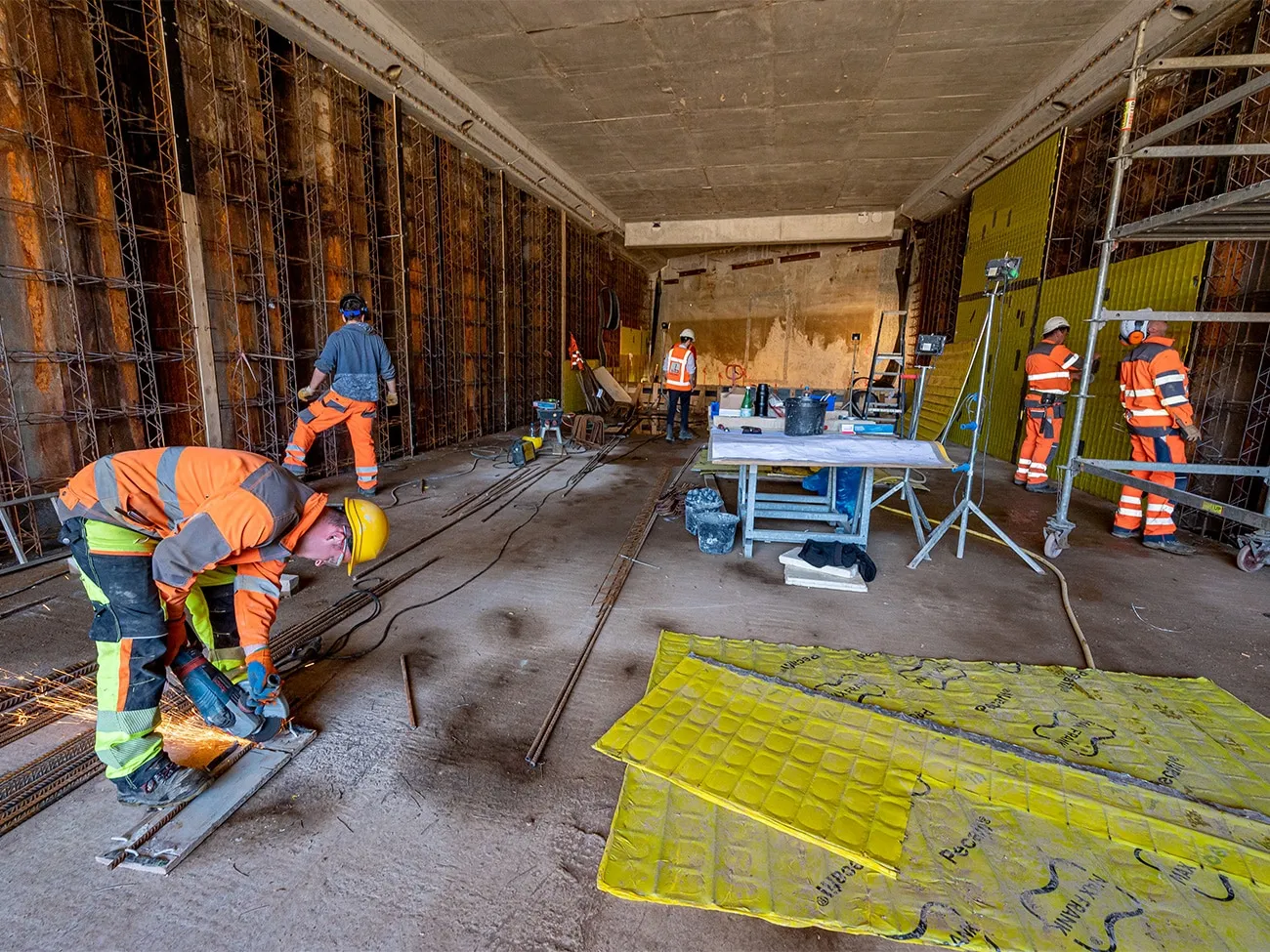
Current work: the tunnel walls
At the time of the interview, work on the tunnel walls was in full swing. Celmis says: “We’re working on the formwork and reinforcement. Rows of concrete placement pipes are positioned above the formwork. We’ll be able to pour self-compacting concrete into them from ground level. Once that is done, the next challenge comes into view: we’ll cast the mirror beam and the internal walls in the metro concourse.”
We ask when the wall between the tunnel and the metro concourse will be removed in its entirety. “That can only happen once we’ve put the same safeguards in place as those we’ve already installed on a smaller scale at the working opening. An approved water barrier must therefore be installed first. This permanent barrier must be able to function within 110 minutes in an emergency. It will be made from aluminium stoplogs, which have to be put in place by hand. You might think it would be easier to use a hydraulic gate, but that isn’t an option. The weight of the gate and hydraulic system would put too much strain on the metro concourse. Before we can proceed with the main breakthrough, the aluminium stoplog barrier must first be tested and approved. In the final arrangement, there will be a flood barrier on the tunnel side, while a fire and security closure will be installed on the other side, in the metro concourse.”
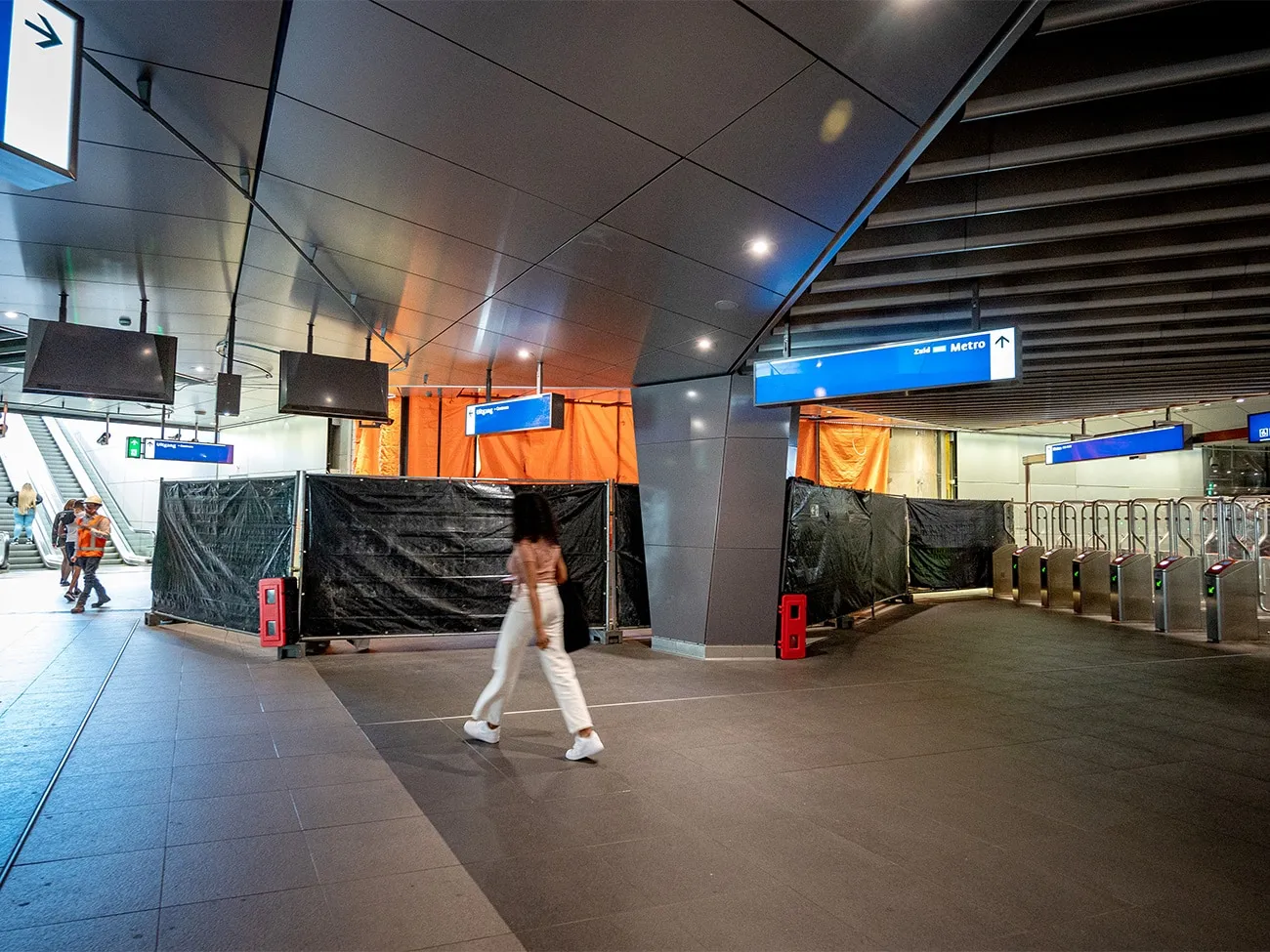
Working in a complex environment
Celmis enjoys his work and still finds it special every day to be able to stand in places that will soon be out of sight. “I also think it’s amazing that thousands of people will soon be walking through ‘our tunnel’ and the cycle parking facility. It’s work in a complex environment, with many challenges relating to engineering, stakeholders, permits and location, but that’s exactly what we’re here for. The main breakthrough is scheduled for the end of September, followed by the finishing work and installation of the systems. By 2023 at the latest, it will be ‘business as usual’ here again, and passengers will benefit every day from what we’re building today. That’s a good thought, isn’t it?”
Question about this story? Ask your question
Keep following this
Get an email when a new story is published. No account needed.
- ThemeUnderground construction
- SubjectUnderground infrastructure







