Coarse-sand barrier for dike reinforcement is a great innovation
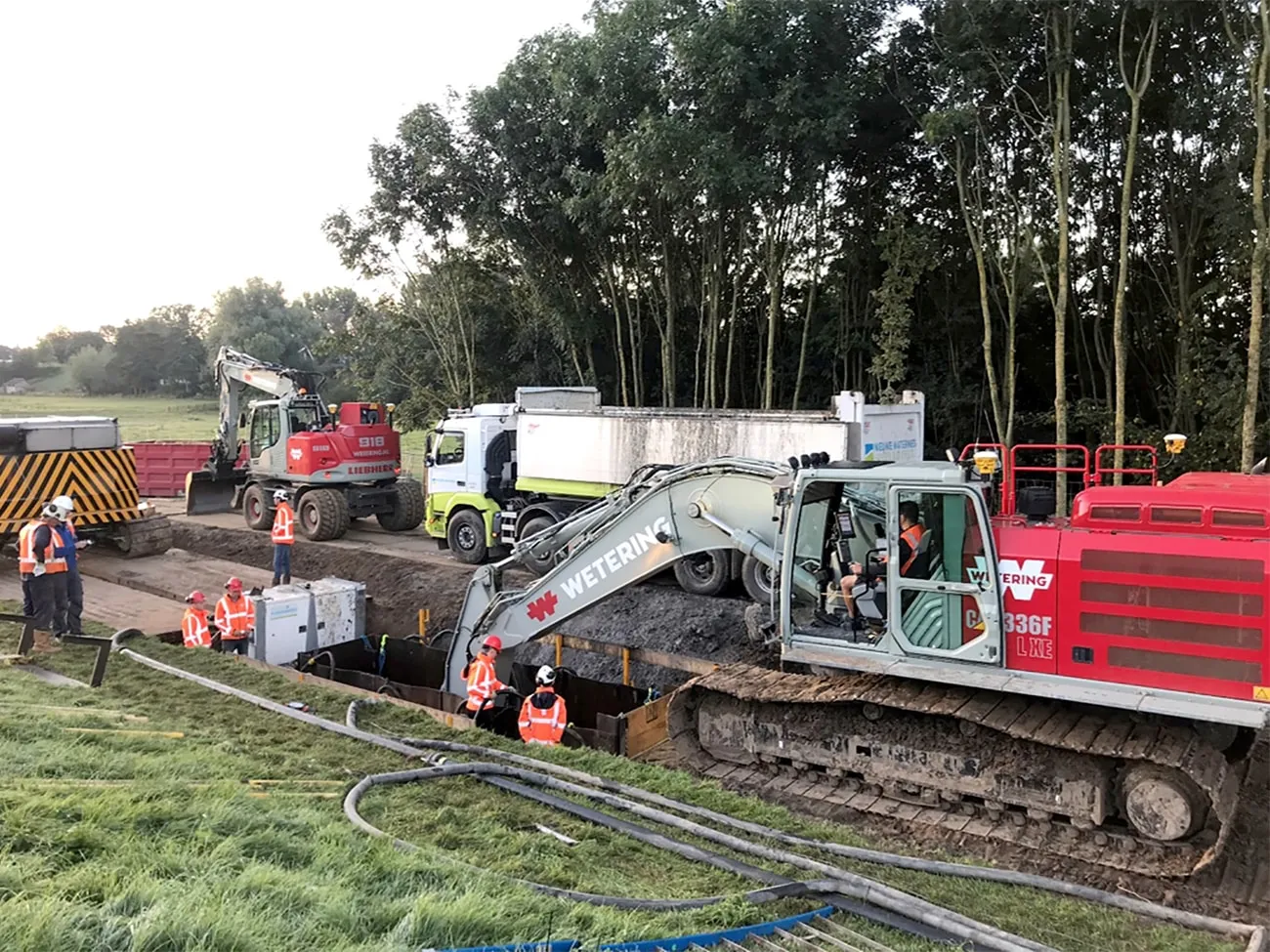
The battle against water is a familiar one, particularly now that the effects of climate change are becoming increasingly apparent. The flooding and evacuations in Limburg in the summer of 2021 are striking and recent examples. Since 2012, three family-owned businesses from Brabant (Wetering, FPH Ploegmakers and Vissers Ploegmakers) have worked together to carry out dike reinforcement projects. As a joint venture, they have delivered projects at various locations that help make the Netherlands safer and better prepared for the future.
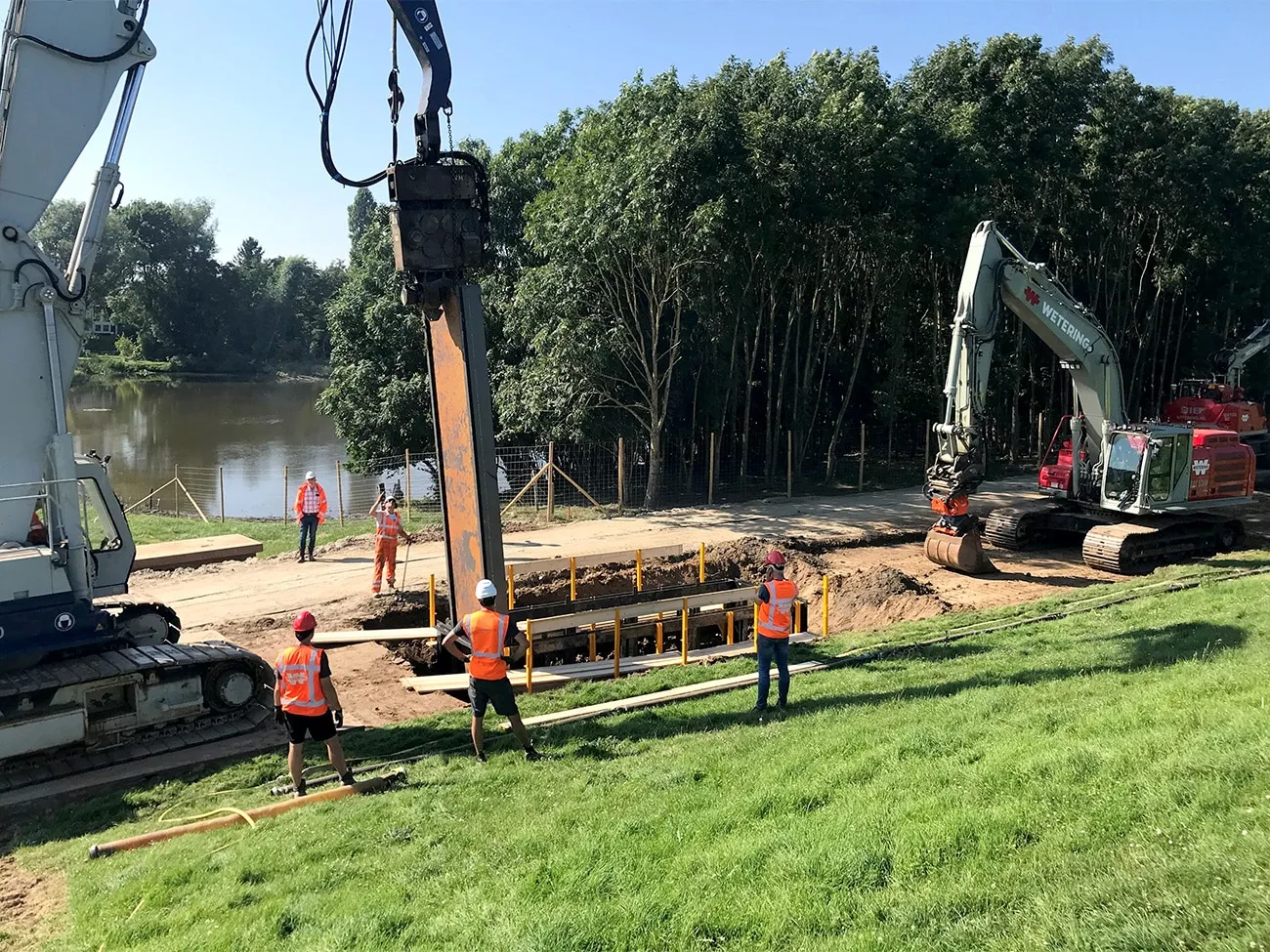
One project that stands out is Prioritaire Dijkversterkingen 1, which involved constructing ring dikes around the centres of Mook, Afferden and Bergen-Aijen. Innovations were applied here, including upgrading the clay, installing a CSM wall and using erosion-control mats, helping to ensure the most sustainable construction possible.
Practical thinking
Practical thinking, coupled with decisiveness, is what brings these three family-owned businesses together. Their approach is driven by an entrepreneurial vision that is always looking for new ideas. Waterschap Rivierenland’s 2019 call for an innovation partnership to apply the coarse-sand barrier for dike reinforcement in Gameren was a perfect fit.
Following a selection stage in 2019 and the successful completion of a constructability trial in 2020, the coarse-sand barrier is now scheduled for completion at the end of 2021. This marks the culmination of a five-year development programme, from the original idea at Deltares, through a series of intermediate stages (laboratory tests, a Delta Flume test and a constructability trial), to a mature technique used in a primary flood defence. The coarse-sand barrier is now ready for wider use in dike reinforcement projects where piping is a risk.
Innovative, buildable ideas
Over the past two years, the joint venture has been closely involved in the further development of the coarse-sand barrier. The companies’ contribution was to check that all design modifications could also be built and implemented in practice. Collaboration and coordination within the innovation partnership helped Waterschap Rivierenland, Deltares and the joint venture as a market party develop ideas in a short time that were not only innovative, but above all practical to implement.
Many innovations fall by the wayside or take too long to develop before they are put into practice. One reason is that asset managers are unfamiliar with them and lack confidence in them. To prevent this, a dedicated Monitoring Think Tank brought all the parties involved together from the outset to consider how the coarse-sand barrier could be monitored after installation. The decision was ultimately made to use tracer material, which is discussed in more detail later in this article.
Coarse-Sand Barrier (GZB)
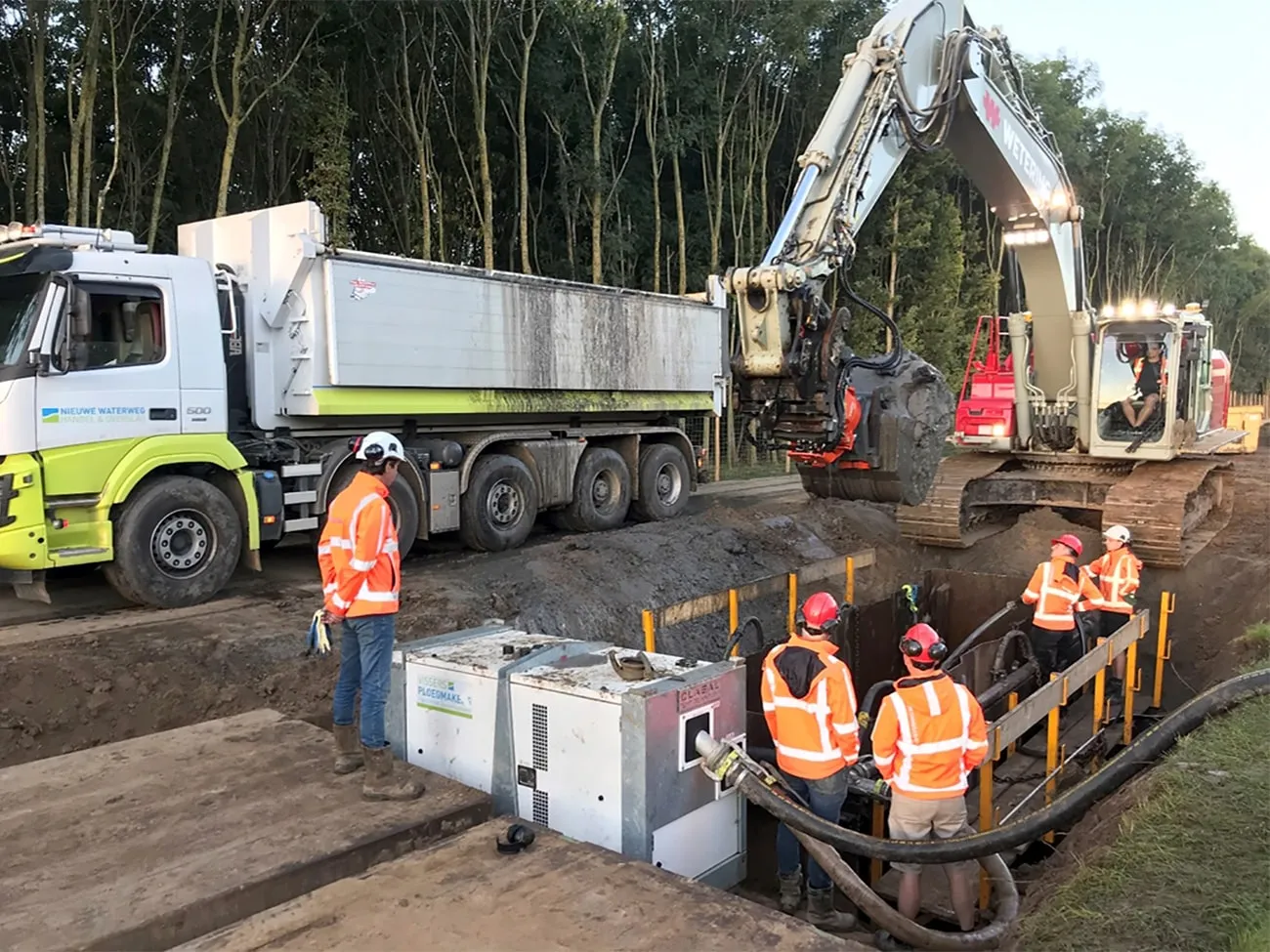
The GZB is a trench filled with coarse sand at the transition between the clay layer and the sandy subsoil, at the foot of the inner side of the dike. It acts as a filter, allowing water through while preventing seepage from carrying away the fine sand beneath the dike. This prevents continuous channels from forming towards the river, a process known as piping. The resulting voids can ultimately cause a dike to fail.
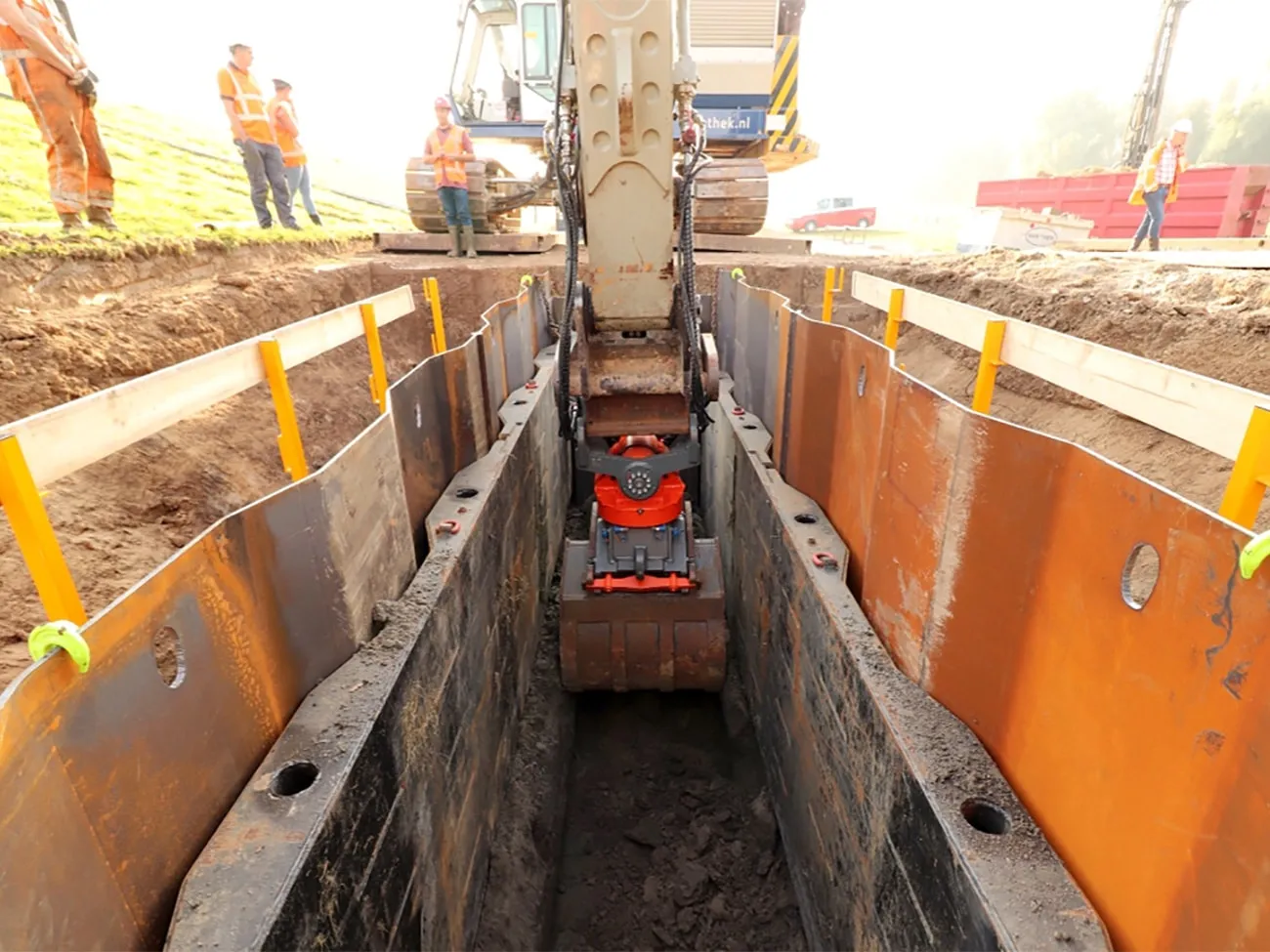
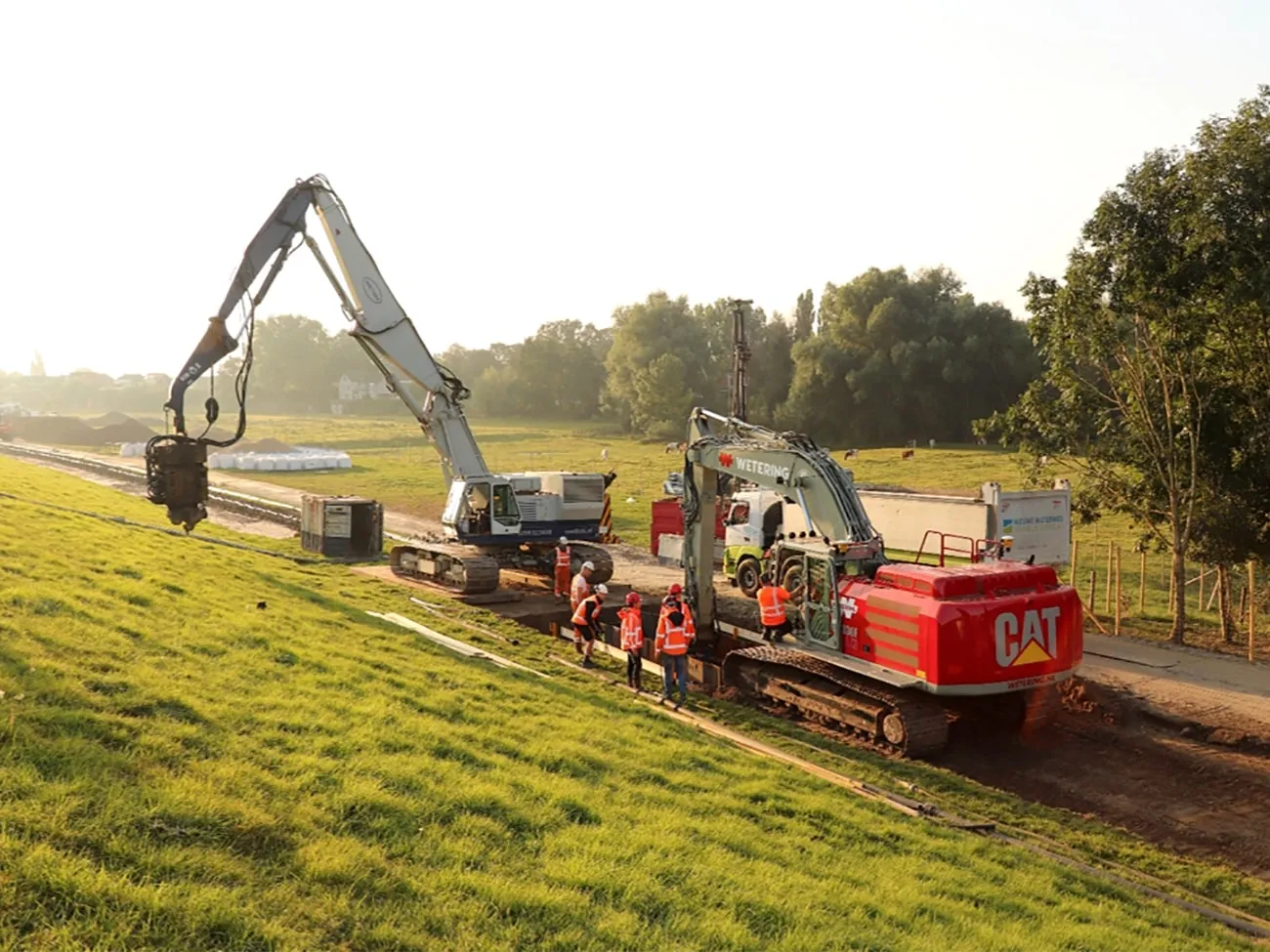
The Wetering, FPH Ploegmakers, Vissers Ploegmakers joint venture has further developed a sheet-pile box specifically for constructing the coarse-sand barrier. The box creates an enclosed compartment and features an ingenious, sealed groundwater management system. Part of the excavation inside the box is carried out dry. Water is then introduced to prevent uncontrolled heave and groundwater inflow. The remaining excavation and backfilling are carried out underwater, after which the top of the coarse-sand barrier is briefly dewatered to finish the work and install the capping clay layer. The pumped-out water is reused to raise the water level in the next sheet-pile box. By installing the boxes so that they overlap, a continuous barrier is guaranteed, while only short sections of the dike alignment are open at any one time during construction. One advantage of the sheet-pile box is that it avoids stress relief in the dike body and provides a clear view of the completed work, allowing immediate quality checks (grading, compaction and level surveys). The GZB structure consists entirely of natural materials (sand and clay). The narrow trench limits both excavation and backfilling. In addition, the low water burden of working with the sheet-pile box (a wet construction method over a limited area) means that intensive, prolonged dewatering is not required. All this contributes to a sustainable construction method with low CO2 and NOx emissions per kilometre.
Tracer material
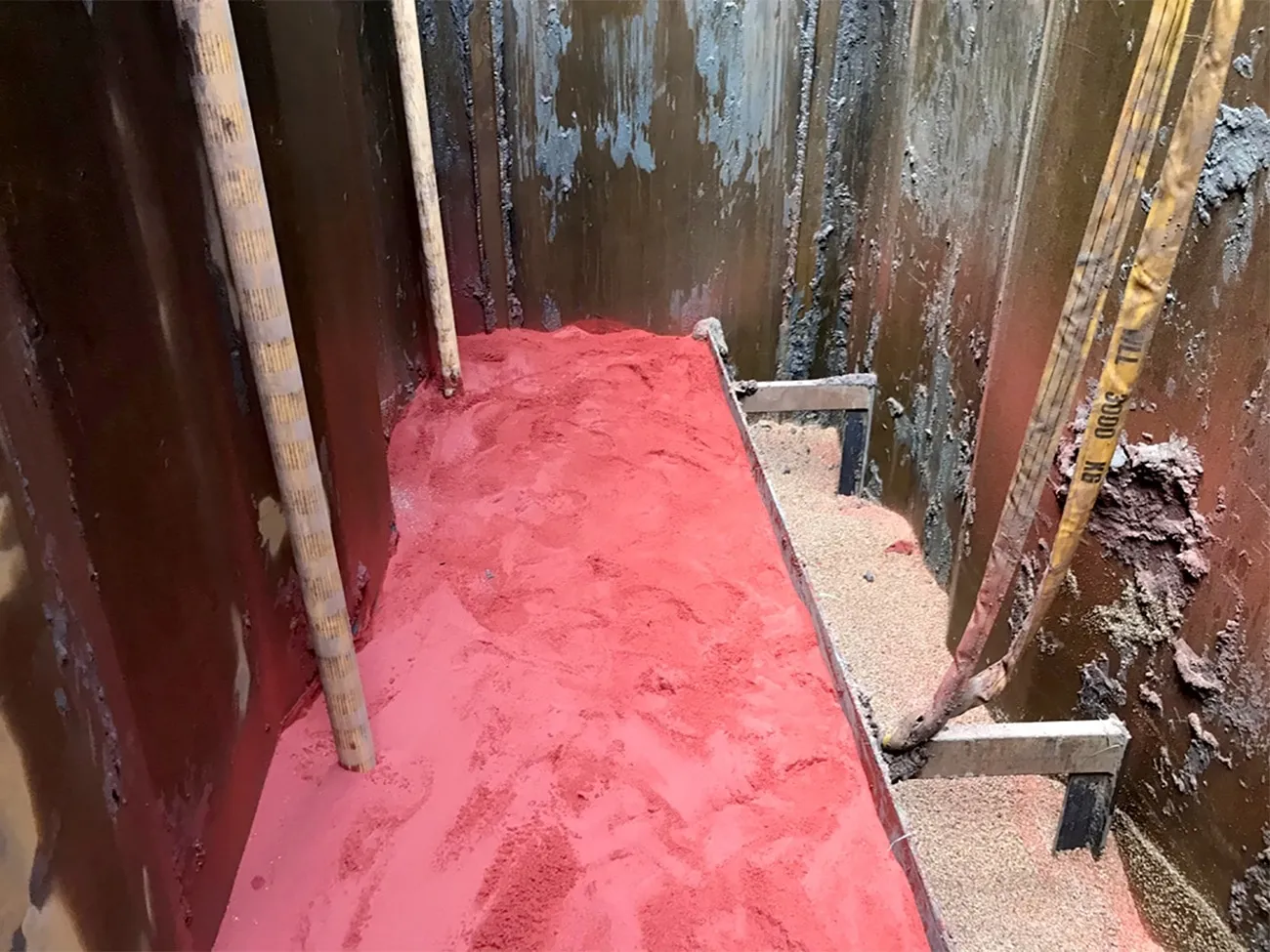
The main advantage of using tracer material is that it requires no additional management effort and/or complex data collection. The material is 100% natural and fits with the sustainable nature of the coarse-sand barrier. The red layer of sand makes the barrier visible outdoors in all conditions, including during high water. At high water, the red sand indicates the location of the coarse-sand barrier; erosion of the top layer is part of the mechanism. If red sand is detected at the outlet of a sand-boiling seepage point, additional measures can be taken in time. The red sand tracer also provides a simple and effective way to identify the exact location of the coarse-sand barrier along the dike. This can also prevent it from being damaged during excavation work.
Wetering
Since its founding in 1955, Wetering has had a clear mission: to work towards a legacy we can be proud of! We always make room for something new, for nature, for water, and for people, for example when preparing a site for development.
Our slogan is no coincidence: Room for People and Nature. Our focus is on extracting materials and putting them back in place.
FPH Ploegmakers
FPH Ploegmakers is the specialist in civil engineering, landscaping and cultural engineering works. For more than 35 years, we have applied our passion, expertise and inventive solutions to projects including dike reinforcement, water management and climate adaptation. We make sustainable use of people, materials and resources to deliver the best possible results for our clients: “We make it happen!”.
Vissers Ploegmakers
Vissers Ploegmakers is a multidisciplinary civil engineering contractor. We are a flat organisation with committed, decisive people, able to work across a broad range of fields thanks to our expertise in different areas. We excel at carefully organising complex, integrated, bespoke solutions, because no two commissions are the same. We are happy to work with you on your project or deliver the plans you have already developed as the client. Better still, we can take care of the entire process and relieve you of all the work.
A business enquiry for FPH Ploegmakers? Get in touch
Companies in this story
Keep following this
Get an email when a new story is published. No account needed.
- ThemeFlood protection and climate-resilient water management
- SubjectYearbook
- CompanyFPH Ploegmakers