GeoBusiness Nederland: on the way to association 3.0
Text Roel van Gils Image GeoBusiness Nederland
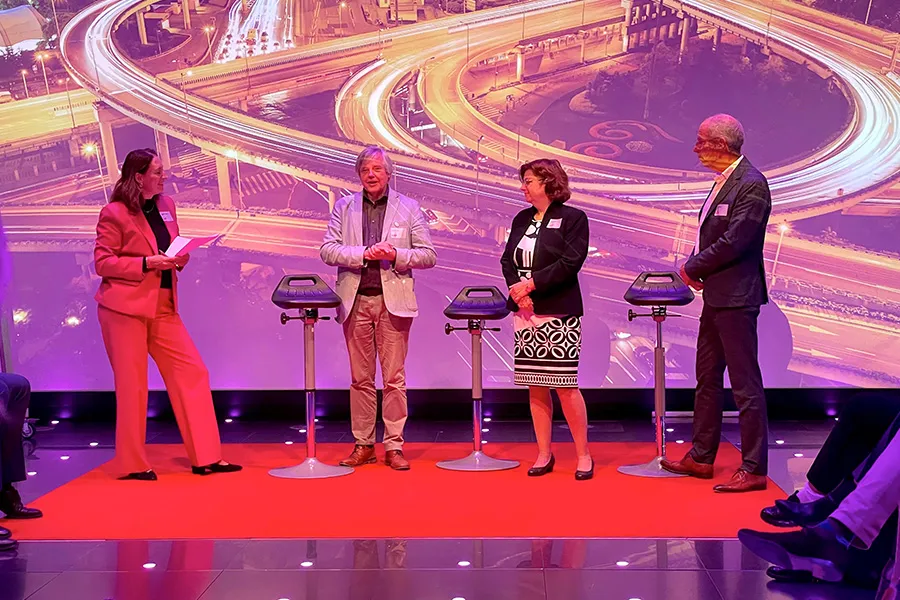
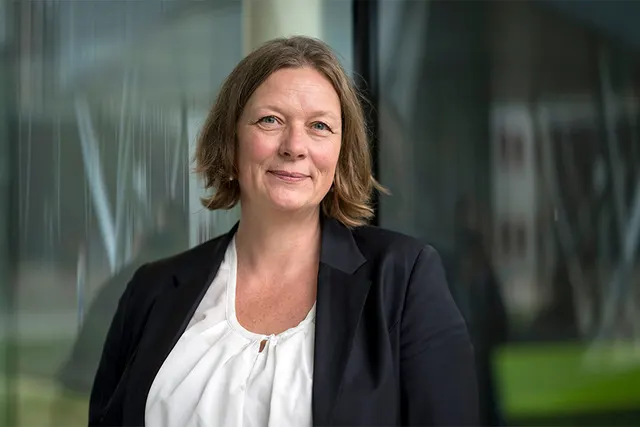
The geoinformation sector is in the midst of a transition. While trade associations have traditionally focused primarily on representing their members, the current climate calls for a broader perspective, according to Jacqueline Meerkerk, director of GeoBusiness Nederland: working together in ecosystems, putting societal challenges at the centre and stimulating innovation. “That is exactly what we stand for as a trade association.” She wants to guide GeoBusiness Nederland into its next phase: from a more traditional representative organisation to an association 3.0, built around a network.
GeoBusiness Nederland is the trade association for companies working with geoinformation and technology. “In an association 3.0, the focus is no longer solely on the organisation itself, but on the world outside it,” says Meerkerk. “How can we, as a sector, contribute to a sustainable future? How can geoinformation help address major societal challenges such as housing construction, climate adaptation and infrastructure renewal? Our role is changing too: we are increasingly becoming catalysts for innovation and collaboration. Of course, we will continue to support our members by providing information, organising networking events and knowledge platforms, and representing their interests to ensure a level playing field. But we are also focusing increasingly on strategically connecting knowledge, policy and practice. Our members are asking this of us too. They want a future-proof association that makes an impact.”
Knowledge networks
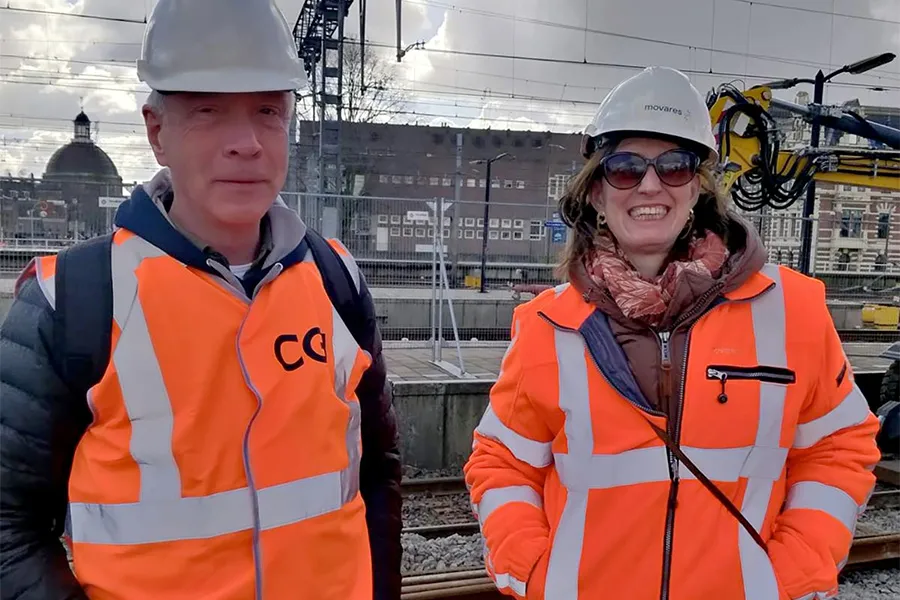
GeoBusiness Nederland has around eighty members, a mix of companies with diverse backgrounds. “Through special interest groups, such as Data inwinning and AI, and knowledge platforms focused on themes such as energy and climate and BIM/digital twin, we encourage knowledge sharing and innovation,” says Meerkerk enthusiastically. “These networks are the driving force behind our association and strengthen our connections with the world outside it. Many members are actively involved.” But Meerkerk believes more is needed to take the next step: the association must act as a facilitator and catalyst for the innovation ecosystem.
GeoSamen
A good example of collaboration on innovation is the GeoSamen initiative, according to Meerkerk. It is a public-private partnership between government, businesses, knowledge institutions and professionals, modelled on the top sectors. “The current 2021-2025 vision expires this year and is being renewed with a view to 2030. As a trade association and secretary of GeoSamen, commissioned by the Ministry of VRO, we are playing an active role in this. At the recent kick-off on 3 October, the ambition was set: over the coming years, we will work together to create a visible, confident sector that uses its high-level expertise to contribute to themes such as housing construction and infrastructure. Rijkswaterstaat says the renewal challenge must be tackled 25 per cent more efficiently. That can only be achieved by making the best possible use of geoinformation and technology. Innovations in our field are highly relevant to this. The aim? Not a patchwork of separate solutions, but connection and scaling up. This will strengthen both our capacity for innovation and our competitive position in Europe.”
Education
A major challenge is also attracting young professionals to the sector. “Geodesy courses are disappearing, even though the field is essential to our data-driven society,” says Meerkerk. “That is why we are working together with universities of applied sciences such as Saxion, where a new Associate Degree programme in geodesy has recently started. Our ultimate aim is to have a full-time bachelor’s degree developed and put the profession back on the map. Our sector needs to make itself much more visible. Its role is seriously underestimated. Most of our work happens behind the scenes. As long as everything works, people take it for granted. Perhaps there needs to be a major measurement error, so everyone understands how relevant we are,” Meerkerk says jokingly.
The geospatial sector is highly advanced technologically and works every day with high-tech systems and equipment, including drones, laser scanning and AI. “It is a fascinating and dynamic field that is extremely relevant to society’s use of our scarce space. That is exactly what we want to bring more prominently into the public eye as a trade association. We want to grow into a network-based association 3.0 that brings people together. We are committed to making geoinformation more visible in decision-making and implementation by governments and businesses, thereby increasing the value of our field. This offers not only benefits to society, but also enormous opportunities for Dutch companies at home and abroad. There is still plenty of potential, including beyond our borders, and there are many European subsidies we can draw on. As a sector, we are among the world’s top 5 in terms of our high-level expertise. Let’s make the most of that and build on it!”
Question about this story? Ask your question
Keep following this
Get an email when a new story is published. No account needed.
- SubjectSurveying & geo-ICT